Compound Camphor Ointment Market Size, Share & Demand Report By Product Type (Cream-Based Camphor Ointments, Gel-Based Camphor Formulations, Traditional Ointments), By Application (Pain Relief, Cough & Cold Relief, Skin Irritation & Inflammation), By End-Use (Retail Consumers, Hospitals & Clinics, Physiotherapy & Rehabilitation Centers) By Region & Segment Forecasts, 2025–2034
USD 3950
Market Overview
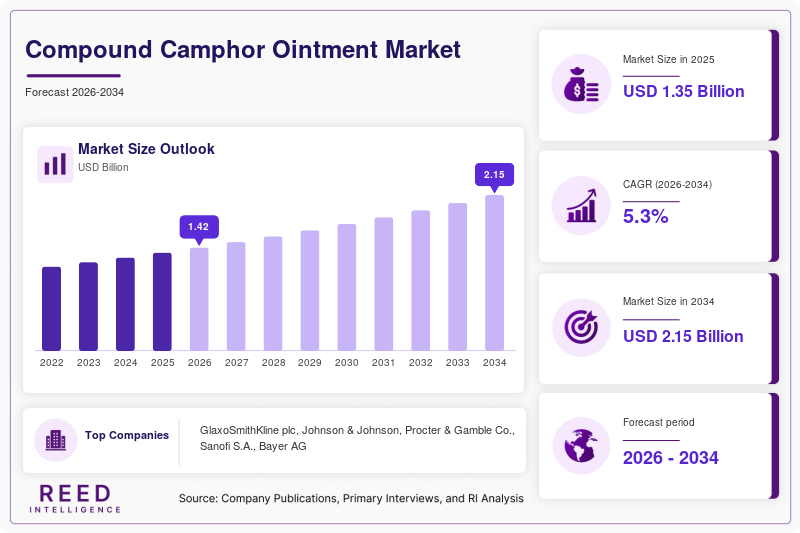
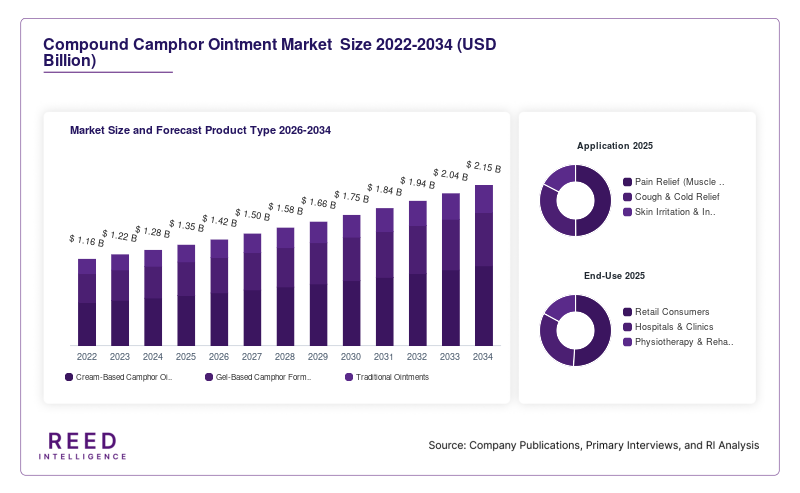
The Compound Camphor Ointment Market size has demonstrated steady expansion over the past decade, supported by rising consumer demand for topical analgesics and over-the-counter (OTC) therapeutic products. In 2025, the global market size is estimated at USD 1.35 billion and is projected to reach USD 1.42 billion in 2026. With increasing awareness regarding self-care and topical pain management, the market is forecast to reach approximately USD 2.15 billion by 2034, registering a compound annual growth rate (CAGR) of 5.3% during the forecast period (2025–2034). This growth trajectory reflects a balanced combination of traditional medicine usage and modern pharmaceutical innovation.
Compound camphor ointments are widely utilized for their anti-inflammatory, analgesic, and decongestant properties. These products are commonly used for relieving muscle pain, joint stiffness, cough, and skin irritation. The market continues to benefit from the increasing prevalence of musculoskeletal disorders, particularly among aging populations and individuals with sedentary lifestyles. Additionally, the rise in sports-related injuries and occupational strain has driven demand for topical relief solutions.
Key Highlights
- Market size projected to grow from USD 1.35 billion in 2025 to USD 2.15 billion by 2034
- CAGR of 5.3% during the forecast period
- Rising demand for OTC topical analgesics supporting market growth
- Increasing adoption of natural and herbal formulations
- Strong expansion through retail and online distribution channels
Market Trends
Increasing Adoption of Herbal and Natural Formulations
The Compound Camphor Ointment Market is witnessing a shift toward herbal and natural product formulations, driven by consumer awareness of potential side effects associated with synthetic drugs. Consumers are increasingly seeking products that contain plant-based ingredients such as camphor, menthol, clove oil, and eucalyptus oil. This trend is particularly prominent in emerging economies, where traditional medicine systems continue to influence purchasing decisions. Manufacturers are responding by developing formulations that emphasize natural ingredients and sustainable sourcing practices. Additionally, packaging and marketing strategies now highlight the absence of harmful chemicals, which enhances product appeal among health-conscious consumers.
Growth of E-commerce and Digital Health Platforms
The expansion of e-commerce platforms has significantly influenced the distribution dynamics of the Compound Camphor Ointment Market. Online sales channels provide consumers with easy access to a wide range of products, competitive pricing, and home delivery convenience. Digital health platforms are also playing a role in educating consumers about product benefits and usage. This trend is supported by the increasing penetration of smartphones and internet connectivity across developing regions. Manufacturers are investing in digital marketing strategies, including social media campaigns and influencer partnerships, to enhance brand visibility and customer engagement.
Market Drivers
Rising Prevalence of Musculoskeletal Disorders
The increasing incidence of musculoskeletal disorders such as arthritis, back pain, and joint stiffness is a major driver of the Compound Camphor Ointment Market. Aging populations across developed and developing regions are particularly susceptible to these conditions, leading to higher demand for topical pain relief solutions. Additionally, sedentary lifestyles and prolonged screen time have contributed to posture-related issues among younger individuals. Compound camphor ointments offer a convenient and non-invasive method of pain management, making them a preferred choice for many consumers. Healthcare professionals often recommend topical treatments as part of comprehensive pain management strategies, further supporting market growth.
Expansion of OTC Healthcare Products
The growing availability and acceptance of over-the-counter (OTC) healthcare products have significantly contributed to the expansion of the Compound Camphor Ointment Market. Consumers are increasingly opting for self-medication for minor ailments, driven by convenience and cost considerations. Regulatory frameworks in many countries have facilitated the approval and distribution of OTC topical products, making them widely accessible through pharmacies and retail outlets. This trend is further supported by rising healthcare costs, which encourage consumers to seek affordable alternatives for managing common conditions such as muscle pain and respiratory discomfort.
Market Restraint
Regulatory Constraints and Safety Concerns
One of the key challenges facing the Compound Camphor Ointment Market is the presence of regulatory constraints and safety concerns associated with camphor usage. Regulatory authorities in several countries have established strict guidelines regarding the permissible concentration of camphor in topical products due to potential toxicity risks. Excessive exposure to camphor can lead to adverse effects, particularly in children and sensitive individuals. These regulations can limit product formulation flexibility and increase compliance costs for manufacturers. For instance, companies must invest in rigorous testing and quality assurance processes to ensure product safety and regulatory compliance. This can impact profit margins and delay product launches. Additionally, consumer awareness of potential risks may influence purchasing decisions, especially among cautious buyers who prefer products with clearly defined safety profiles.
Market Opportunities
Product Innovation and Value-Added Formulations
The development of innovative formulations presents significant growth opportunities in the Compound Camphor Ointment Market. Manufacturers are exploring combinations of camphor with other active ingredients to enhance efficacy and provide multi-functional benefits. For example, formulations that combine pain relief with anti-inflammatory or moisturizing properties can attract a broader consumer base. Packaging innovations, such as roll-on applicators and easy-to-use tubes, also contribute to product differentiation. These advancements enable companies to cater to diverse consumer preferences and expand their market presence.
Expansion in Emerging Markets
Emerging economies in Asia Pacific, Latin America, and Africa offer substantial growth potential for the Compound Camphor Ointment Market. Increasing disposable income, improving healthcare infrastructure, and growing awareness of personal health are driving demand for OTC products in these regions. Local manufacturers are also entering the market with cost-effective offerings, which enhances product availability. Furthermore, government initiatives aimed at promoting traditional medicine systems can support the adoption of camphor-based products. Strategic partnerships and localized marketing efforts can help global companies establish a strong foothold in these high-growth regions.
Segmental Analysis
By Type
The cream-based compound camphor ointment segment held the dominant share of approximately 46% in 2024. Cream formulations are widely preferred due to their ease of application, smooth texture, and quick absorption into the skin. These characteristics make them suitable for a wide range of applications, including muscle pain relief and skin irritation treatment. Additionally, cream-based products often include complementary ingredients such as moisturizers and essential oils, which enhance their therapeutic benefits. The widespread availability of these formulations in pharmacies and retail outlets further supports their dominance in the market.
The gel-based segment is projected to be the fastest-growing, with a CAGR of 6.5% during the forecast period. Gel formulations offer advantages such as a cooling effect, non-greasy texture, and rapid absorption, which appeal to consumers seeking immediate relief. The increasing demand for sports injury treatments and active lifestyle products contributes to the growth of this segment. Manufacturers are also focusing on developing advanced gel formulations with enhanced efficacy and longer-lasting effects.
By Application
The pain relief segment accounted for the largest share of around 52% in 2024. Compound camphor ointments are widely used for alleviating muscle pain, joint stiffness, and minor injuries. The increasing prevalence of musculoskeletal conditions and sports-related injuries drives demand in this segment. Consumers prefer topical treatments due to their targeted action and minimal systemic side effects. Additionally, the availability of various formulations tailored to specific pain relief needs enhances the segment’s growth.
The cough and cold relief segment is expected to grow at the fastest CAGR of 5.9% during the forecast period. Camphor-based ointments are commonly used for relieving respiratory discomfort through topical application on the chest and throat. The growing incidence of seasonal illnesses and respiratory conditions supports the expansion of this segment. Increasing awareness of the benefits of topical decongestants further contributes to its growth.
By End-Use
The retail consumer segment held the largest market share of approximately 58% in 2024. Individual consumers represent the primary end-users of compound camphor ointments, driven by the increasing adoption of self-care practices. The widespread availability of these products in pharmacies, supermarkets, and online platforms ensures easy access for consumers. Marketing campaigns emphasizing convenience and effectiveness further support the growth of this segment.
The healthcare institutions segment is projected to grow at a CAGR of 5.7% during the forecast period. Hospitals, clinics, and physiotherapy centers are increasingly incorporating topical analgesics into their treatment protocols. The growing emphasis on non-invasive pain management solutions and the rising number of outpatient treatments contribute to the expansion of this segment. Healthcare professionals often recommend compound camphor ointments as part of comprehensive treatment plans, which supports their adoption in institutional settings.
Regional Analysis
North America
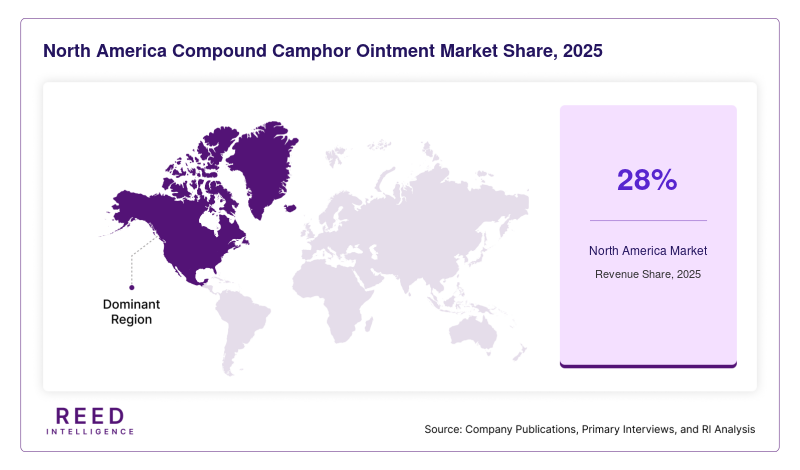
North America accounted for approximately 28% of the Compound Camphor Ointment Market share in 2025 and is projected to grow at a CAGR of 4.8% during the forecast period. The region benefits from a well-established healthcare infrastructure and high consumer awareness of OTC products. The presence of major pharmaceutical companies and strong distribution networks further supports market growth. Additionally, the increasing prevalence of chronic pain conditions contributes to sustained demand for topical analgesics.
The United States dominates the North American market due to its large consumer base and advanced healthcare system. A key growth factor is the rising adoption of self-care practices, which encourages the use of OTC solutions for minor ailments. Consumers in the U.S. are increasingly seeking convenient and effective pain relief options, which drives demand for compound camphor ointments.
Europe
Europe held a market share of around 24% in 2025 and is expected to register a CAGR of 4.6% over the forecast period. The region’s growth is supported by increasing healthcare expenditure and a strong focus on preventive care. The presence of established pharmaceutical companies and stringent quality standards ensures the availability of high-quality products in the market.
Germany is the dominant country in the European market, driven by its robust healthcare infrastructure and high consumer awareness. A unique growth factor is the region’s emphasis on herbal and natural remedies, which aligns with the properties of camphor-based products. This preference supports the adoption of compound camphor ointments among European consumers.
Asia Pacific
Asia Pacific accounted for the largest market share of approximately 32% in 2025 and is projected to grow at a CAGR of 6.2% during the forecast period. The region’s growth is driven by a large population base, increasing disposable income, and rising awareness of personal healthcare. The popularity of traditional medicine systems further supports the use of camphor-based products.
China dominates the Asia Pacific market, supported by its extensive manufacturing capabilities and strong domestic demand. A key growth factor is the widespread use of traditional remedies, which include camphor-based formulations. This cultural preference contributes to the sustained demand for compound camphor ointments in the region.
Middle East & Africa
The Middle East & Africa region held a market share of approximately 8% in 2025 and is expected to grow at a CAGR of 5.1%. The market is gradually expanding due to improving healthcare infrastructure and increasing awareness of OTC products. Urbanization and rising income levels also contribute to market growth.
Saudi Arabia leads the market in this region, driven by its expanding healthcare sector and growing consumer awareness. A unique growth factor is the increasing availability of imported pharmaceutical products, which enhances consumer access to high-quality compound camphor ointments.
Latin America
Latin America accounted for around 8% of the market share in 2025 and is projected to grow at a CAGR of 5.0%. The region’s growth is supported by improving healthcare access and rising demand for affordable OTC products. Economic development and urbanization also play a role in market expansion.
Brazil dominates the Latin American market, supported by its large population and growing healthcare sector. A key growth factor is the increasing popularity of self-medication, which drives demand for accessible and cost-effective topical treatments such as compound camphor ointments.
Competitive Landscape
The Compound Camphor Ointment Market is characterized by the presence of several established pharmaceutical and consumer healthcare companies. The market is moderately fragmented, with both global and regional players competing on product quality, pricing, and brand recognition. Companies are focusing on product innovation, strategic partnerships, and expansion into emerging markets to strengthen their market position.
A leading player in the market is GlaxoSmithKline plc, known for its strong portfolio of OTC healthcare products. The company has recently introduced enhanced formulations of topical analgesics with improved efficacy and consumer-friendly packaging. Other major companies are also investing in research and development to create value-added products that cater to evolving consumer preferences.
Key Players
- GlaxoSmithKline plc
- Johnson & Johnson
- Procter & Gamble Co.
- Sanofi S.A.
- Bayer AG
- Himalaya Wellness Company
- Dabur India Ltd.
- Amrutanjan Health Care Ltd.
- Tiger Balm (Haw Par Corporation)
- Emami Limited
- Church & Dwight Co., Inc.
- Reckitt Benckiser Group plc
- Pfizer Inc.
- Taisho Pharmaceutical Co., Ltd.
- Sun Pharmaceutical Industries Ltd.
Recent Developments
- In 2024, a major pharmaceutical company launched a new camphor-based gel formulation with enhanced cooling properties for sports injury relief.
- In 2025, a leading healthcare brand expanded its product portfolio by introducing herbal compound camphor ointments targeting natural product consumers.
- In 2025, a regional manufacturer entered into a distribution partnership to expand its presence in Southeast Asia, improving product accessibility in emerging markets.
Compound Camphor Ointment Market Segments
Product Type
- Cream-Based Camphor Ointments
- Gel-Based Camphor Formulations
- Traditional Ointments
Application
- Pain Relief (Muscle & Joint)
- Cough & Cold Relief
- Skin Irritation & Inflammation
End-Use
- Retail Consumers
- Hospitals & Clinics
- Physiotherapy & Rehabilitation Centers
By Region
- North America
- Europe
- APAC
- Middle East and Africa
- LATAM