Conductive Carbon Black Market Size, Share & Demand Report By Type (Specialty Conductive Carbon Black, High-Structure Carbon Black, Low-Structure Carbon Black), By Application (Batteries, Coatings, Plastics, Inks), By End-Use Industry (Automotive, Electronics, Industrial, Energy) By Region & Segment Forecasts, 2026–2034
USD 3950
Market Overview
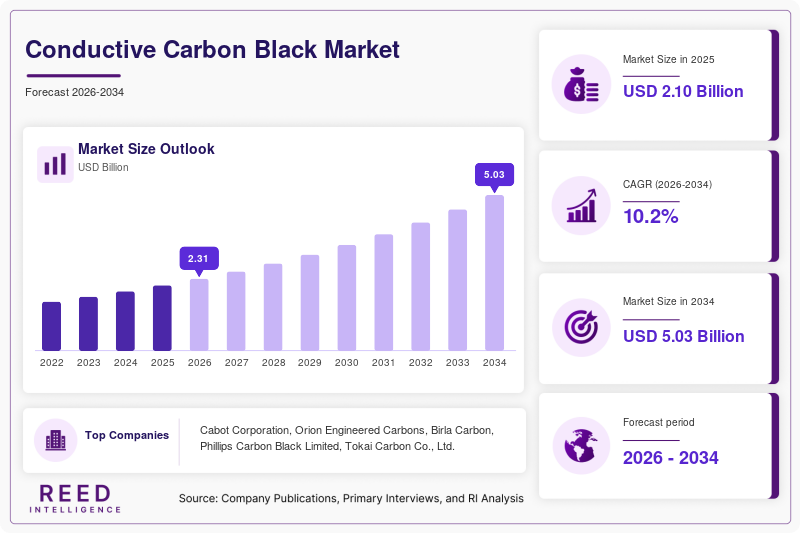
The Conductive Carbon Black Market size was valued at approximately USD 2.1 billion in 2026 and is projected to reach USD 4.6 billion by 2034, expanding at a CAGR of 10.2% during the forecast period from 2026 to 2034. The market is witnessing steady growth due to increasing demand for conductive materials across industries such as automotive, electronics, energy storage, and industrial manufacturing. Conductive carbon black plays a critical role in enhancing electrical conductivity, mechanical strength, and durability of polymers and coatings, making it an essential material in modern industrial applications.
One significant global factor supporting market growth is the rapid expansion of electric mobility and energy storage systems. The rising adoption of electric vehicles (EVs) and lithium-ion batteries has driven the need for high-performance conductive additives. Conductive carbon black is widely used in battery electrodes to improve charge distribution and enhance battery efficiency, which has significantly increased its demand worldwide.
Key Highlights
- North America dominated the market with a 33.8% share in 2025.
- Asia Pacific is expected to grow at the fastest CAGR of 11.4% during 2026–2034.
- By type, specialty conductive carbon black accounted for the largest share of 41.2%.
- while high-structure carbon black is projected to grow at a CAGR of 11.7%.
- By application, batteries led with a 39.6% share, whereas coatings are expected to expand at a CAGR of 10.9%.
- The United States remained the dominant country, with market values of USD 480 million in 2024 and USD 525 million in 2025.
Market Trends
Increasing integration of conductive carbon black in electric vehicle battery systems
The growing demand for electric vehicles has significantly influenced the adoption of conductive carbon black in battery manufacturing. Manufacturers are increasingly focusing on improving battery performance, energy density, and lifecycle, which has led to the integration of advanced conductive materials. Conductive carbon black enhances electron flow within battery electrodes, resulting in improved charge efficiency and reduced energy loss. As EV adoption accelerates globally, particularly in regions such as Asia Pacific and Europe, the demand for conductive carbon black in battery applications continues to rise. Additionally, ongoing advancements in battery chemistries are encouraging the use of high-performance conductive additives, further strengthening market growth.
Rising usage in antistatic and electromagnetic shielding applications
Another prominent trend is the increasing use of conductive carbon black in antistatic and electromagnetic interference (EMI) shielding applications. With the rapid expansion of electronic devices and sensitive equipment, there is a growing need to prevent static buildup and protect components from electromagnetic disturbances. Conductive carbon black is widely incorporated into plastics, coatings, and packaging materials to provide effective conductivity and shielding properties. Industries such as electronics, aerospace, and healthcare are increasingly adopting these materials to ensure product reliability and safety. This trend is expected to gain momentum as technological advancements drive the proliferation of high-frequency electronic systems.
Market Drivers
Expansion of lithium-ion battery manufacturing
The rapid growth of lithium-ion battery production is a major driver of the conductive carbon black market. These batteries are widely used in electric vehicles, consumer electronics, and renewable energy storage systems. Conductive carbon black is a critical component in battery electrodes, where it improves conductivity and enhances overall battery performance. As governments worldwide promote clean energy adoption and electrification, investments in battery manufacturing facilities are increasing. This expansion directly boosts the demand for conductive carbon black. Furthermore, advancements in battery technology require high-purity and specialized conductive materials, creating additional growth opportunities for market players.
Growth of the electronics and semiconductor industry
The increasing demand for electronic devices and semiconductor components is another key driver of the market. Conductive carbon black is widely used in electronic packaging, cables, and coatings to provide electrical conductivity and protect components from static discharge. The rise of smart devices, Internet of Things (IoT) technologies, and advanced computing systems has significantly increased the need for reliable conductive materials. Additionally, the miniaturization of electronic components requires materials that can deliver consistent performance in compact designs. This trend has led to increased adoption of conductive carbon black, supporting steady market growth across multiple regions.
Market Restraint
Volatility in raw material prices and environmental concerns
One of the primary restraints affecting the conductive carbon black market is the volatility in raw material prices and growing environmental concerns associated with its production. Carbon black is typically derived from petroleum-based feedstocks, and fluctuations in crude oil prices directly impact production costs. This price instability can create challenges for manufacturers in maintaining profit margins and pricing consistency. Additionally, the production process involves emissions that raise environmental concerns, leading to stringent regulations in several regions. Compliance with environmental standards often requires significant investment in emission control technologies, increasing operational costs. For example, manufacturers in Europe are required to adhere to strict emission norms, which can limit production capacity and affect market growth. These factors collectively pose challenges to the expansion of the conductive carbon black market.
Market Opportunities
Growing demand from renewable energy storage systems
The increasing focus on renewable energy integration presents a strong opportunity for the conductive carbon black market. Energy storage systems, particularly lithium-ion and next-generation batteries, require conductive additives to enhance efficiency and durability. Conductive carbon black plays a crucial role in improving electrode performance and ensuring stable energy output. As countries invest in solar and wind energy projects, the need for reliable energy storage solutions continues to grow. This trend is expected to drive the demand for conductive carbon black in the coming years. Additionally, advancements in battery technologies such as solid-state batteries may further expand its application scope.
Expansion in advanced polymer and coating applications
Another significant opportunity lies in the growing use of conductive carbon black in advanced polymers and coatings. Industries such as automotive, aerospace, and construction are increasingly adopting conductive materials for applications such as antistatic surfaces, corrosion resistance, and electromagnetic shielding. Conductive carbon black enhances the performance of coatings by providing durability and conductivity. As manufacturers focus on developing lightweight and high-performance materials, the demand for conductive additives is expected to increase. This trend is particularly evident in automotive manufacturing, where conductive coatings are used to improve vehicle safety and performance.
Segmental Analysis
By Type
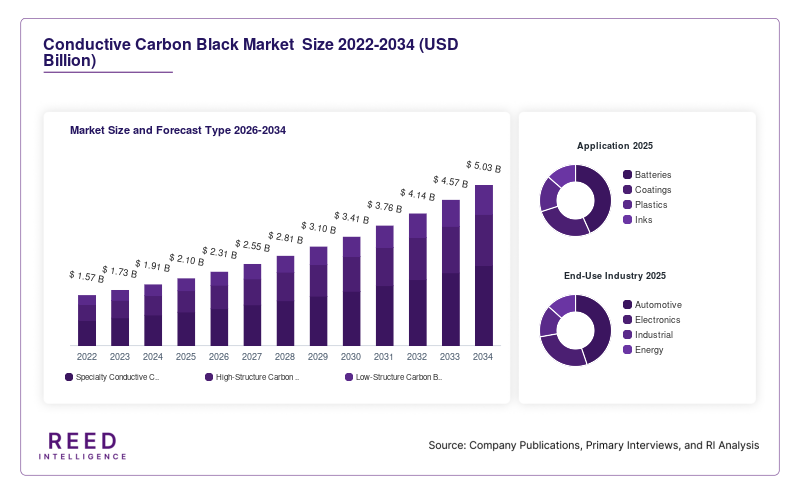
Specialty conductive carbon black emerged as the dominant subsegment, accounting for approximately 41.2% of the market share in 2024. This segment is widely used in applications requiring high electrical conductivity and consistent performance. Specialty grades are engineered to provide superior dispersion and conductivity, making them suitable for advanced applications such as batteries, coatings, and electronic components. The growing demand for high-performance materials in industries such as automotive and electronics has significantly contributed to the dominance of this segment. Additionally, manufacturers are focusing on developing customized solutions to meet specific application requirements, further driving growth.
High-structure conductive carbon black is the fastest-growing subsegment, expected to expand at a CAGR of 11.7% during the forecast period. This growth is driven by its ability to provide enhanced conductivity at lower loading levels, making it cost-effective for manufacturers. The increasing demand for lightweight and efficient materials in automotive and electronics applications is a key factor supporting this growth. Furthermore, advancements in material science have enabled the development of high-structure carbon black with improved performance characteristics, further boosting its adoption.
By Application
Batteries represent the dominant application segment, accounting for approximately 39.6% of the market share in 2024. Conductive carbon black is extensively used in battery electrodes to improve electrical conductivity and enhance performance. The rapid growth of electric vehicles and renewable energy storage systems has significantly increased the demand for conductive materials in battery applications. Additionally, the increasing focus on energy efficiency and sustainability has driven the adoption of advanced battery technologies, further supporting market growth.
Coatings are the fastest-growing application segment, projected to expand at a CAGR of 10.9% during the forecast period. Conductive carbon black is widely used in coatings to provide antistatic properties and electromagnetic shielding. The increasing demand for protective and functional coatings in industries such as automotive, aerospace, and construction is driving this growth. Additionally, advancements in coating technologies have enabled the development of high-performance products with improved durability and conductivity.
By End-Use Industry
The automotive industry is the dominant end-use segment, accounting for approximately 36.8% of the market share in 2024. Conductive carbon black is widely used in automotive components such as batteries, tires, and coatings. The increasing adoption of electric vehicles has significantly boosted demand for conductive materials. Additionally, the focus on improving vehicle performance and safety has led to the integration of advanced materials, further supporting market growth.
The electronics industry is the fastest-growing end-use segment, expected to grow at a CAGR of 11.1% during the forecast period. The increasing demand for electronic devices and advanced technologies has driven the need for conductive materials. Conductive carbon black is used in electronic components, packaging, and coatings to provide conductivity and protect against static discharge. The rapid growth of IoT and smart devices is expected to further drive demand in this segment.
Regional Analysis
North America
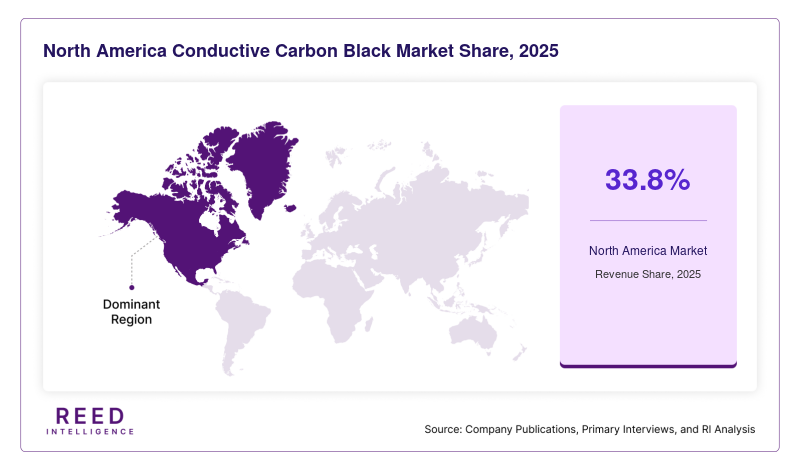
North America accounted for approximately 33.8% of the global conductive carbon black market share in 2025 and is expected to grow at a CAGR of 9.6% during the forecast period. The region’s growth is driven by strong demand from the automotive and electronics sectors. The increasing adoption of electric vehicles and advancements in battery technology have significantly contributed to market expansion. Additionally, the presence of established manufacturers and technological innovations supports steady growth.
The United States dominates the North American market due to its robust industrial base and high investment in research and development. A key growth factor in the country is the rapid expansion of EV infrastructure and battery manufacturing facilities. Government incentives and policies promoting clean energy adoption have further accelerated the demand for conductive carbon black in various applications.
Europe
Europe held a significant market share of around 27.4% in 2025 and is projected to grow at a CAGR of 9.8% during the forecast period. The region’s market is driven by stringent environmental regulations and increasing demand for sustainable materials. The automotive industry, particularly electric vehicle production, plays a crucial role in driving demand for conductive carbon black.
Germany is the leading country in the European market, supported by its strong automotive manufacturing sector. A unique growth factor in Germany is the focus on high-performance battery development and energy efficiency. The country’s emphasis on innovation and sustainability has encouraged the adoption of advanced conductive materials across industries.
Asia Pacific
Asia Pacific is the fastest-growing region, with a CAGR of 11.4% from 2026 to 2034, and accounted for approximately 29.6% of the market share in 2025. The region’s growth is driven by rapid industrialization, expanding electronics manufacturing, and increasing demand for electric vehicles. Countries such as China, Japan, and South Korea are major contributors to market growth.
China dominates the Asia Pacific market due to its large-scale manufacturing capabilities and strong presence in battery production. A key growth factor in China is the government’s focus on electric mobility and renewable energy projects. The country’s investments in battery manufacturing and infrastructure development have significantly boosted the demand for conductive carbon black.
Middle East & Africa
The Middle East & Africa region held a smaller market share of around 5.2% in 2025 but is expected to grow at a CAGR of 8.7% during the forecast period. The market is driven by increasing industrialization and infrastructure development. The demand for conductive materials in construction and industrial applications is gradually increasing.
Saudi Arabia is a leading country in this region, supported by its growing industrial sector. A unique growth factor is the diversification of the economy away from oil dependency, leading to increased investments in manufacturing and advanced materials. This shift is expected to drive the demand for conductive carbon black in the coming years.
Latin America
Latin America accounted for approximately 4.0% of the market share in 2025 and is projected to grow at a CAGR of 8.9% during the forecast period. The region’s growth is supported by the expansion of the automotive and electronics industries. Increasing investments in industrial development are also contributing to market growth.
Brazil is the dominant country in Latin America, driven by its strong automotive manufacturing sector. A key growth factor is the increasing adoption of electric vehicles and the development of supporting infrastructure. This trend is expected to create opportunities for conductive carbon black manufacturers in the region.
Competitive Landscape
The conductive carbon black market is moderately consolidated, with several key players focusing on innovation, product development, and strategic partnerships. Leading companies are investing in research and development to enhance product performance and expand their application portfolio. The market is characterized by the presence of both global and regional players competing on factors such as quality, pricing, and technological capabilities.
Cabot Corporation is recognized as a leading player in the market, offering a wide range of conductive carbon black products. The company has recently focused on expanding its production capacity to meet growing demand from battery manufacturers. Other major players are also investing in sustainable production processes to comply with environmental regulations and improve operational efficiency. Strategic collaborations and acquisitions are common in the market, enabling companies to strengthen their market position and expand their global footprint.
Key Players
- Cabot Corporation
- Orion Engineered Carbons
- Birla Carbon
- Phillips Carbon Black Limited
- Tokai Carbon Co., Ltd.
- OCI Company Ltd.
- China Synthetic Rubber Corporation
- Denka Company Limited
- Imerys Graphite & Carbon
- Asbury Carbons
- Continental Carbon Company
- Mitsubishi Chemical Corporation
- Omsk Carbon Group
- Longxing Chemical Industry Co., Ltd.
- Sid Richardson Carbon & Energy
Recent Developments
- Cabot Corporation announced the expansion of its conductive carbon black production facility to support growing demand from battery manufacturers.
- Orion Engineered Carbons introduced a new range of high-performance conductive carbon black products designed for advanced battery applications.
- Birla Carbon invested in sustainable manufacturing technologies to reduce emissions and improve production efficiency.
Conductive Carbon Black Market Segments
Type
- Specialty Conductive Carbon Black
- High-Structure Carbon Black
- Low-Structure Carbon Black
Application
- Batteries
- Coatings
- Plastics
- Inks
End-Use Industry
- Automotive
- Electronics
- Industrial
- Energy
By Region
- North America
- Europe
- APAC
- Middle East and Africa
- LATAM