Cortisol Testing Kit Market Size, Share & Demand Report By Type (Saliva-based Testing Kits, Blood-based Testing Kits, Urine-based Testing Kits), By Application (Stress Monitoring, Endocrine Disorder Diagnosis, Research Applications), By End-Use (Hospitals & Diagnostic Laboratories, Home Care Settings, Research Institutes) & Segment Forecasts, 2025–2034
USD 3950
Market Overview
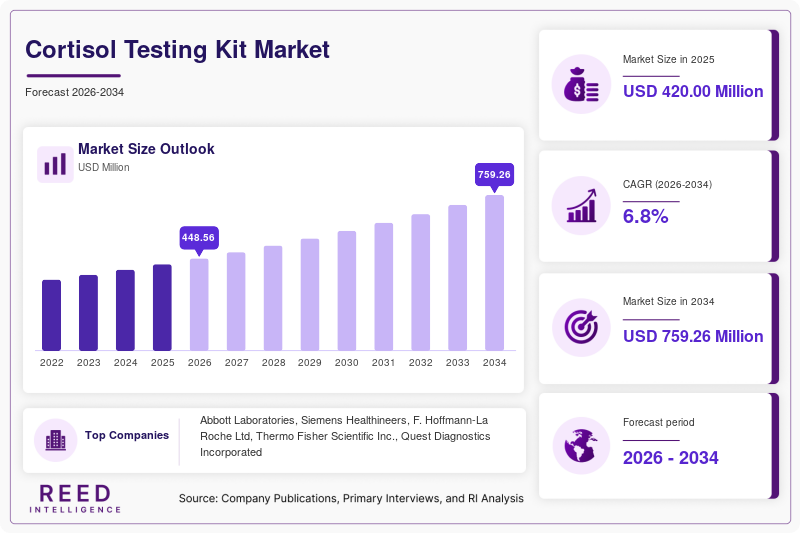
The Cortisol Testing Kit Market size is witnessing steady expansion driven by the increasing prevalence of stress-related disorders, endocrine abnormalities, and rising awareness of hormonal health. In 2025, the global market size is estimated at approximately USD 420 million, and it is projected to reach USD 465 million in 2026. Over the forecast period from 2025 to 2034, the market is expected to grow at a compound annual growth rate (CAGR) of 6.8%, reaching nearly USD 810 million by 2034. This growth reflects the expanding adoption of diagnostic solutions for adrenal gland function, particularly in both clinical and home-based testing environments.
One of the primary growth factors is the increasing incidence of chronic stress and lifestyle-related disorders. Modern work environments, irregular sleep patterns, and rising mental health concerns are contributing to elevated cortisol levels, thereby increasing demand for monitoring tools. Another significant factor is the growing awareness regarding endocrine health among consumers, especially in developed and urbanizing economies. Public health campaigns and digital health platforms have improved knowledge about hormone imbalances, boosting the uptake of cortisol testing kits.
Key Highlights
- Market size projected to grow from USD 420 million in 2025 to USD 810 million by 2034
- CAGR of 6.8% during the forecast period (2025–2034)
- Rising demand for non-invasive and at-home testing kits
- Increasing prevalence of stress-related and endocrine disorders
Market Trends
Shift Toward At-Home and Self-Testing Solutions
The Cortisol Testing Kit Market is experiencing a noticeable shift toward at-home diagnostic solutions. Consumers are increasingly opting for self-testing kits that provide convenience, privacy, and faster results without requiring visits to healthcare facilities. Saliva-based cortisol testing kits are particularly gaining traction due to their non-invasive nature and ease of use. This trend is supported by advancements in biotechnology that enable accurate measurement of hormone levels outside traditional laboratories. Additionally, the growth of e-commerce platforms has made these kits more accessible, allowing users to purchase and use them independently. The integration of mobile apps for result interpretation and tracking is further enhancing user engagement and adoption.
Integration of Digital Health and Telemedicine Platforms
Another key trend shaping the market is the integration of cortisol testing kits with digital health ecosystems. Many manufacturers are incorporating connectivity features that allow users to sync test results with mobile applications or cloud-based platforms. This enables real-time monitoring and facilitates remote consultations with healthcare professionals. Telemedicine services are increasingly incorporating hormone testing into their offerings, providing a comprehensive approach to stress and endocrine health management. The use of artificial intelligence for data interpretation is also emerging, offering personalized insights and recommendations. This trend is expected to improve diagnostic accuracy and enhance patient outcomes while expanding the reach of cortisol testing solutions.
Market Drivers
Rising Prevalence of Stress-Related Disorders
The growing prevalence of stress-related disorders is a major driver of the Cortisol Testing Kit Market. Increasing work pressure, urban lifestyles, and mental health challenges are contributing to elevated cortisol levels among individuals across various age groups. Chronic stress is linked to multiple health conditions, including anxiety, depression, obesity, and cardiovascular diseases, which necessitate regular monitoring of cortisol levels. Healthcare professionals are increasingly recommending cortisol testing as part of routine health assessments, especially for patients experiencing symptoms related to hormonal imbalance. This rising awareness is translating into higher demand for testing kits in both clinical and home settings.
Advancements in Diagnostic Technologies
Technological advancements in diagnostic tools are significantly driving market growth. The development of user-friendly and highly accurate testing kits has improved the reliability of cortisol measurement. Innovations such as saliva-based and dried blood spot testing have simplified the testing process, making it accessible to a broader population. Additionally, improvements in assay sensitivity and specificity are enhancing diagnostic outcomes. These advancements are reducing the dependency on centralized laboratories and enabling decentralized testing. The incorporation of digital tools for result analysis and reporting further strengthens the utility of these kits, making them an integral part of modern healthcare diagnostics.
Market Restraint
Limited Awareness in Emerging Economies
Despite steady growth, the Cortisol Testing Kit Market faces challenges due to limited awareness in emerging economies. In many developing regions, knowledge about hormonal health and the importance of cortisol monitoring remains relatively low. This lack of awareness leads to underdiagnosis of stress-related and endocrine disorders, thereby limiting the demand for testing kits. Additionally, healthcare infrastructure in these regions may not support widespread adoption of advanced diagnostic tools. Cost sensitivity also plays a role, as consumers may prioritize essential healthcare services over specialized testing kits. For example, in rural areas, limited access to healthcare professionals and diagnostic facilities further restricts market penetration. Addressing these challenges requires targeted awareness campaigns, improved healthcare access, and affordable product offerings.
Market Opportunities
Expansion in Emerging Markets
Emerging markets present significant growth opportunities for the Cortisol Testing Kit Market. Rapid urbanization, increasing healthcare expenditure, and improving access to diagnostic services are driving demand in regions such as Asia Pacific, Latin America, and parts of Africa. Governments and private organizations are investing in healthcare infrastructure, which is expected to enhance the availability of diagnostic tools. Additionally, rising awareness about mental health and stress management is encouraging the adoption of cortisol testing kits. Manufacturers can capitalize on this opportunity by offering cost-effective solutions tailored to local market needs and by establishing distribution networks in underserved areas.
Development of Personalized Health Monitoring Solutions
The growing trend of personalized healthcare offers substantial opportunities for market expansion. Consumers are increasingly seeking tailored health solutions that provide insights into their individual physiological conditions. Cortisol testing kits integrated with digital health platforms can offer personalized recommendations based on test results. This includes stress management strategies, lifestyle modifications, and dietary guidance. The use of wearable devices and continuous monitoring technologies further enhances this approach. By leveraging data analytics and artificial intelligence, companies can develop advanced solutions that cater to individual health needs, thereby driving demand and improving patient outcomes.
Segmental Analysis
By Type
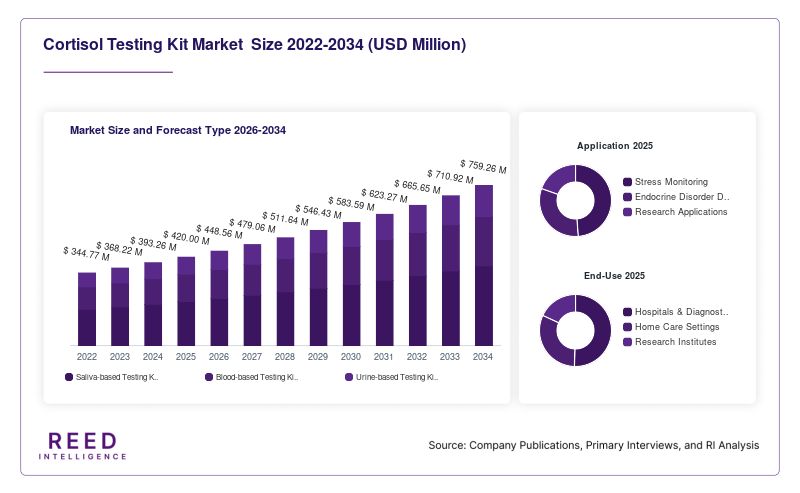
The saliva-based cortisol testing kits segment dominated the market in 2024, accounting for approximately 52% of the total share. These kits are widely preferred due to their non-invasive nature, ease of use, and ability to provide accurate results. Saliva testing allows for multiple sample collections throughout the day, enabling better monitoring of cortisol fluctuations. This makes it particularly useful for diagnosing conditions such as adrenal fatigue and stress-related disorders. The convenience of home-based testing further enhances the appeal of saliva-based kits, contributing to their strong market position.
The blood-based cortisol testing kits segment is expected to be the fastest-growing, with a CAGR of 7.2% during the forecast period. This growth is driven by the high accuracy and reliability of blood tests, which are often considered the gold standard in clinical diagnostics. Healthcare providers prefer blood-based testing for comprehensive evaluation of hormone levels. Additionally, advancements in minimally invasive blood collection techniques are improving patient comfort and encouraging adoption.
By Application
The stress monitoring segment held the largest share in 2024, accounting for around 48% of the market. Increasing awareness of the impact of stress on overall health is driving demand for cortisol testing in this segment. Individuals are using these kits to monitor stress levels and take preventive measures to maintain their well-being. The growing emphasis on mental health and wellness is further supporting the expansion of this segment.
The endocrine disorder diagnosis segment is projected to grow at the fastest CAGR of 7.0% during the forecast period. This growth is attributed to the rising prevalence of conditions such as Cushing’s syndrome and Addison’s disease. Healthcare professionals are increasingly relying on cortisol testing for accurate diagnosis and treatment planning. Advancements in diagnostic technologies are also enhancing the effectiveness of these tests.
By End-Use
Hospitals and diagnostic laboratories dominated the market in 2024, accounting for approximately 55% of the total share. These facilities have the necessary infrastructure and expertise to conduct accurate cortisol testing. Patients often prefer hospital-based testing for reliability and comprehensive analysis. The availability of advanced diagnostic equipment further strengthens the position of this segment.
Home care settings are expected to be the fastest-growing segment, with a CAGR of 7.8% during the forecast period. The increasing demand for convenient and cost-effective healthcare solutions is driving the adoption of home-based testing kits. Consumers are seeking ways to monitor their health without frequent visits to healthcare facilities. The availability of user-friendly kits and digital tools for result interpretation is supporting the growth of this segment.
Regional Analysis
North America
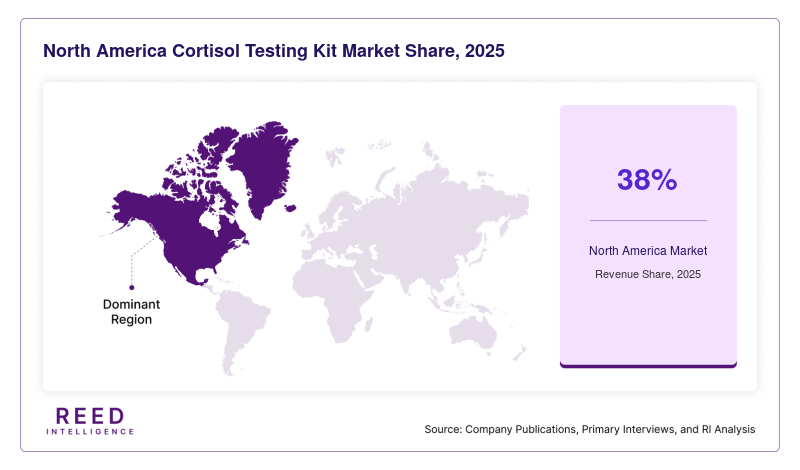
North America accounted for the largest share of the Cortisol Testing Kit Market in 2025, contributing approximately 38% of the global revenue. The region is expected to maintain its dominance with a CAGR of around 6.5% during the forecast period. High awareness levels, advanced healthcare infrastructure, and the presence of leading diagnostic companies are key factors supporting market growth. Additionally, the increasing prevalence of stress-related disorders and strong adoption of at-home testing kits are driving demand across the region.
The United States remains the dominant country in North America due to its well-established healthcare system and high healthcare spending. A unique growth factor in this market is the widespread adoption of telehealth services, which integrate cortisol testing as part of comprehensive health monitoring. This integration is enhancing accessibility and encouraging consumers to adopt regular testing practices.
Europe
Europe held a significant market share of approximately 27% in 2025 and is projected to grow at a CAGR of 6.2% through 2034. The region benefits from strong regulatory frameworks, increasing awareness of endocrine disorders, and a growing aging population. Countries across Western Europe are witnessing increased adoption of advanced diagnostic technologies, contributing to steady market growth.
Germany leads the European market, driven by its robust healthcare infrastructure and emphasis on preventive healthcare. A unique growth factor in Germany is the increasing focus on workplace wellness programs, where employers are encouraging employees to monitor stress levels. This initiative is driving demand for cortisol testing kits in both corporate and individual settings.
Asia Pacific
Asia Pacific is expected to register the fastest growth, with a CAGR of 7.5% during the forecast period, and accounted for around 20% of the market share in 2025. Rapid urbanization, increasing healthcare awareness, and rising disposable incomes are key factors driving growth. The region is also witnessing a surge in lifestyle-related disorders, which is boosting demand for diagnostic solutions.
China dominates the Asia Pacific market due to its large population and expanding healthcare infrastructure. A unique growth factor in China is the growing popularity of digital health platforms, which are integrating diagnostic services with mobile applications. This trend is increasing accessibility and encouraging the adoption of cortisol testing kits among tech-savvy consumers.
Middle East & Africa
The Middle East & Africa region accounted for approximately 8% of the market share in 2025 and is expected to grow at a CAGR of 6.0%. The market is driven by improving healthcare infrastructure and increasing awareness of chronic diseases. Governments in the region are investing in healthcare development, which is expected to support market growth.
Saudi Arabia leads the market in this region, supported by its strong healthcare investments and initiatives to improve public health. A unique growth factor is the increasing focus on preventive healthcare, with government programs promoting early diagnosis and monitoring of health conditions. This is driving demand for cortisol testing kits.
Latin America
Latin America held a market share of around 7% in 2025 and is projected to grow at a CAGR of 6.3% during the forecast period. The region is witnessing gradual improvements in healthcare infrastructure and increasing awareness of diagnostic tools. Rising prevalence of stress-related disorders is also contributing to market growth.
Brazil is the dominant country in Latin America, driven by its large population and expanding healthcare sector. A unique growth factor in Brazil is the growing adoption of private healthcare services, which are offering advanced diagnostic solutions. This trend is supporting the uptake of cortisol testing kits among urban populations.
Competitive Landscape
The Cortisol Testing Kit Market is moderately fragmented, with several global and regional players competing based on product innovation, pricing strategies, and distribution networks. Leading companies are focusing on developing advanced testing kits with improved accuracy and user convenience. Partnerships with healthcare providers and digital health platforms are also common strategies to expand market presence.
One of the leading players in the market is Abbott Laboratories, known for its strong portfolio of diagnostic solutions. The company has recently introduced enhanced immunoassay technologies for hormone testing, improving the accuracy of cortisol measurements. Other key players are investing in research and development to introduce innovative products and gain a competitive edge. The market is also witnessing increased collaboration between diagnostic companies and telehealth providers, which is expected to drive future growth.
Key Players
- Abbott Laboratories
- Siemens Healthineers
- F. Hoffmann-La Roche Ltd
- Thermo Fisher Scientific Inc.
- Quest Diagnostics Incorporated
- Bio-Rad Laboratories, Inc.
- DiaSorin S.p.A.
- Danaher Corporation
- Ortho Clinical Diagnostics
- Randox Laboratories Ltd
- Eagle Biosciences, Inc.
- Salimetrics LLC
- DRG International, Inc.
- Creative Diagnostics
- Abcam plc
Recent Developments
- In 2024, a leading diagnostic company launched a new saliva-based cortisol testing kit with improved sensitivity and faster results.
- In 2025, a major player partnered with a telehealth platform to integrate cortisol testing with digital health services.
- In 2025, another company introduced an AI-powered mobile application for real-time analysis of cortisol test results.
Cortisol Testing Kit Market Segments
Type
- Saliva-based Testing Kits
- Blood-based Testing Kits
- Urine-based Testing Kits
Application
- Stress Monitoring
- Endocrine Disorder Diagnosis
- Research Applications
End-Use
- Hospitals & Diagnostic Laboratories
- Home Care Settings
- Research Institutes
By Region
- North America
- Europe
- APAC
- Middle East and Africa
- LATAM