Crawling Mat Market Size, Share & Demand Report By Product Type (Foam Crawling Mats, Fabric Crawling Mats, Rubber Crawling Mats), By Application (Household Use, Daycare Centers, Educational Institutions), By End-Use (Infants (0–2 Years), Toddlers (2–5 Years)) & Segment Forecasts, 2025–2034
USD 3950
Market Overview
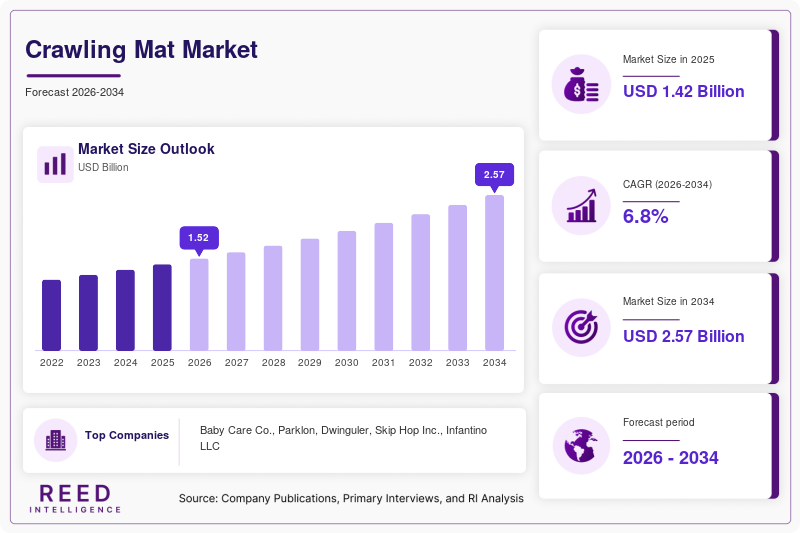
The global Crawling Mat Market size is estimated at USD 1.42 billion and is projected to reach approximately USD 1.52 billion in 2026. Over the forecast period from 2025 to 2034, the market is expected to grow at a compound annual growth rate (CAGR) of 6.8%, reaching nearly USD 2.63 billion by 2034.
Crawling mats are widely used for infant development, offering cushioning, hygiene, and safety during early growth stages. The market is benefiting from the rising birth rate in emerging economies and increased consumer spending on baby care products. In addition, urban households are increasingly opting for premium, non-toxic, and eco-friendly crawling mats, further boosting market demand.
Key Highlights
- The global crawling mat market is valued at approximately USD 1.42 billion in 2025, reflecting steady demand across residential and institutional applications. Growth is supported by rising awareness of infant safety and hygiene.
- The market is projected to reach USD 2.63 billion by 2034, driven by increasing adoption of premium baby care products. Expanding distribution channels and product innovation are also contributing to this growth.
- The industry is expected to grow at a CAGR of 6.8% from 2025 to 2034, indicating consistent expansion over the forecast period. This growth reflects sustained demand across both developed and emerging markets.
- Demand for safe and hygienic baby products is increasing as parents prioritize infant well-being and cleanliness. This trend is encouraging the adoption of high-quality, non-toxic crawling mats.
Market Trends
Rising Demand for Eco-Friendly and Non-Toxic Materials
Consumers are increasingly prioritizing sustainability and safety when purchasing baby products, which has led to a strong demand for eco-friendly crawling mats. Manufacturers are shifting toward materials such as organic cotton, natural rubber, and recyclable foam to address concerns related to chemical exposure and environmental impact. This trend is particularly evident in developed regions, where regulatory standards and consumer awareness are high. Companies are also emphasizing certifications and labeling to assure product safety. The trend is expected to continue as environmentally conscious parenting gains traction, influencing product innovation and shaping long-term market growth.
Integration of Educational and Interactive Designs
Crawling mats are evolving from basic safety products into interactive tools that support early learning. Manufacturers are incorporating educational elements such as alphabets, numbers, shapes, and sensory textures to enhance cognitive development. These designs are gaining popularity among parents seeking multifunctional products that combine play and learning. Additionally, vibrant colors and thematic patterns are being used to stimulate visual development. This trend is expanding the scope of crawling mats beyond traditional use, positioning them as developmental aids in early childhood education, thereby contributing to increased market demand and differentiation among product offerings.
Market Drivers
Increasing Awareness of Infant Safety and Hygiene
The growing emphasis on infant health and safety is a major driver for the crawling mat market. Parents are increasingly concerned about the risks associated with hard flooring surfaces, including injuries and exposure to dust and germs. Crawling mats provide a protective barrier that ensures comfort and cleanliness, making them an essential household product. Healthcare professionals and parenting communities are also promoting the use of such products, further boosting adoption. This heightened awareness is particularly strong in urban areas, where lifestyle changes and smaller living spaces increase the need for dedicated child-friendly zones.
Expansion of E-Commerce and Digital Retail Channels
The rapid growth of e-commerce platforms has significantly contributed to the market expansion. Online retail channels offer a wide variety of crawling mats, enabling consumers to compare features, prices, and reviews before making a purchase. This convenience has increased product visibility and accessibility, especially in emerging markets. Manufacturers are leveraging digital marketing strategies, including social media campaigns and influencer collaborations, to reach target audiences. The availability of discounts and doorstep delivery further enhances customer engagement, making online platforms a key growth driver for the crawling mat market.
Market Restraint
Presence of Low-Quality and Counterfeit Products
The crawling mat market faces challenges due to the availability of low-cost, substandard, and counterfeit products. These products often fail to meet safety and quality standards, which can pose risks to infants. The presence of such items in the market can erode consumer trust and negatively impact brand reputation for established manufacturers. In price-sensitive markets, consumers may opt for cheaper alternatives without fully understanding the associated risks. This creates a barrier for premium product adoption and affects overall market growth. For example, certain regions have reported increased instances of mats containing harmful chemicals, leading to stricter regulations and recalls. While regulations aim to improve product quality, they also increase compliance costs for manufacturers, further complicating market dynamics.
Market Opportunities
Growing Demand in Emerging Economies
Emerging economies present significant growth opportunities for the crawling mat market due to rising disposable income and increasing awareness of child safety products. Countries in Asia Pacific, Latin America, and Africa are witnessing a shift toward modern parenting practices, which includes investment in high-quality baby products. Urbanization and improved access to retail infrastructure are further supporting market growth. Manufacturers can tap into these markets by offering affordable yet durable products tailored to local preferences. Localization strategies, such as culturally relevant designs and pricing models, can enhance market penetration and drive long-term growth.
Innovation in Smart and Multifunctional Products
Technological advancements and product innovation offer new opportunities for market expansion. Smart crawling mats equipped with sensors, sound features, and interactive elements are gaining attention among tech-savvy consumers. Additionally, multifunctional mats that can be converted into playpens, storage units, or exercise mats are becoming increasingly popular. These innovations not only enhance user experience but also provide added value, making them attractive to modern parents. Companies investing in research and development to create innovative products are likely to gain a competitive edge and capture a larger market share in the coming years.
Segmental Analysis
By Type
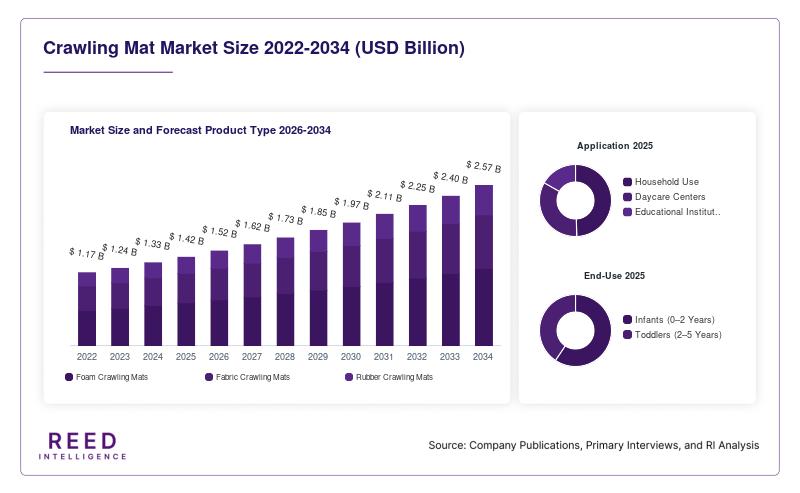
Foam crawling mats dominated the market in 2024, accounting for approximately 58% of the total market share. These mats are widely preferred due to their lightweight nature, affordability, and superior cushioning properties. Foam mats are also available in various thickness levels, making them suitable for different flooring types. Additionally, their water-resistant and easy-to-clean features enhance their appeal among parents. Manufacturers are focusing on improving foam quality by incorporating non-toxic materials, which further supports their dominance in the market.
Fabric-based crawling mats are expected to be the fastest-growing segment, with a projected CAGR of 7.6% during the forecast period. These mats are gaining popularity due to their eco-friendly properties and aesthetic appeal. They are often made from organic materials, making them suitable for environmentally conscious consumers. The growth of this segment is also driven by increasing demand for premium and decorative products that complement modern home interiors.
By Application
Household use dominated the application segment in 2024, accounting for nearly 65% of the market share. The high share is attributed to the widespread adoption of crawling mats in residential settings for infant safety and comfort. Parents prefer having dedicated play areas within their homes, especially in urban environments where space is limited. The availability of customizable designs and sizes further enhances their suitability for home use.
Daycare centers and educational institutions represent the fastest-growing application segment, with a CAGR of 7.9% over the forecast period. The increasing number of daycare facilities and preschools is driving demand for durable and easy-to-maintain crawling mats. These institutions prioritize safety and hygiene, making high-quality mats an essential investment. The growth is also supported by government initiatives promoting early childhood education.
By End-Use
Infants (0–2 years) accounted for the largest market share in 2024, contributing around 61% of the total revenue. Crawling mats are primarily designed for this age group to support safe movement and development. The increasing focus on early childhood care and the rising number of working parents are key factors driving demand in this segment. Manufacturers are offering specialized products tailored to infant needs, including anti-slip surfaces and soft padding.
The toddler segment (2–5 years) is expected to grow at the fastest CAGR of 7.4% during the forecast period. As children grow, crawling mats are increasingly used for play and learning activities. The demand for interactive and educational designs is particularly strong in this segment. The growth is also supported by the increasing emphasis on cognitive development and early learning, which encourages parents to invest in multifunctional products.
Regional Analysis
North America
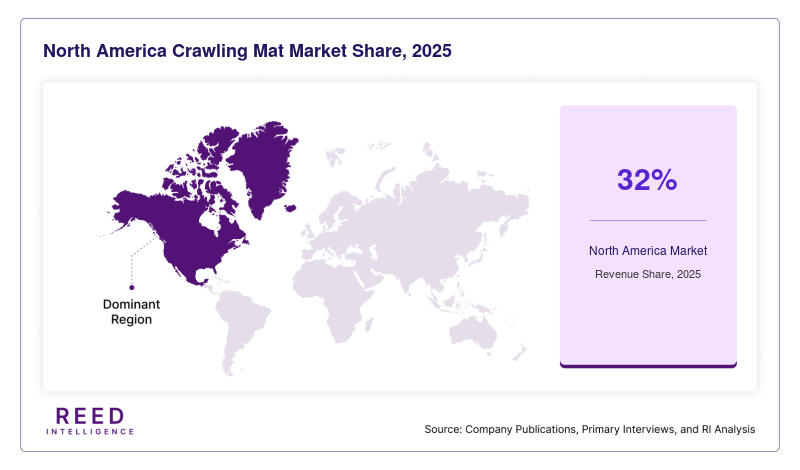
North America accounted for approximately 32% of the global crawling mat market share in 2025 and is projected to grow at a CAGR of 6.2% during the forecast period. The region’s growth is driven by high consumer awareness, strong purchasing power, and the presence of established brands. Parents in the region prioritize safety-certified products, leading to consistent demand for premium crawling mats.
The United States dominates the North American market, supported by advanced retail infrastructure and widespread adoption of innovative baby products. A unique growth factor in this region is the increasing demand for eco-friendly materials, driven by stringent regulations and consumer preference for sustainable products.
Europe
Europe held around 26% of the global market share in 2025 and is expected to grow at a CAGR of 5.9% through 2034. The market is characterized by high standards for product safety and quality, which influence consumer purchasing behavior. The presence of established manufacturers further supports market stability.
Germany leads the European market due to its strong manufacturing base and emphasis on product quality. A key growth factor is the increasing adoption of organic and non-toxic materials, which aligns with the region’s focus on sustainability and environmental responsibility.
Asia Pacific
Asia Pacific accounted for nearly 24% of the global market share in 2025 and is projected to grow at the fastest CAGR of 8.1% during the forecast period. Rapid urbanization, rising birth rates, and increasing disposable income are major factors driving growth in the region.
China dominates the Asia Pacific market due to its large population and growing middle class. A unique growth factor is the expansion of online retail platforms, which has significantly improved product accessibility and affordability for consumers across urban and rural areas.
Middle East & Africa
The Middle East & Africa region held about 9% of the market share in 2025 and is expected to grow at a CAGR of 6.5% through 2034. The market is gradually expanding due to improving economic conditions and increasing awareness of child safety products.
The United Arab Emirates is a key contributor to regional growth, supported by high disposable income and demand for premium products. A unique growth factor is the increasing presence of international brands, which enhances product availability and consumer choice.
Latin America
Latin America accounted for approximately 9% of the global market share in 2025 and is projected to grow at a CAGR of 6.7% during the forecast period. The region’s growth is driven by improving living standards and increased spending on childcare products.
Brazil leads the Latin American market due to its large population and expanding retail sector. A unique growth factor is the growing influence of social media, which is raising awareness about modern parenting practices and boosting product adoption.
Competitive Landscape
The crawling mat market is moderately fragmented, with several global and regional players competing based on product quality, innovation, and pricing strategies. Leading companies are focusing on expanding their product portfolios and strengthening their distribution networks to maintain market competitiveness. Strategic initiatives such as partnerships, mergers, and new product launches are commonly adopted to enhance market presence.
One of the leading players in the market is Baby Care Co., which has established a strong reputation for high-quality and safe baby products. The company recently introduced a new range of eco-friendly crawling mats made from biodegradable materials, reflecting its commitment to sustainability. Other companies are also investing in research and development to introduce innovative features such as foldable designs and antibacterial coatings. The competitive landscape is expected to remain dynamic, with companies continuously striving to differentiate their offerings.
Key Players
- Baby Care Co.
- Parklon
- Dwinguler
- Skip Hop Inc.
- Infantino LLC
- Tiny Love
- Fisher-Price
- Richell Corporation
- SoftTiles
- ProSourceFit
- Tadpoles
- Baby Go
- Alzipmat
- Ggumbi
- Creamhaus
Recent Developments
- In 2024, a leading manufacturer launched a new line of antibacterial crawling mats designed to enhance hygiene and safety for infants.
- In 2023, a major company expanded its distribution network by partnering with e-commerce platforms to improve product accessibility in emerging markets.
- In 2025, a prominent player introduced foldable and portable crawling mats with enhanced durability, targeting urban consumers with limited living space.
Crawling Mat Market Segments
Product Type
- Foam Crawling Mats
- Fabric Crawling Mats
- Rubber Crawling Mats
Application
- Household Use
- Daycare Centers
- Educational Institutions
End-Use
- Infants (0–2 Years)
- Toddlers (2–5 Years)
By Region
- North America
- Europe
- APAC
- Middle East and Africa
- LATAM