Creosote Oil Market Size, Share & Demand Report By Type (Coal Tar Creosote, Wood Tar Creosote), By Application (Wood Preservation, Carbon Black Production, Others), By End-Use (Railways, Marine, Utilities, Industrial), By Region & Segment Forecasts, 2026–2034
USD 3950
Market Overview
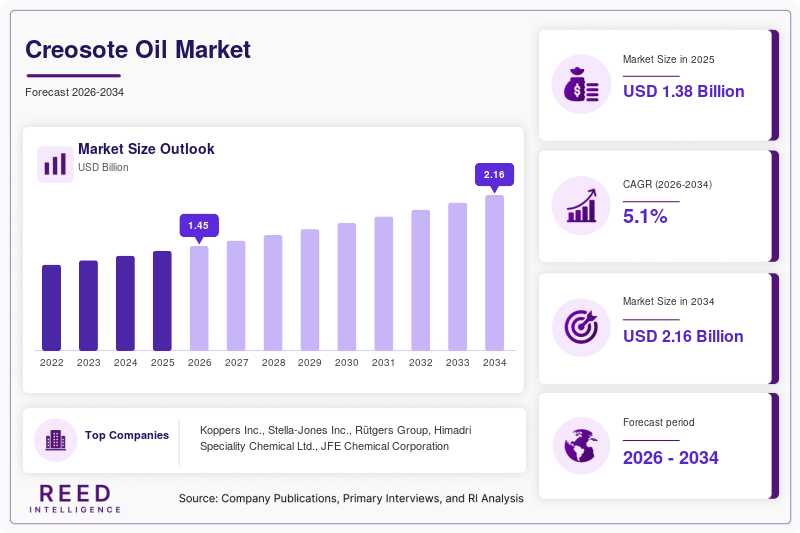
The global Creosote Oil Market size was valued at approximately USD 1.38 billion in 2026 and is projected to reach USD 2.05 billion by 2034, expanding at a CAGR of 5.1% during the forecast period. Creosote oil, derived primarily from coal tar distillation, remains a critical preservative for wood products such as railway sleepers, utility poles, and marine pilings. Its ability to enhance durability and resistance to fungal decay and insect attack continues to sustain its industrial relevance. Despite increasing environmental scrutiny, steady infrastructure investments and maintenance of aging railway networks across developed and emerging economies have provided a stable foundation for market growth.
A key global factor supporting market expansion is the rising demand for long-lasting wood preservation solutions in infrastructure projects. Governments across regions are focusing on extending the lifecycle of transportation and energy infrastructure, which directly drives the consumption of creosote oil-treated wood. Additionally, the material’s cost-effectiveness compared to alternative preservatives ensures its continued adoption, particularly in developing markets where budget constraints influence procurement decisions.
Key Highlights
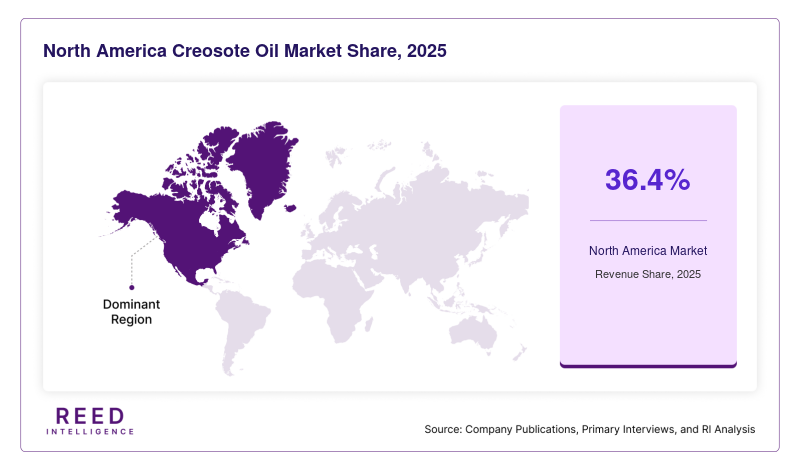
- North America dominated the market with a 36.4% share in 2025.
- Asia Pacific is expected to grow at the fastest CAGR of 6.8% during 2026–2034.
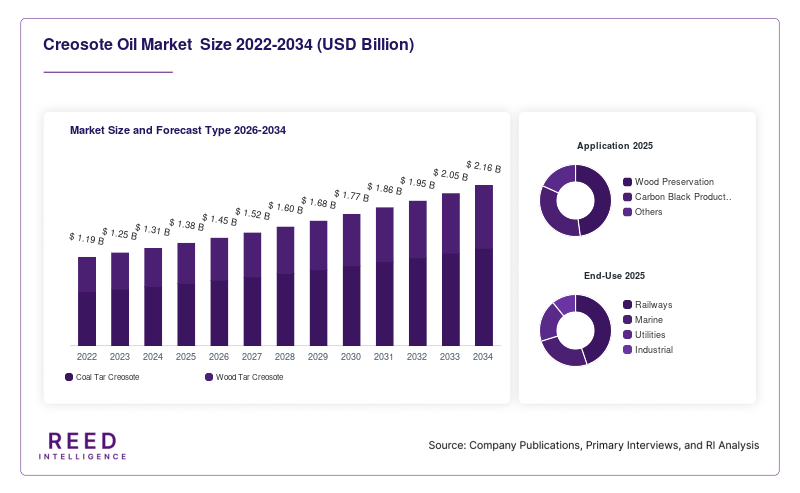
- By type, coal tar creosote accounted for the largest share of 62.7%, while wood tar creosote is projected to grow at a CAGR of 6.2%.
- By application, wood preservation led with a 68.5% share, whereas carbon black production is expected to expand at a CAGR of 5.9%.
- The United States remained the dominant country, with market values of USD 410 million in 2024 and USD 445 million in 2025.
Market Trends
Increasing focus on sustainable wood preservation alternatives within traditional frameworks
The Creosote Oil Market is experiencing a gradual shift toward sustainability-focused practices while maintaining reliance on traditional preservation solutions. Manufacturers are investing in refining creosote formulations to reduce environmental impact without compromising performance. This includes the development of low-emission variants and improved application techniques that minimize soil and water contamination. Regulatory bodies in North America and Europe are encouraging controlled usage rather than outright bans, which has led to innovation in safer handling and disposal methods. As a result, industries such as railways and utilities continue to adopt creosote oil while aligning with evolving environmental standards. This trend reflects a balanced approach where legacy materials remain relevant through technological adaptation and compliance.
Expansion of railway infrastructure and maintenance programs globally
A notable trend shaping the market is the expansion and modernization of railway networks across emerging economies. Countries in Asia Pacific and Latin America are investing heavily in rail connectivity to support urbanization and freight transportation. This has increased demand for creosote-treated wooden sleepers due to their durability and cost advantages. Simultaneously, developed regions are focusing on maintaining and replacing aging infrastructure, further supporting steady consumption. The long service life of creosote-treated wood makes it a preferred choice for railway operators seeking cost-efficient maintenance solutions. This ongoing investment cycle ensures consistent demand, making infrastructure development a central trend influencing market dynamics.
Market Drivers
Rising demand for durable infrastructure materials
The growing need for durable and long-lasting infrastructure materials is a major driver of the Creosote Oil Market. Creosote oil-treated wood offers enhanced resistance to moisture, fungi, and insects, making it ideal for outdoor and heavy-duty applications. Infrastructure sectors such as railways, marine construction, and utility distribution rely heavily on treated wood to ensure safety and longevity. As governments increase spending on infrastructure development and rehabilitation, the demand for reliable preservation solutions continues to rise. This is particularly evident in regions with extreme weather conditions, where untreated materials degrade rapidly. The cost-benefit advantage of creosote-treated wood further strengthens its position as a preferred choice among contractors and infrastructure developers.
Cost-effectiveness compared to alternative preservatives
Another significant driver is the cost-effectiveness of creosote oil compared to alternative wood preservatives such as copper-based or synthetic chemicals. While newer alternatives offer environmental benefits, they often come at a higher cost and may require more frequent maintenance. Creosote oil provides a balance between performance and affordability, making it suitable for large-scale applications. Industries operating under budget constraints, especially in developing economies, continue to favor creosote due to its proven track record and lower lifecycle costs. This economic advantage ensures sustained demand even as regulatory pressures increase, reinforcing its role in the global wood preservation market.
Market Restraint
Environmental and health concerns limiting widespread adoption
Environmental and health concerns associated with creosote oil present a significant restraint to market growth. Creosote contains polycyclic aromatic hydrocarbons (PAHs), which are considered hazardous and potentially carcinogenic. Regulatory authorities in several regions have imposed strict guidelines on its production, handling, and application. These restrictions have limited its use in residential and consumer applications, confining it primarily to industrial sectors. Additionally, public awareness regarding environmental sustainability has increased pressure on companies to adopt safer alternatives. For instance, certain European countries have reduced the use of creosote-treated wood in public infrastructure projects, opting for eco-friendly substitutes. This shift not only impacts demand but also increases compliance costs for manufacturers, thereby affecting overall market expansion.
Market Opportunities
Technological advancements in eco-friendly formulations
Advancements in technology are creating opportunities for the development of eco-friendly creosote formulations. Researchers and manufacturers are focusing on reducing the toxicity of creosote while maintaining its preservative properties. Innovations such as modified distillation processes and blending with biodegradable compounds are gaining traction. These developments aim to address regulatory concerns and expand the application scope of creosote oil. As industries seek sustainable yet effective solutions, the introduction of improved formulations could open new markets and increase adoption rates. This opportunity is particularly relevant in regions with stringent environmental regulations, where demand for compliant products is steadily rising.
Growth in emerging economies and infrastructure investments
Emerging economies present significant growth opportunities for the Creosote Oil Market due to rapid urbanization and infrastructure development. Countries in Asia Pacific, Africa, and Latin America are investing in transportation networks, energy distribution, and industrial expansion. These projects require durable materials capable of withstanding harsh environmental conditions, making creosote-treated wood an attractive option. Additionally, the relatively lower cost of creosote compared to alternatives aligns with budget constraints in these regions. As governments prioritize infrastructure development to support economic growth, the demand for wood preservation solutions is expected to increase, providing a strong growth avenue for market participants.
Segmental Analysis
By Type
Coal tar creosote dominated the market in 2024, accounting for a share of 62.7%. Its widespread use is attributed to its superior preservative properties and cost-effectiveness. Coal tar creosote provides excellent resistance to biological degradation, making it suitable for heavy-duty applications such as railway sleepers and marine structures. Its availability and established supply chain further strengthen its dominance. Industries prefer this type due to its proven performance and long service life, which reduce maintenance costs and operational disruptions.
Wood tar creosote is expected to be the fastest-growing subsegment, with a CAGR of 6.2% during the forecast period. The growth is driven by increasing demand for less toxic alternatives to traditional coal tar creosote. Wood tar creosote offers relatively lower environmental impact while maintaining effective preservation properties. This makes it suitable for applications in regions with stringent regulations. The shift toward sustainable solutions and ongoing research into improving its performance are key factors supporting its growth.
By Application
Wood preservation emerged as the dominant application segment, holding a 68.5% share in 2024. The extensive use of creosote oil in treating railway sleepers, utility poles, and marine pilings drives this segment’s dominance. The ability of creosote to extend the lifespan of wood significantly reduces replacement costs, making it a preferred choice for infrastructure projects. Additionally, its effectiveness in harsh environmental conditions ensures consistent demand across various industries.
Carbon black production is projected to be the fastest-growing application segment, with a CAGR of 5.9% during the forecast period. The growth is driven by increasing demand for carbon black in industries such as rubber and plastics. Creosote oil serves as a feedstock in carbon black manufacturing, providing a cost-effective raw material. The expansion of automotive and industrial sectors further supports demand, creating new opportunities for market growth.
By End-Use
The railway sector dominated the end-use segment in 2024, accounting for a significant share of the market. The extensive use of creosote-treated wooden sleepers in railway infrastructure drives this dominance. Railways require durable materials capable of withstanding heavy loads and environmental exposure. Creosote-treated wood meets these requirements, making it a preferred choice for railway operators worldwide. The ongoing maintenance and replacement of sleepers further contribute to sustained demand.
The marine sector is expected to be the fastest-growing end-use segment, with a CAGR of 6.1% during the forecast period. The growth is driven by increasing investments in port and harbor infrastructure. Creosote-treated wood is widely used in marine applications due to its resistance to water and biological degradation. The expansion of global trade and shipping activities further supports demand, creating growth opportunities for this segment.
Regional Analysis
North America
North America held a dominant share of 36.4% in 2025 and is expected to grow at a CAGR of 4.3% during the forecast period. The region’s mature infrastructure and extensive railway network drive consistent demand for creosote oil. Ongoing maintenance and replacement of aging wooden structures contribute significantly to market stability. Additionally, the presence of established manufacturers and advanced treatment facilities supports efficient supply chains and product availability.
The United States leads the regional market, driven by large-scale railway maintenance programs and utility infrastructure projects. A unique growth factor in the country is the continued reliance on wooden sleepers in freight rail systems, which require regular treatment and replacement. This ensures steady demand for creosote oil despite increasing environmental regulations.
Europe
Europe accounted for 24.8% of the market share in 2025 and is projected to grow at a CAGR of 3.9% through 2034. The region’s market is influenced by stringent environmental regulations, which limit the use of creosote in certain applications. However, industrial uses such as railway sleepers and marine structures continue to sustain demand.
Germany dominates the European market due to its well-developed railway network and industrial base. A key growth factor is the emphasis on maintaining existing infrastructure rather than new construction, which requires consistent use of preservation materials. This focus supports stable demand despite regulatory challenges.
Asia Pacific
Asia Pacific is expected to be the fastest-growing region, with a CAGR of 6.8% during the forecast period and a market share of 21.5% in 2025. Rapid urbanization and infrastructure development are the primary drivers of growth in this region. Increasing investments in railway expansion and energy distribution networks further boost demand.
China leads the regional market, supported by large-scale infrastructure projects and government initiatives. A unique growth factor is the expansion of high-speed rail networks, which require durable materials for supporting infrastructure. This drives significant consumption of creosote-treated wood products.
Middle East & Africa
The Middle East & Africa region held a market share of 9.6% in 2025 and is projected to grow at a CAGR of 5.5% during the forecast period. Infrastructure development and energy projects are key contributors to market growth. The region’s harsh climatic conditions increase the need for durable preservation solutions.
South Africa is the dominant country in this region, driven by its established railway network and mining industry. A unique growth factor is the demand for treated wood in mining infrastructure, where durability and resistance to environmental factors are critical. This supports steady consumption of creosote oil.
Latin America
Latin America accounted for 7.7% of the market share in 2025 and is expected to grow at a CAGR of 5.9% through 2034. The region’s growth is driven by expanding transportation networks and industrial activities. Investments in railway and port infrastructure contribute to increased demand for wood preservation solutions.
Brazil leads the regional market, supported by its extensive railway network and agricultural exports. A unique growth factor is the need for durable infrastructure to support logistics and supply chains. This drives the adoption of creosote-treated wood in transportation and storage facilities.
Competitive Landscape
The Creosote Oil Market is moderately consolidated, with a mix of global and regional players competing based on product quality, pricing, and distribution capabilities. Leading companies focus on maintaining compliance with environmental regulations while optimizing production processes. Strategic collaborations and investments in research and development are common approaches to enhance market presence.
Koppers Inc. is recognized as a leading player in the market, leveraging its extensive product portfolio and global distribution network. The company recently expanded its production capacity to meet growing demand in Asia Pacific, reflecting its focus on regional growth. Other key players are also investing in sustainable solutions and advanced treatment technologies to remain competitive in a regulated market environment.
Key Players
- Koppers Inc.
- Stella-Jones Inc.
- Rütgers Group
- Himadri Speciality Chemical Ltd.
- JFE Chemical Corporation
- Mitsubishi Chemical Corporation
- Huanghua Xinnuo Lixing Fine Chemical Co. Ltd.
- ArcelorMittal
- Seadrift Coke L.P.
- Nippon Steel Chemical & Material Co. Ltd.
- Rain Industries Limited
- Epsilon Carbon Pvt. Ltd.
- China Steel Chemical Corporation
- Baowu Carbon Materials
- Resolia SAS
Recent Developments
- Koppers Inc. expanded its creosote production facility in 2025 to enhance supply capabilities in Asia Pacific markets.
- Stella-Jones Inc. introduced improved wood treatment processes aimed at reducing environmental impact while maintaining product performance.
- Rain Industries Limited invested in advanced distillation technology to improve the efficiency and quality of creosote oil production.
Creosote Oil Market Segments
Type
- Coal Tar Creosote
- Wood Tar Creosote
Application
- Wood Preservation
- Carbon Black Production
- Others
End-Use
- Railways
- Marine
- Utilities
- Industrial
By Region
- North America
- Europe
- APAC
- Middle East and Africa
- LATAM