Crutch Pads Market Size, Share & Demand Report By Product Type (Underarm Crutch Pads, Hand Grip Pads, Forearm Crutch Pads, Memory Foam Crutch Pads), By Material (Foam-Based Pads, Gel-Based Pads, Rubber Pads, Fabric-Covered Pads), By Distribution Channel (Medical Supply Stores, Pharmacies, Online Retail Platforms, Hospital Procurement Channels), By Region & Segment Forecasts, 2026–2034
USD 3950
Market Overview
The global Crutch Pads Market size was valued at USD 428.6 million in 2026 and is projected to reach USD 728.4 million by 2034, expanding at a CAGR of 6.9% during 2026–2034. The market continues to experience steady growth due to the increasing prevalence of orthopedic injuries, rising aging populations, growing rehabilitation requirements, and broader adoption of mobility-assistance devices across healthcare systems worldwide. Crutch pads are essential accessories designed to improve comfort, reduce pressure on the underarm and hand areas, and enhance user mobility during long-term or short-term crutch use.
A major global factor supporting market expansion is the rising incidence of musculoskeletal disorders and fracture-related injuries. Increasing participation in sports activities, road traffic accidents, and age-related mobility limitations have contributed to growing demand for crutches and related accessories. Healthcare providers are increasingly emphasizing patient comfort and rehabilitation outcomes, encouraging the use of ergonomically designed crutch pads with enhanced cushioning materials.
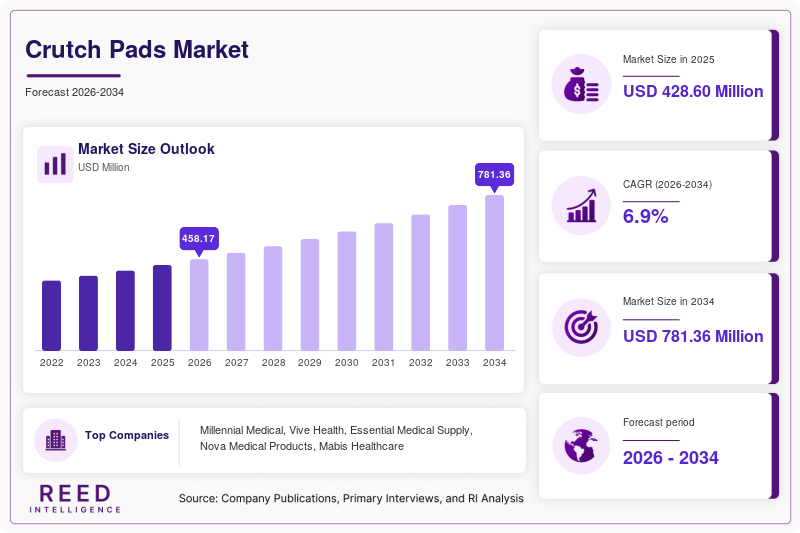
Key Highlights
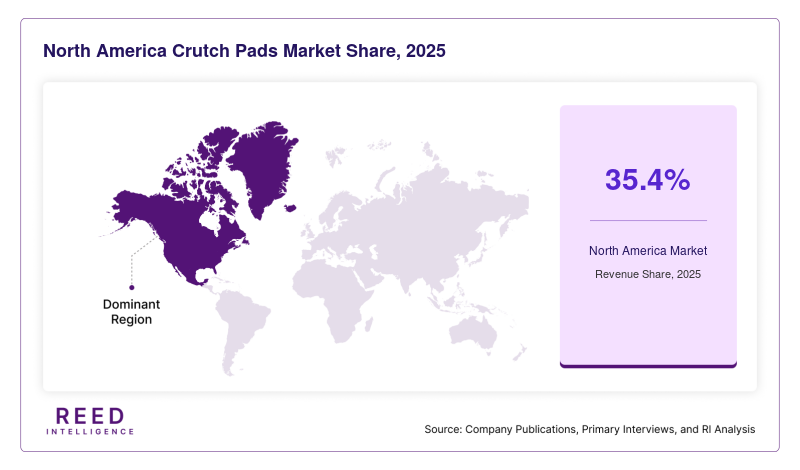
- North America dominated the market with a 35.4% share in 2025.
- Asia Pacific is expected to grow at the fastest CAGR of 8.5% during 2026–2034.
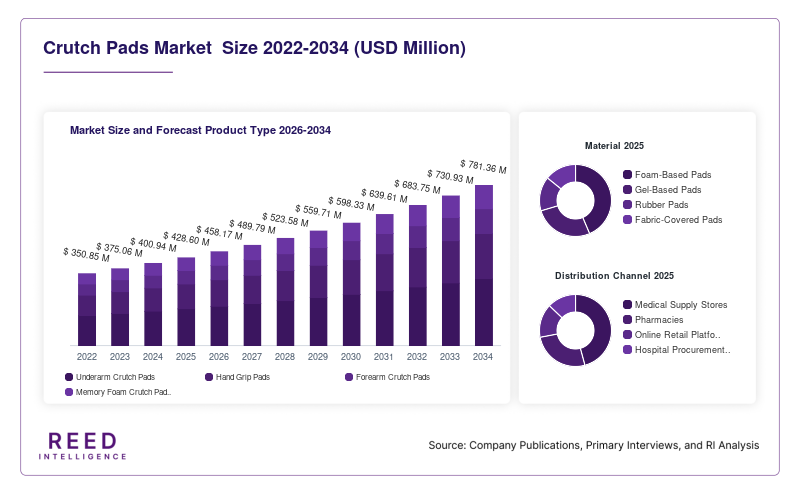
- By product type, underarm crutch pads accounted for the largest share of 46.8%.
- while memory foam crutch pads are projected to grow at a CAGR of 9.1%.
- By material, foam-based pads held the leading share of 43.9%.
- whereas gel-based pads are anticipated to expand at a CAGR of 8.8%.
- By distribution channel, medical supply stores led with a 41.2% share.
- while online retail platforms are expected to grow at a CAGR of 10.2%.
- The United States remained the dominant country, with market values of USD 124.7 million in 2024 and USD 132.8 million in 2025.
Market Trends
Growing Adoption of Memory Foam and Ergonomic Cushioning Solutions
The crutch pads market is witnessing a notable shift toward advanced ergonomic cushioning products. Traditional rubber and basic foam pads are increasingly being replaced by memory foam-based alternatives that offer enhanced pressure distribution and user comfort. Patients recovering from fractures, surgeries, and mobility-related conditions often use crutches for extended periods, making comfort a key purchasing factor. Manufacturers are introducing products that conform to body contours, reduce friction, and minimize discomfort during prolonged use. These developments are attracting attention from healthcare providers and rehabilitation centers seeking improved patient outcomes. The growing preference for premium mobility accessories is expected to sustain demand for ergonomically engineered crutch pads throughout the forecast period.
Expansion of Online Distribution Channels
Digital commerce has become a significant trend influencing market growth. Consumers increasingly prefer online platforms for purchasing healthcare accessories due to convenience, wider product selection, and competitive pricing. E-commerce channels allow manufacturers to directly reach end users while reducing dependency on traditional retail networks. Product comparison tools, customer reviews, and fast delivery services have further strengthened online sales performance. In addition, healthcare-focused digital marketplaces are offering customized mobility solutions, including crutch pad replacement kits and premium comfort accessories. The increasing penetration of smartphones and internet connectivity across emerging economies is expected to support the continued expansion of online crutch pad sales globally.
Market Drivers
Rising Prevalence of Orthopedic Injuries and Rehabilitation Needs
The increasing incidence of orthopedic injuries is a major factor driving demand for crutch pads. Sports injuries, workplace accidents, falls among elderly populations, and road traffic incidents continue to generate substantial requirements for mobility support products. Patients undergoing rehabilitation frequently rely on crutches for mobility, creating sustained demand for replacement and upgraded cushioning accessories. Healthcare professionals increasingly recommend high-quality crutch pads to reduce discomfort and improve recovery experiences. As healthcare systems prioritize patient-centered rehabilitation practices, the demand for enhanced mobility accessories is expected to increase steadily. Growing awareness of injury recovery management further strengthens the market outlook.
Expanding Global Elderly Population
Population aging has emerged as another important growth driver. Older adults are more susceptible to mobility limitations, fractures, osteoporosis-related injuries, and joint replacement procedures. These conditions often require temporary or long-term use of crutches and walking aids. Comfortable mobility support products play a vital role in improving independence and reducing physical strain among elderly users. Governments and healthcare organizations are investing in mobility assistance programs to support aging populations. As life expectancy continues to increase globally, the number of individuals requiring rehabilitation and mobility support is expected to rise, contributing significantly to crutch pad market growth throughout the forecast period.
Market Restraints
Availability of Alternative Mobility Support Devices
The growing availability of alternative mobility solutions presents a challenge for the crutch pads market. Mobility scooters, wheelchairs, knee walkers, rollators, and advanced walking aids are increasingly being adopted for rehabilitation and long-term mobility support. Many patients prefer these alternatives because they reduce upper-body strain and may offer greater convenience during recovery. As healthcare providers recommend device selection based on patient-specific conditions, some users may bypass crutch usage entirely. This trend can limit demand for crutch accessories in certain patient groups. Furthermore, reimbursement policies in several healthcare systems may favor alternative mobility equipment, influencing purchasing decisions. The availability of multifunctional mobility products may therefore moderate market expansion despite ongoing growth in rehabilitation requirements.
Market Opportunities
Increasing Demand in Emerging Healthcare Markets
Emerging economies present significant growth opportunities for crutch pad manufacturers. Healthcare infrastructure improvements, rising healthcare expenditure, and increasing awareness regarding rehabilitation products are supporting market expansion across developing regions. Countries in Asia Pacific, Latin America, and parts of the Middle East are investing in orthopedic care services and rehabilitation facilities. As access to healthcare improves, demand for mobility-assistance products and related accessories is expected to increase. Manufacturers that establish cost-effective production capabilities and localized distribution networks can benefit from expanding patient populations. Growing urbanization and increasing disposable incomes are further contributing to favorable market conditions in these regions.
Product Innovation Through Antimicrobial and Sustainable Materials
Innovation in materials and product design creates another attractive opportunity. Consumers and healthcare institutions are increasingly seeking products that combine comfort, hygiene, and sustainability. Antimicrobial fabrics, moisture-resistant coverings, recyclable materials, and eco-friendly manufacturing processes are gaining importance. Manufacturers developing environmentally responsible crutch pads can appeal to sustainability-conscious consumers while differentiating their product portfolios. Healthcare facilities also value infection-control benefits associated with antimicrobial materials. Continued research into advanced cushioning technologies and lightweight designs is expected to generate new revenue opportunities and support long-term market competitiveness.
Segmental Analysis
By Product Type
Underarm crutch pads represented the dominant subsegment, accounting for approximately 46.8% of market revenue in 2024. These products are widely used because underarm crutches remain one of the most common mobility aids prescribed for temporary injury recovery. Their extensive utilization across hospitals, rehabilitation centers, and home-care settings contributes to strong demand. Consumers frequently replace worn pads to maintain comfort and hygiene, supporting recurring revenue generation. Manufacturers continue to improve cushioning performance, durability, and material quality, reinforcing the segment's leadership position. The availability of standardized sizes compatible with multiple crutch models further supports widespread adoption across both developed and emerging healthcare markets.
Memory foam crutch pads are projected to be the fastest-growing subsegment, advancing at a CAGR of 9.1% through 2034. Increasing consumer preference for premium comfort solutions is a key growth factor. Memory foam technology helps distribute pressure more evenly, reducing discomfort during prolonged crutch use. Healthcare providers increasingly recommend these products for elderly patients and individuals undergoing extended rehabilitation. Product innovations incorporating breathable fabrics, washable covers, and antimicrobial features are further enhancing demand. As consumers become more aware of comfort-related benefits, adoption of memory foam-based products is expected to accelerate across multiple healthcare settings.
By Material
Foam-based pads held the largest market share of approximately 43.9% in 2024. These products offer a balance between affordability, comfort, and durability, making them a preferred choice among consumers and healthcare institutions. Foam materials provide effective cushioning while remaining lightweight and cost-efficient. Manufacturers continue to introduce enhanced foam formulations designed to improve pressure relief and long-term performance. Their compatibility with a wide range of crutch models also contributes to market dominance. Hospitals and rehabilitation facilities frequently purchase foam-based products in bulk due to their practical cost structure and reliable performance characteristics.
Gel-based pads are expected to witness the fastest growth, registering a CAGR of 8.8% during the forecast period. Enhanced shock absorption and pressure reduction capabilities make gel products increasingly attractive for long-term users. These pads provide improved comfort for patients experiencing extended recovery periods or chronic mobility challenges. Growing demand for premium healthcare accessories is supporting adoption across developed markets. Manufacturers are introducing hybrid designs combining gel and foam technologies to maximize comfort while maintaining durability. Rising consumer awareness regarding advanced cushioning solutions is expected to sustain segment growth over the coming years.
By Distribution Channel
Medical supply stores accounted for the leading market share of approximately 41.2% in 2024. These stores remain a preferred purchasing channel due to product availability, professional guidance, and established relationships with healthcare providers. Consumers often rely on recommendations from pharmacists, rehabilitation specialists, and orthopedic professionals when selecting mobility accessories. Medical supply retailers frequently stock a wide variety of crutch pad options, enabling customers to compare products based on comfort, material, and price. Their strong presence in healthcare ecosystems continues to support segment leadership despite growing competition from digital sales platforms.
Online retail platforms are projected to be the fastest-growing distribution channel, expanding at a CAGR of 10.2% through 2034. Increasing internet penetration and changing consumer purchasing behavior are major growth factors. Online channels offer convenience, extensive product selection, competitive pricing, and direct access to customer reviews. Manufacturers benefit from broader market reach and lower distribution costs. Subscription-based replacement programs and targeted digital marketing campaigns are further driving online sales. As consumers become increasingly comfortable purchasing healthcare accessories through digital platforms, this segment is expected to experience substantial growth throughout the forecast period.
Regional Analysis
North America
North America accounted for approximately 35.4% of the global Crutch Pads Market in 2025 and is expected to maintain a stable growth trajectory with a forecast CAGR of 6.3% through 2034. Strong healthcare infrastructure, widespread access to orthopedic treatment, and high adoption of premium mobility accessories support regional demand. The region benefits from substantial healthcare spending and strong consumer awareness regarding rehabilitation products. Continuous product innovation and replacement demand contribute to market expansion.
The United States remains the dominant country within North America. A key growth factor is the high volume of orthopedic surgeries and sports-related injuries requiring rehabilitation support. Healthcare providers frequently recommend ergonomic mobility accessories to improve patient comfort and recovery outcomes. The presence of established manufacturers and advanced distribution networks further strengthens market performance across the country.
Europe
Europe represented approximately 27.8% of the global market in 2025 and is projected to register a CAGR of 6.1% during the forecast period. Rising demand for rehabilitation products, increasing elderly populations, and strong healthcare coverage systems support market growth. The region also benefits from growing awareness regarding patient comfort and mobility management. Demand for premium and specialized crutch accessories continues to expand across both public and private healthcare facilities.
Germany leads the European market due to its advanced healthcare infrastructure and large orthopedic patient population. A unique growth factor is the country's emphasis on rehabilitation and physiotherapy services following injury or surgery. Healthcare institutions increasingly adopt high-quality mobility accessories to enhance patient recovery experiences, contributing to sustained demand for advanced crutch pad products.
Asia Pacific
Asia Pacific held nearly 22.6% of the market in 2025 and is expected to record the fastest CAGR of 8.5% between 2026 and 2034. Expanding healthcare access, increasing orthopedic injury cases, and improving rehabilitation awareness are driving regional growth. Rising disposable incomes and growing healthcare expenditures are encouraging consumers to invest in enhanced mobility support products. Manufacturers are also increasing their regional presence through strategic distribution partnerships.
China dominates the Asia Pacific market. One unique growth factor is the rapid expansion of healthcare infrastructure in both urban and semi-urban regions. Growing participation in sports activities and rising accident-related injuries have increased demand for mobility aids. Local manufacturing capabilities and expanding e-commerce platforms further contribute to market development across the country.
Middle East & Africa
The Middle East & Africa accounted for approximately 7.2% of global revenue in 2025 and is forecast to expand at a CAGR of 6.8% through 2034. Investments in healthcare modernization and increasing access to rehabilitation services are supporting market growth. Rising awareness regarding mobility support products among healthcare providers and patients is creating new opportunities for manufacturers. Improved healthcare infrastructure in several countries is enhancing product accessibility.
Saudi Arabia represents the leading country within the region. A major growth factor is government-led healthcare investment aimed at expanding rehabilitation and orthopedic treatment services. Growing healthcare spending and increasing adoption of advanced medical products are encouraging demand for comfortable and durable crutch accessories across hospitals and rehabilitation centers.
Latin America
Latin America captured nearly 7.0% of the global market in 2025 and is anticipated to grow at a CAGR of 6.6% during the forecast period. Expanding healthcare services and increasing awareness of rehabilitation products continue to support market development. Urbanization and improved access to medical care are contributing to higher adoption of mobility assistance products. Demand for affordable and durable crutch accessories remains particularly strong.
Brazil dominates the regional market due to its large population and expanding healthcare sector. A unique growth factor is the increasing availability of rehabilitation programs addressing injury recovery and mobility limitations. Public and private healthcare providers are investing in patient-support solutions, creating favorable conditions for continued market expansion.
Competitive Landscape
The global Crutch Pads Market remains moderately fragmented, with manufacturers focusing on product innovation, ergonomic design improvements, and expanded distribution networks. Competition is influenced by product quality, pricing strategies, material innovation, and brand reputation. Companies are investing in memory foam technologies, antimicrobial materials, and environmentally responsible manufacturing processes to strengthen their market positions.
Millennial Medical maintains a leading position due to its diversified mobility-support product portfolio and strong presence across healthcare distribution channels. The company recently introduced enhanced ergonomic padding solutions designed to improve user comfort during extended rehabilitation periods.
Other prominent participants include Essential Medical Supply, Vive Health, Nova Medical Products, and Mabis Healthcare. These companies continue to expand product offerings through design enhancements and strategic partnerships. Market participants are increasingly targeting e-commerce growth opportunities while strengthening relationships with hospitals, rehabilitation centers, and medical supply distributors. Product differentiation through comfort-focused innovations is expected to remain a key competitive strategy over the forecast period.
Key Players
- Millennial Medical
- Vive Health
- Essential Medical Supply
- Nova Medical Products
- Mabis Healthcare
- Carex Health Brands
- Drive Medical
- Cardinal Health
- Briggs Healthcare
- Graham-Field Health Products
- Medline Industries
- Mobility Designed
- Walgreens Healthcare Solutions
- Ossenberg GmbH
- Invacare Corporation
Recent Developments
- Millennial Medical launched a new ergonomic crutch pad series featuring enhanced pressure-distribution technology for rehabilitation patients.
- Vive Health expanded its online mobility accessory portfolio with upgraded antimicrobial crutch pad products targeting home-care users.
- Nova Medical Products introduced lightweight memory foam crutch pads designed to improve comfort during long-term recovery periods.
- Drive Medical expanded its distribution partnerships across Asia Pacific to strengthen access to mobility-support accessories.
- Carex Health Brands introduced washable and reusable crutch pad covers to address increasing demand for hygiene-focused mobility products.
Crutch Pads Market Segments
Product Type
- Underarm Crutch Pads
- Hand Grip Pads
- Forearm Crutch Pads
- Memory Foam Crutch Pads
Material
- Foam-Based Pads
- Gel-Based Pads
- Rubber Pads
- Fabric-Covered Pads
Distribution Channel
- Medical Supply Stores
- Pharmacies
- Online Retail Platforms
- Hospital Procurement Channels
By Region
- North America
- Europe
- APAC
- Middle East and Africa
- LATAM