Cryoballoon Ablation System Market Size, Share & Demand Report By Application (Atrial Fibrillation, Ventricular Tachycardia, Others), By Product Type (Single-Shot Cryoballoon Systems, Multi-Electrode Cryoballoon Systems), By End-Use (Hospitals, Ambulatory Surgical Centers, Specialty Clinics), By End-User Specialty (Electrophysiology Labs, Cardiac Centers) By Region & Segment Forecasts, 2026–2034
USD 3950
Market Overview
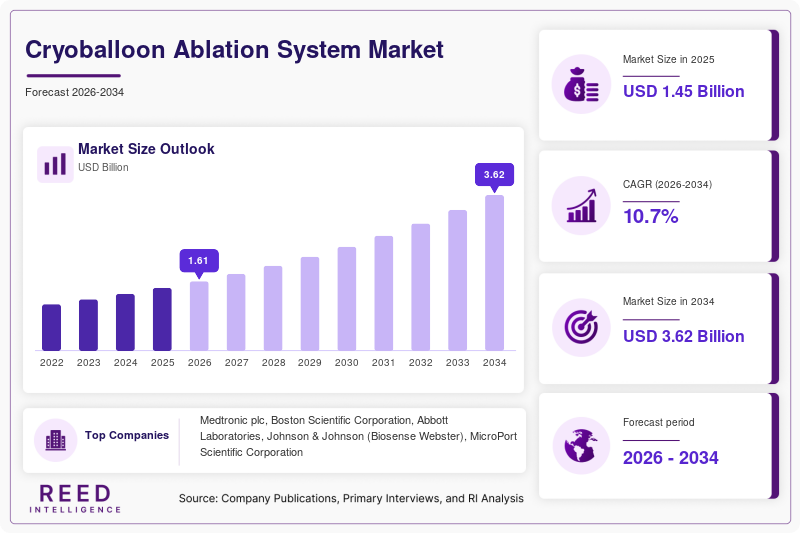
The global Cryoballoon Ablation System Market size was valued at approximately USD 1.45 billion in 2026 and is projected to reach USD 3.28 billion by 2034, expanding at a CAGR of 10.7% during the forecast period (2026–2034). The market growth is primarily supported by the increasing prevalence of atrial fibrillation (AF) and the growing preference for minimally invasive cardiac procedures worldwide.
A key global factor driving the market is the rising burden of cardiovascular diseases, particularly arrhythmias, fueled by aging populations and lifestyle-related health risks. Cryoballoon ablation systems offer a safer and more efficient alternative to traditional radiofrequency ablation, with shorter procedure times and improved patient outcomes, further accelerating adoption among healthcare providers.
Key Highlights:
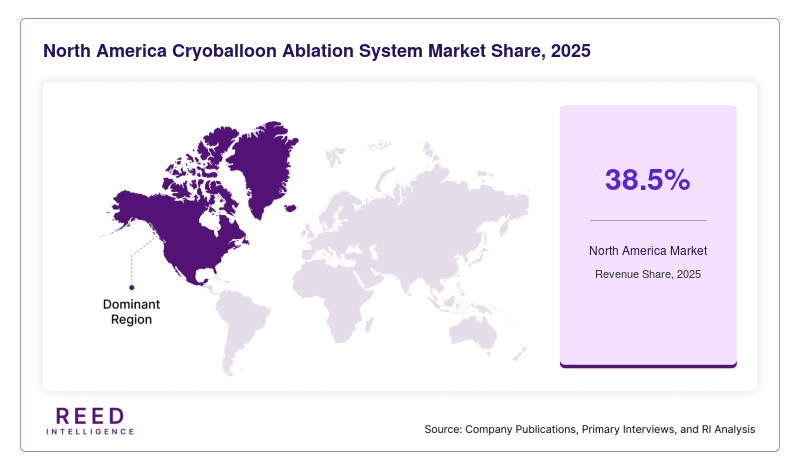
- Dominant region: North America held approximately 38.5% market share in 2025, while Asia Pacific is projected to grow at a CAGR of 12.8%.
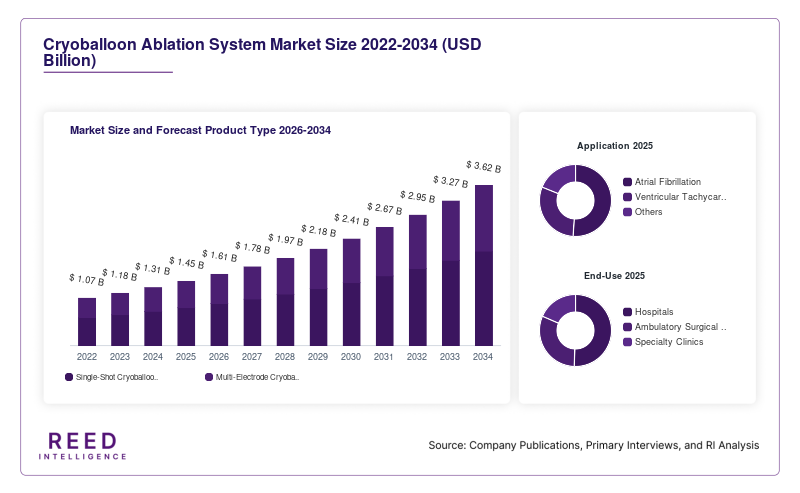
- Leading segment: By application, atrial fibrillation ablation dominated with 64.2% share in 2025, while ventricular tachycardia is expected to grow at a CAGR of 11.9%.
- By end-use: Hospitals led with 71.3% share, whereas ambulatory surgical centers are anticipated to expand at 12.2% CAGR.
- Dominant country: The United States market was valued at USD 520 million in 2024 and USD 565 million in 2025, driven by advanced electrophysiology adoption.
Market Trends
Integration of Advanced Imaging and Navigation Technologies
The Cryoballoon Ablation System Market is witnessing a notable shift toward the integration of advanced imaging and 3D mapping technologies. These systems enhance procedural accuracy by providing real-time visualization of cardiac anatomy and catheter positioning. The use of intracardiac echocardiography and electroanatomical mapping reduces procedural complications and improves long-term success rates. As healthcare providers increasingly prioritize precision and efficiency, manufacturers are focusing on developing integrated platforms that streamline workflows and reduce dependency on multiple devices. This trend is expected to strengthen clinical confidence and expand adoption across both developed and emerging healthcare systems.
Rising Adoption of Single-Shot Ablation Techniques
Another significant trend shaping the market is the growing adoption of single-shot ablation technologies such as cryoballoon systems. Unlike point-by-point ablation, cryoballoon systems allow pulmonary vein isolation in fewer steps, reducing procedure time and operator dependency. This efficiency has made cryoballoon ablation a preferred choice among electrophysiologists, particularly for paroxysmal atrial fibrillation cases. The trend is further supported by favorable clinical outcomes, reduced hospitalization duration, and lower recurrence rates. As healthcare systems aim to optimize resource utilization and improve patient throughput, demand for single-shot ablation solutions is expected to rise steadily during the forecast period.
Market Drivers
Increasing Prevalence of Atrial Fibrillation
The rising incidence of atrial fibrillation globally is a primary driver of the Cryoballoon Ablation System Market. Aging populations, sedentary lifestyles, and increasing comorbidities such as hypertension and diabetes have significantly contributed to the growing AF patient pool. Cryoballoon ablation has emerged as an effective treatment option for AF due to its high success rates and reduced procedural complexity. As early intervention becomes more common in arrhythmia management, the demand for cryoballoon systems is expected to increase substantially.
Growing Preference for Minimally Invasive Procedures
Healthcare systems and patients are increasingly favoring minimally invasive procedures that offer faster recovery, reduced hospital stays, and lower complication risks. Cryoballoon ablation systems align well with these preferences by providing a less invasive approach compared to traditional surgical methods. The reduced need for repeat procedures and improved patient outcomes further enhance their appeal. Additionally, advancements in catheter technology and operator training programs are enabling wider adoption across various healthcare settings, supporting sustained market growth.
Market Restraint
High Cost of Cryoballoon Ablation Systems
One of the major challenges facing the Cryoballoon Ablation System Market is the high cost associated with these systems and procedures. The initial investment required for acquiring cryoballoon equipment, along with maintenance and training costs, can be substantial for healthcare providers, particularly in low- and middle-income regions. Additionally, the procedure itself is relatively expensive compared to alternative treatments, limiting accessibility for a broader patient population.
The lack of uniform reimbursement policies in several regions further exacerbates this issue, making it difficult for healthcare facilities to justify large-scale adoption. Smaller hospitals and clinics may prefer more cost-effective treatment options, slowing market penetration in certain geographies. Addressing cost-related barriers through technological innovation, economies of scale, and improved reimbursement frameworks will be critical for unlocking the market’s full potential.
Market Opportunities
Expansion in Emerging Markets
Emerging economies present significant growth opportunities for the Cryoballoon Ablation System Market. Countries in Asia Pacific, Latin America, and the Middle East are experiencing rapid improvements in healthcare infrastructure and increasing awareness of advanced cardiac treatments. As governments invest in healthcare modernization and private sector participation rises, access to electrophysiology procedures is expanding. Market players can capitalize on this trend by offering cost-effective solutions and establishing strategic partnerships with local healthcare providers.
Technological Innovations in Catheter Design
Continuous innovation in catheter design and materials is creating new opportunities for market growth. Next-generation cryoballoon systems are being developed with enhanced flexibility, improved cooling efficiency, and better anatomical adaptability. These advancements are expected to improve procedural outcomes and reduce complications, making cryoballoon ablation suitable for a wider range of patients. Additionally, integration with digital health platforms and remote monitoring tools can further enhance patient management, opening new avenues for product differentiation and market expansion.
Segmental Analysis
By Application
Atrial fibrillation ablation dominated the Cryoballoon Ablation System Market in 2025, accounting for approximately 64.2% of the total share. This dominance is attributed to the high prevalence of AF and the proven effectiveness of cryoballoon systems in pulmonary vein isolation procedures. The simplicity and efficiency of the procedure have made it a preferred choice among clinicians, contributing to its widespread adoption.
Ventricular tachycardia is expected to be the fastest-growing subsegment, projected to expand at a CAGR of 11.9% during the forecast period. The increasing incidence of ventricular arrhythmias and advancements in ablation technologies are expected to drive growth. Additionally, ongoing research and clinical trials are expanding the applicability of cryoballoon systems in treating complex arrhythmias.
By End-Use
Hospitals accounted for the largest share of the market in 2025, representing approximately 71.3% of total revenue. The availability of advanced infrastructure, skilled healthcare professionals, and higher patient inflow contributed to the dominance of this segment. Hospitals are often the primary centers for complex cardiac procedures, making them key end-users of cryoballoon ablation systems.
Ambulatory surgical centers (ASCs) are anticipated to be the fastest-growing segment, with a projected CAGR of 12.2%. The shift toward outpatient care and the need to reduce healthcare costs are driving the growth of ASCs. These facilities offer shorter procedure times and lower costs, making them an attractive option for both patients and healthcare providers.
By Product Type
Single-shot cryoballoon systems dominated the market in 2025, holding a share of approximately 68.5%. These systems are preferred due to their ability to perform pulmonary vein isolation in a single step, reducing procedure time and improving efficiency. The ease of use and consistent outcomes further contribute to their widespread adoption.
Advanced multi-electrode cryoballoon systems are expected to witness the fastest growth, with a projected CAGR of 11.5%. These systems offer enhanced precision and adaptability, enabling more effective treatment of complex cases. Continuous innovation and product development are expected to drive adoption in the coming years.
By End-User Specialty
Electrophysiology labs dominated the market in 2025, accounting for approximately 62.7% of the share. These specialized facilities are equipped with advanced technologies and staffed by trained professionals, making them ideal for performing cryoballoon ablation procedures.
Cardiac centers are expected to grow at the fastest rate, with a CAGR of 11.8%. The increasing number of dedicated cardiac care facilities and rising demand for specialized treatment are driving growth in this segment. These centers focus on providing comprehensive cardiac care, including advanced ablation procedures.
Regional Analysis
North America
North America accounted for approximately 38.5% of the Cryoballoon Ablation System Market share in 2025 and is expected to maintain steady growth, expanding at a CAGR of 9.8% from 2026 to 2034. The region’s established healthcare infrastructure, high adoption of advanced medical technologies, and strong presence of leading market players contributed to its dominant position. Favorable reimbursement policies and increasing awareness about early diagnosis and treatment of cardiac arrhythmias further supported market expansion.
The United States dominated the regional market due to its advanced electrophysiology landscape and high procedural volumes. The growing emphasis on outpatient cardiac procedures and continuous technological innovation in ablation systems have strengthened market growth. Additionally, the presence of skilled electrophysiologists and strong clinical research activities have contributed to widespread adoption of cryoballoon ablation systems.
Europe
Europe held around 27.2% market share in 2025 and is projected to grow at a CAGR of 10.2% during the forecast period. The region’s growth is driven by increasing healthcare expenditure, rising prevalence of cardiovascular diseases, and supportive regulatory frameworks. Countries such as Germany, France, and the UK have well-established healthcare systems that facilitate the adoption of advanced cardiac treatment technologies.
Germany emerged as the dominant country within Europe, supported by its strong medical device industry and high patient awareness. The country’s focus on innovation and early adoption of new technologies has enabled rapid integration of cryoballoon ablation systems in clinical practice. Additionally, favorable reimbursement policies and government initiatives aimed at improving cardiac care have contributed to sustained market growth.
Asia Pacific
Asia Pacific accounted for approximately 21.4% of the market share in 2025 and is anticipated to register the fastest growth, with a CAGR of 12.8% from 2026 to 2034. Rapid urbanization, increasing healthcare investments, and rising awareness about advanced cardiac treatments are key factors driving market expansion in the region.
China led the regional market due to its large patient population and improving healthcare infrastructure. The government’s focus on expanding access to advanced medical technologies and increasing investments in healthcare facilities has accelerated adoption. Additionally, the growing number of trained healthcare professionals and rising medical tourism are contributing to the region’s growth trajectory.
Middle East & Africa
The Middle East & Africa region held around 7.1% market share in 2025 and is expected to grow at a CAGR of 9.5% during the forecast period. The region’s growth is supported by increasing investments in healthcare infrastructure and rising awareness of advanced cardiac procedures. However, limited access to specialized healthcare services in certain areas may pose challenges.
Saudi Arabia emerged as a key contributor to regional growth, driven by government initiatives to modernize healthcare systems and improve access to advanced treatments. The country’s focus on reducing dependence on overseas medical care and expanding domestic capabilities has supported the adoption of cryoballoon ablation systems.
Latin America
Latin America accounted for approximately 5.8% market share in 2025 and is projected to grow at a CAGR of 9.9% from 2026 to 2034. The region’s growth is driven by improving healthcare infrastructure and increasing awareness of minimally invasive procedures. Economic development and rising healthcare expenditure are also contributing to market expansion.
Brazil dominated the regional market due to its relatively advanced healthcare system and growing adoption of modern medical technologies. The country’s increasing focus on improving cardiac care and expanding access to specialized treatments has supported the growth of the cryoballoon ablation system market.
Competitive Landscape
The Cryoballoon Ablation System Market is moderately consolidated, with several key players focusing on technological innovation and strategic collaborations to strengthen their market position. The leading company in the market is Medtronic plc, which has established a strong presence through its advanced cryoballoon product portfolio and continuous investment in research and development. The company recently introduced an upgraded cryoballoon system with enhanced cooling efficiency and improved procedural outcomes.
Other prominent players include Boston Scientific Corporation, Abbott Laboratories, Johnson & Johnson (Biosense Webster), and MicroPort Scientific Corporation. These companies are actively expanding their product offerings and geographic presence through partnerships, acquisitions, and product launches. The competitive landscape is characterized by a focus on innovation, clinical efficacy, and cost optimization to address evolving market demands.
Key Players List
- Medtronic plc
- Boston Scientific Corporation
- Abbott Laboratories
- Johnson & Johnson (Biosense Webster)
- MicroPort Scientific Corporation
- Biotronik SE & Co. KG
- Terumo Corporation
- Lepu Medical Technology
- CardioFocus Inc.
- AtriCure Inc.
- AngioDynamics Inc.
- Osypka Medical GmbH
- Stereotaxis Inc.
- CathRx Ltd.
- Japan Lifeline Co., Ltd.
Recent Developments
- Medtronic plc launched an advanced cryoballoon catheter with improved temperature control and enhanced procedural efficiency.
- Boston Scientific expanded its electrophysiology portfolio through strategic partnerships focusing on cryoablation technologies.
- Abbott Laboratories invested in next-generation mapping systems to complement cryoballoon procedures.
- Johnson & Johnson enhanced its ablation solutions through integration with advanced imaging platforms.
- MicroPort Scientific Corporation expanded its presence in Asia Pacific with new product approvals and distribution agreements.
Cryoballoon Ablation System Market Segments
Product Type
- Single-Shot Cryoballoon Systems
- Multi-Electrode Cryoballoon Systems
Application
- Atrial Fibrillation
- Ventricular Tachycardia
- Others
End-Use
- Hospitals
- Ambulatory Surgical Centers
- Specialty Clinics
End-User Specialty
- Electrophysiology Labs
- Cardiac Centers
By Region
- North America
- Europe
- APAC
- Middle East and Africa
- LATAM