Cupcake Liners Market Size, Share & Demand Report By Material Type (Paper, Silicone, Aluminum Foil, Plastic), By Application (Commercial Bakeries, Household Baking, Foodservice Industry, Institutional Catering), By Distribution Channel (Offline Retail, Online Retail, Wholesale Distribution, Specialty Baking Stores), By Region & Segment Forecasts, 2026–2034
USD 3950
Market Overview
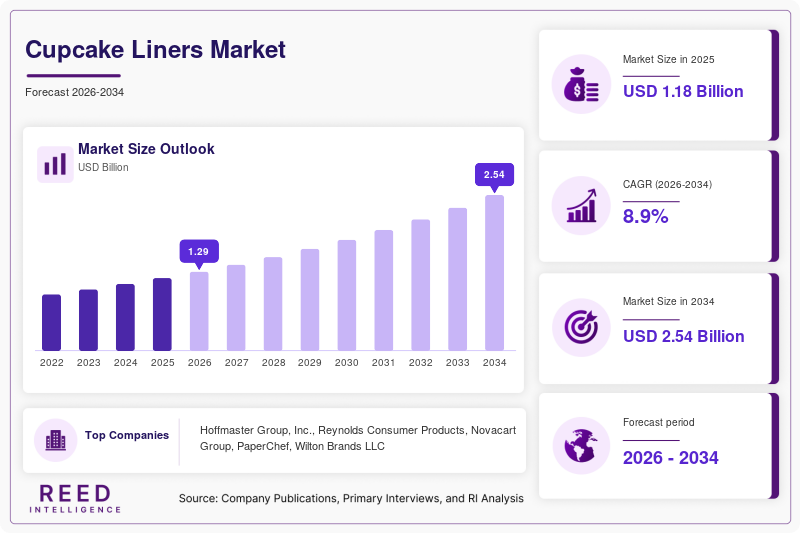
The global Cupcake Liners Market size was valued at USD 1.18 billion in 2026 and is projected to reach USD 2.34 billion by 2034, expanding at a CAGR of 8.9% during the forecast period from 2026 to 2034. The market continues to witness steady growth due to rising demand for bakery products across retail, foodservice, and home baking applications. Increased consumption of cupcakes, muffins, and premium bakery desserts has created sustained demand for decorative and functional cupcake liners in developed as well as emerging economies. Manufacturers are focusing on eco-friendly paper liners, grease-resistant materials, and customized printed designs to strengthen product differentiation in competitive retail channels.
One of the major global factors supporting market expansion is the rapid growth of the organized bakery and café industry. Urban consumers are increasingly purchasing visually appealing baked goods for celebrations, gifting, and social gatherings. This trend has encouraged bakeries and foodservice providers to invest in premium cupcake presentation solutions. In addition, online baking tutorials and social media content related to home baking have accelerated the adoption of colorful and themed cupcake liners among individual consumers. Sustainable packaging regulations in North America and Europe are also encouraging manufacturers to shift toward biodegradable and compostable paper materials.
Key Highlights
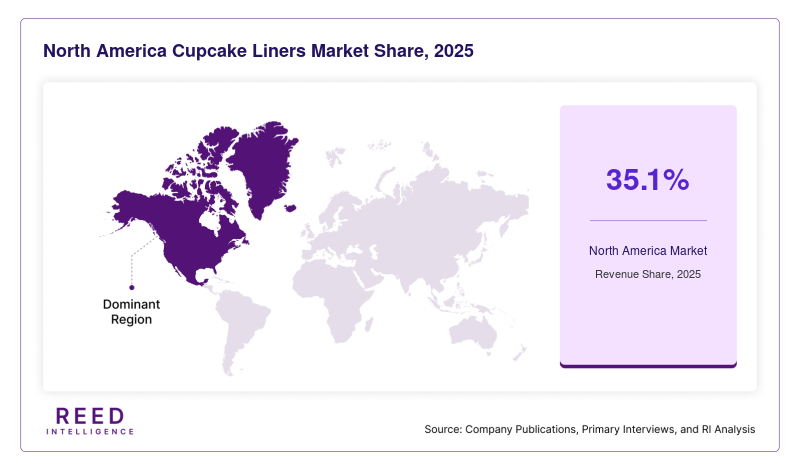
- North America dominated the market with a 35.1% share in 2025.
- Asia Pacific is expected to grow at the fastest CAGR of 10.8% during 2026–2034.
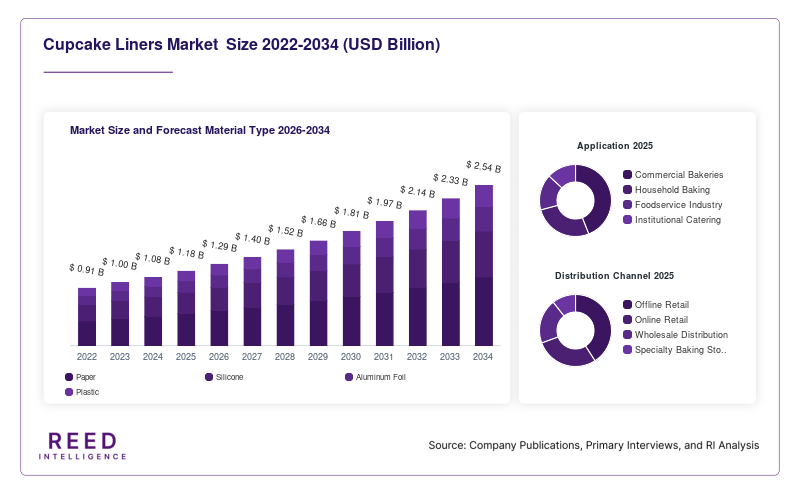
- By material type, paper cupcake liners accounted for the largest share of 58.4%.
- while silicone cupcake liners are projected to grow at a CAGR of 11.6%.
- By application, commercial bakeries led with a 46.3% share, whereas household baking is expected to expand at a CAGR of 10.9%.
- By distribution channel, offline retail held the dominant share of 61.7%, while online retail is projected to grow at a CAGR of 12.1%.
- The United States remained the dominant country, with market values of USD 312 million in 2024 and USD 338 million in 2025.
Market Trends
Growing Preference for Eco-Friendly and Compostable Baking Accessories
Sustainability has become a major trend shaping the Cupcake Liners Market as consumers and foodservice operators increasingly prefer environmentally responsible packaging materials. Paper cupcake liners manufactured using biodegradable pulp, chlorine-free paper, and compostable coatings are witnessing strong adoption in bakery chains and cafés. Many bakery brands are replacing plastic-based baking accessories with recyclable alternatives to align with sustainability targets and consumer expectations. This transition is particularly visible in North America and Europe, where food packaging regulations continue to encourage reduced plastic consumption.
Manufacturers are responding by introducing unbleached kraft liners, soy-based printing inks, and grease-resistant coatings derived from plant materials. Retail demand for premium eco-friendly baking products has also increased through e-commerce channels. Consumers purchasing home baking supplies are prioritizing sustainable packaging along with product appearance and functionality. The growing influence of environmentally conscious purchasing behavior is expected to encourage long-term innovation in compostable liner materials, recyclable packaging formats, and reusable baking accessories.
Rising Influence of Customized and Themed Baking Products
Customization and visual presentation have emerged as important trends across the global Cupcake Liners Market. Bakeries, event planners, and home bakers increasingly prefer themed cupcake liners designed for birthdays, weddings, seasonal festivals, and corporate celebrations. Social media platforms have amplified demand for visually distinctive baked goods, encouraging manufacturers to offer decorative liners in metallic finishes, printed patterns, and color-coordinated collections.
The premiumization of bakery products has also increased spending on customized baking accessories. Commercial bakeries are investing in branded cupcake liners that enhance product recognition and improve customer engagement. Personalized packaging has become an effective marketing tool for boutique bakeries and specialty dessert stores. In addition, digital printing technologies are enabling cost-efficient short-run production for seasonal and limited-edition designs. This trend is expected to create opportunities for manufacturers offering flexible customization capabilities, advanced food-safe printing methods, and rapid product development services.
Market Drivers
Expansion of the Global Bakery and Café Industry
The rapid expansion of bakery chains, café outlets, and quick-service dessert stores is a major factor driving growth in the Cupcake Liners Market. Urban consumers are increasing their consumption of cupcakes, muffins, pastries, and snack-sized desserts due to changing lifestyles and rising disposable income levels. Commercial bakeries require high-volume supplies of durable and visually attractive cupcake liners to maintain product consistency and presentation standards. The growing number of specialty cupcake stores and dessert cafés has also strengthened demand for decorative and premium-quality baking accessories.
International bakery franchises are expanding into emerging economies across Asia Pacific, the Middle East, and Latin America, creating additional demand for food-safe and heat-resistant cupcake liners. Retail bakeries are introducing seasonal product launches and customized dessert collections that require themed liners and packaging formats. The continued expansion of food delivery platforms and takeaway bakery services has further increased the importance of durable liner materials that preserve product quality during transportation.
Increasing Popularity of Home Baking Activities
The growing popularity of home baking is contributing significantly to market growth across several consumer segments. Social media platforms, online recipe tutorials, and cooking shows have encouraged consumers to experiment with cupcakes and bakery desserts at home. This trend has increased sales of baking accessories, including cupcake liners, measuring tools, decorative toppings, and reusable molds. Consumers are increasingly purchasing baking products through online retail channels due to wider product variety and convenient access.
Seasonal celebrations, school events, and family gatherings have also encouraged demand for colorful and themed cupcake liners among households. Manufacturers are introducing smaller packaging quantities and multipurpose baking products designed specifically for occasional home bakers. Silicone cupcake liners are becoming popular because of their reusable nature and cost efficiency. The rise of home-based baking businesses and independent dessert creators has further strengthened demand for professional-grade liners suitable for commercial-quality presentation.
Market Restraint
Fluctuating Raw Material Costs and Intense Price Competition
Fluctuating prices of paper pulp, silicone materials, food-grade coatings, and printing chemicals remain a significant challenge for manufacturers operating in the Cupcake Liners Market. Raw material price volatility affects production costs and profit margins, particularly for small and medium-sized companies with limited procurement capabilities. Environmental regulations related to food-safe packaging materials have also increased compliance costs for manufacturers producing biodegradable and compostable liners.
Intense competition among regional and international suppliers has created pricing pressure across retail and commercial bakery channels. Many low-cost manufacturers compete aggressively in price-sensitive markets, making it difficult for premium brands to maintain profitability. In addition, counterfeit and low-quality imported products can negatively impact brand reputation and consumer confidence. Smaller bakery businesses often prioritize cost over premium features, limiting the adoption of higher-value specialty liners. These factors collectively create operational challenges for manufacturers attempting to balance affordability, sustainability, product quality, and long-term profitability.
Market Opportunities
Growth Potential in Emerging E-Commerce Baking Supply Platforms
The expansion of digital retail platforms presents substantial growth opportunities for the Cupcake Liners Market. Online marketplaces and specialty baking websites are making baking accessories more accessible to consumers across urban and semi-urban locations. E-commerce channels allow manufacturers to reach niche customer segments seeking premium, customized, or imported cupcake liners that may not be widely available through traditional retail stores.
Subscription baking kits and seasonal celebration packages are also increasing demand for decorative liner products. Small businesses and independent bakers are increasingly sourcing baking supplies online due to product variety and competitive pricing. Manufacturers can leverage direct-to-consumer strategies, digital marketing campaigns, and influencer collaborations to strengthen brand visibility. The continued growth of online baking communities and social commerce platforms is expected to support demand for personalized and visually appealing cupcake liner collections.
Increasing Adoption of Reusable Silicone Cupcake Liners
The growing consumer focus on waste reduction and reusable kitchen products is creating opportunities for silicone cupcake liners across residential and commercial applications. Silicone liners offer advantages such as durability, flexibility, easy cleaning, and repeated usability, making them attractive alternatives to disposable paper products. Many environmentally conscious consumers prefer reusable baking accessories that reduce household waste and long-term purchasing costs.
Manufacturers are introducing heat-resistant silicone products in multiple shapes, colors, and themed designs to attract both home bakers and professional bakeries. Demand is also increasing among consumers seeking non-stick baking solutions that improve convenience and reduce the need for additional grease or oils. Premium kitchenware retailers and online marketplaces are expanding their reusable baking product portfolios to capitalize on this trend. Continued innovation in food-grade silicone materials and ergonomic product designs is expected to strengthen market adoption during the forecast period.
Segmental Analysis
By Material Type
Paper cupcake liners accounted for the largest share of the Cupcake Liners Market in 2024, representing 58.4% of total revenue. The segment continues to dominate because of its affordability, convenience, wide design availability, and compatibility with commercial bakery operations. Paper liners are commonly used by bakeries, cafés, supermarkets, and home bakers due to their disposable nature and ease of handling. Manufacturers are increasingly introducing greaseproof and heat-resistant paper variants that improve baking performance while maintaining product appearance. Decorative printed paper liners are also highly popular for birthdays, weddings, and festive occasions. Strong demand for biodegradable paper products has encouraged manufacturers to invest in sustainable materials and eco-friendly coatings, particularly in North America and Europe where environmental regulations continue to influence food packaging standards.
Silicone cupcake liners are projected to register the fastest CAGR of 11.6% during the forecast period due to growing consumer interest in reusable baking accessories. These products are increasingly preferred by environmentally conscious consumers seeking durable and waste-reducing alternatives to disposable liners. Silicone liners offer several functional advantages, including flexibility, non-stick performance, and resistance to high baking temperatures. Home bakers and small-scale baking businesses are adopting reusable liners to reduce recurring supply costs and improve convenience. Manufacturers are introducing innovative silicone products with bright colors, decorative shapes, and stackable designs to attract premium consumers. Growth in online retail channels and kitchenware marketplaces is also contributing to increased visibility and adoption of reusable baking products across residential applications.
By Application
Commercial bakeries held the dominant share of 46.3% in the Cupcake Liners Market in 2024. Large-scale bakery chains, cupcake boutiques, supermarkets, and café operators require high-volume liner supplies to support daily production activities. Commercial buyers prioritize product consistency, heat resistance, greaseproof performance, and visual presentation when selecting cupcake liners. Demand is particularly strong for customized and branded liners that improve product differentiation and customer recognition. Seasonal product launches and celebration-themed desserts also increase purchasing volumes across foodservice businesses. Manufacturers serving commercial bakeries often provide bulk packaging solutions and customized printing services to strengthen long-term customer relationships. The continued expansion of organized bakery chains and food delivery services is expected to sustain strong demand for commercial-grade cupcake liners during the forecast period.
Household baking is expected to register the fastest CAGR of 10.9% through 2034 due to increasing consumer participation in home baking activities. Social media content, online recipe platforms, and baking tutorials have significantly influenced consumer interest in preparing cupcakes and desserts at home. Consumers are increasingly purchasing decorative cupcake liners for birthdays, family gatherings, and festive celebrations. Retailers are expanding product offerings with smaller pack sizes, colorful designs, and multipurpose baking accessories targeted at casual home bakers. Silicone liners and themed paper products are particularly popular among younger consumers seeking visually attractive presentation options. Growth in e-commerce channels has further improved product accessibility, enabling consumers to purchase specialized baking supplies from international and premium brands.
By Distribution Channel
Offline retail accounted for the largest share of 61.7% in the Cupcake Liners Market in 2024 due to the strong presence of supermarkets, hypermarkets, specialty baking stores, and kitchenware retailers. Consumers often prefer purchasing baking accessories through physical stores because they can compare product quality, colors, materials, and packaging before making buying decisions. Commercial bakery operators also rely on wholesale retail distributors for bulk procurement of cupcake liners and related baking products. Established retail networks in North America and Europe continue to support stable sales volumes for standard and decorative liner products. Seasonal promotional displays and festive bakery campaigns in supermarkets also contribute significantly to product visibility and impulse purchases. Manufacturers maintain strong partnerships with retail chains to improve shelf placement and expand regional market penetration.
Online retail is projected to expand at the fastest CAGR of 12.1% during the forecast period due to growing digital commerce adoption and increasing demand for specialty baking products. E-commerce platforms provide consumers with access to a wide range of liner materials, colors, themes, and customized designs that may not be available through traditional stores. Independent bakers and small businesses increasingly prefer online purchasing because of competitive pricing and broader product selection. Social media marketing and influencer-driven baking content are also encouraging consumers to explore premium and imported baking accessories online. Subscription baking kits and direct-to-consumer sales strategies are further supporting digital market growth. Manufacturers are investing in digital branding, product personalization, and rapid delivery capabilities to strengthen online customer engagement.
Regional Analysis
North America
North America accounted for 35.1% of the global Cupcake Liners Market in 2025 and continues to maintain a strong position due to the mature bakery industry and high consumption of packaged desserts. The region is expected to expand at a CAGR of 7.8% during the forecast period. Consumers in the United States and Canada continue to purchase premium bakery products for household consumption, social events, and festive celebrations. The widespread presence of café chains, cupcake boutiques, and organized retail bakeries supports sustained demand for decorative and food-safe baking accessories.
The United States remains the dominant country in the region due to strong retail distribution networks and a large base of home baking consumers. Rising demand for eco-friendly baking supplies has encouraged manufacturers to introduce biodegradable and compostable cupcake liners across supermarkets and specialty baking stores. Social media-driven baking culture and growing interest in customized desserts are additional factors supporting product sales. Seasonal demand during holidays and celebrations also contributes significantly to recurring purchases in the country.
Europe
Europe represented 27.4% of the global Cupcake Liners Market in 2025 and is projected to grow at a CAGR of 7.5% through 2034. The region benefits from a well-established bakery tradition and strong consumer demand for premium confectionery products. European consumers increasingly prefer aesthetically appealing baked goods with sustainable packaging solutions. Demand for greaseproof paper liners and decorative baking products remains high in countries with large café and artisanal bakery industries.
Germany remains the leading country in the regional market due to its advanced bakery manufacturing sector and strong consumption of packaged bakery products. Sustainability regulations across the European Union are encouraging food packaging manufacturers to adopt recyclable and biodegradable materials. Premium home baking trends and rising sales of baking accessories through online platforms are also supporting market growth. Regional manufacturers are focusing on innovative printing designs and environmentally responsible packaging formats to maintain competitive positioning.
Asia Pacific
Asia Pacific held a 22.8% share of the global Cupcake Liners Market in 2025 and is expected to register the fastest CAGR of 10.8% during the forecast period. Rapid urbanization, changing dietary habits, and expanding café culture are supporting bakery product consumption across major economies. The increasing popularity of Western-style desserts among younger consumers has significantly strengthened demand for cupcake liners and related baking accessories. Growth in organized retail and e-commerce distribution networks is further improving market accessibility.
China dominates the regional market due to its expanding bakery industry and rising consumer spending on packaged food products. International bakery chains and local dessert brands are rapidly expanding in metropolitan areas, creating strong demand for decorative and cost-efficient baking accessories. Social media marketing and online baking tutorials are also encouraging home baking activities among urban consumers. Manufacturers are increasingly introducing colorful and themed liner products to attract younger demographics and premium bakery brands.
Middle East & Africa
The Middle East & Africa accounted for 7.1% of the global Cupcake Liners Market in 2025 and is projected to grow at a CAGR of 8.1% through 2034. The region is witnessing increasing demand for premium bakery products driven by urban population growth and expanding hospitality sectors. Luxury dessert cafés, hotel bakeries, and celebration-focused foodservice businesses are contributing to rising consumption of decorative cupcake liners. Demand for customized baking products is particularly strong in metropolitan markets.
The United Arab Emirates remains the leading country in the region due to its growing foodservice industry and high consumer spending on premium desserts. International tourism and hospitality expansion are increasing the demand for visually appealing baked goods in hotels, cafés, and event catering businesses. The growth of online grocery and specialty baking supply platforms is also improving access to imported cupcake liner products. Manufacturers are targeting premium consumers with metallic, themed, and designer baking accessory collections.
Latin America
Latin America represented 7.6% of the global Cupcake Liners Market in 2025 and is anticipated to grow at a CAGR of 8.4% during the forecast period. Rising urbanization and increasing bakery product consumption are supporting market expansion across the region. Consumers are gradually adopting premium cupcakes and snack-sized desserts for celebrations, gifting, and café consumption. The growth of supermarket bakery sections and independent dessert stores is creating steady demand for affordable cupcake liners.
Brazil dominates the regional market due to its large consumer base and growing bakery industry. Rising participation in home baking activities and increasing social media influence are supporting sales of decorative baking accessories. Local bakery businesses are expanding product variety to attract younger consumers seeking visually attractive desserts. Regional manufacturers are introducing low-cost paper liners and seasonal printed designs to compete effectively in price-sensitive retail environments while improving product differentiation.
Competitive Landscape
The Cupcake Liners Market is moderately fragmented, with global and regional manufacturers competing on product quality, sustainability, pricing, and customization capabilities. Companies are focusing on biodegradable materials, advanced printing technologies, and reusable silicone products to strengthen market positioning. Strategic partnerships with bakery chains, supermarkets, and online retailers remain important growth strategies across major markets.
Hoffmaster Group, Inc. remains one of the leading participants in the global market due to its extensive portfolio of disposable foodservice and baking products. The company continues to expand its eco-friendly baking accessory offerings to address rising demand for sustainable packaging solutions. Reynolds Consumer Products, Novacart Group, Meri Meri, and PaperChef are also prominent companies operating in the industry. These companies focus on product innovation, decorative printing designs, and distribution expansion to improve competitive positioning.
Key Players
- Hoffmaster Group, Inc.
- Reynolds Consumer Products
- Novacart Group
- PaperChef
- Meri Meri
- Wilton Brands LLC
- Fox Run Brands
- If You Care
- Nordic Ware
- Sur La Table
- Silicone Zone
- House of Marie
- Bake Choice
- Regency Wraps
- Simply Baked
Recent Developments
- Reynolds Consumer Products introduced a new line of compostable cupcake liners in 2025 designed for commercial bakery applications and premium retail packaging.
- Novacart Group expanded its production capabilities in Europe during 2024 to support rising demand for greaseproof and decorative paper baking products.
- Wilton Brands LLC launched themed seasonal cupcake liner collections in 2025 targeting online retail consumers and home baking enthusiasts.
Cupcake Liners Market Segments
Material Type
- Paper
- Silicone
- Aluminum Foil
- Plastic
Application
- Commercial Bakeries
- Household Baking
- Foodservice Industry
- Institutional Catering
Distribution Channel
- Offline Retail
- Online Retail
- Wholesale Distribution
- Specialty Baking Stores
By Region
- North America
- Europe
- APAC
- Middle East and Africa
- LATAM