CyberKnife Technology Market Size, Share & Demand Report By Type (CyberKnife Systems, Services), By Application (Oncology, Non-Oncology), By End-Use (Hospitals, Specialty Clinics, Ambulatory Surgical Centers) By Region & Segment Forecasts, 2025–2034
USD 3950
Market Overview
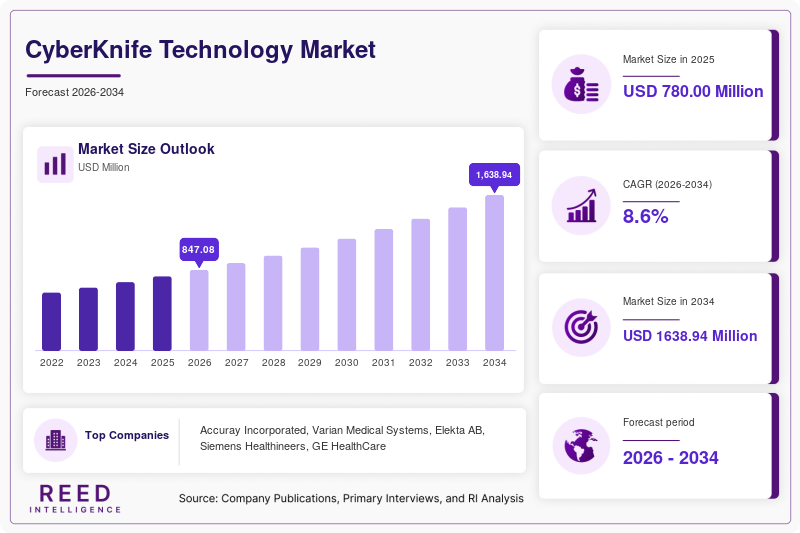
The CyberKnife Technology Market size is estimated at USD 780 million in 2025 and is projected to reach USD 840 million in 2026. With continuous technological advancements and expanding clinical applications, the market is forecasted to reach approximately USD 1750 million by 2034, registering a compound annual growth rate (CAGR) of 8.6% from 2025 to 2034.
CyberKnife technology, a robotic radiosurgery system, is widely used for delivering high-dose radiation with sub-millimeter accuracy. It is particularly effective in treating tumors located in sensitive or hard-to-reach areas, including the brain, spine, lungs, and prostate. The increasing shift toward precision oncology and personalized treatment protocols is contributing significantly to market growth.
Key Highlights
- The market size is estimated at USD 780 million in 2025 and is expected to grow to USD 840 million in 2026. This steady increase reflects rising adoption of advanced radiosurgery systems and expanding clinical applications.
- The market is forecasted to reach approximately USD 1.75 billion by 2034. This growth is supported by increasing cancer prevalence and advancements in precision radiation technologies.
- The market is projected to register a CAGR of 8.6% from 2025 to 2034. Consistent innovation and growing demand for non-invasive treatment solutions are key factors driving this expansion.
Market Trends
Integration of Artificial Intelligence and Real-Time Imaging
The integration of artificial intelligence (AI) and advanced imaging technologies is emerging as a significant trend in the CyberKnife Technology Market. AI-driven algorithms enable real-time tumor tracking and adaptive radiation delivery, improving treatment precision and reducing damage to surrounding healthy tissues. These systems can adjust radiation beams dynamically based on patient movement, which is particularly useful in treating tumors in the lungs and abdomen. The adoption of machine learning models also allows clinicians to personalize treatment plans based on patient-specific data, enhancing clinical outcomes. This trend is expected to accelerate as healthcare providers seek to improve efficiency and reduce treatment errors.
Expansion of Applications Beyond Oncology
Another notable trend is the expanding application of CyberKnife technology beyond traditional oncology treatments. While it is primarily used for cancer care, its use in treating non-malignant conditions such as arteriovenous malformations, trigeminal neuralgia, and certain neurological disorders is increasing. This diversification is opening new revenue streams and expanding the addressable patient population. Hospitals and specialty clinics are investing in CyberKnife systems to offer a broader range of treatments, improving return on investment. The growing acceptance of radiosurgery for non-cancer indications is expected to contribute significantly to long-term market growth.
Market Drivers
Rising Global Cancer Burden
The increasing prevalence of cancer worldwide is a major driver for the CyberKnife Technology Market. As populations age and lifestyle-related risk factors such as smoking, obesity, and sedentary behavior rise, the incidence of cancer continues to grow. CyberKnife systems provide a non-invasive alternative to conventional surgery, making them particularly appealing for elderly patients or those with comorbidities. The ability to deliver high-dose radiation in fewer sessions also improves patient convenience and reduces overall treatment costs. Healthcare systems are increasingly prioritizing advanced treatment technologies to address the growing patient load, further boosting demand for CyberKnife solutions.
Growing Preference for Minimally Invasive Treatments
There is a strong shift toward minimally invasive and non-invasive medical procedures across the healthcare industry. Patients and healthcare providers prefer treatments that reduce pain, minimize complications, and shorten recovery times. CyberKnife technology aligns well with these preferences, offering precise radiation therapy without the need for incisions or anesthesia. This is particularly beneficial for tumors located in complex anatomical regions where traditional surgery carries higher risks. The growing awareness of these benefits among patients and physicians is driving adoption. Additionally, the increasing number of outpatient treatment centers equipped with advanced radiotherapy systems is further supporting market growth.
Market Restraint
High Cost of Installation and Treatment
One of the primary restraints in the CyberKnife Technology Market is the high cost associated with system installation and treatment procedures. CyberKnife systems require significant capital investment, often exceeding several million dollars, making them less accessible for smaller hospitals and healthcare facilities. In addition to the initial cost, maintenance, training, and operational expenses further increase the financial burden.
This cost factor limits adoption in developing regions where healthcare budgets are constrained. Even in developed markets, reimbursement policies may not fully cover the cost of advanced radiosurgery, discouraging some providers from investing in the technology. For example, smaller oncology centers may opt for conventional linear accelerators instead of CyberKnife systems due to budget limitations. As a result, the high cost remains a key barrier to widespread adoption, particularly in emerging economies with limited healthcare infrastructure.
Market Opportunities
Expansion in Emerging Markets
Emerging markets present significant growth opportunities for the CyberKnife Technology Market. Countries in Asia Pacific, Latin America, and the Middle East are investing heavily in healthcare infrastructure to meet the needs of growing populations. Governments and private healthcare providers are increasingly focusing on advanced cancer treatment technologies to improve patient outcomes. The rising middle-class population and increasing healthcare expenditure are creating a favorable environment for the adoption of CyberKnife systems. Additionally, partnerships between global technology providers and local healthcare institutions are facilitating market entry and expansion. These factors are expected to drive strong growth in emerging regions over the forecast period.
Technological Advancements and Product Innovation
Continuous innovation in CyberKnife technology is creating new opportunities for market growth. Advances such as improved imaging systems, enhanced robotic precision, and integration with cloud-based platforms are making these systems more efficient and user-friendly. Manufacturers are focusing on developing next-generation systems that offer faster treatment times and improved patient comfort. These innovations not only enhance clinical outcomes but also increase the attractiveness of CyberKnife systems for healthcare providers. Furthermore, ongoing research and development efforts are expanding the range of treatable conditions, opening new avenues for market expansion and revenue generation.
Segmental Analysis
By Type
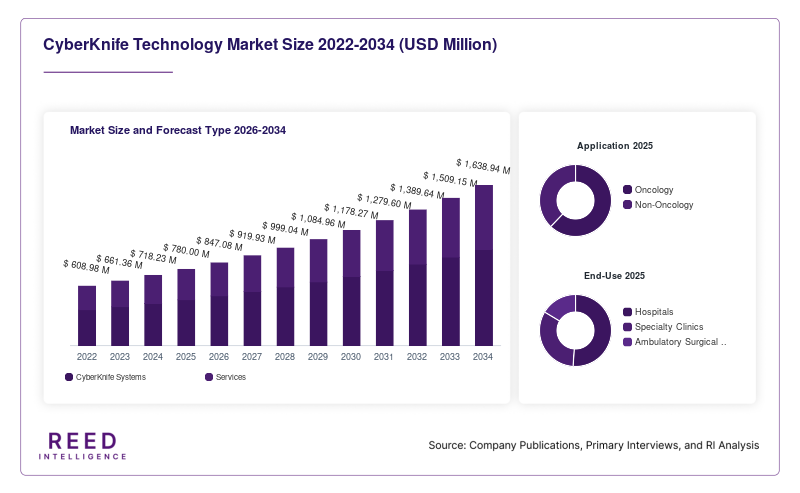
The CyberKnife system segment dominated the market in 2024, accounting for approximately 65% of the total share. This dominance is attributed to the widespread adoption of complete robotic radiosurgery systems in major hospitals and cancer treatment centers. These systems offer high precision and versatility, making them suitable for treating a wide range of tumors. The increasing preference for comprehensive treatment solutions is driving demand for full CyberKnife systems. Additionally, advancements in system capabilities, such as improved imaging and motion tracking, are further enhancing their adoption across healthcare facilities.
The services segment is expected to be the fastest-growing, with a projected CAGR of 9.5% during the forecast period. This growth is driven by the increasing need for system maintenance, software upgrades, and training services. As the installed base of CyberKnife systems expands, the demand for after-sales services is also rising. Healthcare providers are focusing on ensuring optimal system performance and minimizing downtime, which is boosting the growth of this segment.
By Application
Oncology applications dominated the CyberKnife Technology Market in 2024, accounting for approximately 72% of the total share. The high prevalence of cancer and the effectiveness of CyberKnife systems in treating various tumor types are key factors driving this dominance. The technology is widely used for treating brain, lung, prostate, and spinal tumors, among others. Its ability to deliver precise radiation doses while minimizing damage to healthy tissues makes it a preferred choice for oncology treatments.
Non-oncology applications are expected to be the fastest-growing segment, with a CAGR of 9.2% during the forecast period. The increasing use of CyberKnife technology for treating neurological disorders and other non-malignant conditions is driving this growth. Advances in treatment protocols and growing clinical evidence supporting the effectiveness of radiosurgery in non-oncology applications are contributing to the expansion of this segment.
By End-Use
Hospitals accounted for the largest share of the CyberKnife Technology Market in 2024, representing approximately 60% of the total revenue. This dominance is due to the availability of advanced infrastructure and skilled healthcare professionals in hospitals. Large hospitals and cancer centers are the primary adopters of CyberKnife systems, as they handle a high volume of patients and require advanced treatment technologies.
Specialty clinics are expected to be the fastest-growing segment, with a CAGR of 9.0% during the forecast period. The increasing number of specialized cancer treatment centers and outpatient clinics is driving this growth. These facilities focus on providing targeted treatments and personalized care, making them ideal settings for CyberKnife technology. The growing preference for outpatient procedures is further supporting the expansion of this segment.
Regional Analysis
North America
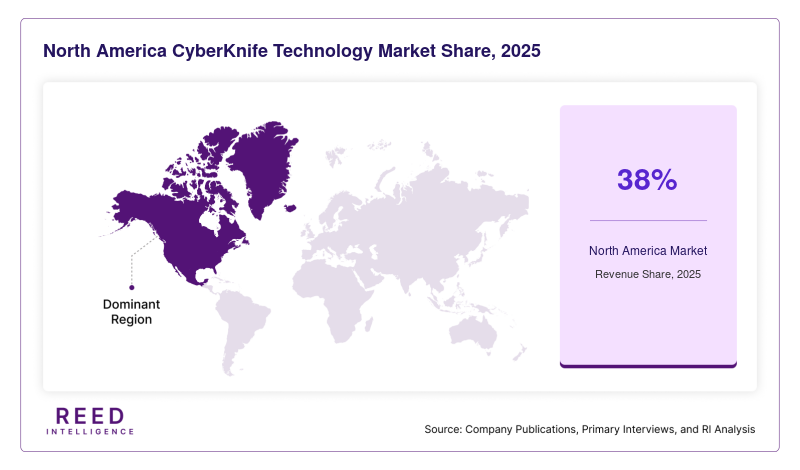
North America held the largest share of the CyberKnife Technology Market in 2025, accounting for approximately 38% of global revenue. The region is expected to maintain its dominance, with a projected CAGR of 7.9% during the forecast period. The strong presence of advanced healthcare infrastructure and high adoption of innovative medical technologies are key factors supporting market growth. Additionally, favorable reimbursement policies and increasing healthcare spending contribute to sustained demand.
The United States dominates the North American market due to its well-established healthcare system and high prevalence of cancer. A unique growth factor in this region is the strong focus on precision medicine and personalized treatment approaches. Hospitals and cancer centers are increasingly adopting CyberKnife systems to enhance treatment accuracy and patient outcomes, further driving market expansion.
Europe
Europe accounted for a significant share of the CyberKnife Technology Market in 2025, contributing around 27% of global revenue. The region is expected to grow at a CAGR of 8.1% during the forecast period. Increasing government initiatives to improve cancer care and the presence of advanced medical facilities are key drivers of market growth in Europe.
Germany leads the European market due to its robust healthcare infrastructure and high investment in medical technologies. A unique growth factor in this region is the emphasis on early cancer detection and treatment. This focus is driving demand for advanced radiosurgery systems, including CyberKnife, to provide effective and timely treatment options.
Asia Pacific
Asia Pacific is expected to witness the fastest growth in the CyberKnife Technology Market, with a CAGR of 9.8% from 2025 to 2034. The region accounted for approximately 20% of the market share in 2025. Rapid economic development, increasing healthcare expenditure, and growing awareness of advanced treatment options are driving market growth.
China dominates the Asia Pacific market due to its large patient population and expanding healthcare infrastructure. A unique growth factor in this region is the increasing number of public-private partnerships aimed at improving access to advanced medical technologies. These collaborations are accelerating the adoption of CyberKnife systems across the region.
Middle East & Africa
The Middle East & Africa region held a smaller share of the CyberKnife Technology Market in 2025, accounting for approximately 8% of global revenue. The market is expected to grow at a CAGR of 8.4% during the forecast period. Increasing investments in healthcare infrastructure and rising awareness of advanced cancer treatments are supporting market growth.
Saudi Arabia leads the market in this region due to its significant healthcare investments and modernization initiatives. A unique growth factor is the government’s focus on establishing specialized cancer treatment centers. These initiatives are driving the adoption of advanced technologies such as CyberKnife systems.
Latin America
Latin America accounted for around 7% of the CyberKnife Technology Market in 2025 and is expected to grow at a CAGR of 8.2% during the forecast period. Improving healthcare infrastructure and increasing focus on cancer treatment are key factors driving market growth in the region.
Brazil dominates the Latin American market due to its large healthcare system and growing investment in advanced medical technologies. A unique growth factor is the rising demand for private healthcare services, which is encouraging the adoption of advanced treatment systems such as CyberKnife in private hospitals and specialty clinics.
Competitive Landscape
The CyberKnife Technology Market is moderately consolidated, with a few key players dominating the global landscape. Companies are focusing on technological innovation, strategic partnerships, and geographic expansion to strengthen their market position.
One of the leading players in the market is Accuray Incorporated, which is known for its advanced CyberKnife systems and strong global presence. The company continues to invest in research and development to enhance system capabilities and expand its product portfolio. A recent development includes the launch of upgraded software solutions aimed at improving treatment accuracy and workflow efficiency.
Other major players are also focusing on expanding their distribution networks and entering emerging markets. Strategic collaborations with healthcare providers and research institutions are helping companies enhance their market reach and develop innovative treatment solutions. The competitive environment is expected to intensify as new players enter the market and existing companies continue to innovate.
Key Players List
- Accuray Incorporated
- Varian Medical Systems
- Elekta AB
- Siemens Healthineers
- GE HealthCare
- Brainlab AG
- IBA Radiopharma Solutions
- Hitachi Ltd.
- Toshiba Medical Systems
- Philips Healthcare
- Mevion Medical Systems
- Panacea Medical Technologies
- Shinva Medical Instrument Co., Ltd.
- ViewRay Inc.
- RaySearch Laboratories
Recent Developments
- In 2024, Accuray Incorporated introduced an upgraded CyberKnife system with enhanced AI-driven tumor tracking capabilities, improving treatment precision.
- In 2023, a major healthcare provider in Asia Pacific partnered with a global manufacturer to expand access to CyberKnife technology across multiple hospitals.
- In 2024, a European cancer center adopted next-generation CyberKnife systems to enhance its radiotherapy services and improve patient outcomes.
CyberKnife Technology Market Segments
Type
- CyberKnife Systems
- Services
Application
- Oncology
- Non-Oncology
End-Use
- Hospitals
- Specialty Clinics
- Ambulatory Surgical Centers
By Region
- North America
- Europe
- APAC
- Middle East and Africa
- LATAM