Cytology Brushes Market Size, Share & Demand Report By Product Type (Cervical Cytology Brushes, Endoscopic Cytology Brushes, Bronchial Cytology Brushes, Urological Cytology Brushes), By Application (Cancer Screening, Infectious Disease Diagnostics, Inflammatory Disease Assessment, Research Use), By End Use (Hospitals, Diagnostic Laboratories, Ambulatory Centers, Specialty Clinics), By Region & Segment Forecasts, 2026–2034
USD 3950
Market Overview
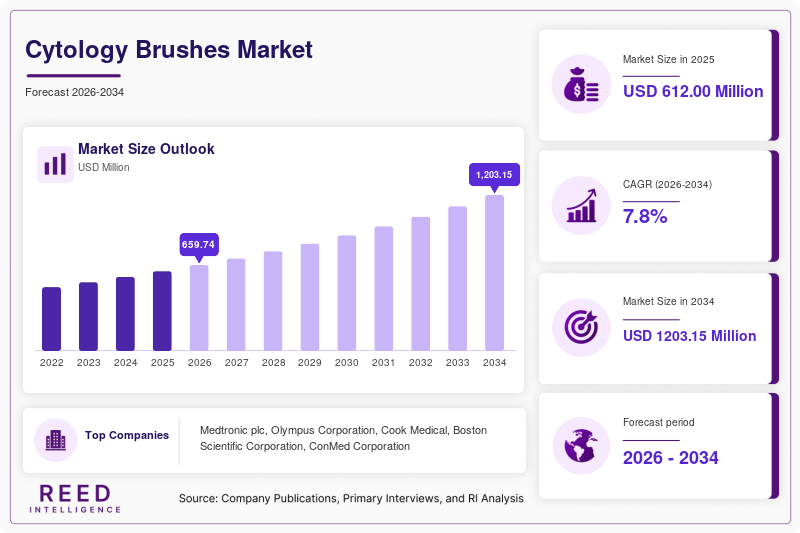
The Cytology Brushes Market size was valued at USD 612 million in 2026 and is projected to reach USD 1,118 million by 2034, expanding at a CAGR of 7.8% during 2026–2034. Cytology brushes are widely used for collecting cell samples during diagnostic procedures involving the cervix, bronchi, gastrointestinal tract, and urinary tract. Demand is rising as healthcare systems place greater focus on early disease detection, minimally invasive screening, and precision pathology workflows. Hospitals and specialty clinics are increasingly adopting single-use sterile brushes that reduce contamination risk and improve sample adequacy.
A major global factor supporting market growth is the continued expansion of cancer screening programs. Governments and private providers are investing in cervical cancer screening, lung lesion assessment, and gastrointestinal diagnostics. Growing awareness regarding preventive care has increased routine examinations, especially in urban healthcare centers. At the same time, improvements in brush design, flexible shafts, ergonomic handles, and enhanced bristle geometry are helping clinicians obtain higher-quality cellular samples with less patient discomfort. Emerging markets are also strengthening laboratory capacity, creating additional demand for cytology consumables.
Key Highlights
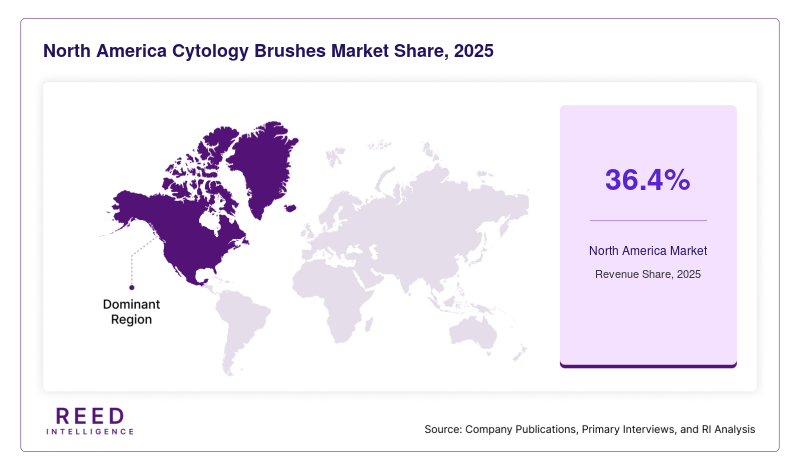
- North America dominated the market with a 36.4% share in 2025.
- Asia Pacific is expected to grow at the fastest CAGR of 9.6% during 2026–2034.
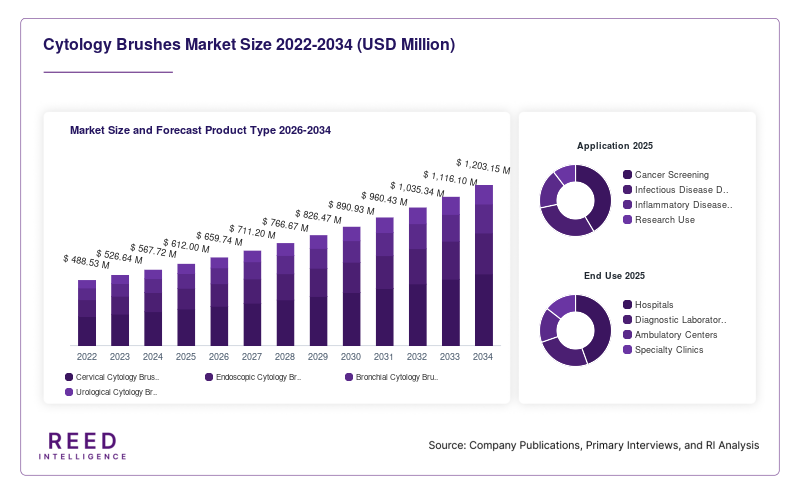
- By product type, cervical cytology brushes accounted for the largest share of 42.1%.
- while endoscopic cytology brushes are projected to grow at a CAGR of 8.9%.
- By application, cancer screening led with a 47.3% share, whereas infectious disease diagnostics is expected to expand at a CAGR of 8.4%.
- The United States remained the dominant country, with market values of USD 176 million in 2024 and USD 191 million in 2025.
Market Trends
Shift Toward Single-Use Sterile Sampling Devices
Healthcare providers are increasingly replacing reusable sampling accessories with disposable cytology brushes to improve infection control and workflow efficiency. Single-use products eliminate reprocessing time, reduce sterilization costs, and help facilities comply with stricter hygiene standards. This trend is particularly visible in ambulatory surgery centers, gynecology clinics, and bronchoscopy units where rapid patient turnover is common. Manufacturers are responding by launching individually packed sterile brushes with clear labeling, improved shelf life, and multiple size options. Procurement teams also prefer disposable products because they simplify inventory management and lower liability linked to cross-contamination events.
Integration with Advanced Screening Pathways
Cytology brushes are being incorporated into broader diagnostic pathways that include liquid-based cytology, molecular testing, and digital pathology. Sample collection devices are now expected to deliver adequate cell yield for multiple downstream tests rather than only conventional smear preparation. This has encouraged demand for brushes engineered to preserve cell morphology and maximize transfer into transport media. Laboratories using automation platforms value consistent specimen quality, which supports repeatable results. As screening programs modernize, clinics are selecting premium brushes that improve first-pass sampling success and reduce the need for repeat appointments, strengthening revenue opportunities for suppliers.
Market Drivers
Rising Burden of Cancer and Preventive Screening Uptake
The growing incidence of cervical, lung, gastrointestinal, and urinary cancers continues to support demand for reliable cytology sampling tools. Public health campaigns promoting routine screening have increased patient participation in annual checkups and targeted diagnostic procedures. Many countries now reimburse screening visits, making testing more accessible to broader populations. Cytology brushes are often preferred because they are simple to use, low cost, and suitable for outpatient settings. As physicians seek early-stage detection to improve treatment outcomes, regular procurement of high-quality brushes has become a standard requirement across hospitals, laboratories, and specialty centers.
Expansion of Endoscopy and Minimally Invasive Procedures
The rapid increase in diagnostic endoscopy volumes is another major growth catalyst for the Cytology Brushes Market. Gastroenterology and pulmonology departments rely on brush-based sampling during bronchoscopy, ERCP, colonoscopy, and upper GI procedures to investigate suspicious lesions. Compared with surgical biopsy, brush cytology can be faster, less invasive, and more comfortable for selected cases. Aging populations with chronic respiratory and digestive disorders are adding to procedure demand. Healthcare facilities are therefore increasing purchases of flexible and procedure-specific brushes designed for narrow channels, difficult anatomy, and efficient specimen retrieval.
Market Restraint
Pricing Pressure and Variability in Diagnostic Yield
Despite favorable demand conditions, the market faces pressure from low-cost competition and variability in sampling outcomes. In price-sensitive regions, hospitals often prioritize inexpensive generic brushes, which can compress margins for established brands and limit innovation spending. At the same time, inadequate technique, poor brush selection, or low cellular yield may reduce diagnostic confidence and require repeat procedures. This can affect clinician trust in lower-quality products. Smaller clinics may delay switching to premium brushes if reimbursement remains limited. The combined impact of price erosion and inconsistent sample adequacy creates a restraint for premium segment expansion, particularly in public healthcare systems with tight procurement budgets.
Market Opportunities
Untapped Potential in Emerging Screening Programs
Several middle-income countries are expanding national screening initiatives for cervical cancer and other high-burden diseases. These programs require scalable consumables that can be distributed to regional clinics and community hospitals. Cytology brushes fit this need because they are portable, affordable, and easy to use after brief training. Suppliers that establish local partnerships, multilingual packaging, and dependable logistics can gain early market share. Demand is expected to rise further as donor-funded healthcare projects improve laboratory infrastructure and specimen transport networks in underserved areas.
Product Innovation Focused on Multi-Test Sampling
An important opportunity lies in developing brushes that support multiple diagnostic uses from one sample collection event. Providers increasingly prefer devices that can collect adequate cells for cytology, HPV testing, microbiology, and molecular analysis simultaneously. This reduces patient discomfort and lowers repeat visit rates. Companies investing in advanced bristle materials, optimized cell release systems, and compatibility with liquid transport media may command premium pricing. Such innovations can differentiate brands in mature markets where standard brushes are heavily commoditized and purchasing decisions increasingly depend on measurable clinical efficiency.
Segmental Analysis
By Product Type
Cervical cytology brushes were the dominant subsegment, accounting for 42.1% share in 2024. Their leadership is linked to routine Pap testing, HPV screening, and annual gynecological examinations across both developed and developing markets. These brushes are widely used in hospitals, physician offices, fertility centers, and community screening camps. High repeat usage creates strong recurring revenue streams for suppliers. Product availability in multiple softness grades and handle designs also supports clinician preference. Procurement departments favor standardized cervical brushes because they integrate easily with existing liquid-based cytology workflows and specimen containers.
Endoscopic cytology brushes are the fastest-growing product type and are expected to expand at a CAGR of 8.9% through 2034. Growth is driven by increasing bronchoscopy, ERCP, and gastrointestinal lesion investigations. Physicians require flexible devices that can navigate narrow working channels while preserving sampling performance. Rising demand for minimally invasive diagnostics and same-day procedures supports this segment. Manufacturers are launching radiopaque tips, kink-resistant shafts, and retractable brush heads that improve handling and safety. As respiratory and digestive disease prevalence rises globally, endoscopy-linked brush demand is likely to remain strong.
By Application
Cancer screening held the largest share of 47.3% in 2024. Cytology brushes are routinely used in cervical cancer programs and in the evaluation of suspicious lesions in respiratory and digestive pathways. Public health agencies prefer scalable screening tools with low unit costs and easy training requirements. Early detection goals, favorable reimbursement in many countries, and rising awareness campaigns continue to sustain this segment. Private diagnostic chains also contribute through bundled wellness packages that include women’s health assessments. Because screening requires recurring tests over time, the application generates consistent purchasing volumes.
Infectious disease diagnostics is the fastest-growing application, projected to rise at a CAGR of 8.4% during the forecast period. Clinicians increasingly use brush-based sampling where cellular and microbial assessment is required simultaneously. Better awareness of sexually transmitted infections, respiratory pathogens, and localized inflammatory conditions supports demand. Laboratories value adequate sample collection that reduces false negatives and repeat visits. Growth is especially notable in urban outpatient centers adopting broader diagnostic panels. As preventive medicine expands, combined infection and cytology assessment pathways may create new revenue channels for manufacturers.
By End Use
Hospitals represented the leading end-use segment with 51.6% share in 2024. Large hospitals perform high volumes of gynecology exams, bronchoscopy procedures, endoscopies, and pathology testing, making them major purchasers of cytology brushes. Centralized procurement contracts often favor dependable suppliers able to deliver consistent quality and large-scale volumes. Teaching hospitals also influence brand adoption because clinician training frequently occurs using selected product lines. Their broad specialty coverage ensures demand across multiple departments, including oncology, gastroenterology, pulmonology, and women’s health.
Diagnostic laboratories and ambulatory centers are the fastest-growing end users, advancing at a CAGR of 8.7% through 2034. Decentralization of healthcare services and growth in same-day diagnostic procedures are shifting volumes outside traditional hospitals. Standalone women’s health clinics and endoscopy centers prefer compact inventory models centered on disposable consumables. Faster patient turnover increases repeat purchasing frequency. In addition, independent labs often partner with clinic networks, encouraging standardized brush selection across multiple collection sites and creating scalable supplier contracts.
Regional Analysis
North America
North America held 36.4% of the global Cytology Brushes Market in 2025 and is forecast to expand at a CAGR of 6.9% through 2034. The region benefits from mature screening systems, high diagnostic awareness, and steady replacement demand from hospitals and outpatient centers. Strong reimbursement for preventive care and high procedure volumes in gynecology and pulmonology support recurring purchases of disposable sampling devices.
The United States remains the dominant country due to its large installed base of specialty clinics and pathology laboratories. A unique growth factor is the rapid adoption of integrated women’s health service networks that combine annual exams, HPV testing, and cytology sampling in one visit. This model increases throughput and strengthens repeat demand for premium cervical brushes.
Europe
Europe accounted for 28.1% market share in 2025 and is projected to grow at a CAGR of 7.1% during the forecast period. Stable healthcare funding, organized cancer screening programs, and broad clinician familiarity with cytology procedures sustain regional demand. Western Europe leads premium product adoption, while Central and Eastern Europe present opportunities for value-focused suppliers expanding distribution reach.
Germany leads the regional market owing to strong hospital procurement systems and high endoscopy procedure volumes. A unique growth factor is the country’s emphasis on preventive occupational healthcare, where routine examinations often lead to earlier referrals for diagnostic screening. This expands demand for gynecological and respiratory sampling consumables across public and private care settings.
Asia Pacific
Asia Pacific represented 22.7% share in 2025 and is expected to register the fastest CAGR of 9.6% through 2034. Rising healthcare expenditure, urbanization, and growing awareness of women’s health screening are accelerating product adoption. Regional manufacturers are also improving local supply availability, helping reduce lead times and import dependency for hospitals.
China is the largest country market in the region. A unique growth factor is the rapid expansion of county-level hospitals equipped with upgraded diagnostic departments. As these facilities add pathology and endoscopy services, procurement of affordable cytology brushes is increasing sharply. Private hospital chains are also supporting demand for premium imported brands.
Middle East & Africa
Middle East & Africa held 7.2% share in 2025 and is forecast to grow at a CAGR of 7.7%. Market growth is supported by healthcare modernization programs, rising cancer awareness, and increasing private hospital investment. Larger Gulf countries are leading adoption of advanced diagnostic tools, while African markets are gradually improving screening access through public initiatives.
Saudi Arabia is the leading country market. A unique growth factor is the expansion of specialized women’s health centers and digital hospital projects that prioritize preventive diagnostics. Procurement of sterile disposable devices aligns with infection-control standards, creating steady demand for cervical and endoscopic cytology brushes across urban care networks.
Latin America
Latin America captured 5.6% share in 2025 and is projected to grow at a CAGR of 7.4% through 2034. Demand is supported by expanding private healthcare coverage, improved laboratory services, and growing awareness of early detection. Regional distributors play a key role in supplying hospitals with imported and locally assembled consumables at competitive prices.
Brazil dominates the regional market due to its large patient base and strong network of urban hospitals. A unique growth factor is the expansion of mobile women’s health outreach units that provide screening in remote communities. These programs increase consumption of low-cost disposable cervical brushes and specimen collection kits.
Competitive Landscape
The Cytology Brushes Market is moderately fragmented, with global medical device companies competing alongside regional consumables manufacturers. Product quality, sterility assurance, ergonomic design, pricing, and distributor reach remain core competitive factors. Companies are expanding portfolios to include specimen transport kits, biopsy accessories, and endoscopy tools to strengthen bundled sales opportunities.
Medtronic plc is viewed as a market leader due to its broad clinical presence and strong hospital relationships. A recent development includes the expansion of its single-use endoscopy accessory line in selected Asia Pacific markets. Other active participants include Olympus Corporation, Cook Medical, Boston Scientific Corporation, and ConMed Corporation, each leveraging established procedural device channels. Mid-sized suppliers are competing through value pricing and customized private-label manufacturing. Digital procurement platforms are also increasing price transparency, encouraging firms to differentiate through service levels, training support, and reliable supply continuity.
Key Players
- Medtronic plc
- Olympus Corporation
- Cook Medical
- Boston Scientific Corporation
- ConMed Corporation
- CooperSurgical Inc.
- Hologic Inc.
- BD
- Cardinal Health
- Teleflex Incorporated
- Merit Medical Systems
- SteryLab S.r.l.
- EndoChoice
- Prince Medical
- Gynetics Medical Products
Recent Developments
- A leading multinational supplier introduced softer-bristle cervical brushes designed for improved patient comfort in outpatient clinics.
- Several Asian manufacturers expanded automated sterile packaging capacity to meet rising regional demand for disposable sampling devices.
- A major endoscopy device company launched a next-generation cytology brush with reinforced catheter flexibility for complex bronchoscopy procedures.
Cytology Brushes Market Segments
Product Type
- Cervical Cytology Brushes
- Endoscopic Cytology Brushes
- Bronchial Cytology Brushes
- Urological Cytology Brushes
Application
- Cancer Screening
- Infectious Disease Diagnostics
- Inflammatory Disease Assessment
- Research Use
End Use
- Hospitals
- Diagnostic Laboratories
- Ambulatory Centers
- Specialty Clinics
By Region
- North America
- Europe
- APAC
- Middle East and Africa
- LATAM