Dental Intraoral Photostimulable Phosphor System Market Size, Share & Demand Report By Type (Chairside Systems, Portable Systems), By Application (Caries Detection, Periodontal Diagnosis, Endodontic Diagnosis, Others), By End-Use (Dental Clinics, Hospitals, Diagnostic Imaging Centers), By Plate Size (Size 0, Size 1, Size 2, Size 3), By Region & Segment Forecasts, 2025–2034
USD 3950
Market Overview
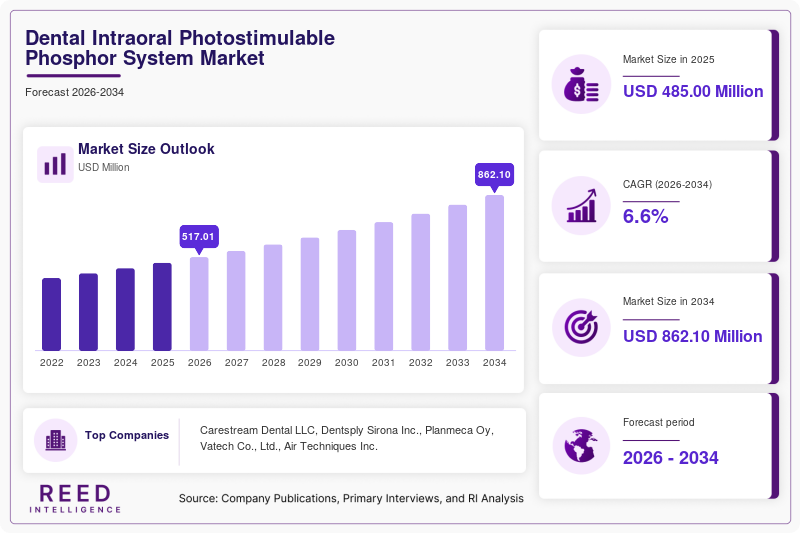
The Dental Intraoral Photostimulable Phosphor System Market size was valued at approximately USD 485 million in 2025 and is projected to reach around USD 865 million by 2034, expanding at a CAGR of 6.6% during the forecast period (2025–2034). The market has experienced steady expansion due to increasing adoption of digital dental imaging solutions across clinical and diagnostic environments. These systems, known for their cost-efficiency and compatibility with existing X-ray units, continue to replace conventional film-based imaging technologies.
A key global factor supporting market growth is the growing emphasis on preventive dental care and early diagnosis. Dental professionals increasingly rely on high-resolution imaging to detect caries, periodontal diseases, and oral abnormalities at early stages. Photostimulable phosphor (PSP) systems offer flexibility, improved patient comfort, and lower radiation exposure compared to traditional methods, making them highly suitable for modern dental practices.
Key Highlights:
- North America dominated the market with a share of 38% in 2025, while Asia Pacific is projected to grow at the fastest CAGR of 8.1% during the forecast period.
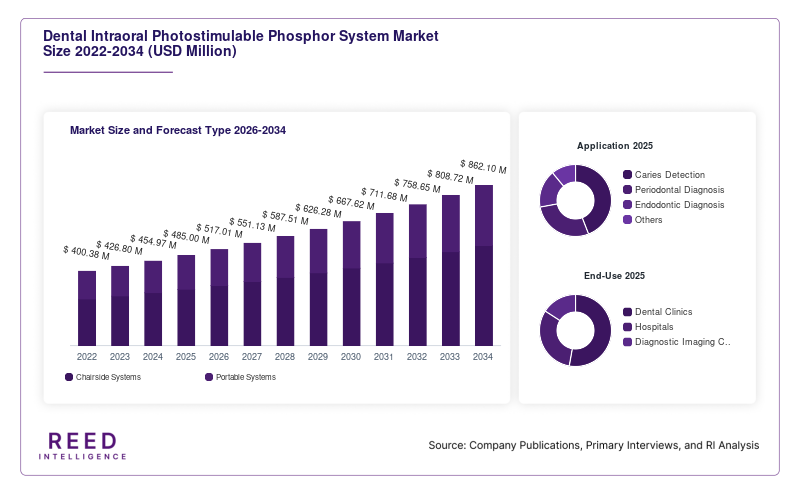
- By type, chairside systems led with a 54% share in 2024, whereas portable systems are expected to grow fastest at a CAGR of 7.5%.
- By end-use, dental clinics accounted for the largest share, while diagnostic imaging centers are anticipated to expand at a CAGR of 7.2%.
- The United States remained the dominant country, with market values of USD 162 million in 2024 and USD 171 million in 2025.
Market Trends
Integration with Digital Workflow Systems
Dental practices are increasingly adopting integrated digital ecosystems that combine imaging, patient management, and diagnostic tools. PSP systems are being designed to seamlessly connect with dental software platforms, enabling faster image processing and storage. This integration reduces workflow inefficiencies and enhances clinical decision-making. As clinics shift toward paperless operations, demand for systems that support interoperability and cloud storage is rising steadily.
Growing Preference for Portable and Compact Imaging Devices
The trend toward mobility and space optimization is shaping the Dental Intraoral Photostimulable Phosphor System Market. Portable PSP systems are gaining traction, particularly in small clinics and mobile dental units. These systems offer flexibility in usage without compromising image quality. Their lightweight design and ease of installation make them suitable for outreach programs and remote dental services, contributing to broader accessibility of dental imaging solutions.
Market Drivers
Rising Prevalence of Dental Disorders
The increasing incidence of dental caries, periodontal diseases, and oral infections is driving the demand for advanced diagnostic tools. PSP systems provide high-quality images that assist in accurate diagnosis and treatment planning. As oral health awareness improves globally, more patients seek regular dental check-ups, boosting the need for efficient imaging systems.
Cost-Effectiveness Compared to Direct Digital Systems
Photostimulable phosphor systems offer a cost advantage over direct digital radiography systems. They allow dental clinics to upgrade to digital imaging without replacing existing X-ray infrastructure. This affordability makes PSP systems attractive for small and mid-sized practices, especially in emerging markets where budget constraints are significant.
Market Restraint
Competition from Direct Digital Radiography Systems
One of the major restraints in the Dental Intraoral Photostimulable Phosphor System Market is the growing competition from direct digital radiography (DDR) systems. DDR systems provide instant image acquisition without the need for scanning, reducing processing time significantly. This technological advantage appeals to high-volume dental practices seeking faster workflows.
Additionally, DDR systems eliminate the need for consumables such as phosphor plates, reducing recurring costs over time. While PSP systems remain cost-effective initially, long-term operational considerations are influencing purchasing decisions. As DDR technology continues to evolve and become more affordable, it poses a challenge to the widespread adoption of PSP systems, particularly in developed markets.
Market Opportunities
Expansion in Emerging Markets
Emerging economies present significant growth opportunities for the Dental Intraoral Photostimulable Phosphor System Market. Increasing healthcare investments, rising disposable incomes, and growing awareness of oral health are driving demand for dental imaging solutions. PSP systems, due to their affordability and adaptability, are well-positioned to penetrate these markets.
Technological Advancements in Imaging Plates
Continuous improvements in phosphor plate technology are enhancing image quality and durability. Advanced plates offer higher resolution, faster scanning times, and improved resistance to wear and tear. These innovations are expected to increase adoption rates by addressing concerns related to maintenance and image consistency, thereby supporting long-term market growth.
Segmental Analysis
By Type
Chairside systems dominated the Dental Intraoral Photostimulable Phosphor System Market with a 54% share in 2024. Their ease of use and integration into existing dental workflows made them the preferred choice for most clinics.
Portable systems are expected to grow at the fastest CAGR of 7.5% during the forecast period. Their mobility and suitability for remote applications will drive adoption, particularly in underserved areas.
By Application
Caries detection held the largest share of 46% in 2024, as early diagnosis remains a primary focus in dental care. PSP systems provide detailed images that aid in identifying early-stage decay.
Periodontal disease diagnosis is projected to grow at a CAGR of 7.1%, driven by increasing awareness of gum health and the need for advanced diagnostic tools.
By End-Use
Dental clinics accounted for the largest share of 62% in 2024 due to the high volume of patient visits and routine imaging requirements. Clinics rely on PSP systems for cost-effective digital imaging solutions.
Diagnostic imaging centers are expected to grow at a CAGR of 7.2%, supported by the rising demand for specialized imaging services and advanced diagnostic capabilities.
By Plate Size
Size 2 plates dominated the market with a 48% share in 2024, as they are widely used for adult intraoral imaging. Their versatility makes them suitable for various diagnostic procedures.
Size 0 plates are anticipated to grow at a CAGR of 7.0%, driven by increasing pediatric dental care and the need for smaller imaging solutions.
Regional Analysis
North America
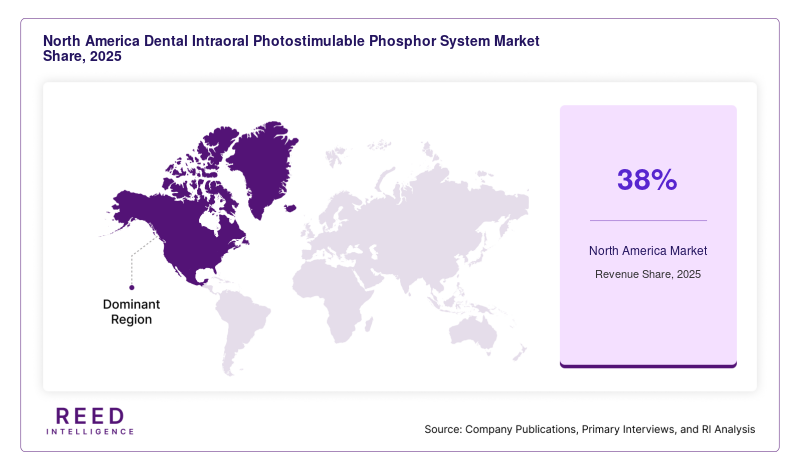
North America accounted for 38% of the Dental Intraoral Photostimulable Phosphor System Market share in 2025 and will grow at a CAGR of 5.9% through 2034. The region’s growth will be driven by advanced healthcare infrastructure and widespread adoption of digital dental technologies.
The United States dominated the regional market due to strong reimbursement frameworks and high patient awareness. The presence of established dental service organizations and continuous investments in dental care technologies further support market expansion.
Europe
Europe held a 27% market share in 2025 and is projected to grow at a CAGR of 6.2% during the forecast period. The region benefits from a well-established dental care system and increasing adoption of digital imaging solutions.
Germany led the European market, supported by a strong dental equipment manufacturing base and high demand for precision diagnostics. Government initiatives promoting oral healthcare also contribute to steady growth.
Asia Pacific
Asia Pacific captured 20% of the market share in 2025 and is expected to grow at the fastest CAGR of 8.1% from 2025 to 2034. Rapid urbanization and improving healthcare infrastructure are key growth factors.
China emerged as the dominant country, driven by increasing dental tourism and expanding private dental clinics. Rising awareness about oral hygiene and growing investments in healthcare technology further enhance market potential.
Middle East & Africa
The Middle East & Africa region held a 9% share in 2025 and will grow at a CAGR of 6.8% over the forecast period. Growth is supported by increasing healthcare expenditure and expanding dental care services.
Saudi Arabia led the market due to government initiatives aimed at improving healthcare facilities. The rising number of dental clinics and growing focus on preventive care contribute to regional development.
Latin America
Latin America accounted for 6% of the market share in 2025 and is projected to grow at a CAGR of 6.5% through 2034. The region is witnessing gradual adoption of digital dental imaging technologies.
Brazil dominated the regional market, driven by a large patient population and increasing demand for cosmetic dentistry. The expansion of private dental clinics supports market growth.
Competitive Landscape
The Dental Intraoral Photostimulable Phosphor System Market is moderately competitive, with several global and regional players focusing on innovation and product development. Companies are investing in advanced imaging technologies and expanding their distribution networks to strengthen market presence.
A leading player in the market is Carestream Dental, known for its comprehensive portfolio of dental imaging solutions. The company recently introduced an upgraded PSP system with enhanced scanning speed and improved image clarity, reinforcing its competitive position.
Other key players are focusing on strategic partnerships and product launches to cater to evolving customer needs. The competitive landscape is characterized by continuous technological advancements and efforts to improve system efficiency and user experience.
Key Players List
- Carestream Dental LLC
- Dentsply Sirona Inc.
- Planmeca Oy
- Vatech Co., Ltd.
- Air Techniques Inc.
- Acteon Group
- Midmark Corporation
- Owandy Radiology
- Trident S.r.l.
- Digiray Corporation
- Nical S.p.A.
- XDR Radiology
- FONA Dental
- Villa Sistemi Medicali
- MyRay (Cefla Group)
Recent Developments
- 2024: Carestream Dental launched an advanced PSP scanner with improved image processing capabilities.
- 2024: Planmeca introduced a compact portable PSP system targeting small clinics.
- 2023: Dentsply Sirona expanded its imaging portfolio with enhanced software integration features.
- 2023: Vatech developed a high-resolution phosphor plate for improved diagnostic accuracy.
- 2023: Air Techniques partnered with regional distributors to expand its presence in Asia Pacific.
Dental Intraoral Photostimulable Phosphor System Market Segments
Type
- Chairside Systems
- Portable Systems
Application
- Caries Detection
- Periodontal Diagnosis
- Endodontic Diagnosis
- Others
End-Use
- Dental Clinics
- Hospitals
- Diagnostic Imaging Centers
Plate Size
- Size 0
- Size 1
- Size 2
- Size 3
By Region
- North America
- Europe
- APAC
- Middle East and Africa
- LATAM