Denture Disinfectants Market Size, Share Demand Report By Product Type (Tablet Disinfectants, Liquid Disinfectants, Foam Cleansers, Enzyme-Based Disinfectants, Ultrasonic Cleaning Solutions), By Distribution Channel (Retail Pharmacies, Hospital Pharmacies, Online Pharmacies, Supermarkets & Hypermarkets, Dental Clinics), By End-Use (Homecare, Dental Clinics, Hospitals, Long-Term Care Facilities) By Region & Segment Forecasts, 2026–2034
USD 3950
Market Overview
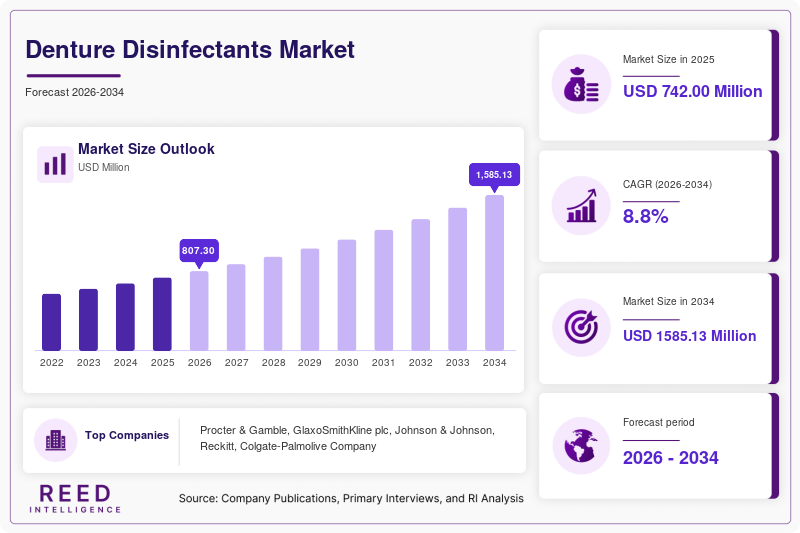
The global Denture Disinfectants Market was valued at approximately USD 742 million in 2026 and is projected to reach nearly USD 1460 million by 2034, expanding at a CAGR of 8.8% during the forecast period from 2026 to 2034. The market continues to gain momentum due to the rising aging population, growing awareness regarding oral hygiene, and increasing adoption of removable dental prosthetics among adults and elderly patients. Denture disinfectants are widely used to reduce microbial contamination, eliminate odor, and improve denture durability, making them an important component of preventive oral healthcare.
One of the major global factors supporting market growth is the increasing prevalence of edentulism and periodontal disorders across aging demographics. Countries with rapidly expanding elderly populations are witnessing greater demand for denture maintenance products as healthcare systems emphasize infection prevention and oral health management. In addition, technological improvements in non-abrasive cleansing formulations and effervescent disinfecting tablets have enhanced user convenience and safety. Manufacturers are also introducing alcohol-free, biodegradable, and enzyme-based formulations to meet evolving consumer preferences for safer and sustainable oral care products.
Key Highlights
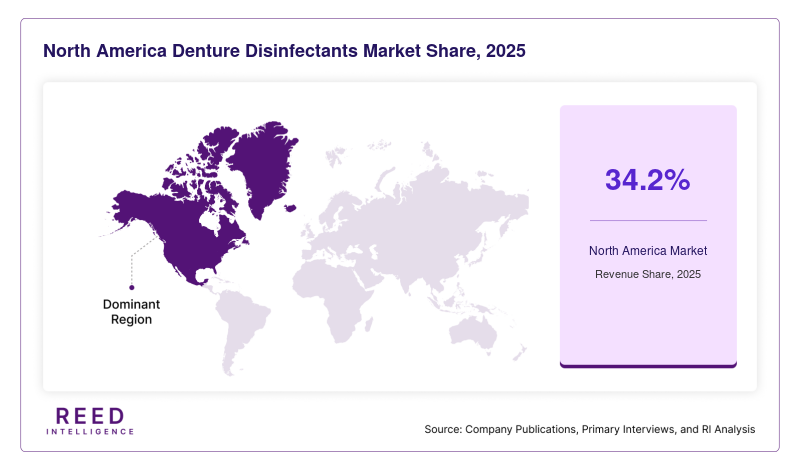
- North America dominated the market with a 34.2% share in 2025.
- Asia Pacific is expected to grow at the fastest CAGR of 10.9% during 2026–2034.
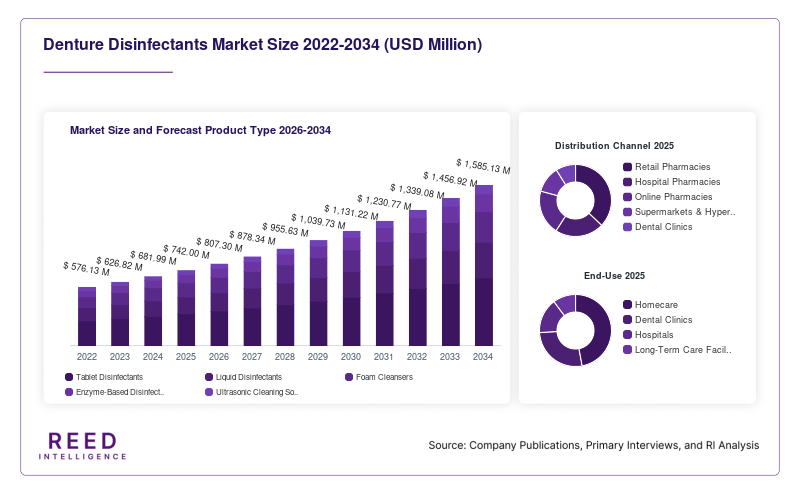
- By product type, tablet disinfectants accounted for the largest share of 39.4%.
- while enzyme-based disinfectants are projected to grow at a CAGR of 11.7%.
- By distribution channel, retail pharmacies led with a 42.1% share, whereas online pharmacies are expected to expand at a CAGR of 12.3%.
- By end-use, homecare applications dominated with a 58.6% share, while dental clinics are anticipated to grow at a CAGR of 10.5%.
- The United States remained the dominant country, with market values of USD 218 million in 2024 and USD 236 million in 2025.
Market Trends
Rising Preference for Enzyme-Based and Non-Toxic Denture Cleaning Solutions
Consumer demand for safer and gentler oral hygiene products has accelerated the adoption of enzyme-based denture disinfectants across developed and emerging economies. Traditional chemical disinfectants containing strong oxidizing agents are increasingly being replaced by formulations that reduce irritation while maintaining antimicrobial effectiveness. Manufacturers are introducing low-residue cleansing products capable of eliminating bacteria, fungi, and plaque without damaging denture materials. This trend is especially visible among elderly consumers who prefer mild formulations suitable for long-term daily use. Healthcare professionals are also recommending enzyme-based products due to their compatibility with acrylic dentures and metal partials. The market is further benefiting from growing environmental awareness, as consumers seek biodegradable packaging and phosphate-free ingredients. Product differentiation through herbal extracts, mint-based deodorizing agents, and anti-stain technologies is also becoming a major competitive strategy among global oral care brands.
Increasing Adoption of Online Oral Care Product Distribution Channels
The rapid expansion of digital healthcare retailing has transformed the purchasing behavior of denture care consumers worldwide. Online pharmacies and e-commerce platforms are becoming important sales channels for denture disinfectants due to convenience, subscription-based purchasing models, and broader product availability. Elderly consumers and caregivers increasingly prefer home delivery services for recurring oral care products, especially in urban regions with strong internet penetration. Manufacturers are partnering with digital marketplaces to expand regional accessibility and improve brand visibility. The availability of consumer reviews, educational videos, and promotional discounts has also strengthened online product adoption. In addition, tele-dentistry services are influencing product recommendations, enabling dentists to guide patients toward specific denture hygiene products through virtual consultations. This digital transformation is expected to support long-term market growth and strengthen direct-to-consumer sales strategies across the oral healthcare industry.
Market Drivers
Growing Elderly Population and Rising Denture Usage
The global increase in the geriatric population remains one of the strongest growth drivers for the denture disinfectants market. Aging individuals are more susceptible to tooth loss, periodontal disease, and oral infections, resulting in higher adoption of complete and partial dentures. As denture use rises, demand for effective cleaning and disinfecting solutions continues to expand across hospitals, dental clinics, and homecare settings. Elderly consumers are becoming more aware of complications linked to poor denture hygiene, including fungal infections, gum irritation, and oral odor. Healthcare providers are emphasizing routine denture disinfection as part of preventive oral care programs, especially in long-term care facilities and assisted living centers. In many countries, public healthcare initiatives focused on senior wellness are also increasing oral hygiene awareness, which directly supports consistent demand for denture disinfectants and associated maintenance products.
Expanding Awareness of Denture-Related Infections and Oral Hygiene
Increasing awareness regarding denture-associated microbial infections has significantly strengthened demand for disinfecting products worldwide. Improperly cleaned dentures can accumulate bacteria, fungi, and biofilms that contribute to oral health complications such as stomatitis and bad breath. Dental associations and oral healthcare professionals are actively educating patients about the importance of daily denture hygiene practices. This educational outreach has encouraged regular use of cleansing tablets, antimicrobial soaking solutions, and foam-based disinfectants. Consumers are also paying greater attention to preventive healthcare and personal hygiene following global public health concerns in recent years. Product manufacturers are responding by investing in consumer education campaigns, improved labeling, and clinically tested antimicrobial claims. As awareness increases among both patients and caregivers, the market is expected to experience sustained demand across institutional and personal healthcare applications.
Market Restraint
Availability of Low-Cost Alternatives and Limited Awareness in Developing Regions
Despite steady market expansion, the denture disinfectants industry faces challenges associated with low-cost household substitutes and limited oral healthcare awareness in several developing economies. Many denture users continue to rely on traditional cleaning methods such as toothpaste, soap solutions, vinegar, or saltwater mixtures instead of specialized disinfecting products. These alternatives are often perceived as more affordable, particularly among low-income populations and elderly individuals with limited healthcare spending capacity. In rural and underdeveloped areas, awareness regarding denture-associated infections and proper prosthetic maintenance remains relatively low, reducing product penetration. Limited access to dental professionals and oral hygiene education further restricts market growth in certain regions. Additionally, some consumers avoid frequent use of chemical disinfectants due to concerns regarding taste alteration, allergic reactions, or potential damage to denture materials. These factors collectively create pricing pressure for manufacturers and slow the adoption of premium disinfecting formulations, particularly in price-sensitive healthcare markets.
Market Opportunities
Expansion of Dental Tourism and Prosthetic Dentistry Services
The rapid growth of dental tourism is creating new opportunities for denture disinfectant manufacturers worldwide. Countries offering affordable prosthetic dentistry procedures are experiencing increased demand for post-treatment oral hygiene products, including denture cleansing and disinfecting solutions. International patients receiving dentures, implants, and removable prosthetics often require long-term maintenance products recommended by dental clinics. This trend is particularly strong in Asia Pacific and parts of Latin America where advanced dental services are available at competitive prices. Dental hospitals and specialty clinics are increasingly partnering with oral care companies to provide bundled hygiene kits containing disinfectant tablets and cleansing solutions. Rising investment in prosthetic dentistry infrastructure and cosmetic dental procedures is expected to strengthen demand for professional-grade disinfecting products across medical tourism destinations during the forecast period.
Product Innovation Focused on Smart Packaging and Eco-Friendly Formulations
Innovation in sustainable packaging and user-friendly product formats presents substantial growth opportunities for market participants. Manufacturers are increasingly developing biodegradable disinfectant tablets, recyclable containers, and water-efficient cleansing formulations to align with evolving consumer expectations. Smart packaging technologies, including dosage reminders and portable single-use sachets, are also improving convenience for elderly users and travelers. Companies investing in natural antimicrobial ingredients and alcohol-free products are gaining stronger acceptance among health-conscious consumers. In addition, innovations in rapid-disinfection technologies capable of eliminating microorganisms within shorter soaking durations are attracting institutional buyers such as dental clinics and nursing facilities. These advancements allow companies to strengthen premium product positioning while addressing growing environmental and healthcare concerns within the global oral hygiene market.
Segmental Analysis
By Product Type
Tablet disinfectants accounted for the largest share of the denture disinfectants market in 2024, contributing approximately 39.4% of total revenue. The dominance of this subsegment is primarily linked to ease of use, affordability, and strong antimicrobial effectiveness. Effervescent cleansing tablets are widely preferred by elderly consumers because they provide convenient overnight soaking and help remove stains, bacteria, and odor from dentures. These products are commonly recommended by dentists due to their compatibility with different denture materials and their ability to reduce plaque accumulation without causing abrasion. Manufacturers continue to introduce multi-action tablet formulations capable of delivering whitening, deodorizing, and antibacterial functions simultaneously. Retail pharmacies and supermarkets remain important distribution channels supporting large-scale sales of tablet disinfectants across developed and emerging healthcare markets.
Enzyme-based disinfectants are expected to witness the fastest growth during the forecast period, registering a CAGR of 11.7% from 2026 to 2034. Rising demand for gentle and non-toxic oral care solutions is significantly driving this segment’s expansion. Consumers increasingly prefer enzyme-driven products because they effectively break down food particles and microbial deposits without damaging denture surfaces. These formulations are gaining popularity among users with sensitive gums and allergies associated with harsh chemical cleaners. Healthcare professionals are also recommending enzyme-based solutions for long-term denture maintenance due to reduced risks of material degradation. Manufacturers are investing heavily in research and development activities to improve biological cleansing efficiency and introduce environmentally friendly ingredients. Growing consumer awareness regarding sustainable healthcare products is expected to accelerate adoption of enzyme-based denture disinfectants across global markets.
By Distribution Channel
Retail pharmacies represented the leading distribution channel in 2024, accounting for nearly 42.1% of the global market share. The dominance of this segment is supported by strong consumer trust in pharmacist-recommended oral healthcare products and widespread product availability. Many elderly denture users prefer purchasing disinfectants from pharmacies because they can receive guidance regarding product selection and usage methods. Retail pharmacies also benefit from high visibility in urban and suburban healthcare networks, enabling consumers to access denture care products conveniently. Major oral healthcare brands continue to strengthen partnerships with pharmacy chains to improve shelf presence and promotional campaigns. In addition, the availability of bundled oral hygiene kits and recurring consumer purchases contributes to stable revenue generation within this distribution segment across multiple geographic markets.
Online pharmacies are projected to register the fastest CAGR of 12.3% during the forecast period due to growing digital healthcare adoption and increasing internet accessibility. Consumers are increasingly purchasing denture disinfectants through online platforms because of product convenience, competitive pricing, and subscription-based delivery options. E-commerce platforms allow customers to compare ingredients, reviews, and product effectiveness before making purchasing decisions, which enhances consumer confidence. Elderly individuals and caregivers particularly benefit from home delivery services for recurring oral care products. Manufacturers are also expanding direct-to-consumer sales strategies through branded online stores and partnerships with healthcare marketplaces. Promotional discounts, educational content, and telehealth recommendations further strengthen online product visibility. This digital retail transformation is expected to significantly reshape purchasing behavior within the denture disinfectants industry over the coming years.
By End-Use
Homecare applications dominated the denture disinfectants market in 2024, accounting for approximately 58.6% of global revenue. The strong position of this segment is primarily associated with the large number of denture users performing daily oral hygiene routines independently at home. Consumers increasingly recognize the importance of regular denture disinfection to prevent microbial buildup, odor formation, and oral irritation. Homecare products such as cleansing tablets, soaking solutions, and foam cleansers are widely accessible through pharmacies, supermarkets, and online platforms. Manufacturers are focusing on user-friendly packaging and simplified instructions tailored for elderly individuals. The growing preference for preventive healthcare and self-care routines is also supporting consistent product consumption within the homecare segment. Rising awareness campaigns conducted by dental professionals continue to encourage regular at-home denture maintenance practices globally.
Dental clinics are anticipated to witness the fastest growth, expanding at a CAGR of 10.5% between 2026 and 2034. Increasing prosthetic dentistry procedures and rising emphasis on infection prevention are driving demand for professional-grade disinfecting products within clinical settings. Dentists routinely recommend specialized denture cleaning regimens to patients following prosthetic fittings and oral surgeries. Clinics are also adopting advanced disinfection protocols to reduce cross-contamination risks during denture adjustments and repairs. The expansion of cosmetic dentistry services and dental tourism further contributes to segment growth, particularly in emerging economies. Professional recommendations strongly influence patient purchasing behavior, leading to increased sales of clinically approved disinfecting products. Growing investment in dental infrastructure and advanced oral healthcare facilities is expected to strengthen the adoption of denture disinfectants across professional healthcare environments.
Regional Analysis
North America
North America accounted for approximately 34.2% of the global denture disinfectants market share in 2025 and is expected to maintain stable growth throughout the forecast period. The region is projected to expand at a CAGR of 7.9% between 2026 and 2034 due to high awareness regarding oral hygiene and strong penetration of specialized dental care products. Consumers in the United States and Canada demonstrate high spending capacity on preventive healthcare products, supporting consistent demand for denture cleansing tablets, soaking solutions, and antimicrobial foams across retail and online channels.
The United States remained the dominant country within the regional market due to its large elderly population and advanced dental healthcare infrastructure. One major growth factor is the strong integration of preventive oral care recommendations within senior healthcare programs and assisted living facilities. Dentists and hygienists frequently recommend professional denture maintenance products to reduce microbial infections and improve prosthetic longevity. In addition, the growing adoption of subscription-based online healthcare purchasing continues to strengthen market accessibility and recurring consumer demand across the country.
Europe
Europe represented nearly 28.1% of the global market share in 2025 and continues to experience steady expansion supported by rising oral health awareness and increasing geriatric populations. The region is forecast to grow at a CAGR of 7.5% during the study period. Countries across Western Europe demonstrate strong adoption of clinically approved denture disinfectants due to established healthcare systems and favorable reimbursement structures for dental prosthetics. Growing consumer preference for sustainable and non-toxic oral care products is also encouraging innovation among regional manufacturers and private-label brands.
Germany emerged as the dominant country in the European denture disinfectants market owing to its strong dental care infrastructure and aging demographic profile. A unique growth factor supporting the country’s market expansion is the increasing use of eco-friendly oral healthcare formulations. German consumers display strong interest in biodegradable packaging and environmentally responsible ingredients, encouraging manufacturers to develop phosphate-free and plant-derived disinfectant products. The expansion of pharmacy retail chains and online healthcare stores further supports widespread product availability throughout the country.
Asia Pacific
Asia Pacific is anticipated to record the fastest CAGR of 10.9% from 2026 to 2034 due to rapidly expanding elderly populations and improving dental healthcare accessibility. The region accounted for approximately 22.7% of the global market share in 2025 and is expected to witness significant growth across both urban and semi-urban markets. Increasing disposable income, growing awareness of oral hygiene, and wider adoption of removable dentures are driving demand for disinfecting products. Expanding e-commerce penetration and rising healthcare expenditure are also contributing to regional market development.
China dominated the Asia Pacific market due to its large patient population and growing investment in oral healthcare infrastructure. One major growth factor is the rapid expansion of domestic oral care manufacturing and digital retail distribution. Local manufacturers are launching affordable denture cleansing products tailored for middle-income consumers, while online shopping platforms continue to improve product accessibility across rural and metropolitan regions. Government healthcare awareness initiatives focused on elderly wellness are also encouraging regular denture maintenance practices among aging populations.
Middle East & Africa
The Middle East & Africa region accounted for nearly 7.4% of the global denture disinfectants market share in 2025 and is projected to expand at a CAGR of 7.2% during the forecast period. Market growth remains supported by improving healthcare infrastructure and rising awareness regarding oral hygiene in urban centers. Countries across the Gulf Cooperation Council are witnessing increased demand for premium oral healthcare products due to higher disposable incomes and expanding private dental clinic networks. International healthcare brands are also strengthening regional distribution partnerships to improve market penetration.
Saudi Arabia emerged as the leading country within the regional market owing to ongoing healthcare modernization and increasing dental care investments. A distinctive growth factor is the rising establishment of advanced private dental hospitals and cosmetic dentistry centers across major cities. These facilities actively recommend specialized denture cleaning and disinfecting products as part of post-treatment care routines. In addition, the growing elderly population and improving insurance coverage for dental procedures are supporting long-term demand for preventive oral hygiene products throughout the country.
Latin America
Latin America held approximately 7.6% of the global market share in 2025 and is anticipated to grow at a CAGR of 8.1% through 2034. The market is benefiting from increasing awareness regarding denture hygiene and gradual improvements in public dental healthcare services. Rising urbanization and expanding pharmacy retail networks are contributing to wider product availability across regional markets. Manufacturers are increasingly targeting middle-income consumers through affordable cleansing tablets and multipurpose disinfecting solutions designed for routine homecare use.
Brazil remained the dominant country in the Latin American market due to its large consumer base and expanding dental tourism industry. One important growth factor is the increasing popularity of cosmetic and restorative dentistry services within private healthcare institutions. Patients undergoing denture and prosthetic treatments are being advised to adopt regular disinfecting practices, creating recurring demand for maintenance products. Additionally, the rapid growth of online healthcare retailing and mobile commerce platforms is improving accessibility to denture disinfectants across both urban and secondary cities.
Competitive Landscape
The global denture disinfectants market remains moderately fragmented, with established oral healthcare companies competing alongside regional manufacturers and private-label brands. Leading players focus on product innovation, antimicrobial performance, and consumer-friendly formulations to strengthen market positioning. Companies are increasingly investing in enzyme-based technologies, sustainable packaging, and rapid-disinfection solutions to differentiate their offerings in a competitive marketplace. Strategic partnerships with pharmacies, dental clinics, and online healthcare retailers continue to play a major role in expanding distribution networks worldwide.
Procter & Gamble maintained a leading position within the market due to its extensive oral healthcare portfolio and strong global distribution capabilities. The company recently expanded its denture care product line with improved antibacterial cleansing technology designed for overnight disinfection and stain removal. Other major participants are emphasizing geographic expansion, acquisitions, and digital marketing strategies to strengthen consumer engagement. Increased investment in research and development activities is also supporting the introduction of alcohol-free, biodegradable, and sensitivity-friendly disinfecting products across multiple consumer segments.
Key Players
- Procter & Gamble
- GlaxoSmithKline
- Johnson & Johnson
- Reckitt
- Lion Corporation
- Sunstar Group
- Colgate-Palmolive
- Church & Dwight
- Prestige Consumer Healthcare
- Dentaid
- Laboratoires Pierre Fabre
- Dr. Fresh
- Ranir
- Avistar Pharmaceuticals
- ConvaTec Group
Recent Developments
- In March 2025, GlaxoSmithKline expanded its denture care portfolio with advanced enzyme-based denture disinfectant tablets designed for rapid antimicrobial cleaning and improved stain removal performance.
- In July 2025, Reckitt strengthened its oral healthcare distribution network across Southeast Asia to improve retail pharmacy access to denture disinfectant and cleansing products.
- In Q2 2025, Novadent expanded its manufacturing capacity in India to increase denture disinfectant production and improve supply chain efficiency across Asia Pacific markets.
Denture Disinfectants Market Segments
Product Type
- Tablet Disinfectants
- Liquid Disinfectants
- Foam Cleansers
- Enzyme-Based Disinfectants
- Ultrasonic Cleaning Solutions
Distribution Channel
- Retail Pharmacies
- Hospital Pharmacies
- Online Pharmacies
- Supermarkets & Hypermarkets
- Dental Clinics
End-Use
- Homecare
- Dental Clinics
- Hospitals
- Long-Term Care Facilities
By Region
- North America
- Europe
- APAC
- Middle East and Africa
- LATAM