Dermatitis Herpetiformis Treatment Market Size, Share & Demand Report By Drug Class (Sulfones, Corticosteroids, Immunosuppressants, Biologics), By Treatment Type (Pharmacological Treatment, Dietary Management), By Distribution Channel (Hospital Pharmacies, Retail Pharmacies, Online Pharmacies), By End-Use (Hospitals, Specialty Clinics, Homecare Settings), By Region & Segment Forecasts, 2025–2034
USD 3950
Market Overview
The global Dermatitis Herpetiformis Treatment Market size was estimated at USD 412.6 million in 2025 and is projected to reach approximately USD 718.4 million by 2034, expanding at a CAGR of 6.4% from 2025 to 2034. The market growth is driven by increasing awareness of autoimmune dermatological disorders and improved diagnostic capabilities across developed and emerging healthcare systems.
A key global factor supporting market expansion has been the rising prevalence of gluten-related disorders, particularly celiac disease, which is strongly associated with dermatitis herpetiformis. Increased adoption of gluten-free diets and early screening practices has contributed to higher diagnosis rates, thereby boosting demand for targeted treatments such as dapsone therapy and adjunct immunomodulatory medications.
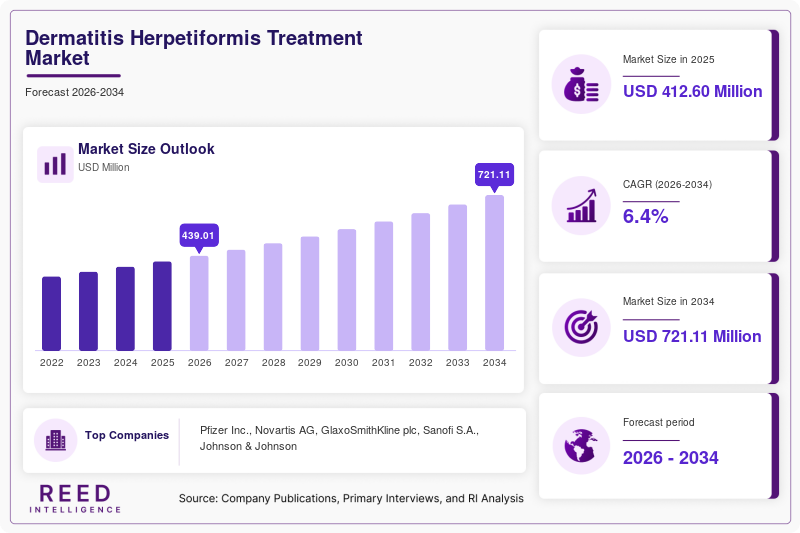
Key Highlights:
- North America dominated the global market with a 38.2% share in 2025, while Asia Pacific is expected to register the fastest CAGR of 7.5% during the forecast period.
- By drug class, sulfones (dapsone) led the market with a 46.5% share in 2024, whereas biologics are projected to grow at the fastest CAGR of 8.2%.
- By distribution channel, hospital pharmacies held the dominant share, while online pharmacies are expected to expand at a CAGR of 7.9%.
- The United States remained the dominant country, with market values of USD 138.5 million in 2024 and USD 146.2 million in 2025.
Market Trends
Increasing Adoption of Biologic Therapies
The Dermatitis Herpetiformis Treatment Market is witnessing a gradual shift toward biologic therapies, especially for patients who are intolerant or unresponsive to traditional dapsone treatment. Biologics targeting immune pathways associated with autoimmune skin conditions are gaining attention due to their improved safety profiles and reduced long-term side effects. This trend is supported by ongoing clinical research and expanding regulatory approvals in dermatology.
Integration of Dietary Management with Pharmacological Treatment
Another key trend shaping the market is the growing emphasis on combining pharmacological treatment with strict gluten-free dietary management. Healthcare providers increasingly recommend integrated care approaches to reduce dependency on medications and improve long-term disease control. Digital health platforms and nutrition tracking apps are also supporting patient adherence, contributing to improved outcomes and sustained demand for supportive therapies.
Market Drivers
Rising Prevalence of Autoimmune Skin Disorders
The increasing incidence of autoimmune diseases, including dermatitis herpetiformis, has been a major driver for the Dermatitis Herpetiformis Treatment Market. Improved diagnostic techniques and growing awareness among healthcare professionals have led to early identification of the condition. This has resulted in higher treatment adoption rates and increased demand for effective therapeutic solutions.
Advancements in Dermatology Treatment Options
Technological advancements in dermatological research have led to the development of improved treatment options with better efficacy and safety profiles. Innovations such as low-dose dapsone regimens, alternative sulfone drugs, and targeted immunotherapies have enhanced patient outcomes. These advancements are encouraging healthcare providers to adopt newer treatment protocols, thereby supporting market growth.
Market Restraint
Side Effects Associated with Long-Term Drug Use
One of the primary challenges in the Dermatitis Herpetiformis Treatment Market is the adverse effects associated with long-term use of standard therapies such as dapsone. Patients may experience hematological complications, including hemolytic anemia and methemoglobinemia, which require regular monitoring and limit widespread usage. These safety concerns often lead to treatment discontinuation or reduced adherence, negatively impacting overall market growth.
Additionally, limited availability of alternative therapies in certain regions and the high cost of advanced biologics further restrict market expansion. Regulatory challenges related to drug approvals also contribute to delays in introducing newer treatment options.
Market Opportunities
Expansion in Emerging Markets
Emerging economies present significant growth opportunities for the Dermatitis Herpetiformis Treatment Market due to improving healthcare infrastructure and increasing awareness of dermatological conditions. Governments and private organizations are investing in healthcare access, enabling better diagnosis and treatment availability. This creates a favorable environment for market players to expand their presence.
Development of Targeted and Personalized Therapies
The growing focus on personalized medicine offers new opportunities in the market. Advances in genetic research and immunology are enabling the development of targeted therapies tailored to individual patient profiles. These treatments are expected to improve efficacy while minimizing side effects, thereby increasing patient acceptance and driving market growth over the forecast period.
Segmental Analysis
By Drug Class
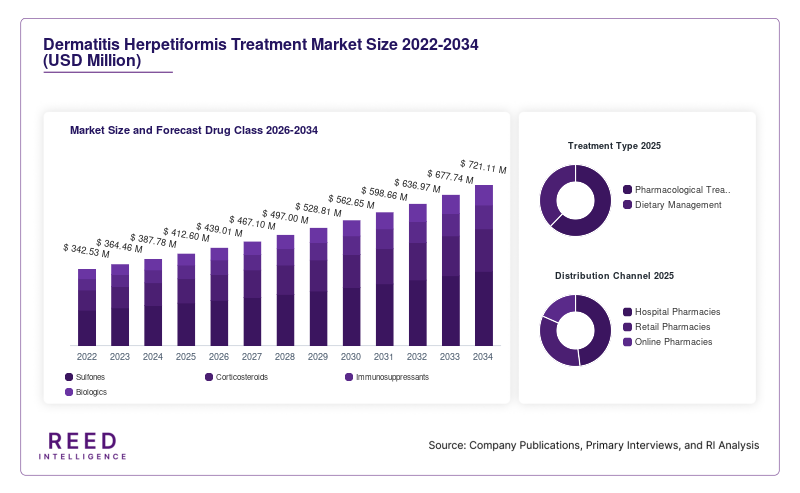
Sulfones, particularly dapsone, dominated the Dermatitis Herpetiformis Treatment Market with a 46.5% share in 2024 due to their effectiveness in rapidly controlling symptoms.
Biologics are expected to be the fastest-growing subsegment, with a projected CAGR of 8.2%, driven by their targeted mechanism of action and improved safety profile compared to traditional therapies.
By Treatment Type
Pharmacological treatment held the largest share in 2024, accounting for 72.4% of the market, as medications remain the primary approach for symptom management.
Dietary management is expected to grow at a CAGR of 7.1%, supported by increasing awareness of gluten-free diets and their role in long-term disease control.
By Distribution Channel
Hospital pharmacies dominated the market with a 49.8% share in 2024 due to higher patient footfall and access to prescription medications.
Online pharmacies are anticipated to grow at the fastest CAGR of 7.9%, driven by increasing digital adoption and convenience in medication delivery.
By End-Use
Hospitals accounted for the largest share in 2024, representing 41.2% of the market, due to the availability of specialized dermatology services.
Homecare settings are projected to grow at a CAGR of 7.3%, supported by increasing patient preference for self-management and remote care solutions.
Regional Analysis
North America
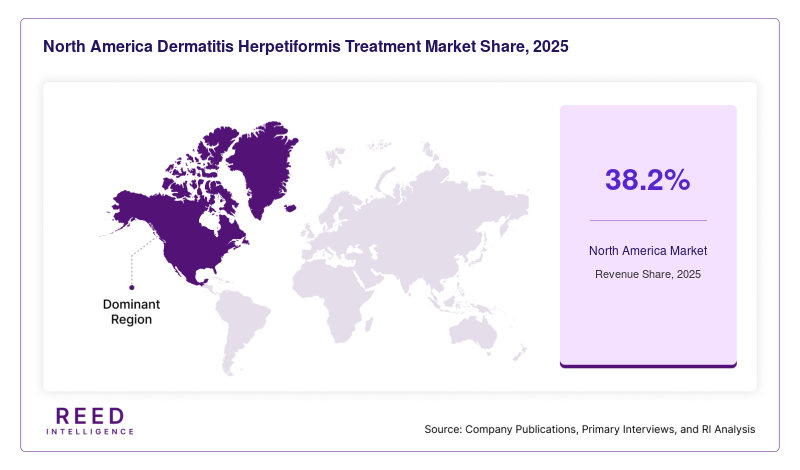
North America accounted for 38.2% of the Dermatitis Herpetiformis Treatment Market share in 2025 and is expected to grow at a CAGR of 5.9% during the forecast period.
The United States dominated the regional market due to strong healthcare infrastructure and widespread availability of dermatological treatments. High awareness levels and advanced diagnostic capabilities have contributed to early disease detection. Additionally, the presence of major pharmaceutical companies and ongoing research activities have supported market expansion.
Europe
Europe held a 27.5% share of the market in 2025 and will grow at a CAGR of 6.1% through 2034.
Germany emerged as the dominant country, driven by its well-established healthcare system and high prevalence of autoimmune disorders. Government support for healthcare research and increasing adoption of advanced therapies have contributed to steady market growth in the region.
Asia Pacific
Asia Pacific captured 19.3% of the market in 2025 and is projected to grow at the fastest CAGR of 7.5%.
China led the regional market due to its large population base and improving healthcare infrastructure. Increasing awareness of gluten-related disorders and rising healthcare investments have significantly boosted the demand for dermatitis herpetiformis treatments.
Middle East & Africa
The Middle East & Africa region accounted for 8.1% of the market in 2025 and is expected to grow at a CAGR of 6.7%.
Saudi Arabia dominated the region due to increasing healthcare spending and expanding dermatology services. Government initiatives aimed at improving healthcare access have supported the adoption of treatment options in the region.
Latin America
Latin America held a 6.9% market share in 2025 and is projected to grow at a CAGR of 6.3%.
Brazil emerged as the leading country, supported by improving healthcare infrastructure and growing awareness of autoimmune skin diseases. Increasing access to medical services and rising demand for effective treatments have driven market growth.
Competitive Landscape
The Dermatitis Herpetiformis Treatment Market is moderately competitive, with several global and regional players focusing on product development and strategic collaborations. Leading companies are investing in research to develop safer and more effective treatment options.
Pfizer Inc. emerged as a market leader due to its strong portfolio in dermatology and autoimmune treatments. The company recently expanded its research pipeline to include novel biologic therapies targeting immune-mediated skin disorders, strengthening its market position.
Other players are focusing on expanding their geographic presence and enhancing distribution networks to capture a larger market share. Strategic partnerships and acquisitions remain key approaches for growth in this competitive landscape.
Key Players List
- Pfizer Inc.
- Novartis AG
- GlaxoSmithKline plc
- Sanofi S.A.
- Johnson & Johnson
- AbbVie Inc.
- Amgen Inc.
- Eli Lilly and Company
- Merck & Co., Inc.
- Teva Pharmaceutical Industries Ltd.
- Sun Pharmaceutical Industries Ltd.
- Cipla Limited
- Dr. Reddy’s Laboratories Ltd.
- Bausch Health Companies Inc.
- Aurobindo Pharma Limited
Recent Developments
- 2024: A leading pharmaceutical company initiated Phase II trials for a biologic therapy targeting dermatitis herpetiformis.
- 2023: Increased regulatory approvals for generic dapsone formulations improved treatment accessibility.
- 2023: Expansion of online pharmacy platforms enhanced drug distribution channels globally.
- 2022: Strategic collaborations between biotech firms accelerated research in autoimmune dermatology treatments.
Dermatitis Herpetiformis Treatment Market Segments
Drug Class
- Sulfones
- Corticosteroids
- Immunosuppressants
- Biologics
Treatment Type
- Pharmacological Treatment
- Dietary Management
Distribution Channel
- Hospital Pharmacies
- Retail Pharmacies
- Online Pharmacies
End-Use
- Hospitals
- Specialty Clinics
- Homecare Settings
By Region
- North America
- Europe
- APAC
- Middle East and Africa
- LATAM