Desiccated Coconut Powder Market Size, Share Demand Report By Type (Fine Grade, Medium Grade, Coarse Grade, Organic), By Application (Bakery & Confectionery, Dairy Alternatives, Snacks & Convenience Foods, Beverages), By End-Use (Food Processing Industry, Foodservice, Retail), By Region & Segment Forecasts, 2026–2034
USD 3950
Market Overview
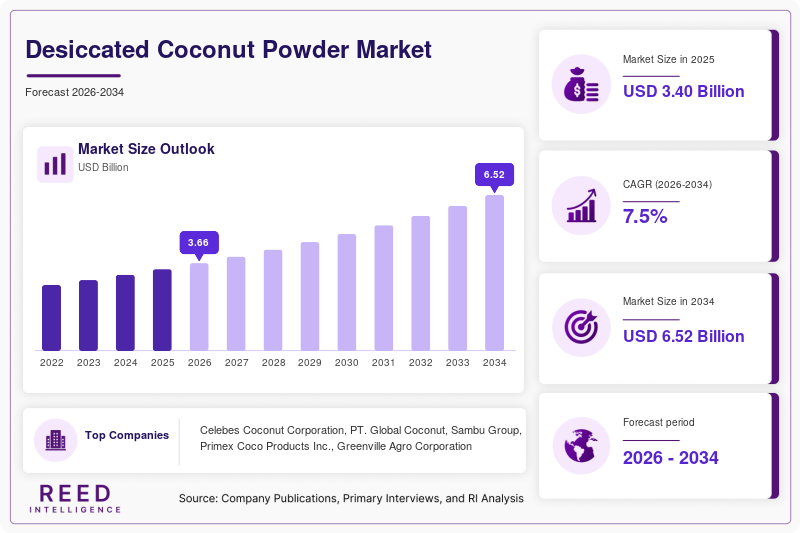
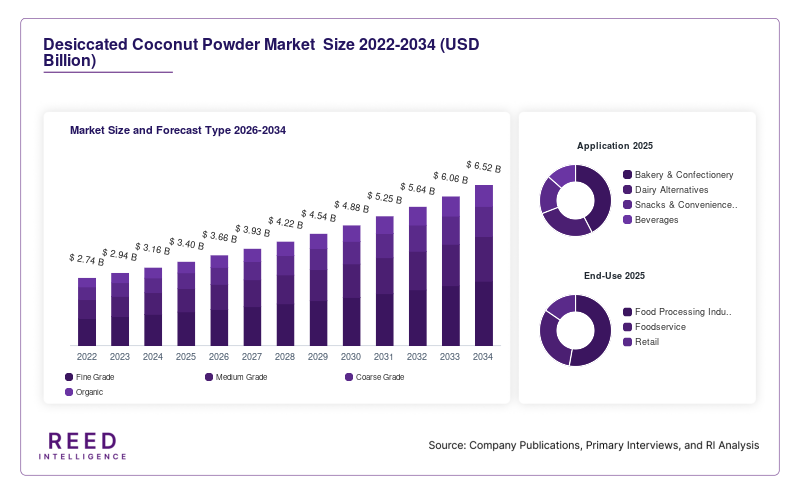
The Desiccated Coconut Powder Market was valued at approximately USD 3.4 billion in 2026 and is projected to reach USD 6.1 billion by 2034, expanding at a CAGR of 7.5% during 2026–2034. The market has experienced steady growth due to increasing consumption of coconut-based ingredients across bakery, confectionery, and dairy alternatives. Rising awareness of plant-based diets and the shift toward natural, minimally processed food products have significantly influenced demand patterns globally. Manufacturers are leveraging improved drying technologies and supply chain efficiencies to meet the growing need for consistent quality and longer shelf life.
A key global factor supporting market growth is the rising adoption of vegan and lactose-free food alternatives. Desiccated coconut powder serves as a versatile ingredient in dairy substitutes, energy bars, and ready-to-eat snacks. Its nutritional value, including healthy fats and dietary fiber, has contributed to its increasing use in health-oriented food formulations. Additionally, expanding retail distribution channels and e-commerce platforms have improved accessibility, especially in emerging markets.
Key Highlights
- North America dominated the market with a 32.8% share in 2025.
- Asia Pacific is expected to grow at the fastest CAGR of 9.4% during 2026–2034.
- By type, fine grade powder accounted for the largest share of 42.6%.
- while organic desiccated coconut powder is projected to grow at a CAGR of 10.1%.
- By application, bakery and confectionery led with a 39.2% share, whereas dairy alternatives are expected to expand at a CAGR of 9.8%.
- India remained the dominant country, with market values of USD 420 million in 2024 and USD 460 million in 2025.
Market Trends
Rising Demand for Organic and Clean-Label Coconut Products
The shift toward organic and clean-label products has become a defining trend in the desiccated coconut powder market. Consumers are increasingly prioritizing transparency in ingredient sourcing and processing methods, leading to higher demand for organically certified coconut powder. Food manufacturers are responding by reformulating their products to include natural ingredients with minimal additives. This trend is particularly evident in developed markets, where regulatory standards and consumer awareness are high. Organic desiccated coconut powder is gaining traction in premium bakery products, nutritional supplements, and baby food segments. Retailers are also expanding shelf space for organic variants, further accelerating market penetration. As sustainability concerns grow, producers are investing in eco-friendly farming and processing practices to align with consumer expectations and strengthen brand positioning.
Expansion of Coconut-Based Functional Foods and Beverages
Another significant trend shaping the market is the growing integration of desiccated coconut powder into functional foods and beverages. The increasing focus on health and wellness has driven demand for products enriched with natural nutrients. Coconut powder is widely used in protein bars, smoothies, plant-based milk, and energy drinks due to its nutritional profile and flavor. Food innovation is playing a crucial role, with companies launching new formulations that cater to fitness-conscious consumers. Additionally, the rise of ready-to-mix beverage powders and instant dessert mixes has expanded application areas. This trend is further supported by the growing popularity of convenient food formats, especially among urban populations with busy lifestyles, thereby contributing to sustained market growth.
Market Drivers
Growth in Plant-Based Food Industry
The expansion of the plant-based food industry has emerged as a key driver for the desiccated coconut powder market. As consumers increasingly shift away from animal-derived products, demand for plant-based ingredients has surged. Desiccated coconut powder is widely used as a substitute for dairy and as a flavor enhancer in vegan recipes. The growth of veganism and lactose intolerance awareness has further accelerated this trend. Food manufacturers are incorporating coconut powder into alternative dairy products such as yogurt, ice cream, and milk powders. Additionally, the ingredient’s natural sweetness and texture make it suitable for various culinary applications. The expanding product portfolio of plant-based foods is expected to sustain demand, particularly in North America and Europe, where consumer adoption rates are high.
Increasing Use in Bakery and Confectionery Applications
The bakery and confectionery segment continues to drive significant demand for desiccated coconut powder. The ingredient is widely used in cakes, cookies, pastries, and chocolates due to its texture, flavor, and moisture-retaining properties. The global rise in consumption of baked goods, particularly in urban regions, has contributed to market growth. Manufacturers are introducing innovative products that incorporate coconut powder to enhance taste and nutritional value. Seasonal demand during festivals and celebrations also boosts consumption levels. Furthermore, the growing trend of home baking has increased retail sales of desiccated coconut powder. As the bakery industry continues to expand, especially in emerging economies, the demand for high-quality coconut ingredients is expected to remain strong.
Market Restraint
Fluctuations in Raw Material Supply and Pricing
One of the primary challenges facing the desiccated coconut powder market is the volatility in raw material supply and pricing. Coconut production is highly dependent on climatic conditions, including rainfall patterns, temperature, and susceptibility to pests and diseases. Any disruption in coconut yield can significantly impact the availability and cost of raw materials. This volatility affects manufacturers’ profit margins and pricing strategies, creating uncertainty in the supply chain. For instance, adverse weather conditions in major coconut-producing regions such as Southeast Asia can lead to supply shortages and increased procurement costs. Additionally, fluctuations in export policies and transportation costs further complicate market dynamics. Small and medium-sized manufacturers are particularly vulnerable, as they may lack the resources to manage price instability effectively. This restraint can hinder market growth, especially in price-sensitive regions, and may lead to reduced consumption if product prices rise significantly.
Market Opportunities
Expansion in Emerging Markets
Emerging markets present significant growth opportunities for the desiccated coconut powder industry. Rapid urbanization, increasing disposable incomes, and changing dietary habits are driving demand for processed and convenience foods. Countries in Asia Pacific, Latin America, and Africa are witnessing a shift toward packaged food products, creating a favorable environment for market expansion. Local manufacturers are investing in production facilities and distribution networks to cater to rising demand. Additionally, government initiatives supporting agricultural development and food processing industries are encouraging market growth. The increasing penetration of modern retail formats, including supermarkets and online platforms, is further enhancing product accessibility. As consumer awareness of coconut-based products increases, these markets are expected to offer substantial growth potential for industry players.
Innovation in Value-Added Coconut Products
The development of value-added coconut products represents another key opportunity for market growth. Manufacturers are focusing on product diversification to meet evolving consumer preferences. Innovations such as flavored coconut powder, fortified variants, and instant mixes are gaining popularity. These products cater to specific consumer needs, including health, convenience, and taste. Additionally, advancements in processing technologies are enabling the production of high-quality, nutrient-rich coconut powder with extended shelf life. The foodservice industry is also adopting these value-added products for use in desserts, beverages, and culinary applications. By investing in research and development, companies can differentiate their offerings and capture new market segments, thereby driving long-term growth.
Segmental Analysis
By Type
The fine grade desiccated coconut powder segment dominated the market in 2024, accounting for approximately 42.6% of the total share. This dominance is attributed to its widespread use in bakery and confectionery products, where a smooth texture is essential. Fine grade powder is preferred by manufacturers due to its consistent quality and ease of blending with other ingredients. It is extensively used in cakes, cookies, and chocolate coatings. The segment also benefits from strong demand in the foodservice industry, where uniformity in texture is crucial for product presentation. Additionally, the availability of fine grade powder in various packaging formats enhances its adoption across retail and industrial applications.
The organic desiccated coconut powder segment is expected to be the fastest-growing, with a projected CAGR of 10.1% during the forecast period. This growth is driven by increasing consumer preference for natural and chemical-free products. Organic variants are gaining popularity in premium food categories, including baby food and health supplements. The rising awareness of sustainable farming practices is also contributing to segment growth. Manufacturers are focusing on obtaining organic certifications to meet regulatory standards and consumer expectations. The expansion of organic product lines in supermarkets and online platforms further supports the growth of this segment.
By Application
The bakery and confectionery segment held the largest share in 2024, accounting for 39.2% of the market. This segment’s dominance is driven by the extensive use of desiccated coconut powder in a wide range of baked goods and sweets. The ingredient enhances flavor, texture, and shelf life, making it a preferred choice among manufacturers. The growing demand for premium and artisanal bakery products has further increased the use of coconut powder. Additionally, seasonal demand during festive occasions boosts consumption levels. The segment also benefits from the expansion of bakery chains and cafes, particularly in urban areas.
The dairy alternatives segment is projected to grow at the fastest CAGR of 9.8% during the forecast period. This growth is driven by the increasing demand for plant-based milk, yogurt, and ice cream. Desiccated coconut powder is widely used as a base ingredient in these products due to its creamy texture and nutritional benefits. The rising prevalence of lactose intolerance and the growing vegan population are key factors supporting segment growth. Manufacturers are introducing innovative products to cater to diverse consumer preferences. The increasing availability of dairy alternatives in retail stores further accelerates market expansion.
By End-Use
The food processing industry dominated the market in 2024, accounting for 48.3% of the total share. This segment includes manufacturers of packaged foods, snacks, and ready-to-eat products. The widespread use of desiccated coconut powder in various food formulations drives its demand in this segment. The growth of the processed food industry, particularly in emerging markets, has contributed significantly to market expansion. Additionally, advancements in food processing technologies have improved product quality and shelf life, further supporting demand. The segment also benefits from strong supply chain networks and large-scale production capabilities.
The retail segment is expected to be the fastest-growing, with a CAGR of 8.9% during the forecast period. This growth is driven by increasing consumer interest in home cooking and baking. The availability of desiccated coconut powder in convenient packaging formats has made it more accessible to consumers. The rise of online retail platforms has further expanded market reach. Additionally, marketing strategies focusing on health benefits and versatility have increased consumer awareness. The growing trend of DIY cooking and baking is expected to sustain demand in this segment.
Regional Analysis
North America
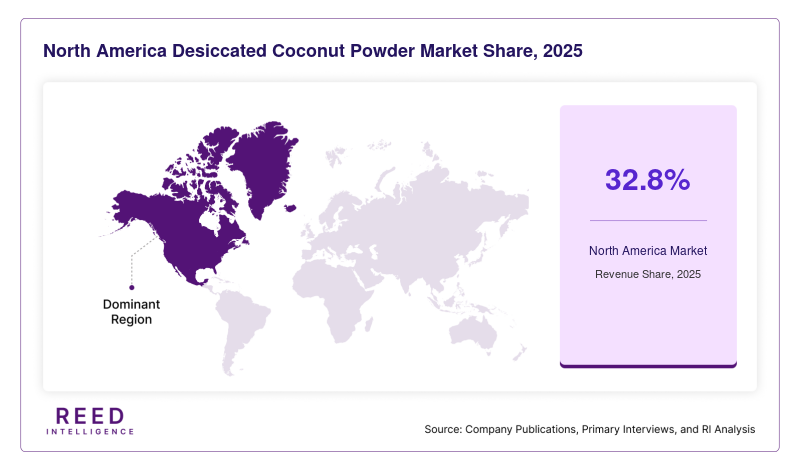
North America held a significant share of the desiccated coconut powder market, accounting for 32.8% in 2025, and is projected to grow at a CAGR of 6.8% during the forecast period. The region’s growth is driven by increasing demand for plant-based and gluten-free food products. Consumers in the United States and Canada are actively seeking healthier alternatives, leading to higher adoption of coconut-based ingredients. The presence of well-established food processing industries and advanced distribution networks further supports market expansion.
The United States remains the dominant country in this region, supported by strong demand for organic and specialty food products. A key growth factor is the increasing popularity of vegan diets and clean-label products. Food manufacturers are continuously innovating to introduce new coconut-based offerings, including snacks and beverages. Additionally, the rise of e-commerce platforms has improved product availability, enabling consumers to access a wide range of coconut powder variants.
Europe
Europe accounted for approximately 27.4% of the market share in 2025 and is expected to grow at a CAGR of 6.5% through 2034. The region’s market growth is driven by increasing consumer preference for natural and organic ingredients. Regulatory support for clean-label products has encouraged manufacturers to incorporate desiccated coconut powder into various food applications. The bakery and confectionery sectors remain major contributors to demand.
Germany leads the European market, supported by its strong food processing industry and consumer focus on health and sustainability. A unique growth factor in this region is the rising demand for allergen-free and lactose-free products. Coconut powder serves as an ideal alternative, driving its adoption in dairy substitutes and functional foods. The increasing availability of organic certifications further enhances consumer trust and market growth.
Asia Pacific
Asia Pacific is the fastest-growing region, with a projected CAGR of 9.4% during 2026–2034, and held a 24.6% market share in 2025. The region benefits from abundant coconut production and a strong presence of local manufacturers. Countries such as India, Indonesia, and the Philippines play a crucial role in global supply. The growing population and rising consumption of processed foods are key factors driving market expansion.
India dominates the regional market, supported by its large agricultural base and increasing demand for packaged food products. A key growth factor is the widespread use of coconut in traditional cuisines, which drives consistent demand. Additionally, government initiatives promoting food processing industries and export activities have strengthened the market. The increasing adoption of modern retail channels further supports growth.
Middle East & Africa
The Middle East & Africa region accounted for 8.2% of the market share in 2025 and is expected to grow at a CAGR of 7.2%. The market is driven by increasing demand for imported food products and rising urbanization. Consumers are gradually adopting packaged and convenience foods, creating opportunities for coconut-based ingredients. The expanding hospitality and foodservice sectors also contribute to demand.
The United Arab Emirates is a key market within this region, driven by its strong retail infrastructure and diverse consumer base. A unique growth factor is the increasing demand for premium and exotic food ingredients. Desiccated coconut powder is widely used in bakery products and desserts, catering to both local and expatriate populations. The growth of tourism further supports market expansion.
Latin America
Latin America held a 7.0% market share in 2025 and is projected to grow at a CAGR of 7.0% during the forecast period. The region’s growth is supported by increasing consumption of processed foods and rising awareness of healthy eating habits. Countries such as Brazil and Mexico are witnessing growing demand for coconut-based products, particularly in urban areas.
Brazil is the dominant country in this region, benefiting from favorable climatic conditions for coconut cultivation. A key growth factor is the expanding food and beverage industry, which is incorporating coconut powder into various applications. The increasing popularity of natural and organic products is also driving demand. Additionally, the growth of local manufacturing capabilities is enhancing market competitiveness.
Competitive Landscape
The desiccated coconut powder market is moderately fragmented, with the presence of several regional and global players competing on quality, pricing, and product innovation. Key companies are focusing on expanding their product portfolios and strengthening distribution networks to enhance market presence. Strategic partnerships and acquisitions are common, enabling companies to access new markets and improve supply chain efficiency.
Celebes Coconut Corporation is recognized as a leading player in the market, known for its extensive product range and strong global distribution network. The company has recently invested in advanced processing technologies to improve product quality and meet increasing demand for organic variants. Other major players are also focusing on sustainability initiatives, including eco-friendly packaging and responsible sourcing practices. Continuous investment in research and development is expected to drive innovation and maintain competitive advantage in the market.
Key Players List
- Celebes Coconut Corporation
- PT. Global Coconut
- Sambu Group
- Primex Coco Products Inc.
- Greenville Agro Corporation
- Cocomi Bio Organic
- Sumatera Baru
- Silvermill Group
- Naturoca
- Klassic Coconut
- Adamjee Lukmanjee & Sons
- Sakthi Coco Products
- Thai Coconut Public Company
- VIET DELTA Corporation
- Kerafed
Recent Developments
- In 2025, a leading manufacturer expanded its organic product line to meet rising demand for clean-label ingredients.
- In 2024, a major player invested in a new processing facility in Southeast Asia to enhance production capacity.
- In 2025, a company launched flavored desiccated coconut powder variants targeting the snack and dessert segment.
Desiccated Coconut Powder Market Segments
Type
- Fine Grade
- Medium Grade
- Coarse Grade
- Organic
Application
- Bakery & Confectionery
- Dairy Alternatives
- Snacks & Convenience Foods
- Beverages
End-Use
- Food Processing Industry
- Foodservice
- Retail
By Region
- North America
- Europe
- APAC
- Middle East and Africa
- LATAM