Diamond Blackfan Anemia Syndrome Therapeutic Market Size, Share & Demand Report By Therapy Type (Corticosteroids, Blood Transfusion, Stem Cell Transplantation, Gene Therapy), By End-Use (Hospitals, Specialty Clinics, Research Institutes), By Route of Administration (Oral, Parenteral) By Region & Segment Forecasts, 2026–2034
USD 3950
Market Overview
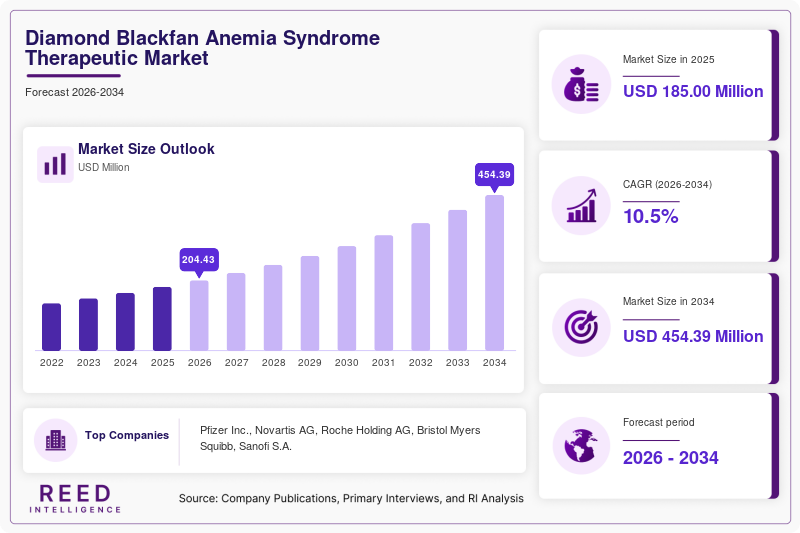
The Diamond Blackfan Anemia Syndrome Therapeutic Market size was valued at approximately USD 185 million in 2026 and is projected to reach USD 412 million by 2034, expanding at a CAGR of 10.5% during the forecast period (2026–2034). The market growth reflects increasing clinical attention toward rare hematological disorders and improved diagnostic pathways that have enabled early disease identification. Advances in precision medicine, combined with improved awareness among healthcare professionals, have significantly supported the expansion of therapeutic interventions for this rare congenital condition.
A key global factor driving the market is the growing integration of genetic testing and molecular diagnostics in routine clinical practice. These advancements have enabled healthcare providers to identify Diamond Blackfan anemia cases more accurately and initiate targeted treatment strategies earlier in the disease lifecycle. In addition, improved access to corticosteroids, blood transfusion support, and hematopoietic stem cell transplantation (HSCT) across developed regions has strengthened the treatment landscape. Emerging therapies, including gene therapy and novel biologics, are also gaining traction, contributing to long-term market expansion.
Key Highlights
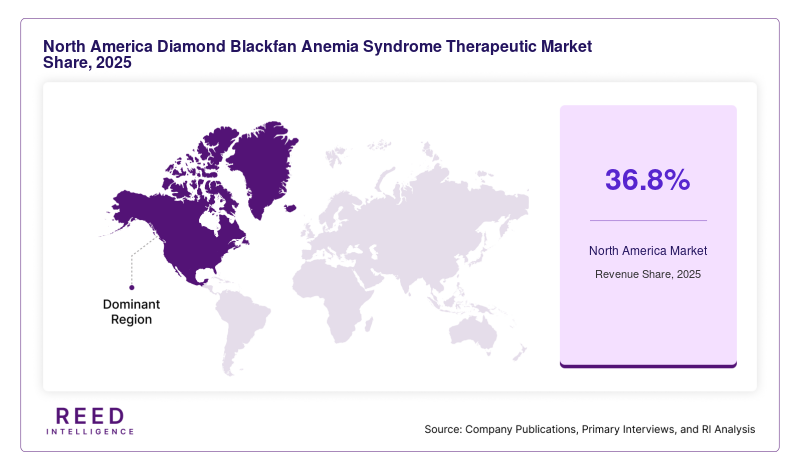
- North America dominated the market with a 36.8% share in 2025.
- Asia Pacific is expected to grow at the fastest CAGR of 11.6% during 2026–2034.
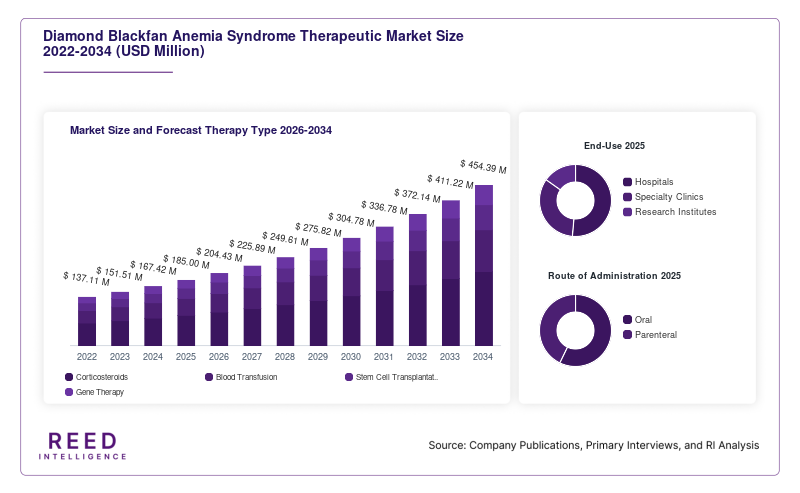
- By therapy type, corticosteroid therapy accounted for the largest share of 42.3%, while gene therapy is projected to grow at a CAGR of 13.1%.
- By end-use, hospitals led with a 48.7% share, whereas specialty clinics are expected to expand at a CAGR of 11.9%.
- The United States remained the dominant country, with market values of USD 72 million in 2024 and USD 79 million in 2025.
Market Trends
Rising focus on gene-based and targeted therapies
The therapeutic landscape for Diamond Blackfan anemia syndrome is evolving toward targeted and gene-based approaches. Researchers are increasingly exploring gene editing technologies such as CRISPR-based interventions to address the root genetic mutations responsible for the disorder. This shift represents a transition from symptomatic management to disease-modifying solutions. Pharmaceutical companies and research institutions are collaborating to accelerate clinical trials and regulatory approvals. As a result, the pipeline for advanced therapies is expanding steadily, creating new growth avenues for the market. This trend is expected to redefine long-term treatment outcomes and reduce dependency on lifelong supportive therapies such as blood transfusions.
Increasing adoption of personalized medicine approaches
Another important trend is the growing adoption of personalized medicine in treating rare hematological disorders. Healthcare providers are tailoring treatment strategies based on patient-specific genetic profiles, disease severity, and response to previous therapies. This approach enhances treatment efficacy and minimizes adverse effects, particularly in pediatric populations. Additionally, advancements in biomarker identification are supporting more precise disease monitoring and therapy optimization. The integration of artificial intelligence in clinical decision-making further strengthens personalized care models. This trend is likely to enhance patient outcomes and improve treatment adherence, contributing to sustained market growth over the forecast period.
Market Drivers
Growing prevalence of rare genetic disorders and improved diagnosis
The increasing recognition and diagnosis of rare genetic disorders are significantly driving the Diamond Blackfan Anemia Syndrome Therapeutic Market. Improvements in neonatal screening programs and genetic testing technologies have enabled early detection of the disease, particularly in developed regions. Early diagnosis allows timely intervention, which improves survival rates and quality of life for patients. Additionally, awareness campaigns by healthcare organizations and patient advocacy groups are encouraging families to seek medical evaluation. This growing diagnostic capability is expanding the patient pool, thereby increasing demand for therapeutic solutions and supporting market expansion.
Advancements in healthcare infrastructure and treatment accessibility
The continuous improvement of healthcare infrastructure across both developed and emerging economies is another key driver. Access to specialized treatment centers, skilled healthcare professionals, and advanced therapeutic options has improved significantly in recent years. Governments and private organizations are investing in rare disease management programs, which include subsidized treatment options and expanded insurance coverage. These initiatives are reducing the financial burden on patients and increasing treatment adoption rates. Furthermore, the availability of advanced therapies such as hematopoietic stem cell transplantation is expanding in emerging markets, contributing to the overall growth of the market.
Market Restraint
High treatment costs and limited patient population
One of the primary challenges restraining the Diamond Blackfan Anemia Syndrome Therapeutic Market is the high cost associated with treatment options. Therapies such as stem cell transplantation and emerging gene-based treatments involve substantial financial investment, making them inaccessible to many patients, particularly in low- and middle-income regions. Additionally, the rarity of the disease limits the overall patient pool, reducing the commercial attractiveness for pharmaceutical companies. This can result in slower development of new therapies and limited availability of treatment options. The economic burden on healthcare systems and patients can also lead to delayed or incomplete treatment, impacting overall market growth.
Market Opportunities
Expansion of orphan drug development initiatives
The increasing focus on orphan drug development presents a significant opportunity for the Diamond Blackfan Anemia Syndrome Therapeutic Market. Regulatory bodies across various regions are offering incentives such as tax benefits, extended market exclusivity, and accelerated approval pathways to encourage research in rare diseases. These initiatives are attracting pharmaceutical companies to invest in innovative therapeutic solutions. As a result, the pipeline for Diamond Blackfan anemia treatments is expanding, with several promising candidates in clinical development. This trend is expected to enhance treatment availability and create new revenue streams for market participants.
Growth potential in emerging markets
Emerging economies present substantial growth opportunities due to improving healthcare infrastructure and rising awareness of rare diseases. Countries in Asia Pacific and Latin America are investing in diagnostic capabilities and specialized treatment facilities. Additionally, increasing healthcare expenditure and government initiatives to support rare disease management are boosting market growth in these regions. Pharmaceutical companies are also expanding their presence through strategic partnerships and distribution networks. This expansion is expected to improve access to therapies and drive market penetration, contributing to long-term growth.
Segmental Analysis
By Therapy Type
Corticosteroid therapy emerged as the dominant subsegment, accounting for a 42.3% share in 2024. This dominance is attributed to its widespread use as the first-line treatment for Diamond Blackfan anemia. Corticosteroids are effective in stimulating red blood cell production, making them a preferred choice among healthcare providers. Additionally, their relatively lower cost compared to advanced therapies contributes to their high adoption rate. Despite potential side effects, corticosteroids remain a cornerstone in disease management due to their proven efficacy and accessibility.
Gene therapy is expected to be the fastest-growing subsegment, with a projected CAGR of 13.1% during the forecast period. The growth is driven by increasing research and development activities focused on addressing the genetic root cause of the disease. Advances in gene editing technologies are enabling the development of targeted therapies that offer long-term benefits. Additionally, supportive regulatory frameworks and funding initiatives are accelerating clinical trials. This subsegment is expected to transform the treatment landscape by providing curative options.
By End-Use
Hospitals accounted for the largest share of 48.7% in 2024, driven by the availability of advanced treatment facilities and skilled healthcare professionals. Hospitals are the primary centers for administering complex therapies such as stem cell transplantation and managing severe cases. The presence of multidisciplinary teams enables comprehensive patient care, including diagnosis, treatment, and follow-up. Additionally, hospitals often serve as hubs for clinical research, further supporting their dominance in the market.
Specialty clinics are anticipated to be the fastest-growing subsegment, with a CAGR of 11.9%. These clinics offer focused care for rare diseases, providing personalized treatment plans and continuous monitoring. The growth is driven by increasing patient preference for specialized care and shorter waiting times. Additionally, advancements in outpatient treatment options are enabling clinics to manage a broader range of cases. This trend is expected to enhance patient outcomes and drive market growth.
By Route of Administration
Oral administration dominated the segment with a 46.5% share in 2024, primarily due to the widespread use of corticosteroids. Oral therapies are convenient and cost-effective, making them a preferred option for long-term treatment. The ease of administration improves patient compliance, particularly in pediatric cases. Additionally, oral formulations are widely available, contributing to their high adoption rate. This segment continues to play a critical role in disease management.
Parenteral administration is projected to grow at a CAGR of 10.8%, driven by the increasing use of advanced therapies such as biologics and stem cell transplantation. These treatments require intravenous or subcutaneous administration, which is typically performed in clinical settings. The growth is supported by advancements in drug delivery technologies and the development of targeted therapies. This segment is expected to gain traction as more innovative treatments enter the market.
Regional Analysis
North America
North America held a significant share of 36.8% in 2025 and is projected to grow at a CAGR of 9.8% during the forecast period. The region’s dominance is attributed to advanced healthcare infrastructure, strong research capabilities, and high awareness levels among healthcare professionals. The presence of leading pharmaceutical companies and robust reimbursement frameworks further supports market growth. Additionally, increasing investments in rare disease research are driving innovation and expanding treatment options.
The United States dominates the regional market, supported by extensive research funding and advanced diagnostic capabilities. A unique growth factor in the country is the strong presence of patient advocacy groups, which play a critical role in raising awareness and facilitating early diagnosis. These organizations also support clinical trial participation, accelerating the development of new therapies.
Europe
Europe accounted for a substantial market share of 28.5% in 2025 and is expected to grow at a CAGR of 9.5% through 2034. The region benefits from well-established healthcare systems and supportive regulatory frameworks for orphan drugs. Increasing collaboration between research institutions and pharmaceutical companies is driving innovation in treatment approaches. Additionally, government initiatives aimed at improving rare disease management are supporting market growth.
Germany leads the European market due to its advanced healthcare infrastructure and strong research ecosystem. A unique growth factor in the country is the widespread adoption of genetic testing, which enables early diagnosis and personalized treatment strategies. This approach is improving patient outcomes and driving demand for advanced therapies.
Asia Pacific
Asia Pacific is expected to grow at the fastest CAGR of 11.6% during the forecast period, with a market share of 18.2% in 2025. The region’s growth is driven by increasing healthcare investments, improving diagnostic capabilities, and rising awareness of rare diseases. Governments are focusing on expanding healthcare access and supporting research initiatives, which is contributing to market expansion.
China dominates the Asia Pacific market due to its large population and growing healthcare infrastructure. A unique growth factor is the government’s focus on expanding rare disease registries, which helps in identifying and managing patients more effectively. This initiative is improving treatment access and supporting market growth.
Middle East & Africa
The Middle East & Africa region accounted for 8.1% of the market share in 2025 and is projected to grow at a CAGR of 8.7%. The market is gradually expanding due to improving healthcare infrastructure and increasing awareness of rare diseases. Investments in healthcare facilities and training programs are enhancing the region’s ability to diagnose and treat complex conditions.
Saudi Arabia leads the regional market, supported by government initiatives to improve healthcare services. A unique growth factor is the increasing adoption of advanced medical technologies, which is enhancing diagnostic accuracy and treatment outcomes. This progress is driving demand for therapeutic solutions.
Latin America
Latin America held a market share of 8.4% in 2025 and is expected to grow at a CAGR of 9.2% during the forecast period. The region is experiencing steady growth due to improving healthcare access and rising awareness of rare diseases. Government programs aimed at strengthening healthcare systems are supporting market expansion.
Brazil dominates the Latin American market, driven by its large population and improving healthcare infrastructure. A unique growth factor is the increasing collaboration between public and private healthcare sectors, which is enhancing access to advanced treatments. This collaboration is expected to drive market growth in the region.
Competitive Landscape
The Diamond Blackfan Anemia Syndrome Therapeutic Market is moderately competitive, with a mix of established pharmaceutical companies and emerging biotech firms. Leading players are focusing on research and development to introduce innovative therapies and expand their product portfolios. Strategic collaborations, mergers, and acquisitions are common strategies to strengthen market presence.
A leading company in the market is Pfizer Inc., which has a strong portfolio of hematology products and ongoing research initiatives. The company recently announced the advancement of a novel gene therapy candidate into clinical trials, highlighting its commitment to innovation. Other companies are also investing in pipeline development and expanding their geographic reach to capture emerging market opportunities.
Key Players
- Pfizer Inc.
- Novartis AG
- Roche Holding AG
- Bristol Myers Squibb
- Sanofi S.A.
- Takeda Pharmaceutical Company Limited
- Amgen Inc.
- Bluebird Bio
- Vertex Pharmaceuticals
- BioMarin Pharmaceutical Inc.
- CRISPR Therapeutics
- Editas Medicine
- Regeneron Pharmaceuticals
- Gilead Sciences Inc.
- Alexion Pharmaceuticals
Recent Developments
- Several companies have advanced gene therapy candidates into early-stage clinical trials, aiming to provide long-term treatment solutions.
- Strategic partnerships between pharmaceutical companies and research institutions have increased, focusing on accelerating drug development and improving treatment outcomes.
- Governments and regulatory bodies have introduced new incentives to support orphan drug development, encouraging innovation in rare disease therapeutics.
Diamond Blackfan Anemia Syndrome Therapeutic Market Segments
Therapy Type
- Corticosteroids
- Blood Transfusion
- Stem Cell Transplantation
- Gene Therapy
End-Use
- Hospitals
- Specialty Clinics
- Research Institutes
Route of Administration
- Oral
- Parenteral
By Region
- North America
- Europe
- APAC
- Middle East and Africa
- LATAM