Diaper Attachment Sensor Market Size, Share & Demand Report By Product Type (Moisture Detection Sensors, Temperature Sensors, Multifunctional Smart Sensors), By End User (Infant Care, Adult Incontinence Care, Elderly Care Facilities), By Distribution Channel (Online Retail, Offline Retail, Healthcare Institutional Procurement), By Region & Segment Forecasts, 2026–2034
USD 3950
Market Overview
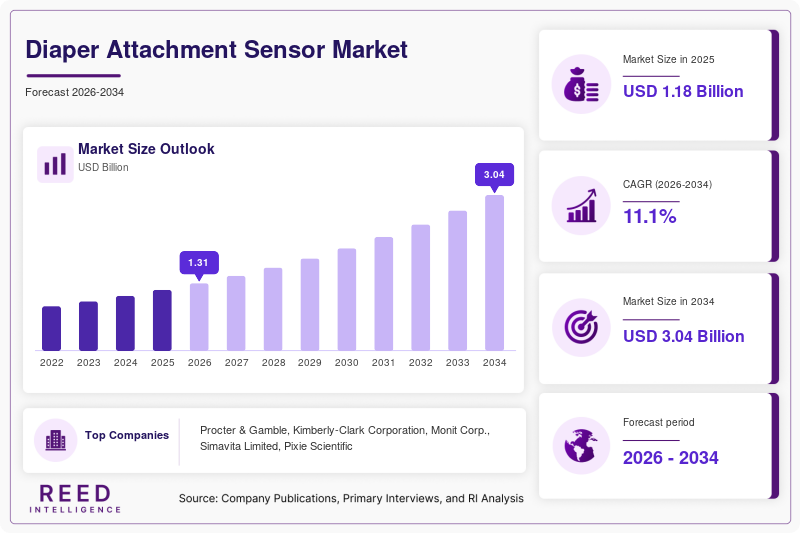
The Diaper Attachment Sensor Market size was valued at USD 1.18 billion in 2026 and is projected to reach USD 2.74 billion by 2034, expanding at a CAGR of 11.1% during the forecast period. This market is gaining traction as healthcare systems, parents, and eldercare providers increasingly adopt connected hygiene monitoring solutions to improve comfort, reduce skin-related complications, and support remote caregiving. Diaper attachment sensors are compact smart devices integrated into infant, adult, and medical diapers to detect moisture, temperature, pH, and movement, providing real-time alerts through mobile applications or institutional monitoring systems. Rising aging populations, increasing birth rates in selected emerging nations, and the broader expansion of digital healthcare ecosystems have created a favorable commercial environment for manufacturers. A major global factor supporting growth is the accelerating integration of Internet of Things (IoT) technologies into personal healthcare products. Smart caregiving technologies are being adopted not only in households but also in hospitals, nursing homes, and rehabilitation centers, where patient monitoring efficiency can improve labor productivity and hygiene outcomes. Demand is also supported by growing awareness regarding diaper rash prevention, incontinence care, and caregiver convenience. Companies are expanding investments in sensor miniaturization, Bluetooth Low Energy connectivity, and AI-enabled analytics platforms to differentiate products and improve long-term recurring software revenues.
Key Highlights
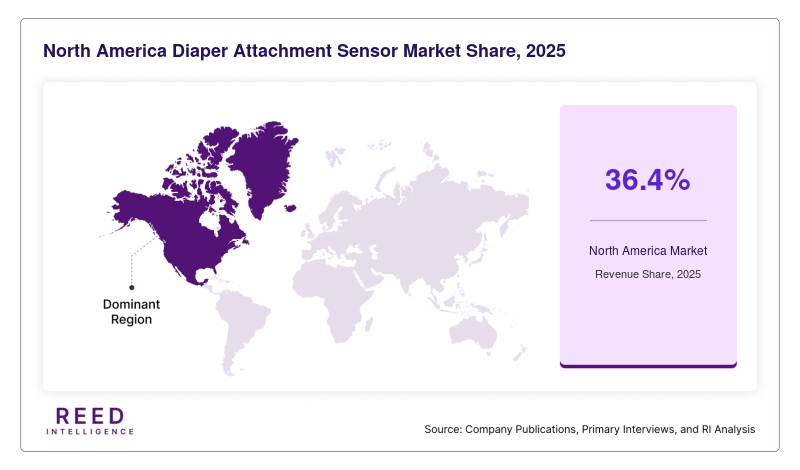
- North America dominated the market with a 36.4% share in 2025.
- Asia Pacific is expected to grow at the fastest CAGR of 12.8% during 2026–2034.
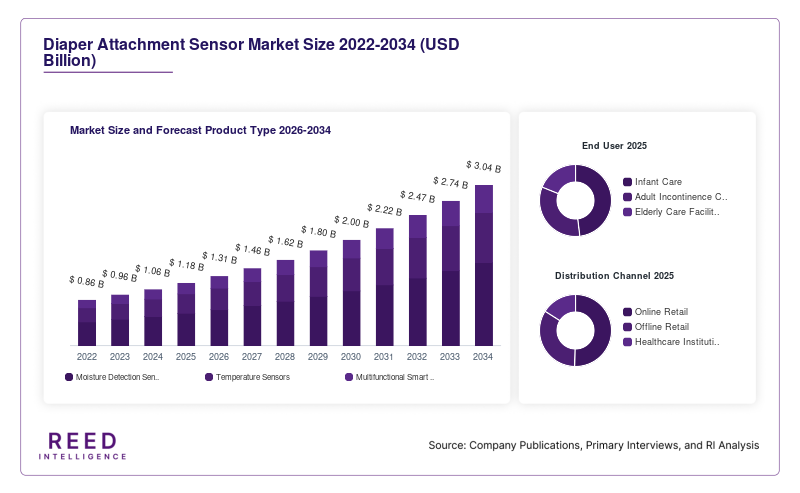
- By product type, moisture detection sensors accounted for the largest share of 44.1%, while multifunctional smart sensors are projected to grow at a CAGR of 13.6%.
- By end user, infant care led with a 48.7% share, whereas elderly care facilities are expected to expand at a CAGR of 12.9%.
- The United States remained the dominant country, with market values of USD 402 million in 2024 and USD 448 million in 2025.
Market Trends
Expansion of AI-integrated smart caregiving platforms
The market is witnessing increasing adoption of diaper attachment sensors integrated with artificial intelligence and predictive analytics platforms. Manufacturers are moving beyond simple wetness detection toward broader health monitoring systems that assess hydration patterns, urinary irregularities, and sleep movement trends. These connected systems provide caregivers with more contextual insights, enabling preventive interventions and better care planning. Hospitals and nursing homes are particularly interested in AI-enabled dashboards that can monitor multiple patients simultaneously, reducing staff burden. This trend is creating recurring revenue models through subscription-based software ecosystems, while also encouraging strategic collaborations between diaper brands, healthcare technology firms, and app developers.
Rising adoption of adult incontinence monitoring solutions
Adult care applications are becoming a central growth area as global populations age and healthcare providers seek practical tools for incontinence management. Diaper attachment sensors designed for eldercare settings now represent a growing share of innovation spending. Facilities are prioritizing solutions that reduce unnecessary diaper checks, improve dignity for patients, and optimize caregiver efficiency. Smart eldercare adoption is especially notable in Japan, Germany, and the United States. Product designs are increasingly focused on discreet form factors, reusable sensor attachments, and integration with electronic health records, supporting institutional demand and expanding the market beyond infant-focused consumer segments.
Market Drivers
Increasing demand for remote healthcare and connected caregiving
Remote patient monitoring has emerged as a significant market driver as healthcare systems shift toward digital management tools. Diaper attachment sensors fit into broader telehealth frameworks by enabling caregivers and family members to monitor hygiene conditions without constant physical inspection. This is especially relevant in post-acute care, disability support, and senior living environments. The convenience of smartphone-connected notifications and cloud-based reporting improves responsiveness while lowering labor demands. As governments and healthcare organizations continue investing in smart healthcare infrastructure, diaper attachment sensor manufacturers benefit from stronger procurement opportunities and expanded institutional use cases.
Growing awareness of hygiene-related skin conditions
Consumer and clinical awareness of diaper rash, urinary tract infections, and prolonged moisture exposure is encouraging wider adoption of smart diaper technologies. Parents increasingly seek premium infant care products that offer proactive alerts to minimize discomfort, while eldercare providers use sensors to reduce skin breakdown risks among immobile patients. Educational campaigns from pediatricians, geriatric specialists, and healthcare brands have elevated preventive hygiene practices. This awareness supports premiumization, allowing sensor-equipped products to command higher margins. Product makers are leveraging this trend by emphasizing health outcomes, convenience, and safety benefits in marketing strategies.
Market Restraints
High product costs and limited affordability in price-sensitive markets
Despite growing technological appeal, the relatively high cost of diaper attachment sensors remains a major barrier to widespread adoption, particularly in low- and middle-income countries. Smart sensor systems often require upfront hardware purchases, compatible applications, and recurring battery or software costs, making them significantly more expensive than traditional diaper products. For many households, especially in emerging markets, standard diapers remain the more economical choice. Healthcare institutions in budget-constrained regions may also hesitate to adopt large-scale deployments due to procurement costs and uncertain reimbursement structures. This pricing challenge can slow penetration even where awareness is increasing. For example, in several Southeast Asian and African markets, smart diaper solutions remain concentrated in premium urban demographics, limiting broader scale despite rising eldercare needs. Manufacturers must address this restraint through lower-cost sensor designs, strategic partnerships, and scalable pricing models.
Market Opportunities
Penetration into institutional healthcare and nursing home infrastructure
Large-scale deployment across hospitals, rehabilitation centers, and long-term care facilities presents a major commercial opportunity. Institutional settings benefit significantly from automated hygiene monitoring because it reduces caregiver workload, supports patient dignity, and improves operational efficiency. As healthcare systems increasingly prioritize digital workflows, diaper attachment sensors can become part of standardized care protocols. Enterprise software integration, fleet management dashboards, and reusable sensor ecosystems offer vendors recurring business opportunities. Partnerships with healthcare providers and insurance systems may also strengthen adoption rates while creating stable revenue streams.
Emerging market expansion through low-cost product innovation
Developing affordable sensor models for middle-income populations could unlock significant untapped demand in Asia Pacific, Latin America, and parts of the Middle East. Manufacturers that simplify functionality while maintaining core wetness detection can expand access beyond premium consumers. Localized manufacturing, strategic telecom integration, and app-lite versions can lower barriers. Birth rates remain comparatively high in many emerging economies, while eldercare systems are gradually modernizing. This creates strong potential for volume growth if companies can align innovation with affordability and local healthcare infrastructure realities.
Segmental Analysis
By Product Type
Moisture detection sensors held the dominant market share of 44.1% in 2024 due to their affordability, simplicity, and broad consumer familiarity. These products primarily focus on notifying caregivers when diaper wetness reaches a threshold, making them highly practical for infant care and institutional eldercare. Their lower production cost compared to multifunctional alternatives has made them accessible to both consumer and healthcare markets. Many established brands prioritize moisture-only solutions because they offer straightforward value propositions and easier adoption.
Multifunctional smart sensors are projected to grow at the fastest CAGR of 13.6% through 2034. These devices combine wetness monitoring with temperature sensing, pH analysis, and movement tracking, enabling more advanced health insights. Growth is fueled by increasing demand for premium caregiving and institutional monitoring systems. As AI integration and software ecosystems expand, multifunctional devices are expected to capture greater value in healthcare-oriented applications.
By End User
Infant care represented the largest market share at 48.7% in 2024, driven by parental demand for convenience, skin health monitoring, and premium baby care products. Parents are often early adopters of connected caregiving devices, particularly in urban and high-income households. Brand marketing focused on rash prevention and sleep optimization has further strengthened adoption in this segment. Consumer familiarity and gifting culture also support product penetration.
Elderly care facilities are forecast to grow at the fastest CAGR of 12.9% during the forecast period. Aging populations and caregiver shortages are major contributors to this growth. Nursing homes increasingly seek technologies that improve operational efficiency while reducing patient discomfort. Institutional software integration and reimbursement support may further accelerate this subsegment’s expansion.
By Distribution Channel
Online retail accounted for the dominant 2024 market share of 39.4%, supported by broad product availability, subscription options, and direct-to-consumer marketing. E-commerce platforms allow brands to educate consumers through detailed product descriptions, reviews, and app demonstrations. The online channel also supports recurring sales through bundled consumables and software subscriptions, making it highly attractive for manufacturers.
Healthcare institutional procurement is anticipated to expand at the fastest CAGR of 13.1% through 2034. Hospitals, rehabilitation centers, and nursing facilities are increasingly deploying sensor solutions for efficiency and patient care optimization. Bulk purchasing, enterprise dashboards, and clinical workflow integration are driving growth in this channel.
Regional Analysis
North America
North America accounted for 36.4% of the global Diaper Attachment Sensor Market in 2025 and is projected to grow at a CAGR of 10.4% through 2034. High consumer awareness, advanced healthcare digitization, and strong spending power support regional leadership. The region also benefits from mature IoT ecosystems and robust venture capital investments in connected caregiving technologies. Institutional adoption across nursing homes and pediatric healthcare centers continues to strengthen market penetration.
The United States dominates the North American market due to widespread digital health adoption and a large elderly population requiring incontinence management. A unique growth factor is the strong integration of sensor-enabled products into home healthcare and telemedicine systems. U.S. technology companies are actively collaborating with personal care brands, accelerating innovation and improving access through direct-to-consumer subscription models.
Europe
Europe held 24.8% of the market in 2025 and is expected to register a CAGR of 10.7% during the forecast period. Growth is supported by aging populations, favorable healthcare reimbursement structures, and strong medical device regulations that encourage product quality. Demand is particularly high in countries emphasizing dignified eldercare and advanced patient care technologies.
Germany leads the European market due to its aging demographics and established eldercare infrastructure. A distinct regional growth factor is government-backed eldercare modernization initiatives, which encourage digital monitoring solutions in long-term care facilities. Germany’s strong engineering ecosystem also supports sensor innovation and premium healthcare product manufacturing.
Asia Pacific
Asia Pacific captured 21.7% of global market share in 2025 and is forecast to expand at the fastest CAGR of 12.8% through 2034. Rising disposable incomes, increasing birth rates in select countries, and healthcare digitization are key contributors. The region is also experiencing rapid expansion in smart consumer electronics, creating favorable conditions for wearable and sensor-based caregiving devices.
Japan dominates the regional market due to its aging society and technological leadership in eldercare robotics and healthcare sensors. A unique growth factor is Japan’s emphasis on labor-saving technologies in nursing care facilities, where caregiver shortages are accelerating adoption of automated hygiene solutions.
Middle East & Africa
The Middle East & Africa represented 8.6% of the market in 2025 and is expected to grow at a CAGR of 9.8%. Growth remains moderate due to affordability limitations, but premium urban healthcare segments are expanding. Gulf nations are showing stronger adoption than broader regional averages because of healthcare modernization and smart hospital investments.
Saudi Arabia leads this region due to expanding healthcare infrastructure and digital transformation initiatives. A unique growth factor is the integration of smart medical devices into hospital modernization projects supported by national healthcare diversification strategies.
Latin America
Latin America held 8.5% of global share in 2025 and is projected to grow at a CAGR of 10.1%. Urbanization, rising awareness of infant hygiene, and increasing middle-class purchasing power are supporting adoption. While price sensitivity remains a challenge, premium caregiving products are gaining traction in major metropolitan markets.
Brazil dominates the Latin American market due to its large population base and growing consumer healthcare sector. A distinctive growth factor is the expansion of digital retail channels, which improve consumer access to imported and domestic smart diaper products.
Competitive Landscape
The Diaper Attachment Sensor Market features a mix of health technology startups, smart wearable developers, and established hygiene product manufacturers. Procter & Gamble remains a leading participant due to its broad diaper ecosystem and ongoing investments in connected infant care technologies. Recent developments include partnerships with digital health application providers to expand smart monitoring capabilities. Kimberly-Clark, Simavita, Monit Corp., and Pixie Scientific are also notable competitors focused on innovation, product miniaturization, and healthcare partnerships. Competition increasingly centers on software ecosystems, sensor reusability, and regional distribution expansion.
Key Players
- Procter & Gamble
- Kimberly-Clark Corporation
- Monit Corp.
- Simavita Limited
- Pixie Scientific
- Verily Life Sciences
- Huggies Innovation Labs
- Panasonic Healthcare
- Abena Group
- Ontex Group
- Medline Industries
- SCA Hygiene Products
- ElderSens Technologies
- SmartBottoms Tech
- CarePredict
Recent Developments
- Monit Corp. expanded its Bluetooth-enabled smart diaper monitoring platform for eldercare institutions in 2025.
- Kimberly-Clark introduced enhanced reusable sensor attachments compatible with premium diaper lines in 2025.
- Procter & Gamble increased investment in AI-integrated infant wellness monitoring through strategic digital health partnerships in 2026.
Diaper Attachment Sensor Market Segments
Product Type
- Moisture Detection Sensors
- Temperature Sensors
- Multifunctional Smart Sensors
End User
- Infant Care
- Adult Incontinence Care
- Elderly Care Facilities
Distribution Channel
- Online Retail
- Offline Retail
- Healthcare Institutional Procurement
By Region
- North America
- Europe
- APAC
- Middle East and Africa
- LATAM