Dietary Fiber Gummies Market Size, Share & Demand Report By Type (Soluble Fiber Gummies, Insoluble Fiber Gummies), By Application (Digestive Health, Weight Management, General Wellness), By Distribution Channel (Offline Retail, Online Retail) By Region & Segment Forecasts, 2025–2034
USD 3950
Market Overview
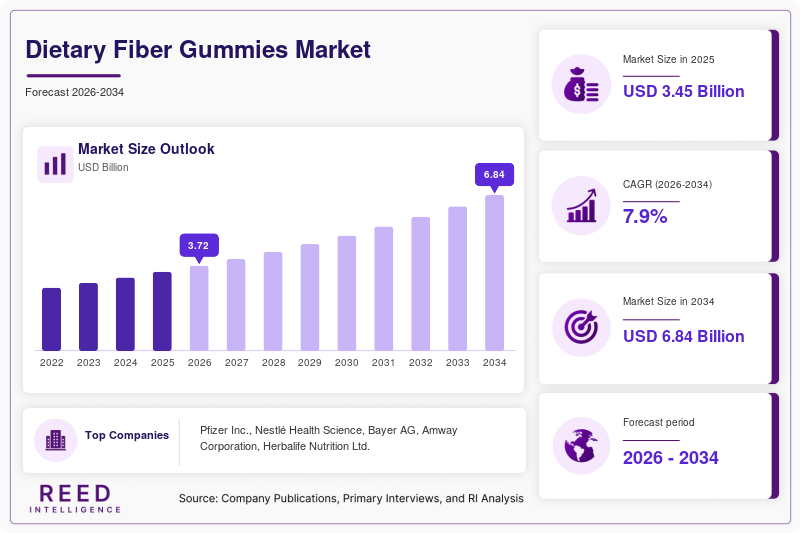
The Dietary Fiber Gummies Market size is estimated at USD 3.45 billion, rising to approximately USD 3.78 billion in 2026. The market is projected to reach USD 6.92 billion by 2034, registering a compound annual growth rate (CAGR) of 7.9% during the forecast period (2025–2034). This growth reflects evolving consumer preferences for functional foods that combine health benefits with ease of consumption.
One of the primary growth factors is the rising awareness of digestive health and its link to overall wellness. Consumers are increasingly adopting fiber-rich products to address issues such as irregular digestion, gut health imbalance, and metabolic disorders. Gummies offer an appealing alternative to traditional fiber supplements like powders or capsules, especially among younger demographics and elderly populations who prefer chewable formats.
Key Highlights
- Market valued at USD 3.45 billion in 2025, reaching USD 3.78 billion in 2026, reflecting a year-on-year growth of approximately 9.6%
- Forecasted to grow to USD 6.92 billion by 2034 at a CAGR of 7.9%, adding nearly USD 3.1 billion in incremental revenue
- Increasing demand for digestive health supplements driving adoption, with over 65% of consumers prioritizing gut health solutions
- Rising preference for convenient, chewable supplement formats, with gummies accounting for over 40% of new supplement launches
- Expansion of online retail channels boosting product accessibility, contributing to nearly 35% of total sales by 2026
Market Trends
Shift Toward Clean-Label and Plant-Based Formulations
The market is witnessing a strong shift toward clean-label products that emphasize transparency, natural ingredients, and minimal processing. Consumers are increasingly scrutinizing ingredient lists and preferring gummies made with plant-based fibers such as inulin, pectin, and psyllium husk. This trend is particularly prominent among vegan and vegetarian consumers, as well as those with dietary restrictions. Manufacturers are responding by eliminating artificial colors, flavors, and preservatives while incorporating organic and non-GMO ingredients. This evolution is reshaping product development strategies and encouraging companies to invest in sustainable sourcing and eco-friendly packaging solutions to align with consumer expectations.
Integration of Multi-Functional Health Benefits
Another notable trend is the incorporation of additional health benefits beyond digestive support. Dietary fiber gummies are increasingly formulated with vitamins, minerals, probiotics, and botanicals to provide holistic wellness solutions. For instance, products now target immune health, weight management, and energy enhancement alongside fiber supplementation. This multi-functional approach is attracting a broader consumer base, including fitness enthusiasts and busy professionals seeking all-in-one solutions. The trend is also driving premiumization in the market, as consumers are willing to pay higher prices for products that offer multiple benefits in a single, convenient format.
Market Drivers
Rising Prevalence of Digestive Disorders and Lifestyle Diseases
The increasing incidence of digestive disorders such as constipation, irritable bowel syndrome, and bloating is a significant driver for the dietary fiber gummies market. Sedentary lifestyles, poor dietary habits, and high consumption of processed foods have contributed to a decline in daily fiber intake. As a result, consumers are actively seeking convenient solutions to bridge this nutritional gap. Dietary fiber gummies provide an easy-to-consume alternative that fits seamlessly into daily routines. Moreover, healthcare professionals are increasingly recommending fiber supplements as part of preventive care, further boosting product demand across diverse age groups.
Growing Consumer Preference for Functional and Convenient Nutrition
Modern consumers prioritize convenience without compromising on health benefits, which has accelerated the demand for functional foods and supplements. Gummies offer a user-friendly format that eliminates the need for measuring powders or swallowing pills, making them particularly appealing to children and older adults. Additionally, the availability of flavored options enhances compliance and regular usage. This driver is further supported by busy urban lifestyles and increasing disposable incomes, enabling consumers to invest in premium wellness products. The convergence of convenience and functionality continues to strengthen the market’s growth trajectory.
Market Restraint
High Sugar Content and Regulatory Concerns
One of the primary restraints in the dietary fiber gummies market is the concern regarding sugar content and its potential health implications. Many gummy formulations rely on sugars or sweeteners to enhance taste and texture, which can conflict with health-conscious consumers’ expectations. Excessive sugar intake is associated with obesity, diabetes, and dental issues, leading to skepticism among certain consumer segments. Regulatory bodies in various regions are also imposing stricter guidelines on sugar labeling and health claims, which can limit product positioning and marketing strategies.
This restraint has a direct impact on product development and brand perception. Companies are required to invest in alternative sweetening solutions such as stevia or erythritol, which may increase production costs and affect taste profiles. For example, brands entering the diabetic or low-sugar segment must ensure compliance with stringent standards while maintaining product appeal. Failure to address these concerns can hinder market expansion, particularly in regions with high health awareness and regulatory oversight.
Market Opportunities
Expansion into Emerging Markets
Emerging economies present significant growth opportunities for the dietary fiber gummies market due to rising health awareness and improving purchasing power. Countries in Asia Pacific, Latin America, and parts of the Middle East are witnessing increased demand for dietary supplements as consumers become more conscious of preventive healthcare. Urbanization and exposure to global wellness trends are further driving adoption. Companies can capitalize on this opportunity by introducing affordable product variants and leveraging local distribution networks. Additionally, educational campaigns highlighting the benefits of fiber intake can help build consumer trust and expand the customer base in these regions.
Product Innovation and Personalization
The growing demand for personalized nutrition offers a promising avenue for market growth. Consumers are increasingly seeking products tailored to their specific health needs, such as weight management, digestive health, or immunity support. This has led to the development of customized dietary fiber gummies with targeted formulations. Advances in technology and data analytics enable companies to offer personalized recommendations based on individual health profiles. Furthermore, innovation in flavors, textures, and packaging can enhance user experience and differentiate products in a competitive market. This opportunity is expected to drive premiumization and foster brand loyalty.
Segmental Analysis
By Type
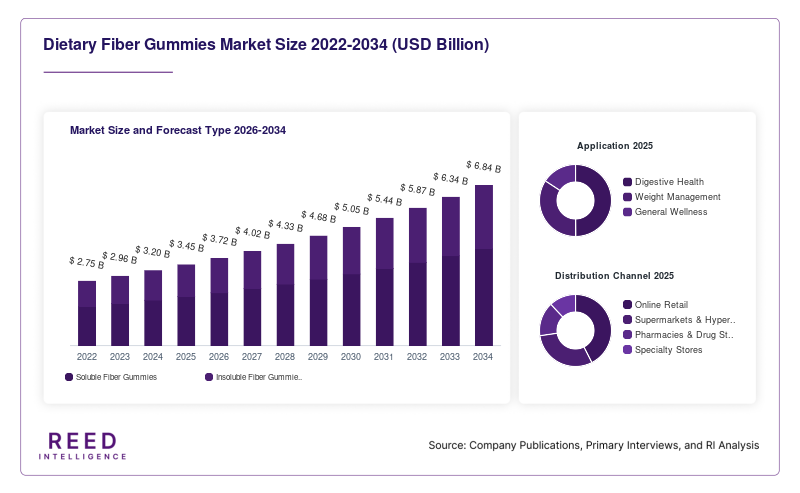
The soluble fiber gummies segment dominated the market in 2024, accounting for approximately 58% of the total share. These products are widely preferred due to their effectiveness in supporting digestive health and regulating blood sugar levels. Soluble fibers such as inulin and pectin are commonly used in gummy formulations, offering both functional benefits and desirable texture. The segment’s dominance is further supported by strong consumer awareness and widespread availability across retail and online channels. Manufacturers continue to focus on enhancing product quality and taste to maintain their competitive position.
The insoluble fiber gummies segment is expected to witness the fastest growth, registering a CAGR of 8.4% during the forecast period. This growth is driven by increasing awareness of the role of insoluble fiber in promoting bowel regularity and preventing constipation. Consumers are gradually recognizing the importance of a balanced fiber intake, which includes both soluble and insoluble types. Additionally, advancements in formulation techniques have improved the palatability of insoluble fiber gummies, making them more appealing to a broader audience.
By Application
The digestive health segment held the largest share in 2024, contributing around 62% of the market. Dietary fiber gummies are primarily consumed to support gut health and alleviate digestive issues, making this segment the cornerstone of the market. Increasing prevalence of gastrointestinal disorders and growing emphasis on preventive healthcare have further strengthened demand. Companies are actively developing products with enhanced efficacy and targeted benefits to cater to this segment.
The weight management segment is projected to grow at the fastest CAGR of 8.7% over the forecast period. This growth is driven by rising concerns about obesity and increasing adoption of fitness-oriented lifestyles. Fiber gummies help promote satiety and reduce calorie intake, making them an attractive option for weight-conscious consumers. The segment is also benefiting from the integration of additional ingredients such as green tea extract and vitamins, which enhance product appeal.
By Distribution Channel
The offline retail segment dominated the market in 2024, accounting for approximately 64% of total sales. Supermarkets, pharmacies, and specialty stores play a crucial role in product distribution, offering consumers the opportunity to physically evaluate products before purchase. Strong retail networks and established brand presence contribute to the segment’s dominance. Additionally, in-store promotions and discounts drive consumer engagement and sales.
The online retail segment is expected to grow at the fastest CAGR of 9.1% during the forecast period. The convenience of online shopping, coupled with the availability of a wide range of products, has significantly boosted this segment. E-commerce platforms enable consumers to compare products, read reviews, and access personalized recommendations. Subscription models and direct-to-consumer strategies further enhance customer retention and drive market growth.
Regional Analysis
North America
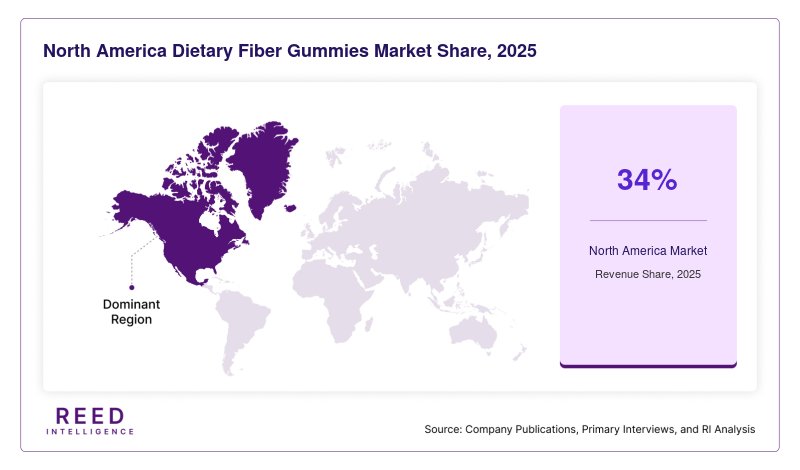
North America accounted for approximately 34% of the global market share in 2025, making it the largest regional market. The region is projected to grow at a CAGR of 7.5% during the forecast period, driven by high consumer awareness and a well-established nutraceutical industry. The presence of leading manufacturers and advanced distribution channels further supports market expansion. Additionally, the increasing adoption of preventive healthcare practices contributes to sustained demand.
The United States dominates the North American market due to its large consumer base and high healthcare expenditure. A unique growth factor in this region is the strong influence of digital marketing and influencer-driven promotions, which enhance product visibility and consumer engagement. This has enabled brands to effectively target younger demographics and expand their reach.
Europe
Europe held a market share of around 26% in 2025 and is expected to grow at a CAGR of 7.2%. The region’s growth is supported by stringent regulations that ensure product quality and safety, fostering consumer trust. Increasing demand for clean-label and organic products also contributes to market expansion across key countries.
Germany leads the European market due to its robust healthcare infrastructure and high awareness of dietary supplements. A unique growth factor is the rising popularity of plant-based and vegan products, which aligns with consumer preferences for sustainable and ethical consumption. This trend is driving innovation in fiber gummy formulations.
Asia Pacific
Asia Pacific captured nearly 22% of the market share in 2025 and is anticipated to grow at the fastest CAGR of 8.6%. Rapid urbanization, increasing disposable incomes, and growing health awareness are key factors driving regional growth. The expanding middle-class population further supports demand for functional food products.
China dominates the Asia Pacific market due to its large population and increasing adoption of dietary supplements. A unique growth factor is the integration of traditional herbal ingredients into gummy formulations, which appeals to local consumers. This approach enhances product acceptance and differentiation in the market.
Middle East & Africa
The Middle East & Africa region accounted for approximately 9% of the market share in 2025 and is projected to grow at a CAGR of 7.8%. The market is driven by rising health awareness and increasing investment in the healthcare sector. However, limited product availability in certain areas poses challenges.
The United Arab Emirates leads the regional market due to its high per capita income and growing expatriate population. A unique growth factor is the increasing adoption of Western dietary habits, which has led to higher demand for functional supplements. This trend is expected to support market growth.
Latin America
Latin America held around 9% of the global market share in 2025 and is expected to grow at a CAGR of 7.4%. The region’s growth is supported by improving economic conditions and increasing awareness of health and wellness products. Expanding retail networks also contribute to market penetration.
Brazil dominates the Latin American market due to its large population and growing focus on preventive healthcare. A unique growth factor is the rising popularity of fortified food products, which encourages consumers to incorporate dietary fiber gummies into their daily routines. This trend is expected to drive sustained growth.
Competitive Landscape
The dietary fiber gummies market is moderately fragmented, with several global and regional players competing for market share. Leading companies focus on product innovation, strategic partnerships, and expansion into emerging markets to strengthen their position. The competitive environment is characterized by continuous research and development activities aimed at improving product quality and functionality.
One of the leading players in the market is a major nutraceutical company known for its extensive product portfolio and strong distribution network. The company recently introduced a new line of sugar-free fiber gummies, addressing consumer concerns regarding sugar content and expanding its target audience. Other key players are investing in clean-label formulations and sustainable packaging to align with evolving consumer preferences. Overall, the market remains dynamic, with companies striving to differentiate themselves through innovation and branding.
Key Players
- Pfizer Inc.
- Nestlé Health Science
- Bayer AG
- Amway Corporation
- Herbalife Nutrition Ltd.
- Church & Dwight Co., Inc.
- SmartyPants Vitamins
- Nature’s Way Products, LLC
- Vitafusion (Church & Dwight)
- Garden of Life
- NOW Foods
- Olly Public Benefit Corporation
- GNC Holdings, Inc.
- Nature Made (Pharmavite LLC)
- Lifeable LLC
Recent Developments
- A leading manufacturer launched a new range of vegan dietary fiber gummies with plant-based ingredients to cater to the growing vegan population.
- A global nutraceutical company expanded its distribution network through partnerships with major e-commerce platforms, enhancing product accessibility.
- A key player introduced personalized fiber gummy solutions based on consumer health data, marking a shift toward customized nutrition products.
Dietary Fiber Gummies Market Segments
Type
- Soluble Fiber Gummies
- Insoluble Fiber Gummies
Application
- Digestive Health
- Weight Management
- General Wellness
Distribution Channel
- Online Retail
- Supermarkets & Hypermarkets
- Pharmacies & Drug Stores
- Specialty Stores
By Region
- North America
- Europe
- APAC
- Middle East and Africa
- LATAM