Digital Comic Book Market Size, Share & Demand Report By Platform Type (Mobile Applications, Web-Based Platforms, Subscription-Based Platforms, Download-to-Own Platforms), By Genre (Action & Adventure, Fantasy, Science Fiction, Romance, Horror, Comedy, Others), By End User (Children, Teen Readers, Adult Readers), By Region & Segment Forecasts, 2026–2034
USD 3950
Market Overview
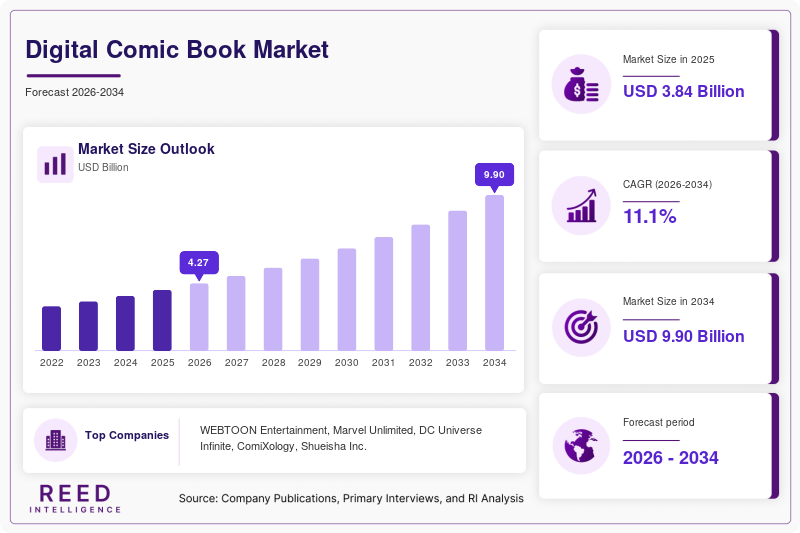
The global Digital Comic Book Market size was valued at USD 3.84 billion in 2026 and is projected to reach USD 8.91 billion by 2034, expanding at a CAGR of 11.1% during 2026–2034. The market continues to evolve as readers increasingly consume entertainment content through smartphones, tablets, e-readers, and web-based platforms. The transition from physical comic books to digital formats has broadened audience reach and enabled publishers to distribute content globally with lower production and logistics costs.
A major factor supporting market growth is the rapid expansion of digital media consumption worldwide. Improved internet accessibility, rising smartphone penetration, and growing adoption of subscription-based content platforms have encouraged consumers to access digital comics across multiple devices. Publishers are also investing in localized content, interactive storytelling features, and multilingual digital libraries to attract broader audiences. Furthermore, the popularity of comic-based movies, streaming adaptations, anime content, and gaming franchises has strengthened reader engagement and increased demand for digital comic book platforms.
Key Highlights
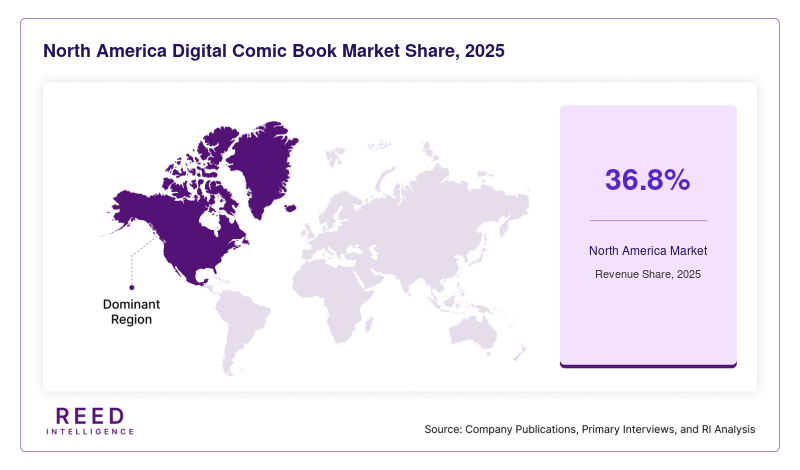
- North America dominated the market with a 36.8% share in 2025.
- while Asia Pacific is expected to grow at the fastest CAGR of 13.2% during 2026–2034.
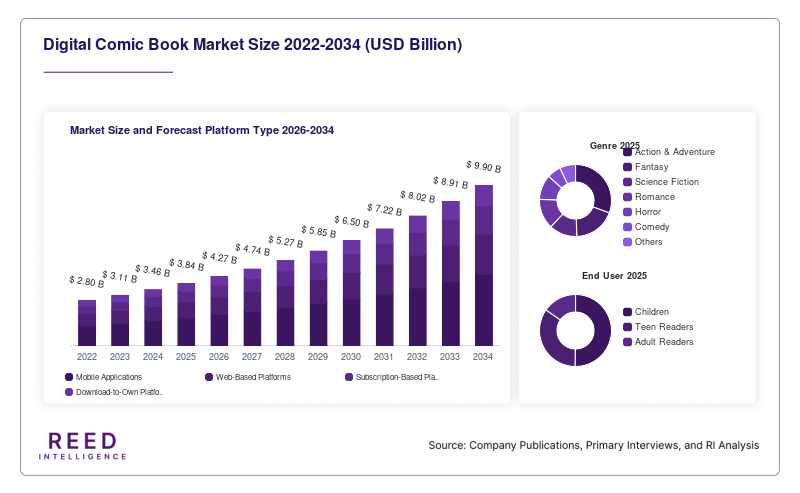
- By platform type, mobile applications accounted for the largest share of 42.6%.
- while subscription-based platforms are projected to grow at a CAGR of 13.8%.
- By genre, action and adventure comics held the largest share of 39.4%.
- whereas fantasy comics are expected to expand at a CAGR of 13.5%.
- By end-user, adult readers led with a 57.3% share.
- while teen readers are anticipated to grow at a CAGR of 12.9%.
- The United States remained the dominant country, with market values of USD 1.05 billion in 2024 and USD 1.16 billion in 2025.
Market Trends
Expansion of Subscription-Based Reading Ecosystems
Subscription-based digital comic services are becoming a prominent trend across the market. Consumers increasingly prefer unlimited access models that provide large content libraries for fixed monthly fees. This approach offers greater affordability compared to purchasing individual comic titles and encourages readers to explore diverse genres. Publishers benefit from predictable recurring revenue streams while maintaining stronger customer engagement. Digital platforms are continuously enhancing their subscription offerings through exclusive releases, early access content, personalized recommendations, and offline reading capabilities. As content competition intensifies within the digital entertainment industry, subscription ecosystems are expected to remain a major trend influencing market growth and consumer retention throughout the forecast period.
Growing Integration of Interactive and Multimedia Content
Digital comic publishers are increasingly incorporating interactive features to improve user engagement and differentiate their products from traditional print formats. Enhanced visual effects, animated panels, background music, voice narration, and interactive storytelling elements are becoming more common across premium platforms. These innovations appeal particularly to younger audiences who are accustomed to immersive digital experiences. The convergence of comics with gaming, animation, and streaming entertainment is creating hybrid content formats that extend audience engagement. Publishers are also experimenting with augmented reality features and dynamic reading modes that enhance storytelling while maintaining the artistic integrity of comic narratives, supporting long-term market development.
Market Drivers
Rising Smartphone Penetration and Digital Content Consumption
The increasing availability of smartphones and affordable internet services has significantly contributed to the expansion of the digital comic book market. Consumers can conveniently access comic content anytime and anywhere without requiring physical purchases or storage space. Mobile-first reading habits have become particularly prevalent among younger demographics, who prefer digital entertainment platforms over traditional media formats. Publishers are optimizing applications for mobile devices, introducing user-friendly interfaces, cloud synchronization, and personalized reading experiences. The combination of growing internet accessibility and widespread mobile adoption continues to strengthen market demand, enabling publishers to reach readers across both developed and emerging economies.
Increasing Popularity of Comic-Based Entertainment Franchises
The global success of comic-inspired films, television series, streaming content, and video games has created substantial interest in original comic storylines and characters. Audiences often seek digital comics to explore expanded narratives, character backstories, and exclusive content beyond mainstream adaptations. Entertainment companies are increasingly leveraging digital comic platforms to extend franchise ecosystems and maintain audience engagement between major releases. Collaborative initiatives involving publishers, streaming providers, and gaming companies are generating new revenue opportunities while attracting first-time readers. This growing connection between digital comics and broader entertainment ecosystems continues to support sustained market growth across multiple regions.
Market Restraints
Digital Piracy and Intellectual Property Protection Challenges
Digital piracy remains a significant restraint affecting the growth potential of the digital comic book market. Unauthorized distribution of copyrighted comic content through websites, file-sharing networks, and illegal applications reduces revenue opportunities for publishers, creators, and platform operators. Unlike physical products, digital files can be copied and distributed rapidly, making enforcement difficult across multiple jurisdictions. Smaller publishers and independent creators are particularly vulnerable because piracy can significantly impact profitability and content investment capacity.
The widespread availability of pirated content may discourage legitimate subscriptions and individual purchases, limiting market monetization. Publishers continue to invest in digital rights management technologies, content encryption, watermarking systems, and legal enforcement measures to mitigate these risks. However, maintaining effective protection strategies often increases operational costs. The persistence of piracy challenges may continue to influence pricing strategies, platform investments, and content distribution decisions throughout the forecast period.
Market Opportunities
Expansion into Emerging Digital Entertainment Markets
Emerging economies present substantial opportunities for digital comic book providers due to improving internet infrastructure, increasing smartphone adoption, and expanding middle-class populations. Countries across Asia, Latin America, the Middle East, and Africa are witnessing growing demand for digital entertainment services. Localized content offerings, regional language translations, and culturally relevant storylines can help publishers attract new audiences. Digital distribution models reduce traditional market entry barriers, allowing publishers to reach consumers without extensive physical retail networks. As digital literacy continues to improve in these regions, market participants are expected to benefit from significant audience expansion and revenue generation opportunities.
Growth of Independent Creator Ecosystems
The rise of self-publishing platforms and creator-focused digital marketplaces is creating new opportunities within the digital comic book industry. Independent artists and writers can distribute content directly to readers without relying solely on traditional publishing structures. Digital platforms provide monetization options through subscriptions, premium chapters, crowdfunding, advertising, and direct purchases. This creator economy encourages content diversity and introduces innovative storytelling formats that appeal to niche audience segments. As more creators enter the market and audiences seek unique content experiences, independent publishing ecosystems are expected to become an increasingly important contributor to overall market growth and innovation.
Segmental Analysis
By Platform Type
Mobile applications represented the dominant subsegment and accounted for approximately 42.6% of market share in 2024. Their leadership position is attributed to widespread smartphone adoption and the convenience of accessing comics through dedicated applications. Readers benefit from features such as offline downloads, synchronized libraries, personalized recommendations, and optimized reading interfaces. Publishers continue to prioritize mobile application development because these platforms enable direct customer engagement and support various monetization models. The growing popularity of mobile-first content consumption has further strengthened demand for application-based comic distribution, making this segment a central component of overall market expansion.
Subscription-based platforms are expected to emerge as the fastest-growing subsegment, registering a CAGR of 13.8% during the forecast period. Consumers increasingly value unlimited content access and predictable pricing structures. Publishers benefit from recurring revenue streams and improved customer retention rates. These platforms often include exclusive releases, early-access content, and personalized recommendations that encourage long-term engagement. The continued expansion of digital entertainment subscriptions across multiple media categories is expected to positively influence adoption. As readers seek cost-effective ways to access extensive comic libraries, subscription-based distribution models are likely to experience significant growth throughout the forecast timeline.
By Genre
Action and adventure comics held the largest share of the market, accounting for approximately 39.4% in 2024. These titles continue to attract a broad audience due to their engaging narratives, recognizable characters, and connections to major entertainment franchises. The popularity of superhero universes, science fiction adventures, and cinematic adaptations has significantly strengthened demand within this category. Publishers frequently prioritize action-oriented content because it appeals to both long-term comic enthusiasts and new readers. The genre's ability to support extensive storytelling across multiple formats contributes to its strong market position and ongoing commercial success.
Fantasy comics are projected to register the fastest growth, expanding at a CAGR of 13.5% through 2034. Consumer interest in immersive fictional worlds, complex character development, and serialized storytelling continues to increase. The influence of fantasy-themed streaming content, gaming franchises, and animated adaptations has further boosted readership. Digital platforms provide ideal environments for fantasy creators to present visually detailed narratives without traditional print limitations. As audiences increasingly seek escapist entertainment experiences, publishers are expanding fantasy-focused content portfolios, supporting sustained growth within this subsegment across global markets.
By End User
Adult readers accounted for the largest share of the digital comic book market, representing approximately 57.3% of total revenue in 2024. This segment benefits from higher purchasing power, established brand loyalty, and strong interest in premium comic content. Adult consumers frequently engage with diverse genres including action, fantasy, science fiction, drama, and historical narratives. Many publishers have expanded mature-content offerings and subscription packages tailored specifically to this demographic. Additionally, nostalgia associated with long-running comic franchises encourages continued readership among adults who increasingly prefer digital formats due to convenience and accessibility.
Teen readers are anticipated to be the fastest-growing subsegment, achieving a CAGR of 12.9% during the forecast period. Increased smartphone ownership, social media influence, and exposure to digital entertainment platforms contribute significantly to segment expansion. Teen audiences often engage with webtoons, manga-inspired content, fantasy stories, and creator-driven narratives distributed through digital channels. Publishers are investing in interactive features, community engagement tools, and localized content strategies to strengthen connections with younger readers. As digital-native generations continue to enter the consumer market, demand from teen readers is expected to become an increasingly important growth driver.
Regional Analysis
North America
North America accounted for approximately 36.8% of the global digital comic book market in 2025 and maintained its position as the leading regional market. The region benefits from established comic book culture, strong consumer spending on digital entertainment, and widespread adoption of subscription-based content platforms. Major publishers continue to expand digital offerings while investing in exclusive content and platform enhancements. The regional market is expected to register a CAGR of 9.8% through 2034 as digital readership continues to increase across multiple demographic groups.
The United States represents the dominant country within the region and contributes the majority of regional revenue. One unique growth factor is the extensive integration of comic intellectual properties into mainstream entertainment ecosystems, including movies, streaming series, and gaming franchises. These interconnected content strategies encourage audiences to engage with original digital comics, creating recurring demand and strengthening platform subscriber growth across the country.
Europe
Europe held approximately 24.6% of global market revenue in 2025 and remains an important contributor to industry expansion. The region benefits from strong demand for graphic novels, digital reading platforms, and localized comic content. Publishers are increasingly focusing on multilingual digital libraries that cater to diverse consumer preferences across European countries. The market is forecast to expand at a CAGR of 10.2% during the forecast period due to rising digital media consumption and continued technological advancements.
Germany remains the dominant country in the European market. A key growth factor is the increasing adoption of digital publishing technologies by both established and independent comic creators. The country's advanced digital infrastructure and growing preference for online entertainment platforms support wider accessibility. Additionally, collaborations between publishers and educational institutions are encouraging broader use of digital comics as educational and cultural content.
Asia Pacific
Asia Pacific represented nearly 22.9% of global market share in 2025 and is projected to record the fastest CAGR of 13.2% between 2026 and 2034. The region benefits from a large population base, increasing internet penetration, and strong consumer interest in manga, webtoons, and digital storytelling formats. Mobile-first consumption patterns continue to accelerate adoption, particularly among younger readers who prefer digital content delivered through smartphones and tablets.
Japan remains the dominant country within the Asia Pacific market due to its established comic culture and extensive digital manga ecosystem. A unique growth factor is the widespread popularity of webtoon and vertically scrolling comic formats, which are optimized for mobile reading experiences. These innovative formats have expanded readership among younger audiences and encouraged publishers to invest heavily in mobile-centric content strategies.
Middle East & Africa
The Middle East & Africa accounted for approximately 7.2% of the global market in 2025 and is expected to achieve a CAGR of 11.0% during the forecast period. Growing smartphone adoption, expanding internet access, and increasing youth engagement with digital entertainment are supporting regional market growth. Digital comic platforms are becoming more accessible as telecommunications infrastructure improves and online payment systems become more widely available.
The United Arab Emirates serves as the dominant market within the region. One distinctive growth factor is the government's focus on digital transformation initiatives that support broader adoption of online content services. Increasing investments in creative industries and digital media ecosystems are creating favorable conditions for comic publishers and platform operators seeking to expand their regional presence.
Latin America
Latin America captured approximately 8.5% of global market share in 2025 and is forecast to grow at a CAGR of 10.8% through 2034. Rising internet penetration, expanding smartphone usage, and growing demand for affordable digital entertainment solutions continue to drive market development. Publishers are introducing localized content and flexible pricing models to attract broader consumer segments while increasing engagement among younger audiences.
Brazil remains the leading country within the Latin American market. A unique growth factor is the increasing popularity of independent digital creators who utilize online platforms to distribute localized comic content. These creators often produce culturally relevant narratives that resonate strongly with regional readers, contributing to greater audience engagement and supporting the expansion of digital comic consumption across the country.
Competitive Landscape
The digital comic book market is characterized by a combination of established publishers, technology-driven content platforms, and independent creator ecosystems. Competition focuses on content exclusivity, subscription offerings, user experience, multilingual libraries, and digital monetization strategies. Companies continue to invest in platform enhancements, mobile optimization, artificial intelligence-driven recommendations, and creator partnership programs to strengthen market positions.
WEBTOON Entertainment remains a leading participant due to its extensive global user base, mobile-first content strategy, and strong creator ecosystem. The company recently expanded its international content partnerships to enhance localized offerings and improve audience engagement. Other major companies are also pursuing acquisitions, licensing agreements, and technology investments to broaden content portfolios and attract new subscribers.
Strategic collaborations between publishers and entertainment companies are becoming increasingly common as organizations seek to leverage popular intellectual properties across multiple digital channels. The growing importance of original content, creator monetization programs, and global distribution capabilities is expected to influence future competitive dynamics within the market.
Key Players
- WEBTOON Entertainment
- Marvel Unlimited
- DC Universe Infinite
- ComiXology
- Shueisha Inc.
- Kakao Entertainment
- Naver Corporation
- Lezhin Entertainment
- Tapas Media
- Dark Horse Comics
- Image Comics
- Kodansha Ltd.
- Viz Media
- INKR Comics
Recent Developments
- WEBTOON Entertainment expanded its creator monetization program and introduced additional AI-assisted translation capabilities for international content distribution.
- DC Universe Infinite launched new exclusive digital-first comic releases aimed at increasing subscription retention and user engagement.
- Kakao Entertainment strengthened its global webtoon distribution network through partnerships with regional content platforms across Asia and Europe.
- ComiXology enhanced its mobile reading interface and introduced advanced personalized recommendation features powered by machine learning.
- Manga Plus expanded multilingual publishing support, enabling faster simultaneous releases for international audiences.
Digital Comic Book Market Segments
Platform Type
- Mobile Applications
- Web-Based Platforms
- Subscription-Based Platforms
- Download-to-Own Platforms
Genre
- Action & Adventure
- Fantasy
- Science Fiction
- Romance
- Horror
- Comedy
- Others
End User
- Children
- Teen Readers
- Adult Readers
By Region
- North America
- Europe
- APAC
- Middle East and Africa
- LATAM