Dipotassium Phosphate For Food Market Size, Share, Growth & Industry Analysis Report By Type (Food-Grade Dipotassium Phosphate, Organic-Certified Dipotassium Phosphate), By Application (Dairy Products, Beverages, Bakery & Confectionery, Processed Foods), By End-Use (Food Processing Industry, Foodservice Sector) and Regional Forecast, 2026–2034
USD 3950
Market Overview
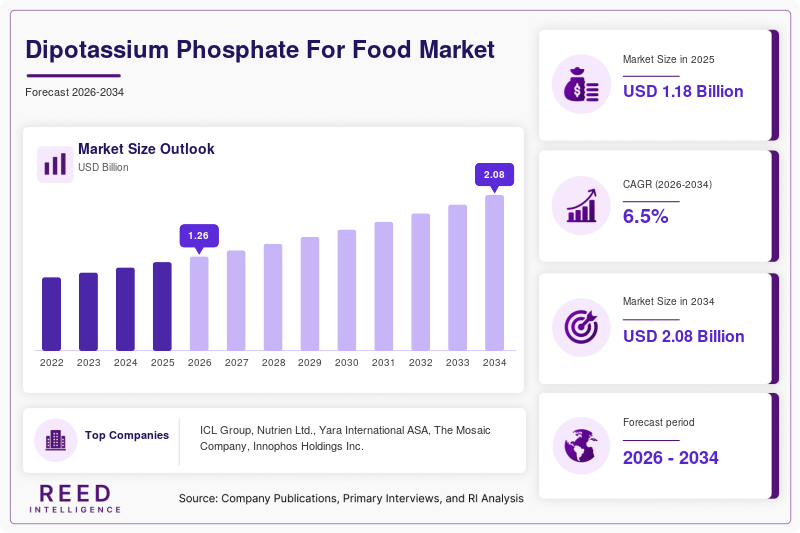
The global Dipotassium Phosphate For Food Market was valued at approximately USD 1.18 billion in 2026 and is projected to reach USD 1.96 billion by 2034, expanding at a CAGR of 6.5% during 2026–2034. Dipotassium phosphate (DKP), widely used as a buffering agent, emulsifier, and nutrient additive in food processing, continues to witness steady demand due to its multifunctional properties. The growing consumption of processed and packaged foods across developed and emerging economies has been a key factor supporting market expansion. Its role in maintaining pH balance and improving shelf stability makes it a preferred ingredient in dairy, beverages, and bakery products.
One major global factor driving the market is the increasing urbanization and evolving dietary habits, which are fueling demand for ready-to-eat and convenience foods. Food manufacturers are increasingly incorporating DKP to enhance texture, taste consistency, and nutritional value, especially in fortified foods. Additionally, the rising focus on food safety and quality compliance has led to higher adoption of standardized food-grade additives such as dipotassium phosphate.
Key Highlights
- North America dominated the market with a 33.8% share in 2025.
- Asia Pacific is expected to grow at the fastest CAGR of 7.8% during 2026–2034.
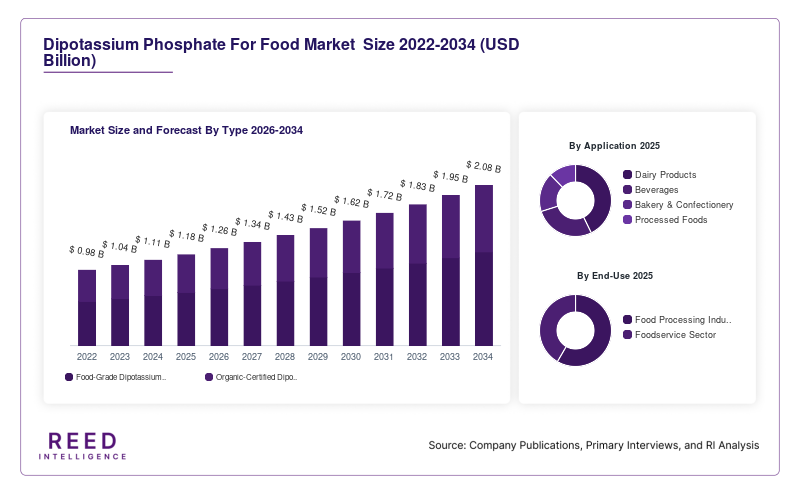
- By type, food-grade dipotassium phosphate accounted for the largest share of 71.2%, while organic-certified variants are projected to grow at a CAGR of 8.6%.
- By application, dairy products led with a 39.5% share, whereas beverage applications are expected to expand at a CAGR of 7.9%.
- The United States remained the dominant country, with market values of USD 420 million in 2024 and USD 455 million in 2025.
Market Trends
Increasing Use in Functional and Fortified Foods
The demand for functional foods enriched with minerals and nutrients is gaining traction globally, and dipotassium phosphate plays a vital role in this shift. As consumers increasingly seek products that offer health benefits beyond basic nutrition, food manufacturers are incorporating DKP to enhance potassium content and improve electrolyte balance. This trend is particularly evident in sports drinks, health beverages, and fortified dairy products. Additionally, the rise of preventive healthcare awareness has influenced dietary preferences, leading to increased consumption of fortified foods. Manufacturers are leveraging DKP not only for its nutritional benefits but also for its stabilizing properties, which help maintain product quality over time. This dual functionality is driving its widespread adoption across multiple food categories.
Clean Label and Regulatory Compliance Evolution
The clean label movement is reshaping ingredient selection in the food industry, and dipotassium phosphate is adapting to this trend. While traditionally viewed as a synthetic additive, manufacturers are now focusing on improving transparency and sourcing practices to align with consumer expectations. Regulatory bodies across regions are also emphasizing safe usage levels and labeling standards, which is encouraging producers to refine product formulations. In response, companies are investing in high-purity and traceable DKP variants to meet compliance requirements. This trend is fostering innovation in production techniques, ensuring that dipotassium phosphate remains relevant in an industry increasingly driven by consumer trust and regulatory oversight.
Market Drivers
Growth of Processed and Convenience Food Industry
The expansion of the global processed food sector is a primary driver for the dipotassium phosphate for food market. Rapid urbanization, busy lifestyles, and rising disposable incomes have significantly increased the demand for ready-to-eat meals and packaged foods. Dipotassium phosphate is widely used in these products as a stabilizer and emulsifier, helping maintain texture and extend shelf life. Its ability to regulate acidity also ensures consistent product quality, which is critical for large-scale food production. As food manufacturers continue to innovate and expand their product portfolios, the demand for reliable food additives such as DKP is expected to grow steadily.
Rising Demand in Dairy and Beverage Applications
Dipotassium phosphate is extensively used in dairy processing, particularly in cheese and milk products, where it acts as an emulsifying salt. The global increase in dairy consumption, especially in emerging markets, is boosting the demand for DKP. In beverages, it is used to stabilize formulations and enhance flavor profiles. The growth of the functional beverage segment, including sports and energy drinks, further amplifies its demand. Manufacturers rely on DKP to maintain product consistency and prevent ingredient separation. This growing reliance across key applications is contributing significantly to market growth.
Market Restraint
Stringent Regulatory Framework and Health Concerns
The dipotassium phosphate for food market faces challenges due to stringent regulations and concerns regarding excessive phosphate intake. Regulatory authorities across various regions impose strict guidelines on the permissible levels of phosphate additives in food products to ensure consumer safety. These regulations can limit the usage of DKP in certain applications, particularly in regions with stringent food safety standards. Additionally, increasing awareness about the potential health risks associated with high phosphate consumption, such as kidney-related issues and mineral imbalances, has led to cautious adoption among consumers and manufacturers alike.
This restraint impacts market growth by compelling manufacturers to explore alternative ingredients or reduce phosphate usage in formulations. For example, some food producers are shifting toward natural or organic stabilizers to align with consumer preferences and regulatory requirements. Compliance with varying international standards also increases operational complexity and costs for manufacturers, especially those operating across multiple regions. As a result, while DKP remains widely used, these regulatory and health considerations pose a significant constraint on its long-term growth trajectory.
Market Opportunities
Expansion in Emerging Economies
Emerging economies present significant growth opportunities for the dipotassium phosphate for food market. Rapid industrialization, urbanization, and changing dietary habits in countries across Asia, Latin America, and Africa are driving demand for processed and packaged foods. As food manufacturing infrastructure expands in these regions, the adoption of food-grade additives such as DKP is expected to increase. Additionally, the growing middle-class population and rising disposable incomes are contributing to higher consumption of convenience foods. Companies that invest in local production facilities and distribution networks can capitalize on these opportunities and strengthen their market presence.
Innovation in Clean-Label and Organic Food Additives
The growing demand for clean-label and organic food products offers a promising opportunity for market players. Manufacturers are increasingly focusing on developing DKP variants that meet organic certification standards and align with consumer preferences for transparency and natural ingredients. Innovations in production processes, such as sustainable sourcing and reduced environmental impact, are also gaining importance. By addressing these evolving consumer demands, companies can differentiate their offerings and tap into premium market segments. This shift toward cleaner and more sustainable ingredients is expected to create new growth avenues for the dipotassium phosphate market.
Segmental Analysis
By Type
The food-grade dipotassium phosphate segment dominated the market, accounting for 71.2% of the share in 2024. This dominance is attributed to its widespread use across multiple food applications, including dairy, beverages, and bakery products. Food-grade DKP is preferred due to its compliance with safety standards and its multifunctional properties, such as pH regulation and emulsification. Manufacturers rely on this type to maintain product consistency and quality, especially in large-scale food production. Its compatibility with various formulations further enhances its adoption across different food categories.
The organic-certified dipotassium phosphate segment is expected to be the fastest-growing, with a CAGR of 8.6% during the forecast period. This growth is driven by increasing consumer demand for organic and clean-label food products. Manufacturers are investing in developing organic-certified variants to cater to this demand and differentiate their offerings. The rising awareness of sustainable and environmentally friendly food production practices is also contributing to the growth of this segment.
By Application
The dairy products segment held the largest share, accounting for 39.5% in 2024. Dipotassium phosphate is extensively used in dairy processing to improve texture and prevent coagulation. Its role as an emulsifying salt in cheese production is particularly significant. The growing consumption of dairy products worldwide, coupled with the expansion of the processed dairy industry, is driving the demand for DKP in this segment. Manufacturers rely on its functional properties to ensure consistent product quality.
The beverages segment is projected to grow at the fastest CAGR of 7.9%. This growth is driven by the increasing demand for functional and fortified beverages, including sports drinks and energy drinks. Dipotassium phosphate is used to stabilize formulations and enhance flavor profiles. The rising popularity of health-oriented beverages is further boosting its demand in this segment.
By End-Use
The food processing industry segment dominated the market, accounting for 64.3% of the share in 2024. This dominance is due to the extensive use of dipotassium phosphate in large-scale food manufacturing. Food processors rely on DKP to improve product stability, extend shelf life, and maintain quality. The expansion of the global food processing industry, driven by increasing demand for packaged foods, is supporting the growth of this segment.
The foodservice sector is expected to grow at the fastest CAGR of 7.2%. This growth is driven by the increasing number of restaurants, cafes, and quick-service outlets. The demand for consistent and high-quality food products in the foodservice industry is encouraging the use of additives such as dipotassium phosphate. The expansion of the hospitality sector and changing consumer dining preferences are further contributing to the growth of this segment.
Regional Analysis
North America
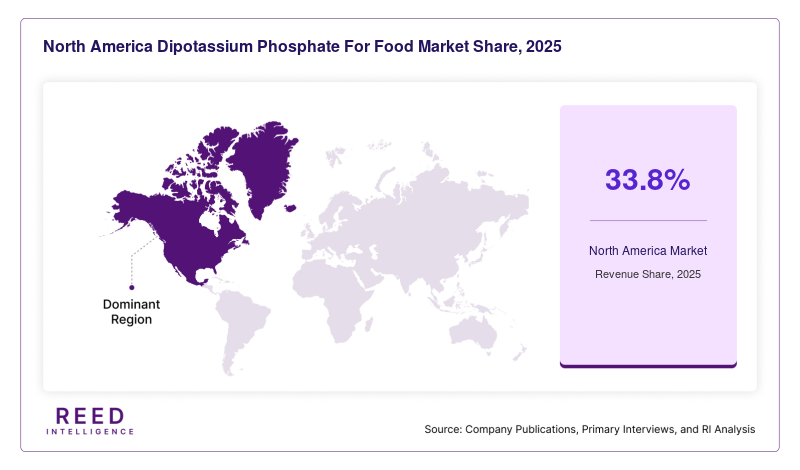
North America accounted for approximately 33.8% of the global market share in 2025, making it the leading regional market. The region is expected to grow at a CAGR of 5.9% during the forecast period. Strong demand from the processed food and beverage industry continues to drive growth, supported by advanced food manufacturing infrastructure and high consumer spending on packaged foods. The presence of established food processing companies further contributes to the widespread adoption of dipotassium phosphate in various applications.
The United States remains the dominant country in the region, driven by its large-scale food production and innovation in functional foods. A unique growth factor is the increasing demand for fortified and health-oriented food products, particularly in the beverage segment. This trend has encouraged manufacturers to incorporate DKP for its nutritional and stabilizing properties, reinforcing its importance in the regional market.
Europe
Europe held a 28.4% market share in 2025 and is projected to grow at a CAGR of 5.6% through 2034. The region’s growth is supported by stringent food safety regulations and a strong focus on product quality. European consumers show a preference for high-quality and standardized food products, which drives the demand for reliable additives such as dipotassium phosphate.
Germany leads the European market, supported by its robust food processing industry and technological advancements. A unique growth factor in this region is the increasing emphasis on clean-label products, which is encouraging manufacturers to develop high-purity DKP variants. This focus on quality and transparency is shaping market dynamics across Europe.
Asia Pacific
Asia Pacific is the fastest-growing region, with a CAGR of 7.8%, and accounted for 22.7% of the market share in 2025. Rapid urbanization, population growth, and increasing consumption of processed foods are key factors driving regional growth. The expanding food and beverage industry in countries such as China and India is significantly contributing to the demand for dipotassium phosphate.
China dominates the Asia Pacific market due to its large-scale food manufacturing sector. A unique growth factor is the rapid expansion of the packaged food industry, supported by changing consumer lifestyles and rising disposable incomes. This trend is expected to sustain high demand for DKP across various applications.
Middle East & Africa
The Middle East & Africa region accounted for 8.1% of the market share in 2025 and is expected to grow at a CAGR of 6.2%. The market is driven by increasing urbanization and the growing adoption of processed foods. The expansion of retail infrastructure and the availability of international food brands are also contributing to market growth.
Saudi Arabia is the dominant country in the region, driven by its growing food processing industry. A unique growth factor is the increasing demand for packaged and convenience foods among the urban population. This shift in consumption patterns is boosting the adoption of food additives such as dipotassium phosphate.
Latin America
Latin America held a 7.0% share in 2025 and is projected to grow at a CAGR of 6.0% during the forecast period. The region’s growth is supported by the expansion of the food processing sector and increasing consumer demand for packaged foods. Economic development and urbanization are also contributing to market expansion.
Brazil leads the Latin American market, supported by its strong agricultural base and food manufacturing industry. A unique growth factor is the rising demand for processed dairy products, which extensively use dipotassium phosphate. This trend is expected to drive steady market growth in the region.
Competitive Landscape
The dipotassium phosphate for food market is moderately consolidated, with several global and regional players competing based on product quality, pricing, and innovation. Key companies are focusing on expanding their production capacities and enhancing their product portfolios to meet growing demand. Strategic partnerships, mergers, and acquisitions are common strategies adopted to strengthen market presence.
ICL Group is recognized as a leading player in the market, owing to its extensive product portfolio and strong global distribution network. The company has recently focused on expanding its food-grade phosphate offerings to cater to the growing demand for functional food ingredients. Other major players are also investing in research and development to improve product quality and develop innovative solutions that align with evolving consumer preferences. The competitive landscape is characterized by continuous innovation and efforts to comply with stringent regulatory standards.
Key Players
- ICL Group
- Nutrien Ltd.
- Yara International ASA
- Mosaic Company
- Innophos Holdings Inc.
- Prayon S.A.
- Haifa Group
- Fosfa a.s.
- Aditya Birla Chemicals
- Guizhou Chanhen Chemical Corporation
- Chengxing Industrial Group
- Sichuan Blue Sword Chemical Group
- Wengfu Group
- Hubei Xingfa Chemicals Group
- PhosAgro
Recent Developments
- In 2025, ICL Group expanded its food-grade phosphate production capacity to meet rising global demand.
- In 2024, Innophos Holdings introduced a new high-purity dipotassium phosphate variant for beverage applications.
- In 2025, Prayon S.A. invested in sustainable production technologies to reduce environmental impact and enhance product quality.
Dipotassium Phosphate For Food Market Segments
By Type
- Food-Grade Dipotassium Phosphate
- Organic-Certified Dipotassium Phosphate
By Application
- Dairy Products
- Beverages
- Bakery & Confectionery
- Processed Foods
By End-Use
- Food Processing Industry
- Foodservice Sector
By Region
- North America
- Europe
- APAC
- Middle East and Africa
- LATAM