Dispensing Pump Market Size, Share Demand Report By Product Type (Lotion Pumps, Spray Pumps, Foam Pumps, Airless Pumps, Trigger Pumps), By Material (Plastic Dispensing Pumps, Metal Dispensing Pumps, Glass-Integrated Dispensing Systems), By End Use (Personal Care & Cosmetics, Pharmaceuticals, Household Products, Food & Beverages, Industrial Applications) By Region & Segment Forecasts, 2026–2034
USD 3950
Market Overview
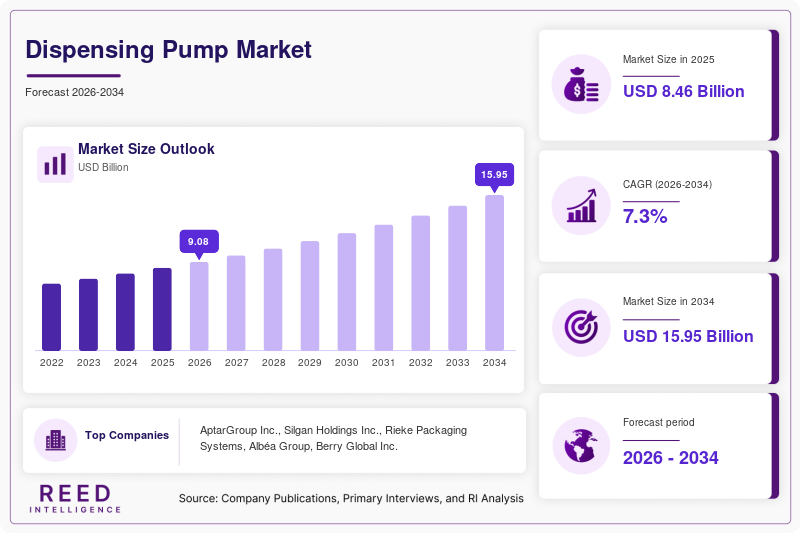
The global Dispensing Pump Market size was valued at USD 8.46 billion in 2026 and is projected to reach USD 14.92 billion by 2034, expanding at a CAGR of 7.3% during the forecast period from 2026 to 2034. Dispensing pumps are critical components in packaging systems used across personal care, pharmaceuticals, food and beverages, household chemicals, and industrial applications. These pumps provide controlled dispensing of liquids, gels, creams, foams, and sprays, improving product efficiency, reducing wastage, and enhancing consumer convenience. Rising demand for hygiene-focused packaging, premium personal care products, and precise dosage solutions has accelerated global adoption. A major global factor supporting market growth is the increasing consumption of packaged consumer goods, particularly in emerging economies where urbanization and e-commerce expansion have reshaped retail distribution. Manufacturers are also investing in recyclable, lightweight, and mono-material dispensing systems to align with sustainability goals and regulatory packaging reforms. Innovations in airless pumps, foaming pumps, and smart dispensers are creating product differentiation while expanding industrial use cases. The pharmaceutical sector has also strengthened demand due to dosage accuracy requirements and contamination prevention standards.
Key Highlights
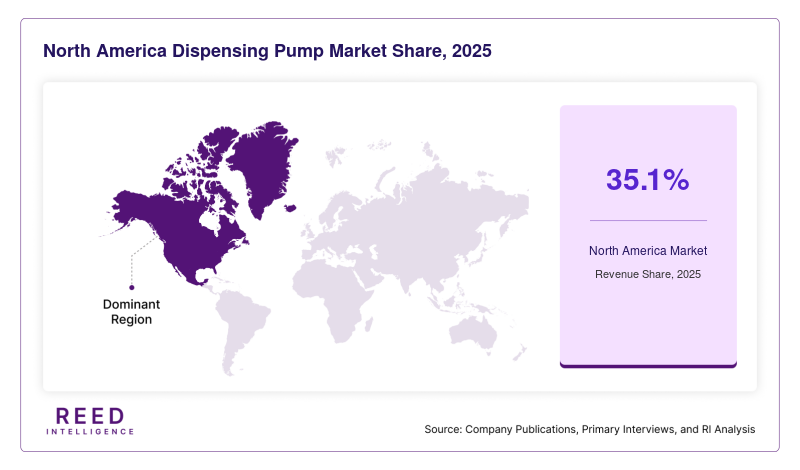
- North America dominated the market with a 35.1% share in 2025.
- Asia Pacific is expected to grow at the fastest CAGR of 8.9% during 2026–2034.
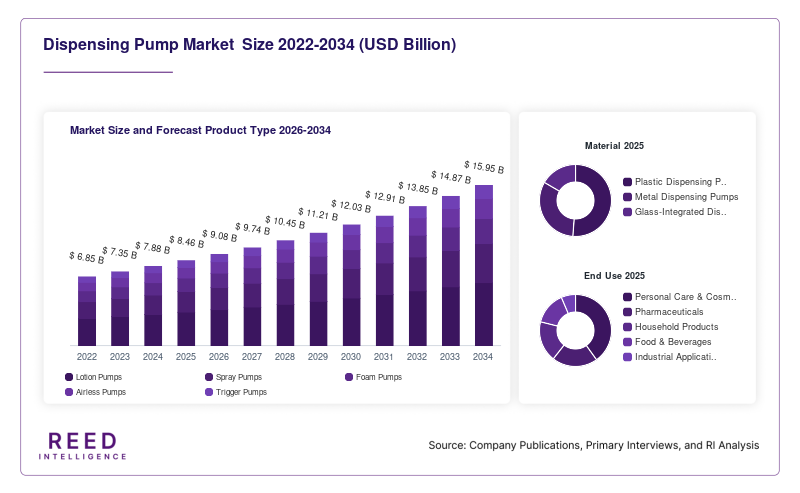
- By product type, lotion pumps accounted for the largest share of 36.8%, while airless pumps are projected to grow at a CAGR of 9.8%.
- By material, plastic dispensing pumps led with a 68.4% share, whereas metal dispensing pumps are expected to expand at a CAGR of 8.1%.
- By end use, personal care & cosmetics dominated with a 39.6% share, while pharmaceuticals are forecast to grow at a CAGR of 9.4%.
- The United States remained the dominant country, with market values of USD 2.41 billion in 2024 and USD 2.58 billion in 2025.
Market Trends
Sustainability-led packaging redesign is reshaping product development
Sustainability has become a defining trend in the Dispensing Pump Market as consumer brands and packaging manufacturers increasingly prioritize recyclable and reusable dispensing systems. Global regulatory pressure to reduce plastic waste has encouraged the adoption of mono-material pumps, refillable containers, and post-consumer recycled resin integration. Brand owners in cosmetics, skincare, and household cleaning are redesigning pump formats to minimize mixed-material components that complicate recycling. This trend is influencing supplier partnerships and innovation pipelines, particularly in Europe and North America. Companies are focusing on lightweight pump architecture without compromising durability or dispensing precision. Refillable packaging ecosystems in beauty and hygiene categories are also creating long-term demand for premium dispensing technologies that balance sustainability with user convenience.
Growth in premium dispensing solutions is expanding across health and beauty sectors
Consumer preference for convenience, hygiene, and controlled product usage is driving strong demand for premium dispensing formats such as airless pumps, foaming pumps, and fine mist dispensers. In skincare, pharmaceutical creams, and luxury cosmetics, these systems offer contamination control, precise dosage, and extended product shelf life. Digital retail growth has also increased the importance of leak-proof, durable dispensing systems suitable for shipping. Manufacturers are integrating ergonomic design, aesthetic customization, and smart-locking features to attract premium brands. This trend is particularly visible in Asia Pacific, where rising disposable income and beauty consumption are accelerating packaging upgrades. Advanced dispensing pumps are increasingly seen not only as functional packaging components but also as brand-enhancing tools.
Market Drivers
Expanding personal care and hygiene product consumption supports long-term volume demand
The consistent rise in personal care, skincare, haircare, and hygiene product sales globally is a major growth driver for the Dispensing Pump Market. Products such as liquid soaps, shampoos, conditioners, sanitizers, lotions, and serums rely heavily on dispensing pumps for controlled and user-friendly application. Post-pandemic hygiene awareness has sustained elevated demand for sanitizer and liquid soap dispensers in residential and commercial sectors. Emerging economies with growing middle-class populations are contributing significantly to packaged hygiene product penetration. As beauty and wellness brands diversify product portfolios, dispensing pump manufacturers benefit from broad volume opportunities across mass-market and premium categories. Packaging differentiation has become central to product positioning, increasing demand for customized pump formats.
Pharmaceutical and healthcare applications are increasing demand for precision dispensing
Healthcare and pharmaceutical industries are increasingly adopting dispensing pumps due to the need for accurate dosage, contamination prevention, and product stability. Nasal sprays, topical creams, oral liquids, and sanitization products require advanced dispensing systems that comply with strict safety regulations. Airless and metered-dose pumps are particularly important for preserving sensitive formulations and reducing microbial exposure. Global healthcare infrastructure expansion and rising self-care product consumption are supporting demand. Pharmaceutical packaging standards often require high-performance dispensing systems with tamper resistance and child safety features. As over-the-counter treatments and wellness products expand globally, dispensing pump suppliers are gaining new opportunities in regulated, higher-margin markets.
Market Restraint
Raw material volatility and recycling complexity create cost and operational challenges
The Dispensing Pump Market faces notable restraints due to fluctuations in raw material prices, particularly petroleum-based plastics, stainless steel, and specialty polymers used in advanced pump systems. Price instability impacts manufacturing margins and limits predictable procurement strategies, especially for small and mid-sized suppliers. Additionally, conventional dispensing pumps often contain multiple material types such as springs, plastic housings, and elastomers, making recycling difficult and increasing environmental scrutiny. Regulatory mandates in Europe and parts of North America are pressuring manufacturers to redesign products, often requiring substantial capital investment. Smaller companies may struggle to meet these changing standards while preserving affordability. For example, personal care brands seeking fully recyclable packaging may avoid traditional pumps in favor of alternative dispensing methods, potentially limiting certain market segments.
Market Opportunities
Expansion of e-commerce packaging creates demand for durable and leak-resistant dispensing systems
Global e-commerce growth has created a substantial opportunity for dispensing pump manufacturers as online retail requires packaging that withstands shipping stress while maintaining product integrity. Leak prevention, secure locking mechanisms, and transportation durability are now essential design priorities for consumer goods brands selling through digital channels. Dispensing pumps with twist-lock systems, shipping clips, and enhanced sealing technologies are gaining importance in beauty, household, and healthcare categories. This shift encourages innovation in both functional engineering and lightweight cost optimization. As direct-to-consumer brands expand internationally, suppliers that can deliver shipping-compatible dispensing systems at scale are likely to secure broader partnerships and recurring contracts.
Emerging market urbanization opens new demand across household and industrial sectors
Rapid urbanization in Asia, Latin America, and Africa is increasing consumption of packaged cleaning products, personal hygiene items, and industrial liquid solutions, all of which support dispensing pump demand. Rising retail modernization and supermarket penetration are making pump-equipped products more accessible to broader populations. Household cleaners, disinfectants, and liquid detergents are particularly important categories in these regions. Industrial applications, including automotive chemicals and foodservice sanitation, also represent untapped growth. Localized manufacturing and cost-effective pump production can help suppliers expand regional presence. As consumer behavior shifts from bulk traditional formats to branded packaged products, dispensing pumps are expected to see stronger penetration across developing economies.
Segmental Analysis
By Product Type
Lotion pumps dominated the Dispensing Pump Market in 2024, accounting for 36.8% of total revenue share. Their broad use across shampoos, soaps, moisturizers, and household liquids makes them highly versatile and commercially scalable. These pumps are favored for ergonomic design, reliable dosage control, and compatibility with mass-market packaging lines. High-volume FMCG industries continue to rely on lotion pumps due to affordability and standardization benefits. Consumer familiarity and broad design customization also contribute to segment leadership.
Airless pumps are projected to be the fastest-growing product type, registering a CAGR of 9.8% through 2034. These pumps are increasingly used in premium skincare, pharmaceuticals, and sensitive formulations because they minimize oxidation and contamination. Growth is supported by demand for preservative-free cosmetics and high-end beauty packaging. Their ability to improve shelf life and precise dispensing positions them well in premium and regulated applications.
By Material
Plastic dispensing pumps held the largest market share in 2024 at 68.4%, driven by lightweight properties, cost efficiency, design flexibility, and large-scale production compatibility. Polypropylene and polyethylene are commonly used due to durability and affordability. Plastic pumps dominate FMCG and household sectors where cost-sensitive, high-volume demand is strongest. Their extensive use in developing markets further strengthens segment leadership despite environmental concerns.
Metal dispensing pumps are expected to witness the fastest CAGR of 8.1% during the forecast period. Growth is driven by premiumization trends, luxury cosmetics, and sustainability-focused packaging initiatives. Metal pumps are increasingly used where aesthetics, durability, and recyclability are key purchasing criteria. Stainless steel and aluminum designs also support refillable packaging ecosystems, making them attractive for upscale brands seeking differentiation.
By End Use
Personal care & cosmetics emerged as the dominant end-use segment in 2024, capturing 39.6% of market share. High consumption of skincare, haircare, liquid soaps, and beauty serums supports sustained dispensing pump demand. Product innovation, brand differentiation, and convenience-focused consumer preferences are key contributors. This segment benefits from both mass-market and premium demand, creating broad product diversification opportunities.
Pharmaceuticals are anticipated to grow at the fastest CAGR of 9.4% through 2034 due to increasing demand for dosage precision, contamination prevention, and specialized delivery systems. Nasal sprays, medicated creams, and sanitization products are expanding segment opportunities. Regulatory standards and healthcare product innovation are driving adoption of sophisticated dispensing technologies with advanced safety and performance features.
Regional Analysis
North America
North America accounted for 35.1% of the global Dispensing Pump Market share in 2025 and remains the leading regional market due to mature consumer goods industries, advanced packaging technologies, and high per-capita consumption of personal care products. The region is projected to grow at a CAGR of 6.4% through 2034. Strong innovation in sustainable dispensing formats and premium packaging solutions continues to support market stability, especially in cosmetics, hygiene, and pharmaceutical segments.
The United States dominates the North American market due to its extensive personal care manufacturing ecosystem and high demand for premium skincare, sanitization, and OTC healthcare products. A unique growth factor is the rapid adoption of refillable beauty packaging among major consumer brands, encouraging advanced dispensing pump redesign. Canada also contributes through environmentally regulated packaging trends and healthcare product innovation.
Europe
Europe held 27.3% of the global Dispensing Pump Market in 2025 and is forecast to expand at a CAGR of 6.8% during the study period. Sustainability legislation, circular economy targets, and innovation in recyclable dispensing systems are shaping regional demand. Cosmetics, pharmaceuticals, and luxury packaging industries provide a broad customer base for technologically advanced dispensing pumps.
Germany leads the European market, supported by industrial packaging engineering capabilities and strong demand from personal care manufacturers. A unique growth factor is the region’s strict packaging waste directives, which are accelerating mono-material pump innovation. France and Italy also support growth due to luxury cosmetics production and premium fragrance packaging requiring specialized dispensing systems.
Asia Pacific
Asia Pacific represented 24.8% of global market share in 2025 and is expected to record the fastest CAGR of 8.9% from 2026 to 2034. Population growth, urbanization, expanding middle-class spending, and beauty product consumption are key market accelerators. Regional manufacturing advantages also make Asia Pacific a major production hub for cost-efficient dispensing pump systems.
China dominates the regional market due to its massive consumer goods manufacturing sector and export-oriented packaging supply chain. A unique growth factor is the rapid expansion of domestic skincare and hygiene brands targeting both domestic and international markets. India is also emerging strongly due to growing FMCG demand and increased packaged household product penetration.
Middle East & Africa
The Middle East & Africa accounted for 6.4% of the global Dispensing Pump Market in 2025 and is projected to grow at a CAGR of 7.1% through 2034. Rising urbanization, hygiene awareness, and retail sector development are supporting growth. Household cleaning products and beauty packaging are expanding demand across urban centers.
Saudi Arabia leads regional growth due to expanding consumer retail infrastructure and premium personal care imports. A unique growth factor is the region’s increasing hospitality and tourism-related hygiene product demand, especially in luxury hotels and healthcare facilities. South Africa also contributes through pharmaceutical packaging and household product modernization.
Latin America
Latin America captured 6.4% of the global market in 2025 and is forecast to grow at a CAGR of 7.4% over the forecast period. Rising consumer packaged goods penetration and increased spending on hygiene products are driving steady market expansion. Local production capacity is also improving packaging affordability.
Brazil dominates the Latin American market due to its strong beauty and cosmetics industry. A unique growth factor is the country’s large direct-selling personal care ecosystem, which increases demand for lotion pumps and cosmetic dispensers. Mexico also supports growth through manufacturing integration with North American consumer goods supply chains.
Competitive Landscape
The Dispensing Pump Market remains moderately fragmented, with global packaging manufacturers competing through innovation, sustainability, and customization. AptarGroup Inc. is the leading player due to its broad dispensing portfolio, strong pharmaceutical presence, and sustainability-focused product innovation. Recent development includes expanded recyclable airless dispensing solutions for premium beauty brands. Silgan Holdings Inc., Rieke Packaging Systems, Albéa Group, and C.L. Smith are also key competitors. Companies are focusing on lightweight engineering, e-commerce durability, and mono-material systems. Strategic acquisitions and regional manufacturing expansion remain common growth strategies. Product differentiation increasingly centers on refillability, premium design, and compliance with changing packaging regulations.
Key Players
- AptarGroup Inc.
- Silgan Holdings Inc.
- Rieke Packaging Systems
- Albéa Group
- C.L. Smith Company
- Frapak Packaging
- Raepak Ltd
- Guala Dispensing
- Berry Global Inc.
- Richmond Containers
- Yonwoo Co. Ltd
- Lumson S.p.A.
- Mitani Valve Co. Ltd
- Weener Plastics Group
- Taplast S.p.A.
Recent Developments
- AptarGroup introduced recyclable mono-material airless pump systems for skincare packaging expansion.
- Silgan Holdings expanded dispensing manufacturing capacity in Asia Pacific to support FMCG clients.
- Albéa Group launched refill-compatible premium dispensing solutions targeting luxury cosmetics brands.
Dispensing Pump Market Segments
Product Type
- Lotion Pumps
- Spray Pumps
- Foam Pumps
- Airless Pumps
- Trigger Pumps
Material
- Plastic Dispensing Pumps
- Metal Dispensing Pumps
- Glass-Integrated Dispensing Systems
End Use
- Personal Care & Cosmetics
- Pharmaceuticals
- Household Products
- Food & Beverages
- Industrial Applications
By Region
- North America
- Europe
- APAC
- Middle East and Africa
- LATAM