Dried Kiwi Fruit Market Size, Share & Demand Report By Nature (Conventional, Organic), By Distribution Channel (Supermarkets and Hypermarkets, Convenience Stores, Online Retail, Specialty Stores, Others), By Application (Snacks and Confectionery, Bakery and Breakfast Products, Dairy and Frozen Desserts, Beverages, Foodservice and Hospitality), By Region & Segment Forecasts, 2026–2034
USD 3950
Market Overview
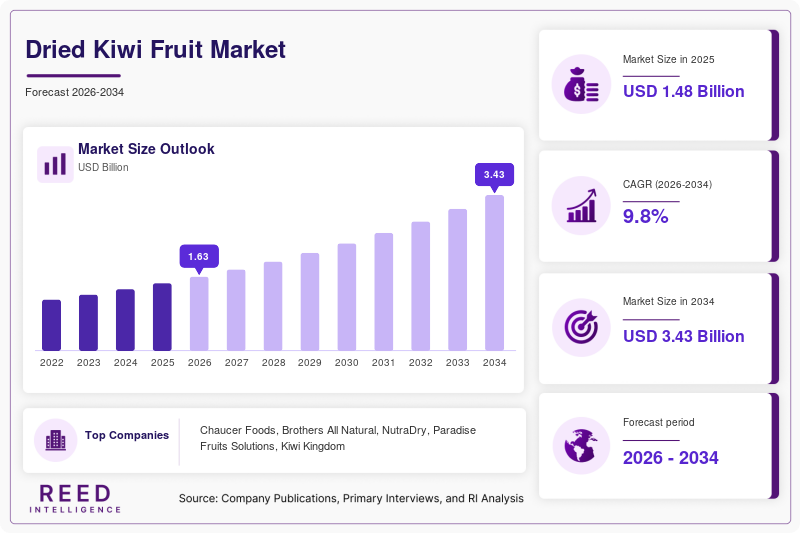
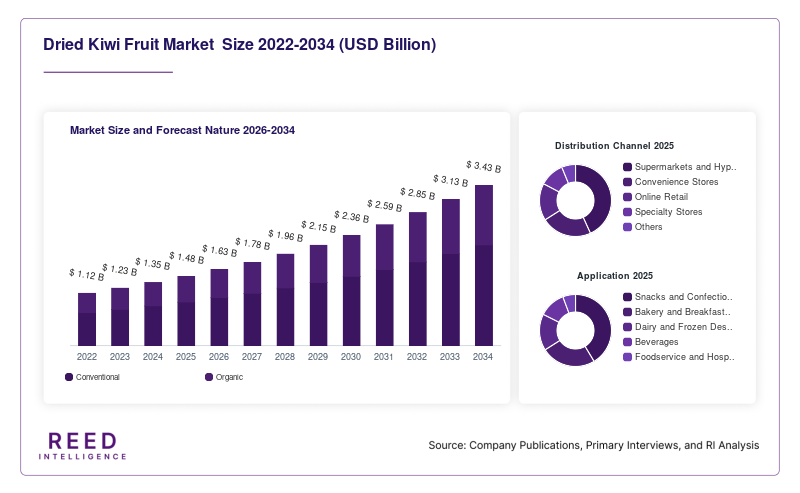
The global Dried Kiwi Fruit Market size was valued at USD 1.48 billion in 2026 and is projected to reach USD 3.12 billion by 2034, expanding at a CAGR of 9.8% during the forecast period from 2026 to 2034. The market continues to gain momentum due to rising consumer demand for nutrient-rich dried fruit snacks, increasing preference for convenient functional foods, and rapid expansion of health-conscious retail channels across developed and emerging economies. Dried kiwi fruit products are increasingly used in breakfast cereals, bakery products, confectionery items, trail mixes, dairy toppings, and healthy snack formulations. Manufacturers are also introducing organic, low-sugar, and preservative-free variants to meet changing dietary preferences.
One of the major global factors supporting market growth is the increasing shift toward natural and minimally processed food products. Consumers are actively replacing artificial snack products with fruit-based alternatives that offer vitamins, antioxidants, and dietary fiber. This trend is especially visible among urban populations with busy lifestyles who seek convenient and portable nutrition. The expansion of e-commerce grocery platforms and specialty health food stores has further improved product accessibility across international markets. In addition, rising awareness regarding immunity-supporting foods has contributed to higher consumption of dried kiwi fruit products in both retail and foodservice applications.
Key Highlights
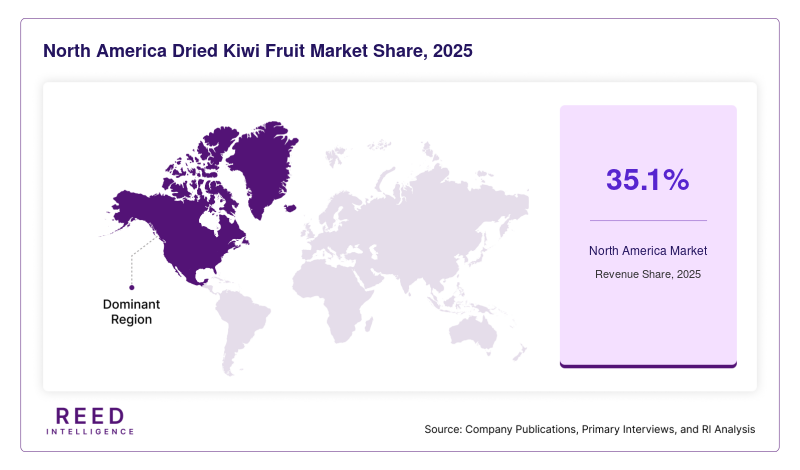
- North America dominated the market with a 35.1% share in 2025.
- Asia Pacific is expected to grow at the fastest CAGR of 11.6% during 2026–2034.
- By nature, conventional dried kiwi fruit accounted for the largest share of 68.4%.
- while organic dried kiwi fruit is projected to grow at a CAGR of 12.3%.
- By distribution channel, supermarkets and hypermarkets led with a 39.2% share.
- whereas online retail is expected to expand at a CAGR of 13.1%.
- By application, snacks and confectionery held the leading share of 44.6%.
- while bakery and breakfast products are projected to grow at a CAGR of 11.4%.
- The United States remained the dominant country, with market values of USD 382 million in 2024 and USD 421 million in 2025.
Market Trends
Rising Preference for Functional and Clean-Label Snacks
Consumer preferences are shifting toward healthier snacking alternatives that contain natural ingredients, lower sugar levels, and higher nutritional value. This trend has significantly increased the demand for dried kiwi fruit products because kiwi contains vitamin C, potassium, antioxidants, and dietary fiber. Food manufacturers are marketing dried kiwi fruit as a convenient functional snack suitable for fitness-conscious consumers and working professionals. The clean-label movement has also encouraged brands to reduce the use of preservatives, artificial flavors, and color additives in dried fruit products. Retailers are expanding shelf space for premium fruit snacks, especially in North America and Europe, where consumers actively compare ingredient transparency and nutritional claims before purchasing packaged foods.
The growing popularity of vegan diets and plant-based nutrition has further strengthened this trend. Dried kiwi fruit is increasingly incorporated into trail mixes, yogurt toppings, smoothie blends, and energy bars designed for consumers seeking natural energy sources. Companies are also launching resealable packaging and single-serve snack packs to improve portability and convenience. Social media marketing focused on healthy lifestyles has amplified consumer awareness regarding fruit-based snacks, contributing to sustained market growth across online and offline retail channels.
Expansion of Premium Organic Fruit Product Categories
The premiumization of dried fruit products is becoming an important trend in the Dried Kiwi Fruit Market. Consumers with higher disposable incomes are increasingly purchasing organic and sustainably sourced dried fruit products that align with environmental and health priorities. Organic dried kiwi fruit products are gaining traction in supermarkets, health food chains, and specialty stores due to growing concerns regarding pesticide use and synthetic additives in conventional agricultural practices. Manufacturers are responding by obtaining organic certifications and investing in traceable supply chain systems that improve consumer confidence.
Premium dried kiwi fruit products are also benefiting from innovation in flavor combinations and packaging formats. Companies are introducing mixed fruit snack blends containing dried kiwi, berries, mango, and nuts to appeal to younger demographics seeking variety. Freeze-dried kiwi products with improved texture retention and longer shelf life are also becoming more common in premium retail categories. In addition, export-oriented producers from New Zealand, China, and Italy are increasing production capacities to meet international demand for organic dried fruit products. This trend is expected to create higher profit margins and support long-term market expansion.
Market Drivers
Growing Awareness of Nutritional Benefits and Immunity Support
Rising awareness regarding the nutritional advantages of kiwi fruit is one of the primary factors driving market growth. Dried kiwi fruit contains essential nutrients such as vitamin C, antioxidants, calcium, and dietary fiber, making it attractive to consumers seeking healthier snack alternatives. Increasing health consciousness after recent global health concerns has encouraged consumers to focus on immunity-supporting foods. This shift has directly supported demand for fruit-based snacks that offer natural nutritional value without extensive processing. Healthcare professionals and nutrition influencers are also promoting fruit consumption as part of balanced dietary habits.
Food manufacturers are leveraging these nutritional benefits in marketing campaigns targeting health-focused consumers. The inclusion of dried kiwi fruit in school snacks, sports nutrition products, and wellness-oriented meal kits has expanded the product’s consumer base. Rising obesity rates and concerns regarding processed food consumption are encouraging households to replace sugary confectionery products with dried fruit snacks. In addition, increasing urbanization and busy lifestyles are supporting demand for portable foods that combine convenience and nutritional value. These factors continue to strengthen market growth across developed and emerging economies.
Increasing Adoption Across Food Processing Industries
The growing use of dried kiwi fruit in food processing applications is another important driver supporting market expansion. Manufacturers in bakery, confectionery, breakfast cereals, dairy products, and snack foods are increasingly incorporating dried kiwi fruit into product formulations to improve flavor, texture, and nutritional content. The bright color and distinct sweet-tart taste of kiwi fruit make it suitable for premium food products targeting health-conscious consumers. Demand from foodservice companies and packaged food manufacturers has increased significantly over the past few years.
The expansion of ready-to-eat food categories has further accelerated ingredient demand within industrial applications. Dried kiwi fruit is being used in granola bars, chocolate coatings, frozen desserts, and yogurt products as consumers seek fruit-infused snacks with natural appeal. Food processing companies are also experimenting with low-sugar and organic variants to meet changing dietary requirements. Technological advancements in drying methods, including freeze-drying and vacuum drying, have improved texture retention and shelf stability, encouraging broader industrial adoption. As processed healthy food categories continue to expand globally, demand for dried kiwi fruit ingredients is expected to rise steadily.
Market Restraint
High Production Costs and Supply Chain Volatility
High production and processing costs remain a major restraint for the Dried Kiwi Fruit Market. Kiwi fruit cultivation requires suitable climatic conditions, careful irrigation management, and intensive farming practices, which increase overall production expenses. In addition, the drying process involves specialized equipment, energy consumption, and quality control systems that raise manufacturing costs further. Organic dried kiwi fruit products are particularly expensive because of certification requirements and limited organic farming acreage. These factors often result in higher retail prices compared to other dried fruit alternatives such as raisins, bananas, and apricots.
Supply chain volatility also affects market growth, especially in export-dependent regions. Weather-related disruptions, labor shortages, fluctuating transportation costs, and seasonal yield variations can influence raw material availability and pricing. For example, unfavorable weather conditions in leading kiwi-producing countries may reduce harvest quality and impact global supply volumes. Small-scale manufacturers often struggle to maintain consistent pricing and inventory levels during such disruptions. Higher product prices can limit consumer adoption in price-sensitive markets across Latin America, Africa, and parts of Asia. In addition, competition from low-cost snack products and private-label dried fruit brands creates pricing pressure for premium kiwi fruit manufacturers.
Market Opportunities
Increasing Penetration of E-Commerce and Direct-to-Consumer Channels
The rapid expansion of online grocery retail platforms presents a major opportunity for companies operating in the Dried Kiwi Fruit Market. Consumers are increasingly purchasing healthy snack products through digital channels because of convenience, product variety, and competitive pricing. Online platforms allow manufacturers to directly target health-conscious consumers through personalized advertising campaigns and subscription-based snack delivery services. Small and medium-sized brands are particularly benefiting from digital marketplaces because they can reach broader customer bases without relying entirely on traditional retail distribution networks.
The availability of detailed product descriptions, nutritional information, and customer reviews on e-commerce platforms also improves purchasing confidence among consumers. Companies are investing in digital branding strategies, influencer collaborations, and social media promotions to improve online visibility. The expansion of mobile shopping applications and improved logistics infrastructure in emerging economies are expected to support online sales growth further. Direct-to-consumer models additionally help manufacturers collect consumer insights and launch customized product offerings more efficiently. As digital retail adoption increases globally, dried kiwi fruit brands are likely to gain stronger market penetration and customer loyalty.
Product Innovation in Functional and Premium Food Categories
Innovation opportunities in functional foods and premium snack categories are creating new growth avenues for market participants. Consumers increasingly prefer products that provide nutritional benefits beyond basic calorie intake, encouraging manufacturers to develop fortified and specialty dried kiwi fruit products. Companies are introducing probiotic-coated dried kiwi snacks, low-sugar formulations, and blends containing seeds, nuts, and superfruits to attract wellness-oriented consumers. Such innovations help brands differentiate themselves in a highly competitive dried fruit market.
Premium packaging and sustainable sourcing initiatives are also supporting higher-value product development. Eco-friendly packaging materials and recyclable pouches are becoming important purchasing considerations among environmentally conscious consumers. Manufacturers are also focusing on freeze-dried kiwi products with improved flavor retention and texture quality for premium retail categories. In addition, growing demand from the hospitality and travel sectors for healthy snack options creates opportunities for bulk packaging and private-label partnerships. Emerging economies with expanding middle-class populations are expected to create additional demand for premium fruit-based snacks over the coming years.
Segmental Analysis
By Nature
Conventional dried kiwi fruit accounted for the largest share of the global market in 2024, representing approximately 68.4% of total revenue. The segment maintains its dominance because conventional products are more affordable and widely available across supermarkets, convenience stores, and foodservice channels. Large-scale production capacities and established agricultural supply chains enable manufacturers to maintain consistent pricing and product availability. Consumers in developing economies continue to prefer conventional dried kiwi products because they offer nutritional benefits at lower price points compared to premium organic alternatives. Food processing companies also prefer conventional dried kiwi ingredients for bakery, confectionery, and cereal products due to cost efficiency and stable procurement volumes.
Organic dried kiwi fruit is expected to register the fastest CAGR of 12.3% during the forecast period. The segment is benefiting from growing consumer concerns regarding pesticide residues, synthetic additives, and environmentally intensive farming practices. Health-conscious consumers in North America and Europe increasingly seek certified organic fruit products that align with clean-label dietary preferences. Retailers are expanding shelf space for organic snacks and specialty dried fruit products to address changing demand patterns. In addition, organic dried kiwi products are gaining traction within premium hospitality, wellness, and fitness-oriented food categories. Manufacturers are investing in certified organic farming partnerships and sustainable packaging solutions to strengthen brand positioning and improve profitability.
By Distribution Channel
Supermarkets and hypermarkets held the dominant share of the Dried Kiwi Fruit Market in 2024, accounting for approximately 39.2% of global revenue. These retail channels continue to attract large consumer volumes because they provide extensive product variety, promotional pricing, and convenient purchasing experiences. Major retail chains allocate dedicated shelf space for healthy snacks and dried fruit products, increasing product visibility and impulse purchases. Consumers often prefer purchasing dried kiwi fruit from supermarkets because they can compare brands, packaging formats, and nutritional information directly. In addition, supermarkets frequently collaborate with manufacturers for in-store promotions and seasonal product launches that improve sales performance.
Online retail is projected to witness the fastest growth, expanding at a CAGR of 13.1% during the forecast period. The rapid increase in digital grocery shopping and smartphone penetration has significantly improved online sales opportunities for dried kiwi fruit brands. Consumers increasingly value home delivery services, subscription snack boxes, and access to premium imported products unavailable in local stores. E-commerce platforms also allow smaller brands to compete with established companies through targeted marketing campaigns and direct consumer engagement. The availability of customer reviews and detailed nutritional information supports informed purchasing decisions. As digital payment infrastructure and logistics networks improve globally, online retail channels are expected to become increasingly important for market expansion.
By Application
Snacks and confectionery represented the largest application segment in 2024, contributing approximately 44.6% of total market revenue. Dried kiwi fruit is widely used in snack mixes, chocolate-coated products, candy formulations, and packaged healthy snacks because of its distinct flavor profile and visual appeal. Consumers increasingly seek convenient snack products that combine taste with nutritional benefits, supporting strong demand within this segment. Food manufacturers are incorporating dried kiwi fruit into premium confectionery categories to improve product differentiation and attract health-conscious consumers. The expansion of travel retail, vending machine distribution, and convenience food categories has further strengthened segment growth across urban markets.
Bakery and breakfast products are expected to expand at the fastest CAGR of 11.4% during the forecast period. Rising demand for nutritious breakfast solutions and functional baked goods is encouraging manufacturers to include dried kiwi fruit in granola, breakfast cereals, muffins, cookies, and artisan bread products. Consumers are increasingly interested in fruit-infused bakery items that provide natural sweetness and improved nutritional value. The segment is also benefiting from rising popularity of premium café culture and healthy breakfast menus in hotels and restaurants. Technological improvements in drying and preservation methods have enhanced texture retention, making dried kiwi fruit more suitable for bakery applications requiring consistent product quality.
Regional Analysis
North America
North America accounted for 35.1% of the global Dried Kiwi Fruit Market share in 2025 and is expected to maintain a stable growth trajectory during the forecast period. The regional market is projected to expand at a CAGR of 8.7% from 2026 to 2034 due to increasing consumer demand for healthy packaged snacks and rising awareness regarding nutritional food products. Supermarkets, convenience stores, and online grocery retailers continue to expand their dried fruit product portfolios across the United States and Canada. The growing popularity of functional foods and natural snack alternatives has further strengthened regional market demand.
The United States remained the dominant country within the regional market due to strong consumer spending on premium health foods and widespread availability of organic snack products. One unique growth factor supporting the country’s market expansion is the increasing use of dried kiwi fruit in sports nutrition and fitness-oriented meal plans. Health-focused consumers are actively purchasing dried fruit products that provide convenient energy sources without artificial ingredients. Food manufacturers are also partnering with retail chains to launch innovative fruit snack products targeted at younger consumers and working professionals.
Europe
Europe represented a significant share of the global Dried Kiwi Fruit Market in 2025 and is projected to register a CAGR of 8.9% during the forecast period. The regional market is supported by growing consumer interest in organic food products, sustainable sourcing practices, and premium packaged snacks. Countries including Germany, the United Kingdom, France, and Italy are witnessing increased demand for fruit-based convenience foods. Retailers across Europe are expanding organic product categories, which has contributed to higher visibility for dried kiwi fruit products in supermarkets and specialty health stores.
Germany dominated the European market due to strong consumer awareness regarding nutritional food choices and a mature organic food industry. A unique factor driving market growth in the country is the increasing popularity of plant-based diets among younger consumers. This dietary transition has encouraged food manufacturers to develop fruit-based snack alternatives that align with vegan and clean-label preferences. German consumers also demonstrate high willingness to spend on premium imported fruit products, supporting demand for organic and freeze-dried kiwi varieties across urban retail channels.
Asia Pacific
Asia Pacific is expected to witness the fastest growth in the Dried Kiwi Fruit Market, expanding at a CAGR of 11.6% from 2026 to 2034. Rising disposable incomes, expanding middle-class populations, and increasing urbanization are major factors supporting regional market expansion. Countries including China, Japan, India, South Korea, and Australia are experiencing rising consumption of packaged healthy snacks. E-commerce growth and improved retail infrastructure have further improved product accessibility across metropolitan and semi-urban areas.
China remained the dominant country in the regional market due to large-scale kiwi fruit production and increasing domestic demand for processed fruit products. One unique growth factor supporting the country’s market development is the integration of dried fruit snacks into modern convenience food culture. Urban consumers increasingly purchase packaged dried fruit products through online platforms and mobile grocery applications. Chinese manufacturers are also expanding export capacities and investing in advanced drying technologies to improve product quality and strengthen international competitiveness.
Middle East & Africa
The Middle East & Africa region accounted for a moderate share of the global Dried Kiwi Fruit Market in 2025 and is projected to grow at a CAGR of 7.9% during the forecast period. Market growth is supported by rising health awareness, increasing retail modernization, and growing demand for imported premium food products. Consumers in Gulf countries are increasingly seeking healthy snack alternatives that align with wellness-focused lifestyles. The expansion of supermarkets, hypermarkets, and international food retail chains has improved product availability across major urban centers.
Saudi Arabia emerged as the leading market within the region due to rising disposable incomes and increasing consumer interest in functional food products. A unique growth factor supporting the country’s market expansion is the rapid development of modern retail infrastructure and premium grocery chains. Consumers are increasingly exposed to imported organic and specialty food products through international retail brands. In addition, growing tourism activity and hospitality sector expansion are contributing to demand for packaged healthy snacks in hotels, airports, and travel retail outlets.
Latin America
Latin America held a developing share of the Dried Kiwi Fruit Market in 2025 and is expected to expand at a CAGR of 8.1% during the forecast period. The market is benefiting from rising awareness regarding nutritious snack products and increasing penetration of international food brands across Brazil, Mexico, Argentina, and Chile. Urban consumers are gradually shifting toward fruit-based snacks as concerns regarding obesity and processed food consumption continue to rise. The growing influence of global wellness trends has encouraged retailers to introduce broader dried fruit product assortments.
Brazil dominated the regional market because of its large consumer base and expanding organized retail sector. One unique growth factor driving the Brazilian market is the increasing popularity of healthy on-the-go snacks among working professionals and students. Retail chains are introducing affordable packaged dried fruit options to attract middle-income consumers seeking convenient nutritional products. Domestic food manufacturers are also partnering with international suppliers to diversify dried fruit offerings and improve product availability across supermarkets and convenience stores.
Competitive Landscape
The global Dried Kiwi Fruit Market remains moderately fragmented, with regional producers and international dried fruit companies competing through product innovation, organic certifications, and retail expansion strategies. Leading companies are focusing on advanced drying technologies, premium packaging formats, and direct-to-consumer sales channels to strengthen market positioning. Strategic partnerships with supermarket chains and e-commerce platforms continue to support global distribution expansion.
Chaucer Foods is considered one of the leading participants in the market due to its extensive freeze-dried fruit portfolio and strong international distribution network. The company recently expanded its production capacity for premium freeze-dried fruit ingredients to address rising demand from snack and bakery manufacturers. Other prominent companies are increasingly investing in sustainable sourcing practices and recyclable packaging materials to improve brand perception among environmentally conscious consumers.
Manufacturers are also introducing mixed fruit snack blends and low-sugar formulations to appeal to health-focused buyers. Several companies are targeting Asia Pacific markets through local partnerships and export expansion initiatives. Product differentiation based on organic certification, flavor innovation, and nutritional positioning remains a major competitive strategy across the industry.
Key Players
- Chaucer Foods
- Brothers All Natural
- NutraDry
- Paradise Fruits Solutions
- Kiwi Kingdom
- Sun-Maid Growers of California
- Traina Foods
- Royal Nut Company
- Döhler Group
- Crispy Green Inc.
- Natural Sourcing International
- Nims Fruit Crisps
- Zhejiang Huibo Agricultural Technology Co., Ltd.
- Green Rootz
- Navitas Organics
Recent Developments
- In February 2026, Chaucer Foods expanded its freeze-dried fruit processing facility in Europe to increase production capacity for premium kiwi-based snack ingredients.
- In August 2025, Brothers All Natural launched a new line of no-added-sugar dried kiwi fruit snacks targeted at health-conscious consumers in North America.
- In November 2025, Paradise Fruits Solutions introduced mixed fruit inclusions containing dried kiwi for bakery and breakfast cereal manufacturers across Europe.
- In March 2026, Döhler Group announced an investment in advanced fruit drying technology to improve texture retention and shelf stability for dried kiwi ingredients.
Dried Kiwi Fruit Market Segments
Nature
- Conventional
- Organic
Distribution Channel
- Supermarkets and Hypermarkets
- Convenience Stores
- Online Retail
- Specialty Stores
- Others
Application
- Snacks and Confectionery
- Bakery and Breakfast Products
- Dairy and Frozen Desserts
- Beverages
- Foodservice and Hospitality
By Region
- North America
- Europe
- APAC
- Middle East and Africa
- LATAM