Drone Based Gas Leak Detection in Oil Gas Market Size, Share & Demand Report By Component (Sensors, Software Analytics, Services), By Application (Pipeline Monitoring, Refinery Inspection, Storage Tank Monitoring, Offshore Platform Inspection), By End-Use (Upstream, Midstream, Downstream) By Region & Segment Forecasts, 2026–2034
USD 3950
Market Overview
The global Drone Based Gas Leak Detection in Oil Gas Market size was valued at approximately USD 1.35 billion in 2026 and is projected to reach USD 3.05 billion by 2034, expanding at a CAGR of 10.8% during the forecast period (2026–2034). The market growth is driven by the increasing need for efficient, safe, and cost-effective monitoring solutions across upstream, midstream, and downstream oil and gas operations. Drone-based systems equipped with advanced sensors and analytics platforms are enabling real-time detection of methane and other hazardous gas leaks, significantly improving operational safety and regulatory compliance.
A key global factor supporting market growth is the tightening of environmental regulations related to greenhouse gas emissions. Governments and regulatory bodies across major economies are mandating frequent inspections and leak detection programs, which has accelerated the adoption of automated aerial inspection technologies. Compared to traditional manual inspections, drones offer faster coverage, reduced human exposure to hazardous environments, and improved data accuracy, making them a preferred solution for energy companies worldwide.
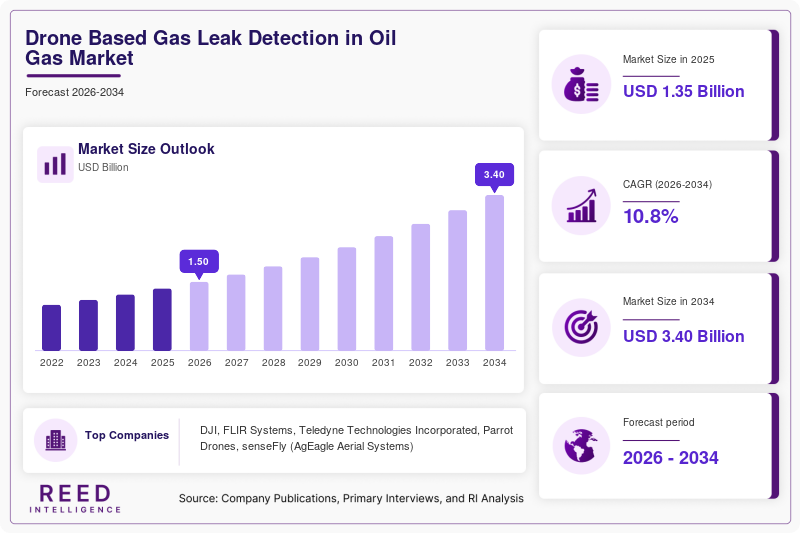
Key Highlights
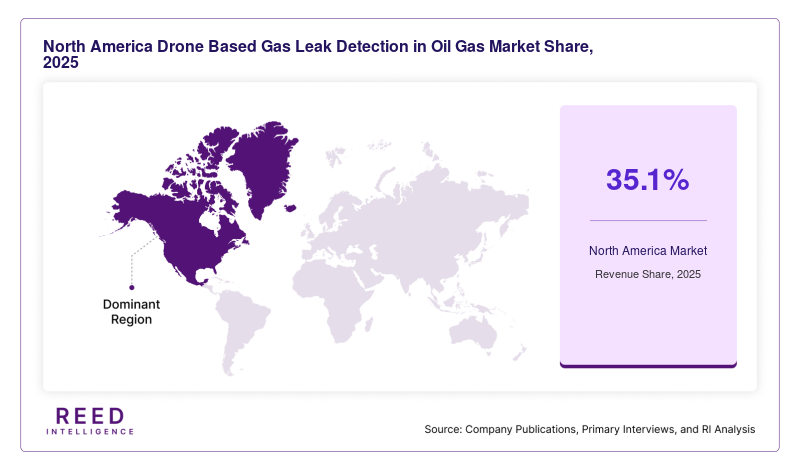
- North America dominated the market with a 35.1% share in 2025.
- Asia Pacific is expected to grow at the fastest CAGR of 11.6% during 2026–2034.
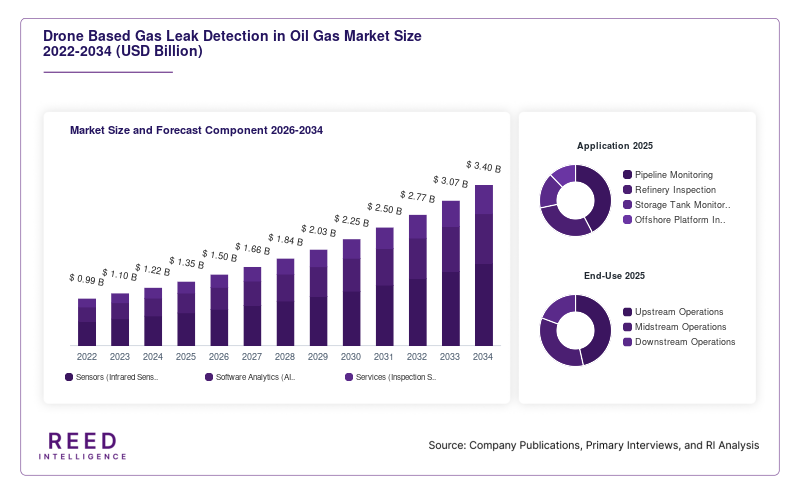
- By component, sensors accounted for the largest share of 39.2%, while software analytics solutions are projected to grow at a CAGR of 12.8%.
- By application, pipeline monitoring led with a 42.5% share, whereas refinery inspection is expected to expand at a CAGR of 11.9%.
- The United States remained the dominant country, with market values of USD 520 million in 2024 and USD 575 million in 2025.
Market Trends
Integration of AI and Advanced Analytics in Drone Systems
The integration of artificial intelligence and machine learning into drone-based gas leak detection systems is transforming how data is processed and interpreted. Advanced analytics platforms enable drones to detect even minor gas emissions with high precision by analyzing spectral imaging data in real time. These systems can differentiate between types of gases, identify leak sources, and generate actionable insights without requiring extensive human intervention. This trend is enhancing operational efficiency, as companies can perform predictive maintenance and reduce downtime. Additionally, AI-enabled drones are improving inspection accuracy in complex environments such as offshore platforms and dense pipeline networks, where manual inspection is difficult. The growing adoption of cloud-based analytics platforms further supports scalability and remote monitoring capabilities, strengthening the overall market outlook.
Rising Adoption of Autonomous Drone Fleets
The shift toward fully autonomous drone operations is gaining momentum in the oil and gas industry. Companies are increasingly deploying drone fleets that can perform scheduled inspections with minimal human control. These autonomous systems are equipped with advanced navigation technologies, including GPS, obstacle avoidance, and real-time mapping, enabling them to cover large infrastructure areas efficiently. The use of autonomous drones reduces labor costs and enhances safety by limiting human exposure to hazardous environments. Moreover, integration with centralized control systems allows operators to monitor multiple drones simultaneously, improving operational efficiency. As regulatory frameworks evolve to support beyond-visual-line-of-sight (BVLOS) operations, the adoption of autonomous drone fleets is expected to accelerate significantly during the forecast period.
Market Drivers
Increasing Stringency of Environmental Regulations
Governments across the globe are implementing stringent regulations to control methane emissions and other greenhouse gases from oil and gas operations. Regulatory bodies require companies to conduct regular inspections and report leak detection activities, driving the demand for advanced monitoring solutions. Drone-based gas leak detection systems provide a reliable and efficient way to meet these requirements, offering real-time data collection and accurate reporting capabilities. These systems help companies minimize environmental impact while avoiding regulatory penalties. In regions such as North America and Europe, strict compliance frameworks have made drone-based solutions an essential component of environmental management strategies. As global awareness of climate change increases, regulatory pressure is expected to intensify, further boosting market growth.
Growing Focus on Worker Safety and Operational Efficiency
Safety concerns in the oil and gas industry are a major driver for the adoption of drone-based inspection technologies. Traditional inspection methods often require workers to access hazardous locations such as pipelines, refineries, and offshore rigs, exposing them to risks. Drones eliminate the need for physical presence in dangerous environments, significantly reducing the likelihood of accidents. Additionally, drones can perform inspections more quickly and cover larger areas than manual methods, improving operational efficiency. The ability to detect leaks early also helps prevent costly incidents and production disruptions. As companies prioritize safety and efficiency, the demand for drone-based gas leak detection solutions is expected to rise steadily.
Market Restraint
Regulatory and Operational Challenges in Drone Deployment
Despite the growing adoption of drone-based gas leak detection systems, regulatory and operational challenges remain a significant restraint for market growth. Aviation authorities in many countries impose strict regulations on drone operations, particularly for beyond-visual-line-of-sight flights and operations in restricted zones such as offshore facilities and urban areas. These regulations can limit the deployment of drones for large-scale inspections, especially in regions with complex airspace management systems. Additionally, obtaining necessary approvals and certifications can be time-consuming and costly for companies.
Operational challenges also impact market expansion. Factors such as limited battery life, weather conditions, and data transmission constraints can affect the efficiency of drone operations. For example, extreme weather conditions like strong winds or heavy rain can disrupt drone flights, leading to delays in inspection schedules. Furthermore, the integration of drone systems with existing infrastructure and data management platforms requires significant investment and technical expertise. These challenges may hinder the adoption of drone-based solutions, particularly among small and medium-sized enterprises with limited resources.
Market Opportunities
Expansion in Emerging Markets
Emerging economies in Asia Pacific, Latin America, and Africa present significant growth opportunities for the drone-based gas leak detection market. Rapid industrialization and increasing energy demand in these regions are driving the expansion of oil and gas infrastructure, including pipelines and refineries. As these countries strengthen their regulatory frameworks and focus on environmental sustainability, the demand for advanced leak detection solutions is expected to rise. Drone-based systems offer a cost-effective alternative to traditional inspection methods, making them particularly attractive in regions with limited resources. Additionally, government initiatives to promote digital transformation and smart infrastructure are supporting the adoption of drone technologies, creating a favorable market environment.
Development of Hybrid Sensor Technologies
The advancement of hybrid sensor technologies is creating new opportunities for market growth. Modern drones are increasingly equipped with multi-sensor systems that combine infrared imaging, laser-based detection, and gas-specific sensors to improve detection accuracy. These hybrid systems enable the identification of multiple gas types simultaneously, enhancing their applicability across various oil and gas operations. The development of lightweight and energy-efficient sensors is also extending drone flight times, improving operational efficiency. As technology continues to evolve, the integration of advanced sensors with AI-driven analytics is expected to unlock new use cases and expand the scope of drone-based gas leak detection solutions.
Segmental Analysis
By Component
Sensors dominated the market in 2024, accounting for a share of approximately 39.2%. These components play a critical role in detecting gas leaks by capturing data related to gas concentration and composition. The increasing demand for high-precision detection systems has driven the adoption of advanced sensors, including infrared and laser-based technologies. These sensors are capable of detecting even minor leaks, improving safety and operational efficiency. The growing focus on environmental compliance has further boosted the demand for advanced sensor technologies, as companies seek reliable solutions to monitor emissions and meet regulatory requirements.
Software analytics solutions are expected to be the fastest-growing subsegment, with a CAGR of 12.8% during the forecast period. The increasing integration of AI and machine learning into analytics platforms is enhancing data processing capabilities, enabling real-time insights and predictive maintenance. These solutions allow companies to analyze large volumes of data collected by drones, improving decision-making and operational efficiency. The growing adoption of cloud-based platforms and the need for scalable solutions are further driving the growth of this segment.
By Application
Pipeline monitoring emerged as the dominant application segment in 2024, accounting for a share of 42.5%. The extensive network of pipelines used for transporting oil and gas requires regular inspection to prevent leaks and ensure safety. Drone-based systems provide an efficient solution for monitoring large pipeline networks, enabling quick detection of leaks and reducing the risk of environmental damage. The ability to cover vast areas in a short time has made drones an essential tool for pipeline inspection.
Refinery inspection is projected to be the fastest-growing application segment, with a CAGR of 11.9% during the forecast period. The increasing complexity of refinery operations and the need for continuous monitoring are driving the adoption of drone-based solutions. These systems enable detailed inspection of equipment and infrastructure, improving maintenance efficiency and reducing downtime. The growing focus on safety and regulatory compliance is further supporting the growth of this segment.
By End-Use
Upstream operations dominated the market in 2024, accounting for a significant share due to the high demand for monitoring exploration and production activities. Drone-based systems are widely used in upstream operations to detect leaks in remote and challenging environments. The ability to access difficult terrains and provide real-time data has made drones an essential tool for upstream companies.
Midstream operations are expected to be the fastest-growing subsegment, with a CAGR of 11.5% during the forecast period. The increasing expansion of pipeline networks and storage facilities is driving the demand for efficient monitoring solutions. Drone-based systems offer a cost-effective and reliable way to inspect these assets, improving safety and operational efficiency. The growing focus on infrastructure development and environmental compliance is further supporting the growth of this segment.
Regional Analysis
North America
North America held a dominant market share of 35.1% in 2025 and is expected to maintain steady growth at a CAGR of 10.5% during the forecast period. The region’s strong market position is driven by the presence of extensive oil and gas infrastructure and strict environmental regulations. The adoption of advanced technologies and early integration of drone-based inspection systems have further contributed to market growth. Companies in the region are investing heavily in automation and digitalization to enhance operational efficiency and reduce environmental impact.
The United States is the leading country in the region, supported by stringent methane emission regulations and a strong focus on environmental compliance. The country’s advanced technological ecosystem and high adoption of innovative solutions have accelerated the deployment of drone-based systems. Additionally, the presence of major oil and gas companies and technology providers has created a robust market environment, driving continuous innovation and growth.
Europe
Europe accounted for a significant share of the global market in 2025 and is projected to grow at a CAGR of 10.2% through 2034. The region’s growth is primarily driven by strict environmental policies and the increasing adoption of sustainable practices in the energy sector. Governments across Europe are implementing stringent regulations to reduce greenhouse gas emissions, encouraging the use of advanced monitoring technologies such as drones.
Germany is a key contributor to the European market, driven by its strong industrial base and commitment to environmental sustainability. The country’s focus on reducing emissions and improving energy efficiency has led to the adoption of innovative solutions for leak detection. Additionally, collaborations between technology providers and energy companies are fostering the development of advanced drone-based systems, supporting market growth.
Asia Pacific
Asia Pacific is expected to be the fastest-growing region, with a CAGR of 11.6% during the forecast period. The region’s rapid industrialization and increasing energy demand are driving the expansion of oil and gas infrastructure, creating a strong demand for leak detection solutions. Governments are also focusing on improving environmental standards, further supporting market growth.
China dominates the Asia Pacific market, supported by large-scale investments in oil and gas infrastructure and technological advancements. The country’s emphasis on reducing emissions and improving operational efficiency has led to the adoption of drone-based inspection systems. Additionally, the growing presence of local technology providers is enhancing market competitiveness and driving innovation.
Middle East & Africa
The Middle East & Africa region held a notable share in 2025 and is expected to grow at a CAGR of 10.9% during the forecast period. The region’s extensive oil and gas reserves and ongoing infrastructure development are key factors driving market growth. Companies are increasingly adopting advanced technologies to improve operational efficiency and ensure compliance with environmental standards.
Saudi Arabia is the dominant country in the region, driven by its large oil production capacity and investments in technological innovation. The country’s focus on modernizing its energy sector and reducing environmental impact has led to the adoption of drone-based solutions. Additionally, the implementation of digital transformation initiatives is supporting the growth of the market.
Latin America
Latin America is projected to grow at a CAGR of 10.4% during the forecast period, supported by increasing investments in oil and gas exploration and production. The region’s growing focus on environmental sustainability and regulatory compliance is driving the adoption of advanced leak detection technologies.
Brazil is the leading country in the region, driven by its expanding oil and gas sector and investments in offshore exploration. The country’s emphasis on improving safety and operational efficiency has led to the adoption of drone-based inspection systems. Additionally, government initiatives to promote technological innovation are supporting market growth.
Competitive Landscape
The Drone Based Gas Leak Detection in Oil Gas Market is characterized by the presence of several established players and emerging companies focusing on technological innovation. The market is moderately fragmented, with companies competing on the basis of product performance, technological capabilities, and service offerings. Leading players are investing in research and development to enhance sensor accuracy, improve drone capabilities, and integrate advanced analytics solutions.
One of the leading companies in the market is DJI, which has been actively developing advanced drone platforms for industrial applications. The company recently introduced upgraded drone systems equipped with enhanced imaging and sensor integration capabilities, enabling more accurate gas leak detection. Other major players are focusing on strategic partnerships and collaborations to expand their market presence and enhance their product portfolios. The increasing adoption of AI and automation is expected to intensify competition, driving continuous innovation in the market.
Key Players
- DJI
- FLIR Systems
- Teledyne Technologies
- Parrot Drones
- senseFly
- Percepto
- ABB Ltd.
- Siemens Energy
- Honeywell International Inc.
- Lockheed Martin Corporation
- Drägerwerk AG
- Airobotics
- Terra Drone Corporation
- Sky-Futures
- Delair
Recent Developments
- In 2025, a major drone manufacturer launched an AI-powered gas detection system capable of identifying multiple gas types simultaneously.
- In 2024, a leading energy company partnered with a drone technology provider to deploy autonomous inspection systems across its pipeline network.
- In 2025, a global technology firm introduced a hybrid sensor platform designed to improve detection accuracy and extend drone flight time.
Drone Based Gas Leak Detection in Oil Gas Market Segments
Component
- Sensors (Infrared Sensors, Laser Gas Detectors, Multi-Gas Sensors)
- Software Analytics (AI-Based Platforms, Cloud Monitoring Systems, Predictive Analytics Tools)
- Services (Inspection Services, Maintenance Services, Data Processing Services)
Application
- Pipeline Monitoring
- Refinery Inspection
- Storage Tank Monitoring
- Offshore Platform Inspection
End-Use
- Upstream Operations
- Midstream Operations
- Downstream Operations
By Region
- North America
- Europe
- APAC
- Middle East and Africa
- LATAM