Dry Gin Market Size, Share & Demand Report By Product Type (London Dry Gin, Flavored Dry Gin, Classic Dry Gin, Organic Dry Gin), By Distribution Channel (Off-Trade, On-Trade, Online Retail), By End User (Commercial, Household) By Region & Segment Forecasts, 2026–2034
USD 3950
Market Overview
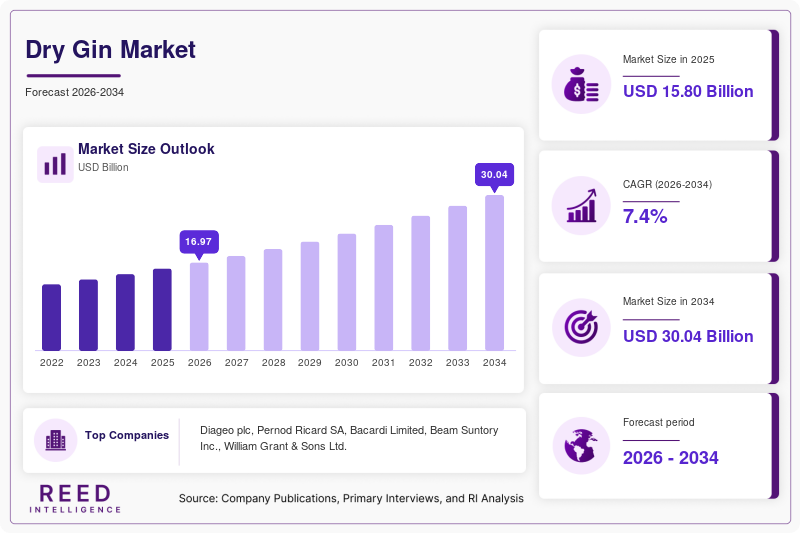
The global Dry Gin Market size was valued at USD 15.8 billion in 2026 and is projected to reach USD 27.9 billion by 2034, expanding at a CAGR of 7.4% during the forecast period from 2026 to 2034. Rising consumer interest in premium alcoholic beverages, expanding cocktail culture, and increasing demand for craft spirits are contributing to steady market expansion across developed and emerging economies. The growing popularity of gin-based cocktails in bars, restaurants, and home consumption settings has strengthened product visibility among younger consumers seeking diverse flavor profiles and artisanal beverage experiences.
A major global factor supporting market growth is the rapid expansion of premium and craft beverage consumption. Consumers are increasingly shifting toward small-batch spirits that emphasize botanical ingredients, unique distillation methods, and regional authenticity. Dry gin producers are responding by introducing flavored variants, organic formulations, and limited-edition products to strengthen brand differentiation. In addition, digital marketing campaigns, social media promotions, and tourism-driven distillery experiences are improving customer engagement and supporting long-term product demand. Growth in e-commerce alcohol sales and modern retail channels has also improved product accessibility across urban markets.
Key Highlights
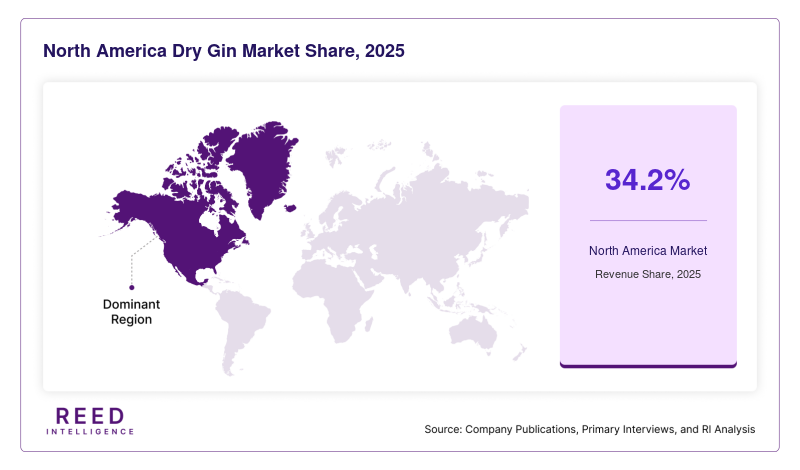
- North America dominated the market with a 34.2% share in 2025, while Asia Pacific is expected to grow at the fastest CAGR of 9.8% during 2026–2034.
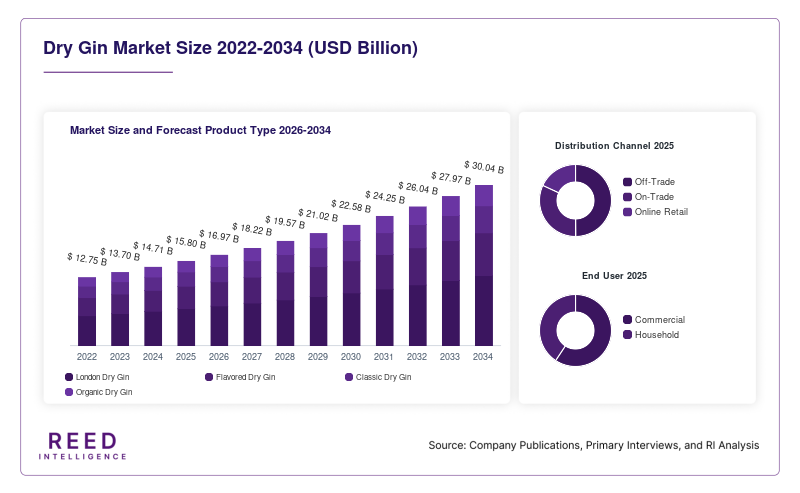
- By product type, London dry gin accounted for the largest share of 46.7%, while flavored dry gin is projected to grow at a CAGR of 10.4%.
- By distribution channel, off-trade sales led with a 58.1% share, whereas online retail is expected to expand at a CAGR of 11.1%.
- By end user, commercial consumption accounted for the largest share of 63.4%, while household consumption is projected to grow at a CAGR of 8.7%.
- The United States remained the dominant country, with market values of USD 3.9 billion in 2024 and USD 4.2 billion in 2025.
Market Trends
Expansion of Premium and Craft Gin Varieties
The Dry Gin Market is experiencing strong momentum from the growing popularity of premium and craft gin products. Consumers are increasingly willing to pay higher prices for beverages that offer distinct botanical blends, artisanal distillation methods, and authentic brand narratives. Craft distilleries are introducing locally inspired ingredients such as citrus peels, herbs, berries, and floral extracts to create differentiated products that appeal to younger consumers and cocktail enthusiasts. This trend is especially visible in urban regions where consumers prioritize quality, flavor diversity, and small-batch production over mass-market alcoholic beverages.
Bars, lounges, and premium restaurants are also expanding their gin-based cocktail menus, encouraging experimentation with new dry gin variants. Limited-edition launches and seasonal flavors are becoming more common as brands seek to strengthen consumer engagement and brand loyalty. In addition, premium packaging, eco-friendly bottles, and transparent ingredient labeling are improving product positioning in retail stores and online channels. The continued rise of luxury beverage consumption is expected to support higher revenue generation across global dry gin manufacturers.
Increasing Influence of Digital Retail and Home Mixology
The increasing influence of digital retail platforms and home mixology culture is shaping demand patterns in the Dry Gin Market. Online alcohol delivery services, direct-to-consumer sales platforms, and mobile beverage applications have improved accessibility for consumers seeking premium spirits from domestic and international brands. The convenience of digital ordering, combined with wider product availability, has encouraged consumers to explore different dry gin labels and flavor profiles without depending solely on traditional retail stores.
At the same time, social media content related to cocktail preparation and home entertainment has increased interest in mixology among younger demographics. Consumers are purchasing cocktail kits, bar accessories, and premium gin products to recreate restaurant-style experiences at home. Beverage companies are responding through collaborations with influencers, digital campaigns, and virtual tasting events to strengthen customer engagement. The trend is also supporting demand for smaller bottle formats and curated gift packs designed for social gatherings and premium gifting occasions.
Market Drivers
Growing Cocktail Culture Across Urban Consumer Segments
The expanding cocktail culture across urban populations is a major driver supporting the growth of the Dry Gin Market. Consumers between the ages of 25 and 40 are increasingly choosing gin-based beverages due to their versatility, lighter flavor profile, and compatibility with premium mixers and garnishes. Restaurants, pubs, rooftop lounges, and hotels are promoting signature cocktails that feature dry gin as a primary ingredient, helping brands achieve stronger visibility and higher product demand.
The rise of nightlife entertainment, social dining, and tourism activities has further accelerated consumption across developed economies. Cocktail festivals and mixology competitions are also encouraging experimentation with botanicals and premium spirits. In addition, gin producers are investing in innovative flavor combinations and modern branding strategies to attract younger consumers. The growing integration of dry gin products into hospitality menus is expected to maintain strong demand growth over the forecast period.
Rising Demand for Premium Alcoholic Beverages
Increasing consumer preference for premium alcoholic beverages is another important factor contributing to market expansion. Higher disposable income and changing lifestyle patterns are encouraging consumers to spend more on high-quality spirits that offer superior taste, authenticity, and packaging. Premium dry gin products often emphasize traditional distillation methods, natural botanicals, and regional heritage, which appeal to consumers seeking unique beverage experiences.
The premiumization trend is particularly strong in North America and Europe, where consumers are shifting away from low-cost alcoholic products toward artisanal and imported spirits. Duty-free retail outlets, luxury hotels, and premium beverage stores are expanding their dry gin portfolios to meet rising demand. Manufacturers are also benefiting from higher profit margins associated with premium products. Investments in packaging innovation, sustainability initiatives, and product storytelling are strengthening brand value and supporting long-term customer retention.
Market Restraint
Regulatory Challenges and High Taxation on Alcoholic Beverages
Stringent government regulations and high taxation policies remain significant restraints for the Dry Gin Market. Alcoholic beverage manufacturers are subject to strict advertising rules, licensing requirements, import restrictions, and labeling regulations in several countries. These policies can increase operational complexity and limit market expansion opportunities, particularly for small and medium-sized distilleries that operate with limited financial resources.
Excise duties and alcohol taxation also affect retail pricing, reducing affordability in price-sensitive markets. In developing regions, high import tariffs on premium spirits can discourage international brand penetration and limit product accessibility for consumers. Restrictions related to alcohol promotion on digital platforms further create challenges for companies attempting to strengthen online marketing strategies. Public health campaigns promoting reduced alcohol consumption may also influence purchasing behavior among health-conscious consumers. For example, several European countries have implemented stricter labeling regulations and advertising limitations for alcoholic beverages, increasing compliance costs for manufacturers and distributors. These factors can slow market growth, particularly in regions with evolving regulatory frameworks.
Market Opportunities
Expansion Opportunities in Emerging Asian Economies
Emerging economies across Asia Pacific are creating significant growth opportunities for the Dry Gin Market. Rapid urbanization, increasing disposable income, and evolving consumer preferences are contributing to higher demand for premium alcoholic beverages in countries such as India, China, Vietnam, and Thailand. Younger consumers in metropolitan cities are becoming more interested in global cocktail trends and imported spirits, creating favorable conditions for international and domestic gin brands.
The hospitality sector is also expanding rapidly across Asia Pacific due to tourism growth and rising investments in premium restaurants, hotels, and nightlife establishments. Beverage companies are introducing localized botanical flavors and region-specific marketing campaigns to strengthen consumer engagement in these markets. In addition, improving retail infrastructure and digital commerce penetration are making premium dry gin products more accessible to middle-income consumers. These developments are expected to create long-term revenue opportunities for global manufacturers.
Product Innovation Through Botanical and Sustainable Ingredients
Product innovation focused on botanical diversity and sustainable production practices presents another major opportunity for market participants. Consumers are increasingly interested in beverages made with organic ingredients, low-carbon production methods, and environmentally responsible packaging. Dry gin producers are responding by incorporating exotic botanicals, herbal extracts, and natural flavoring ingredients to create differentiated product portfolios.
Sustainability-focused production strategies are also gaining attention among environmentally conscious consumers. Companies are adopting recyclable glass packaging, renewable energy systems, and water-efficient distillation technologies to improve brand positioning. Limited-edition botanical blends and alcohol-free or low-alcohol gin alternatives are creating new revenue streams among health-conscious consumers. Manufacturers that combine flavor innovation with sustainability initiatives are expected to strengthen customer loyalty and improve competitive positioning across premium beverage categories.
Segmental Analysis
By Product Type
London dry gin accounted for the largest share of the Dry Gin Market in 2024, representing 46.7% of total revenue. The dominance of this segment is supported by strong consumer familiarity, widespread availability, and its established use in premium cocktails. London dry gin remains highly preferred in bars, restaurants, and hospitality establishments due to its balanced botanical flavor profile and compatibility with tonic water, citrus garnishes, and cocktail mixers. Large beverage manufacturers continue to invest in premium packaging, aged variants, and international marketing campaigns to maintain consumer interest. The segment also benefits from strong export demand, particularly in Europe and North America, where established distillation traditions and premium spirits culture support long-term product consumption. Rising demand from duty-free retail stores and luxury hospitality venues further strengthens the market position of London dry gin products.
Flavored dry gin is projected to register the fastest CAGR of 10.4% during the forecast period due to increasing consumer interest in experimental beverage experiences. Younger demographics are driving demand for fruit-infused, floral, herbal, and spice-based gin variants that provide differentiated taste profiles. Manufacturers are introducing innovative botanical combinations such as berry, lavender, cucumber, and citrus blends to attract premium consumers seeking novelty and personalization. Seasonal product launches and limited-edition releases are also supporting category expansion in modern retail channels. The segment is further benefiting from social media marketing strategies that emphasize cocktail aesthetics and home mixology trends. Increasing availability through online retail platforms and premium gifting formats is expected to contribute to sustained revenue growth for flavored dry gin products globally.
By Distribution Channel
Off-trade distribution accounted for the largest share of the Dry Gin Market in 2024, contributing 58.1% of overall revenue. Supermarkets, hypermarkets, liquor stores, and specialty beverage retailers continue to dominate product sales due to their broad geographic reach and strong product visibility. Consumers often prefer off-trade channels because they offer a wider selection of domestic and imported dry gin brands at competitive prices. Promotional discounts, in-store tasting events, and premium shelf placements further strengthen consumer purchasing decisions. Organized retail expansion across urban regions has also improved product accessibility among middle-income and premium consumers. In addition, retail chains are increasingly dedicating premium sections to craft spirits and imported alcoholic beverages, supporting higher sales volumes for established and emerging gin brands.
Online retail is anticipated to witness the fastest CAGR of 11.1% during 2026–2034 as digital alcohol purchasing becomes increasingly accepted among consumers. E-commerce platforms provide convenient access to a wide range of gin products, including imported labels and limited-edition variants that may not be available in physical retail outlets. Consumers are increasingly using mobile applications and direct-to-consumer websites to compare prices, explore flavor profiles, and purchase premium spirits from home. The growth of digital payment systems and rapid delivery services is also improving customer convenience. Beverage companies are investing in digital marketing campaigns, influencer partnerships, and subscription-based tasting kits to strengthen online engagement. These factors are expected to significantly expand the role of online retail within the global dry gin distribution landscape.
By End User
Commercial consumption represented the dominant end-user segment in the Dry Gin Market in 2024, accounting for 63.4% of total revenue. The strong market position of this segment is supported by extensive demand from bars, hotels, restaurants, clubs, and catering services. Gin-based cocktails remain highly popular in social entertainment venues, particularly among urban consumers seeking premium beverage experiences. Hospitality establishments frequently introduce signature cocktails and themed beverage menus featuring dry gin products to improve customer engagement and increase profit margins. International tourism growth and the recovery of nightlife activities have also contributed to stronger commercial beverage consumption across major cities. Large beverage manufacturers continue to strengthen partnerships with hospitality chains and event organizers to improve product placement and expand brand visibility within commercial establishments.
Household consumption is projected to record the fastest CAGR of 8.7% over the forecast period due to changing social habits and rising interest in home entertainment experiences. Consumers are increasingly purchasing premium dry gin products for private gatherings, celebrations, and home cocktail preparation. The growing influence of social media tutorials and mixology content has encouraged consumers to experiment with cocktail recipes and premium spirit combinations. Manufacturers are introducing smaller bottle formats, curated cocktail kits, and flavored gin collections designed specifically for household use. Expansion of e-commerce alcohol delivery services and subscription-based beverage platforms is also improving accessibility for home consumers. As disposable income rises and premium beverage awareness increases, household consumption is expected to contribute significantly to future market growth.
Regional Analysis
North America
North America accounted for 34.2% of the global Dry Gin Market share in 2025 and is expected to maintain a stable growth trajectory with a forecast CAGR of 6.9% during 2026–2034. Strong consumer spending on premium alcoholic beverages and the widespread popularity of cocktail culture continue to support market expansion across the region. The presence of established distilleries, modern retail networks, and advanced e-commerce channels has improved product accessibility. Growing demand for artisanal and small-batch gin products is also contributing to revenue growth among regional beverage manufacturers.
The United States remains the dominant country in North America due to its large premium spirits consumer base and strong hospitality industry. One major growth factor is the increasing popularity of craft distilleries across urban states such as California, Texas, and New York. These distilleries are introducing regionally inspired botanical blends and experiential tasting events to attract younger consumers. In addition, expanding online alcohol delivery services and premium bar culture continue to strengthen domestic consumption patterns.
Europe
Europe represented 29.4% of the global Dry Gin Market in 2025 and is projected to expand at a CAGR of 6.8% during the forecast period. The region maintains a strong historical association with gin consumption, particularly in countries with established distillation traditions. Premiumization trends, tourism-driven beverage consumption, and growing interest in botanical spirits are supporting stable market demand. European consumers increasingly prefer craft gin varieties that emphasize heritage production methods and locally sourced ingredients.
The United Kingdom continues to dominate the European market due to its mature gin industry and strong consumer awareness regarding premium spirits. A key growth factor is the increasing number of micro-distilleries producing innovative botanical combinations and limited-edition flavors. The country’s tourism and hospitality sectors also contribute significantly to dry gin sales through bars, pubs, and restaurants. In addition, export demand for British gin products continues to strengthen revenue opportunities for regional producers.
Asia Pacific
Asia Pacific is expected to record the fastest CAGR of 9.8% during 2026–2034, supported by rapid urbanization and changing consumer lifestyles. The region accounted for 22.7% of the global Dry Gin Market share in 2025 and continues to attract investment from international beverage companies. Rising disposable income and growing exposure to western dining and nightlife culture are increasing demand for premium alcoholic beverages. Expanding retail infrastructure and digital commerce platforms are also improving product distribution across metropolitan areas.
China remains the dominant country in the Asia Pacific market due to its large urban population and expanding premium beverage sector. One major growth factor is the rapid development of luxury hospitality and entertainment venues in major cities such as Shanghai, Beijing, and Shenzhen. International and domestic gin brands are increasingly partnering with bars and restaurants to introduce localized cocktail offerings. In addition, younger consumers are showing stronger interest in imported spirits and premium social drinking experiences.
Middle East & Africa
The Middle East & Africa region accounted for 6.3% of the global Dry Gin Market share in 2025 and is forecast to grow at a CAGR of 5.9% during the assessment period. Although regulatory restrictions on alcohol sales vary across countries, demand for premium spirits is increasing in tourism-focused economies and urban entertainment districts. International hotel chains, premium lounges, and expatriate consumer groups are contributing to regional market growth. The development of organized retail and hospitality infrastructure is also improving product availability in key urban centers.
South Africa remains the dominant country within the regional market due to its comparatively established alcoholic beverage industry and expanding premium spirits segment. A unique growth factor is the increasing popularity of locally produced botanical gin products that incorporate indigenous herbs and plant extracts. Craft distilleries are gaining visibility through tourism experiences and premium retail distribution. Growing consumer interest in artisanal beverages is expected to create favorable conditions for continued market expansion.
Latin America
Latin America captured 7.4% of the global Dry Gin Market share in 2025 and is projected to expand at a CAGR of 6.3% from 2026 to 2034. Increasing urbanization, rising middle-class spending, and evolving nightlife culture are supporting higher consumption of premium spirits across the region. Beverage companies are strengthening investments in marketing campaigns and modern retail partnerships to improve brand visibility. The popularity of cocktail-based social gatherings is also contributing to stronger demand for dry gin products.
Brazil dominates the Latin American market due to its large consumer base and growing hospitality industry. One important growth factor is the increasing penetration of premium imported spirits in metropolitan cities such as São Paulo and Rio de Janeiro. Bars and restaurants are expanding their cocktail offerings to attract younger consumers seeking international beverage experiences. The expansion of digital retail platforms and premium supermarket chains is also improving accessibility to imported and craft gin products.
Competitive Landscape
The Dry Gin Market is characterized by the presence of global beverage corporations, regional distilleries, and rapidly expanding craft spirit producers competing through product innovation, premium branding, and distribution expansion. Major companies are focusing on botanical diversification, sustainable packaging, and premiumization strategies to strengthen consumer engagement and improve market share. Partnerships with hospitality chains, restaurants, and online retail platforms are also becoming increasingly important for expanding customer reach.
Diageo plc remains one of the leading participants in the global market due to the strong international presence of its gin portfolio and extensive distribution network. The company continues to invest in premium product launches and digital marketing campaigns aimed at younger consumers. Pernod Ricard, Bacardi Limited, William Grant & Sons, and Beam Suntory are also strengthening their positions through acquisitions, regional expansion strategies, and innovative flavor introductions.
Key Players
- Diageo plc
- Pernod Ricard SA
- Bacardi Limited
- Beam Suntory Inc.
- William Grant & Sons Ltd.
- The Edrington Group
- Brown-Forman Corporation
- Campari Group
- Sazerac Company
- Rémy Cointreau
- Lucas Bols N.V.
- The East India Company
- Berkshire Mountain Distillers
- Chase Distillery
- Citadelle Gin
Recent Developments
- Diageo plc expanded its premium gin portfolio in 2025 through the launch of a new botanical dry gin range targeting luxury hospitality channels in North America and Europe.
- Pernod Ricard SA introduced recyclable packaging solutions for selected gin brands in 2024 as part of its long-term sustainability strategy focused on reducing carbon emissions.
- Bacardi Limited strengthened its Asia Pacific distribution network in 2025 by partnering with regional e-commerce platforms to improve digital sales of premium dry gin products.
- Beam Suntory Inc. announced investments in small-batch craft distillation facilities to increase production capacity and support premium product innovation.
- William Grant & Sons Ltd. launched limited-edition flavored dry gin variants featuring regional botanical ingredients to strengthen consumer engagement among younger demographics.
Dry Gin Market Segments
Product Type
- London Dry Gin
- Flavored Dry Gin
- Classic Dry Gin
- Organic Dry Gin
Distribution Channel
- Off-Trade
- On-Trade
- Online Retail
End User
- Commercial
- Household
By Region
- North America
- Europe
- APAC
- Middle East and Africa
- LATAM