Duckweed Protein Market Size, Share & Demand Report By Type (Powder, Liquid Extract), By Application (Food & Beverages, Nutraceuticals, Animal Feed), By End-Use (Food Industry, Animal Feed Industry, Pharmaceutical Industry), By Region & Segment Forecasts, 2026–2034
USD 3950
Market Overview
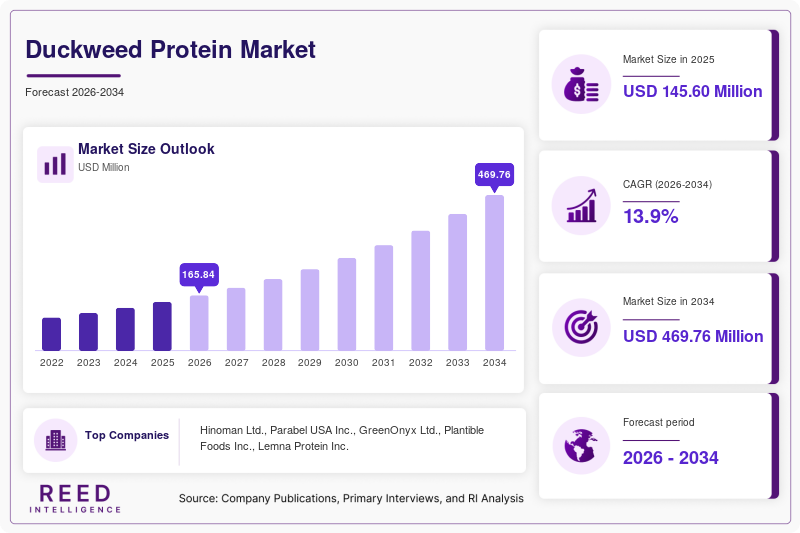
The global Duckweed Protein Market size was valued at approximately USD 145.6 million in 2026 and is projected to reach USD 412.8 million by 2034, expanding at a CAGR of 13.9% during the forecast period of 2026–2034. The market is gaining traction due to the rising demand for sustainable and plant-based protein sources across food, beverage, and animal feed industries. Duckweed, known for its rapid growth rate and high protein content, has emerged as a viable alternative to traditional protein sources such as soy and pea protein. Increasing environmental concerns and the need for efficient protein production systems have further accelerated the adoption of duckweed-derived protein globally.
One of the major global factors supporting market growth is the shift toward sustainable agriculture and low-resource protein production. Duckweed requires minimal land, water, and fertilizers compared to conventional crops, making it highly suitable for addressing food security challenges. Additionally, the growing vegan and flexitarian population is driving the incorporation of novel plant proteins into food formulations, further strengthening market expansion.
Key Highlights
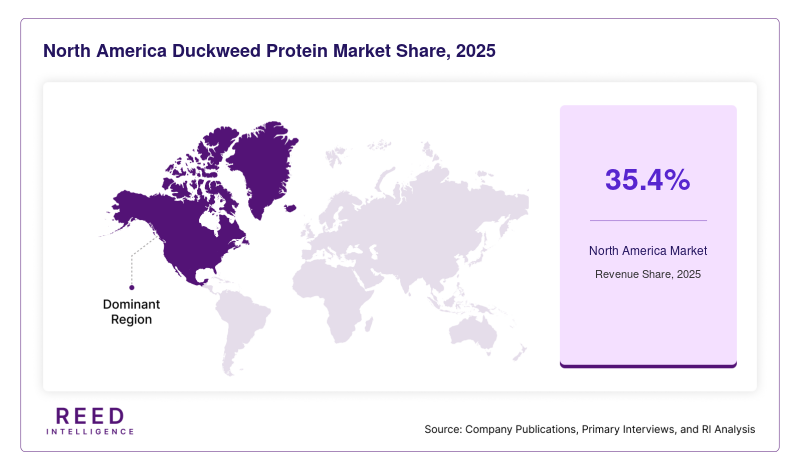
- North America dominated the market with a 35.4% share in 2025.
- Asia Pacific is expected to grow at the fastest CAGR of 14.8% during 2026–2034.
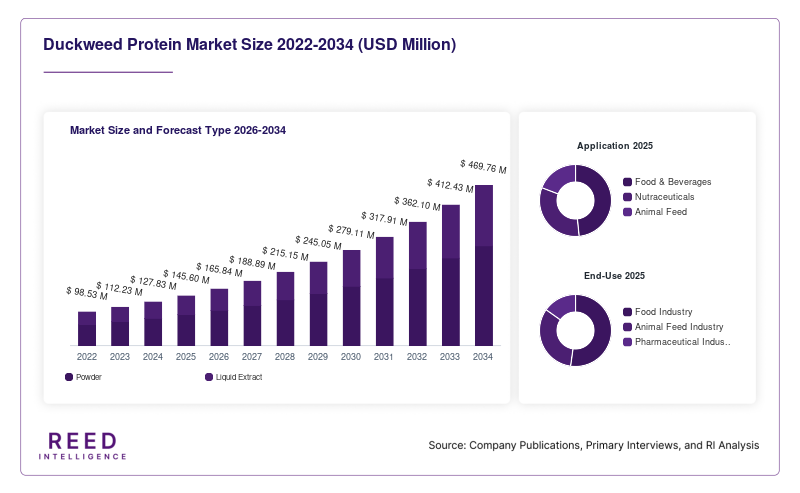
- By type, powder form accounted for the largest share of 42.7%.
- while liquid extracts are projected to grow at a CAGR of 15.6%.
- By application, food & beverages led with a 46.2% share.
- whereas nutraceuticals are expected to expand at a CAGR of 14.9%.
- The United States remained the dominant country, with market values of USD 52 million in 2024 and USD 58 million in 2025.
Market Trends
Rising adoption of plant-based protein alternatives
The increasing consumer shift toward plant-based diets is shaping the growth trajectory of the Duckweed Protein Market. Consumers are actively seeking alternatives to animal-based proteins due to health, environmental, and ethical concerns. Duckweed protein is gaining attention because of its complete amino acid profile and digestibility, which makes it comparable to traditional protein sources. Food manufacturers are integrating duckweed protein into products such as protein powders, meat substitutes, and functional beverages. This trend is further supported by the expansion of vegan product portfolios and the growing influence of sustainability-focused consumer choices across developed and emerging economies.
Advancements in cultivation and processing technologies
Technological advancements in duckweed cultivation and protein extraction are playing a key role in market development. Innovations such as controlled-environment farming, vertical aquaculture systems, and improved harvesting techniques have enhanced productivity and quality consistency. Additionally, advancements in protein isolation methods have improved taste, texture, and nutritional value, making duckweed protein more suitable for commercial applications. These developments are reducing production costs and enabling large-scale commercialization. As companies invest in research and development, the market is expected to witness improved efficiency and broader application potential across industries.
Market Drivers
Growing demand for sustainable protein sources
The global demand for sustainable and eco-friendly protein sources is a significant driver of the Duckweed Protein Market. Duckweed requires significantly less water, land, and energy compared to traditional crops, making it an efficient solution for protein production. As climate change concerns intensify, governments and organizations are encouraging the adoption of environmentally sustainable agricultural practices. Duckweed cultivation aligns with these objectives, as it can be grown in wastewater and helps in nutrient recycling. This dual benefit of protein production and environmental management is attracting investments and increasing its adoption across multiple industries.
Expansion of functional food and nutraceutical sectors
The rapid growth of the functional food and nutraceutical industries is fueling demand for high-quality plant-based proteins. Duckweed protein is rich in essential amino acids, vitamins, and minerals, making it suitable for health-focused products. Consumers are increasingly seeking products that offer additional health benefits, such as improved digestion, muscle recovery, and immune support. As a result, manufacturers are incorporating duckweed protein into dietary supplements, fortified foods, and beverages. The expanding health-conscious consumer base and rising awareness about nutrition are expected to continue driving market growth during the forecast period.
Market Restraint
Limited consumer awareness and regulatory challenges
Despite its benefits, the Duckweed Protein Market faces challenges related to limited consumer awareness and regulatory complexities. Many consumers are unfamiliar with duckweed as a food ingredient, which can hinder its acceptance in mainstream markets. Additionally, regulatory approvals for novel food ingredients vary across regions, creating barriers for market entry and expansion. Companies must invest in education and marketing to build consumer trust and awareness. Furthermore, compliance with food safety standards and obtaining approvals for new applications can be time-consuming and costly. These factors collectively restrain market growth, particularly in regions with stringent regulatory frameworks.
Market Opportunities
Increasing application in animal feed and aquaculture
The use of duckweed protein in animal feed and aquaculture presents a significant growth opportunity. Duckweed is highly nutritious and can serve as a cost-effective feed ingredient for livestock, poultry, and fish. Its high protein content and rapid growth make it an ideal alternative to conventional feed sources such as soybean meal. As the demand for sustainable feed solutions increases, duckweed protein is gaining traction among feed manufacturers. This trend is particularly prominent in regions with large aquaculture industries, where cost efficiency and sustainability are critical factors.
Expansion into emerging markets
Emerging markets offer substantial growth opportunities for the Duckweed Protein Market. Countries in Asia Pacific, Latin America, and Africa are witnessing increasing demand for affordable and sustainable protein sources due to population growth and rising food security concerns. Duckweed cultivation can be easily implemented in these regions due to its low resource requirements. Governments and organizations are supporting initiatives that promote sustainable agriculture and alternative protein sources. As infrastructure and awareness improve, these regions are expected to become key contributors to market expansion during the forecast period.
Segmental Analysis
By Type
The powder segment dominated the Duckweed Protein Market, accounting for a share of 42.7% in 2024. Powdered duckweed protein is widely used due to its ease of storage, transportation, and incorporation into various food and beverage products. It is commonly utilized in protein supplements, baked goods, and plant-based meat alternatives. The versatility and long shelf life of powdered protein make it a preferred choice among manufacturers. Additionally, advancements in drying and processing technologies have improved the quality and nutritional value of powdered duckweed protein, further supporting its dominance in the market.
The liquid extract segment is expected to grow at the fastest CAGR of 15.6% during the forecast period. Liquid duckweed protein is gaining popularity due to its ease of use in beverages and functional foods. It offers better solubility and can be easily integrated into liquid formulations. The growing demand for ready-to-drink protein beverages and functional drinks is driving the growth of this segment. Additionally, innovations in extraction technologies are improving the quality and consistency of liquid protein, making it a promising segment for future growth.
By Application
The food and beverages segment held the largest share of 46.2% in 2024. Duckweed protein is increasingly used in a variety of food products, including plant-based meat alternatives, protein bars, and dairy substitutes. Its high nutritional value and sustainable production process make it an attractive ingredient for food manufacturers. The growing demand for plant-based and functional foods is driving the adoption of duckweed protein in this segment. Additionally, increasing consumer awareness about health and sustainability is further supporting market growth.
The nutraceuticals segment is projected to grow at a CAGR of 14.9% during the forecast period. Duckweed protein is being incorporated into dietary supplements and functional foods due to its rich nutrient profile. The rising demand for health and wellness products is a key factor driving this segment. Consumers are seeking products that offer additional health benefits, such as improved digestion and immune support. As a result, manufacturers are focusing on developing innovative nutraceutical products that include duckweed protein as a key ingredient.
By End-Use
The food industry dominated the Duckweed Protein Market, accounting for a significant share in 2024. The increasing demand for plant-based protein sources in the food industry is driving the adoption of duckweed protein. It is used in a wide range of products, including snacks, beverages, and meat alternatives. The growing trend of clean-label and sustainable products is further supporting the growth of this segment. Additionally, advancements in food processing technologies are enabling the development of high-quality duckweed protein products.
The animal feed industry is expected to grow at the fastest CAGR of 15.2% during the forecast period. Duckweed protein is gaining traction as a sustainable and cost-effective feed ingredient for livestock and aquaculture. Its high protein content and rapid growth make it an ideal alternative to traditional feed sources. The increasing demand for sustainable feed solutions is driving the growth of this segment. Additionally, the expansion of the aquaculture industry is further supporting market growth.
Regional Analysis
North America
North America accounted for a significant share of the Duckweed Protein Market, representing approximately 35.4% in 2025. The region is expected to maintain steady growth with a CAGR of 12.6% during the forecast period. The presence of established food and beverage companies, along with increasing investments in plant-based protein innovation, is driving market expansion. Consumer awareness regarding sustainable and alternative protein sources is relatively high, which further supports market growth. Additionally, advancements in food processing technologies contribute to the development of high-quality duckweed protein products.
The United States dominates the regional market due to strong research and development activities and increasing adoption of plant-based diets. One unique growth factor in the country is the rising number of startups focusing on novel protein sources. These companies are introducing innovative duckweed-based products, including protein powders and functional foods. Government support for sustainable agriculture and alternative proteins further strengthens market growth in the region.
Europe
Europe holds a substantial share of the Duckweed Protein Market and is expected to grow at a CAGR of 13.1% during the forecast period. The region’s strong emphasis on sustainability and environmental protection is a key driver of market growth. European consumers are increasingly adopting plant-based diets, which is encouraging food manufacturers to incorporate alternative protein sources into their products. Regulatory support for sustainable food production further contributes to market expansion.
Germany is the leading country in the European market, driven by its advanced food processing industry and high consumer awareness. A unique growth factor in Germany is the increasing focus on organic and clean-label products. Consumers are actively seeking natural and minimally processed ingredients, which aligns with the properties of duckweed protein. This trend is expected to drive further adoption across the region.
Asia Pacific
Asia Pacific is the fastest-growing region in the Duckweed Protein Market, with a projected CAGR of 14.8% during the forecast period. The region’s large population and increasing demand for affordable protein sources are key drivers of market growth. Additionally, favorable climatic conditions for duckweed cultivation make it an attractive option for protein production. Governments in the region are promoting sustainable agricultural practices, which further supports market expansion.
China dominates the Asia Pacific market due to its extensive aquaculture industry and increasing focus on food security. A unique growth factor in China is the integration of duckweed cultivation with wastewater treatment systems. This approach not only supports sustainable protein production but also addresses environmental concerns. As awareness and infrastructure improve, the market is expected to witness significant growth in the region.
Middle East & Africa
The Middle East & Africa region is experiencing gradual growth in the Duckweed Protein Market, with a projected CAGR of 12.2%. The region’s focus on food security and sustainable agriculture is driving interest in alternative protein sources. Limited water resources make duckweed an attractive option due to its low water requirements. Additionally, increasing investments in agricultural innovation are supporting market development.
South Africa is a key country in the region, driven by its growing agricultural sector and focus on sustainability. A unique growth factor in South Africa is the adoption of innovative farming techniques, including hydroponics and aquaculture systems. These methods enable efficient duckweed cultivation, supporting the growth of the market in the region.
Latin America
Latin America holds a moderate share of the Duckweed Protein Market and is expected to grow at a CAGR of 13.4% during the forecast period. The region’s abundant natural resources and favorable climate conditions support duckweed cultivation. Increasing awareness about sustainable protein sources and growing demand for plant-based products are key factors driving market growth.
Brazil is the dominant country in the region, supported by its strong agricultural base and expanding food processing industry. A unique growth factor in Brazil is the increasing use of duckweed protein in animal feed applications. The country’s large livestock industry is driving demand for cost-effective and sustainable feed solutions, which is expected to boost market growth.
Competitive Landscape
The Duckweed Protein Market is characterized by the presence of several emerging and established players focusing on innovation and sustainability. Companies are investing in research and development to improve cultivation techniques and product quality. The market is moderately fragmented, with players competing on the basis of product quality, pricing, and technological advancements.
A leading player in the market is Hinoman Ltd., which has gained prominence through its innovative approach to duckweed cultivation and commercialization. The company has recently expanded its production capacity to meet the growing demand for plant-based proteins. Other companies are also focusing on strategic partnerships and product launches to strengthen their market position. The increasing interest in sustainable protein sources is expected to intensify competition in the coming years.
Key Players
- Hinoman Ltd.
- Parabel USA Inc.
- GreenOnyx Ltd.
- Plantible Foods Inc.
- Lemna Protein Inc.
- Duckweed Energy LLC
- Sundrop Farms
- Tropic Biosciences
- Aquatic Proteins Ltd.
- Veggie Protein Solutions
- Future Food Innovations
- NutriGreen Biotech
- EcoProtein Systems
- AgriProtein Solutions
- Sustainable Aquatics
Recent Developments
- Several companies have expanded their duckweed cultivation facilities to increase production capacity and meet growing demand.
- New product launches focusing on duckweed-based protein powders and functional beverages have been introduced in North America and Europe.
- Strategic partnerships between food manufacturers and biotechnology firms have been established to develop innovative duckweed protein applications.
Duckweed Protein Market Segments
Type
- Powder
- Liquid Extract
Application
- Food & Beverages
- Nutraceuticals
- Animal Feed
End-Use
- Food Industry
- Animal Feed Industry
- Pharmaceutical Industry
By Region
- North America
- Europe
- APAC
- Middle East and Africa
- LATAM