Dura Substitute Market Size, Share & Demand Report By Type (Synthetic Dura Substitutes, Biological Dura Substitutes, Bioengineered Dura Substitutes), By Material (Collagen-Based Materials, Polymer-Based Materials, Tissue-Derived Materials), By Application (Cranial Surgery, Spinal Surgery), By End Use (Hospitals, Specialty Neurosurgical Centers, Ambulatory Surgical Centers) By Region & Segment Forecasts, 2025–2034
Report Code: RI5464PUB
Last Updated : September 03, 2026
Format:
Starting From
USD 3950
Buy Now
USD 3950
Market Overview
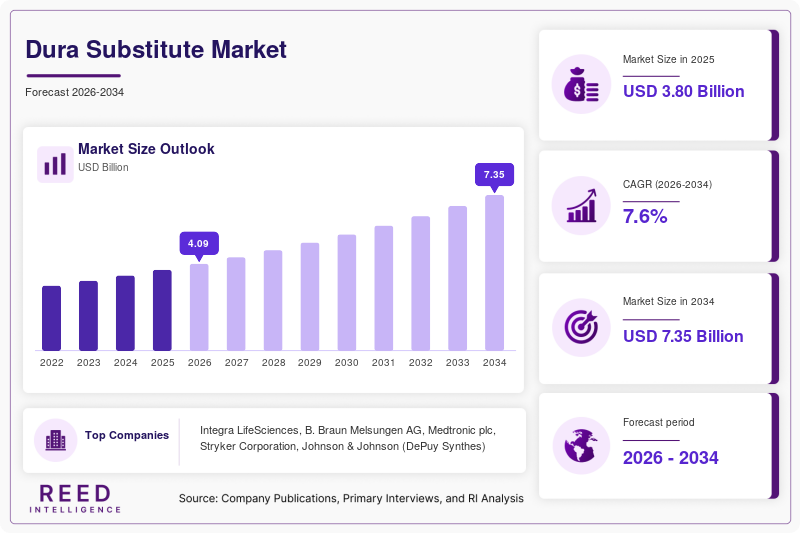
The Dura Substitute Market was valued at USD 3.8 billion in 2025 and is projected to reach USD 7.4 billion by 2033, expanding at a CAGR of 7.6% during 2025–2034. Growth in the Dura Substitute Market is being supported by the rising volume of neurosurgical procedures and increasing demand for advanced biomaterials used in cranial and spinal surgeries. As healthcare systems expand neurosurgical capabilities and hospitals invest in improved surgical outcomes, demand for safe and effective dura substitutes has continued to increase.
Dura substitutes are biomaterials used to repair or replace damaged dura mater during surgical procedures involving the brain or spinal cord. Increasing incidence of traumatic brain injuries, spinal disorders, and neurological conditions has encouraged hospitals to adopt synthetic and biologically derived substitutes. Advancements in biomaterial engineering and tissue-compatible polymer technologies have also improved the safety and performance profile of these products.
Key Highlights
- Dominant region: North America held 39.4% of the Dura Substitute Market share in 2025, while Asia Pacific will register the fastest CAGR of 9.2% through 2034.
- Dominant subsegments: Synthetic dura substitutes accounted for 52.6% share in 2025, while bioengineered substitutes will grow at a CAGR of 9.8%.
- Application leadership: Cranial surgeries represented 61.2% of market demand, while spinal surgery applications will expand at a CAGR of 8.7%.
- Dominant country: The United States recorded USD 1.1 billion in 2025, increasing to USD 1.17 billion in 2026.
Market Trends
Expansion of Bioengineered Dura Materials
A significant trend shaping the Dura Substitute Market is the increasing development of bioengineered dura materials that mimic the natural structure of human dura mater. Medical technology companies are investing in collagen-based and hybrid biomaterials designed to improve surgical outcomes and support tissue regeneration. These materials allow better compatibility with surrounding tissue and reduce the risk of inflammation or rejection. Surgeons are increasingly selecting products that combine structural strength with biological integration. As a result, research and development spending in tissue-engineered dura substitutes has increased across the industry.
Integration of Advanced Surgical Techniques
The growing adoption of minimally invasive neurosurgical techniques is influencing the design and use of dura substitutes. Surgeons performing microsurgical and endoscopic procedures require flexible, easy-to-handle biomaterials that can be implanted efficiently within limited surgical spaces. Product developers are responding by creating thinner, highly adaptable substitutes with improved sealing capabilities. These innovations are supporting the broader evolution of the Dura Substitute Market, as hospitals prioritize materials that reduce surgical complexity and post-operative recovery time.
Market Drivers
Increasing Neurosurgical Procedure Volume
The expanding number of neurosurgical procedures worldwide has significantly supported the Dura Substitute Market. Conditions such as brain tumors, spinal cord injuries, hydrocephalus, and traumatic brain injuries often require surgical intervention involving dura repair. Healthcare providers are increasingly adopting specialized surgical materials that help prevent cerebrospinal fluid leakage and reduce complications. As the global population ages and neurological conditions become more prevalent, the demand for dura substitutes used in cranial and spinal surgeries continues to rise.
Progress in Biomaterial Engineering
Advancements in biomaterial science are enabling manufacturers to design more effective surgical substitutes. Innovations in polymer chemistry, collagen processing, and tissue scaffolding technologies have improved the durability and compatibility of modern dura substitutes. These improvements allow products to provide better mechanical strength and enhanced integration with surrounding tissue. As biomaterial innovation continues, hospitals are adopting advanced solutions that improve patient recovery and surgical reliability, contributing to sustained expansion of the Dura Substitute Market.
Market Restraint
High Product Costs and Surgical Material Pricing Pressure
One factor limiting expansion of the Dura Substitute Market is the relatively high cost associated with advanced biomaterial products. Bioengineered and collagen-based substitutes often require specialized manufacturing processes and strict regulatory compliance, which increases production costs. These higher prices can limit adoption in cost-sensitive healthcare environments, particularly in emerging markets with constrained hospital budgets.
Healthcare providers and insurance systems in several regions are also focusing on cost management strategies, which may reduce spending on premium surgical materials. Hospitals may choose conventional repair techniques or lower-cost alternatives when budgets are limited. Additionally, regulatory approval requirements for implantable biomaterials are stringent and time consuming, adding to development costs and delaying commercialization of new products.
These financial and regulatory constraints may slow adoption rates in some healthcare systems. As a result, manufacturers in the Dura Substitute Market must balance innovation with cost-effective production to maintain competitive positioning while supporting broader accessibility.
Market Opportunities
Expansion of Neurosurgical Infrastructure in Emerging Economies
Emerging economies are investing in healthcare infrastructure and specialized surgical capabilities. Countries across Asia, Latin America, and parts of the Middle East are expanding neurosurgical centers and training programs for neurological specialists. This growth in surgical capacity is expected to generate new demand for advanced surgical materials. As hospitals adopt modern neurosurgical practices, the Dura Substitute Market will gain opportunities to expand product adoption in developing healthcare systems.
Development of Regenerative and Absorbable Materials
The development of regenerative biomaterials presents another opportunity in the Dura Substitute Market. Researchers are exploring absorbable substitutes that gradually integrate into natural tissue while promoting healing. These next-generation materials are designed to eliminate the need for permanent implants and improve post-operative outcomes. As clinical research advances and regulatory approvals expand, regenerative substitutes could become an important segment of the market, supporting product innovation and long-term growth.
Segmental Analysis
By Type
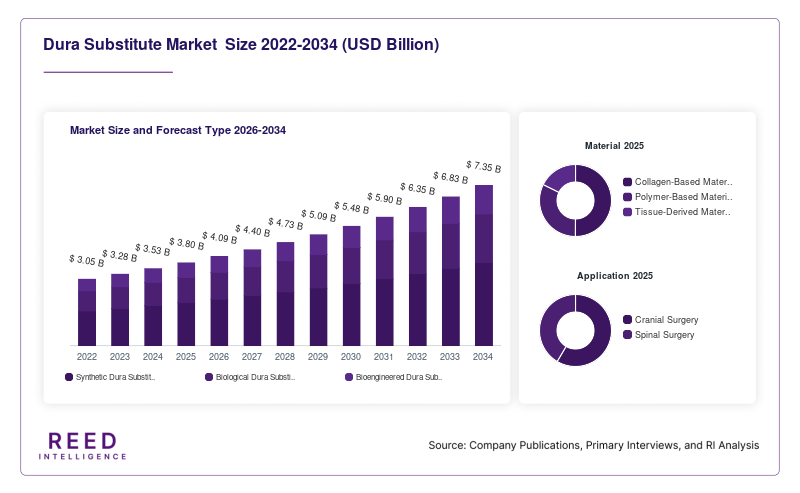
Synthetic dura substitutes dominated the Dura Substitute Market in 2025, accounting for 52.6% of total market share. These materials are widely used because they offer consistent quality, controlled manufacturing conditions, and strong mechanical properties. Hospitals often rely on synthetic substitutes in procedures where structural durability and predictable performance are essential. The availability of polymer-based products with improved sealing properties has also supported the widespread adoption of synthetic substitutes across neurosurgical centers.
The bioengineered dura substitute segment will expand at a CAGR of 9.8% during the forecast period. Growth in this segment will be supported by the development of advanced biomaterials designed to promote tissue integration and healing. Researchers and manufacturers are investing in hybrid materials that combine structural support with regenerative characteristics. As surgical techniques evolve and demand increases for biologically compatible implants, bioengineered products will gain greater acceptance in the Dura Substitute Market.
By Material
The collagen-based material segment accounted for 44.3% of the Dura Substitute Market share in 2025. Collagen materials are widely used because they closely resemble natural tissue structures and support effective surgical repair. Surgeons often prefer collagen substitutes due to their ability to integrate with surrounding tissue and reduce complications such as cerebrospinal fluid leakage. These properties have supported the sustained demand for collagen-based products across hospitals performing neurological surgeries.
The polymer-based material segment will grow at a CAGR of 8.5% between 2025 and 2034. Advances in polymer chemistry and manufacturing technologies will enable the development of highly durable and flexible substitutes. These materials provide improved mechanical strength while maintaining ease of handling during surgery. As medical device manufacturers continue to refine polymer-based biomaterials, adoption will increase across neurosurgical centers participating in the Dura Substitute Market.
By Application
Cranial surgery applications held 61.2% of the Dura Substitute Market share in 2025. Procedures involving brain tumor removal, traumatic brain injury repair, and neurosurgical reconstruction frequently require dura substitutes to restore the protective membrane surrounding the brain. Hospitals performing these procedures consistently use specialized biomaterials to reduce post-operative complications and maintain structural integrity during healing.
The spinal surgery segment will expand at a CAGR of 8.7% over the forecast period. Rising prevalence of spinal disorders and degenerative spine conditions will contribute to the increasing number of spinal surgical procedures. As surgical technologies evolve and more hospitals develop specialized spine centers, the need for effective dura repair materials will continue to increase. These developments will support expansion of the Dura Substitute Market in spinal surgery applications.
By End Use
Hospitals accounted for 68.5% of the Dura Substitute Market share in 2025. Large hospitals perform a significant proportion of neurosurgical procedures due to their access to advanced surgical equipment and specialized medical teams. These facilities typically maintain dedicated neurology and neurosurgery departments that require reliable surgical biomaterials for complex procedures.
The specialty neurosurgical centers segment will grow at a CAGR of 8.9% through 2034. These facilities focus specifically on neurological and spinal treatments and are increasingly adopting advanced surgical implants. The growth of specialized surgical centers in both developed and emerging healthcare systems will contribute to expanding demand in the Dura Substitute Market.
Regional Analysis
North America
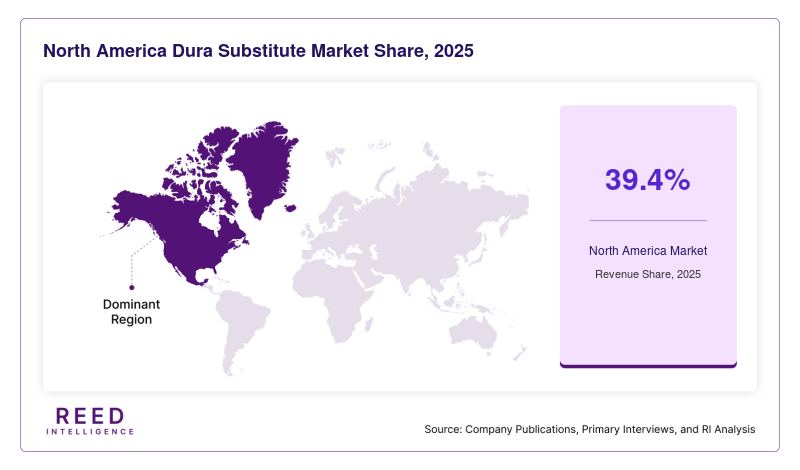
North America accounted for 39.4% of the global Dura Substitute Market share in 2025. The region benefited from a well-established healthcare infrastructure, strong neurosurgical expertise, and early adoption of advanced surgical biomaterials. Hospitals across the United States and Canada consistently integrated modern neurosurgical techniques, supporting demand for specialized surgical implants. Over the forecast period, the Dura Substitute Market in North America will grow at a CAGR of 6.8% between 2025 and 2034, supported by ongoing technological improvements and sustained healthcare spending.
The United States dominated the regional market, supported by high procedure volumes and extensive medical device innovation. Neurosurgical centers in the country frequently conduct complex cranial and spinal procedures requiring reliable dura repair solutions. Additionally, collaboration between hospitals, research institutions, and medical device companies has supported product development. These factors continue to strengthen the country’s position in the Dura Substitute Market.
Europe
Europe represented 27.6% of the Dura Substitute Market share in 2025. The region maintained steady adoption of neurosurgical implants due to established healthcare systems and increasing focus on patient safety during surgical procedures. European hospitals emphasized the use of biocompatible surgical materials that reduce complications during cranial repair procedures. The regional Dura Substitute Market will expand at a CAGR of 7.1% during the forecast period as healthcare providers continue to adopt advanced biomaterials.
Germany emerged as the dominant country in the European market due to its strong medical device manufacturing sector and advanced neurosurgical capabilities. Hospitals across the country frequently perform complex neurological procedures and maintain high standards for surgical implants. Additionally, German medical technology firms invest in biomaterial research, contributing to the steady evolution of the Dura Substitute Market in the region.
Asia Pacific
Asia Pacific accounted for 21.8% of the global Dura Substitute Market share in 2025. The region experienced increasing adoption of neurosurgical technologies due to expanding healthcare infrastructure and rising patient awareness. Governments in several countries invested in specialized surgical facilities and neurology departments. These initiatives supported gradual growth of the Dura Substitute Market across emerging healthcare systems.
During the forecast period, the Asia Pacific Dura Substitute Market will grow at a CAGR of 9.2%, reflecting expanding healthcare access and rising surgical procedure volumes. China held the dominant country position in the region, supported by significant investment in hospital infrastructure and medical technology development. The country’s expanding neurosurgical workforce and increasing demand for advanced surgical implants continue to support market expansion.
Middle East & Africa
The Middle East & Africa represented 6.1% of the Dura Substitute Market share in 2025. Adoption levels in this region remained relatively moderate due to variations in healthcare infrastructure and availability of specialized surgical services. However, several countries have increased investments in healthcare modernization and specialized medical training. These developments are expected to support gradual expansion of the Dura Substitute Market, which will grow at a CAGR of 6.5% through 2034.
The United Arab Emirates emerged as the dominant country within the region. The country has invested heavily in modern hospital infrastructure and advanced medical technologies. Several hospitals in the UAE have developed specialized neurosurgical departments capable of performing complex procedures. These healthcare advancements are encouraging greater use of surgical biomaterials, contributing to the regional development of the Dura Substitute Market.
Latin America
Latin America accounted for 5.1% of the global Dura Substitute Market share in 2025. Regional demand has been influenced by improving access to specialized medical care and the gradual expansion of neurosurgical services. Hospitals in larger urban centers increasingly adopt advanced surgical materials that support safer neurological procedures. The Dura Substitute Market in Latin America will expand at a CAGR of 7.0% during the forecast period as healthcare systems continue to modernize.
Brazil remained the dominant country in the region, supported by its large healthcare network and increasing number of neurosurgical specialists. Major hospitals across Brazil have expanded neurology and spinal surgery departments, encouraging adoption of advanced surgical implants. These developments will continue to contribute to the growth of the Dura Substitute Market in Latin America.
Competitive Landscape
The Dura Substitute Market includes several global medical device manufacturers focusing on biomaterial innovation and neurosurgical product development. Companies compete through product performance, regulatory approvals, and expansion into emerging healthcare markets.
One of the recognized market leaders is Integra LifeSciences, which maintains a strong portfolio of neurosurgical biomaterials used in cranial and spinal procedures. The company continues to expand its surgical product offerings through research and product development initiatives.
Other companies operating in the Dura Substitute Market focus on collagen processing, polymer biomaterials, and surgical implant design. Industry participants are strengthening their market positions through strategic partnerships with hospitals, investment in biomaterial research, and the development of next-generation tissue-compatible implants.
Key Players
- Integra LifeSciences
- B. Braun Melsungen AG
- Medtronic plc
- Stryker Corporation
- Johnson & Johnson (DePuy Synthes)
- Baxter International Inc.
- W. L. Gore & Associates
- Cook Medical
- Collagen Matrix Inc.
- Aesculap Inc.
- Gunze Limited
- Tissuemed Ltd.
- Synovis Micro Companies Alliance
- Neurotex Medical Technologies
- Kerecis Limited
Recent Developments
- Integra LifeSciences expanded its neurosurgical biomaterial portfolio through the launch of a new collagen-based dura repair solution designed for improved tissue integration.
- B. Braun Melsungen AG introduced an advanced polymer dura substitute designed to enhance surgical handling during minimally invasive procedures.
- Medtronic invested in research collaborations focused on developing regenerative biomaterials for neurological surgery applications.
- Stryker Corporation expanded its neurosurgical product distribution network across Asia Pacific healthcare markets.
- Collagen Matrix Inc. announced development of next-generation absorbable dura substitutes aimed at improving post-surgical healing outcomes.
Dura Substitute Market Segments
Type
- Synthetic Dura Substitutes
- Biological Dura Substitutes
- Bioengineered Dura Substitutes
Material
- Collagen-Based Materials
- Polymer-Based Materials
- Tissue-Derived Materials
Application
- Cranial Surgery
- Spinal Surgery
End Use
- Hospitals
- Specialty Neurosurgical Centers
- Ambulatory Surgical Centers
By Region
- North America
- Europe
- APAC
- Middle East and Africa
- LATAM
Frequently Asked Questions
How big is the Dura Substitute Market?
According to Reed Intelligence, the Dura Substitute Market size was valued at USD 3.8 billion in 2025 and is projected to reach USD 7.4 billion by 2033, expanding at a CAGR of 7.6% during 2025–2034.
What are the key opportunities in the market?
Expansion of neurosurgical infrastructure in emerging economies and development of regenerative and absorbable biomaterials are key opportunities in the market.
Who are the leading players in the market?
Integra LifeSciences, B. Braun Melsungen AG, Medtronic plc, Stryker Corporation, Johnson & Johnson (DePuy Synthes), Baxter International Inc., W. L. Gore & Associates, Cook Medical, Collagen Matrix Inc., and Gunze Limited are the leading players in the market.
What are the factors driving the growth of the market?
Increasing neurosurgical procedure volumes and advancements in biomaterial engineering are the factors driving the growth of the market.
Which are the various segmentation that the market report covers?
The market report is segmented as follows: By Type, By Material, By Application, and By End Use.