Earthen Plaster Market Size, Share & Demand Report By Type (Clay-Based Earthen Plaster, Lime-Stabilized Earthen Plaster, Fiber-Reinforced Earthen Plaster, Gypsum-Blended Earthen Plaster), By Application (Residential Construction, Commercial Interiors, Hospitality Infrastructure, Heritage Restoration), By End-Use (New Construction, Renovation and Restoration, Institutional Buildings, Sustainable Housing Projects), By Region & Segment Forecasts, 2026–2034
USD 3950
Market Overview
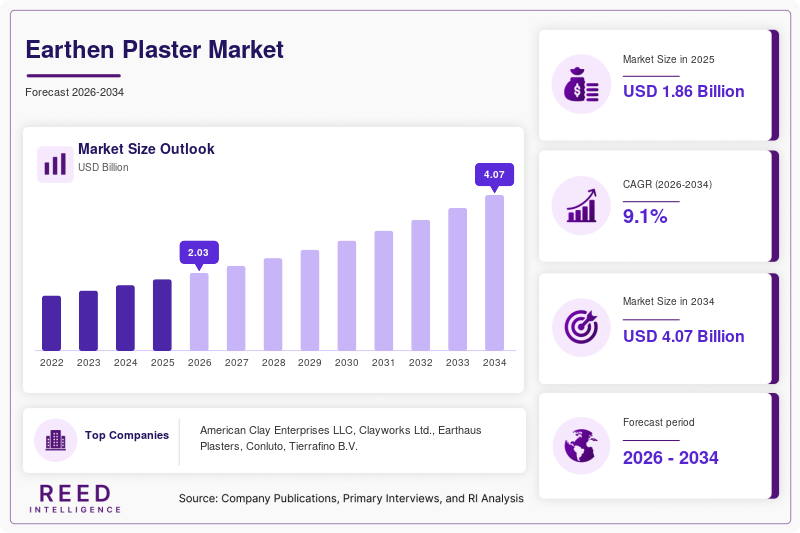
The global Earthen Plaster Market size was valued at USD 1.86 billion in 2026 and is projected to reach USD 3.74 billion by 2034, expanding at a CAGR of 9.1% during the forecast period from 2026 to 2034. The market is gaining traction due to the rising adoption of sustainable construction materials across residential, commercial, and hospitality sectors. Increasing awareness regarding indoor air quality, low-carbon construction methods, and renewable raw materials has accelerated the use of earthen plaster in both new construction and renovation projects. Builders and architects are increasingly integrating natural finishing materials into green building designs to comply with environmental regulations and evolving consumer preferences.
Growing investments in eco-friendly infrastructure development have created favorable conditions for the expansion of the Earthen Plaster Market. Governments in multiple economies are encouraging the use of low-emission building products through green certification programs and sustainable housing initiatives. Earthen plaster products are gaining popularity because they offer moisture regulation, thermal insulation, mold resistance, and reduced volatile organic compound emissions. These functional advantages have strengthened product demand in climate-sensitive regions where energy-efficient construction materials are becoming essential.
Key Highlights
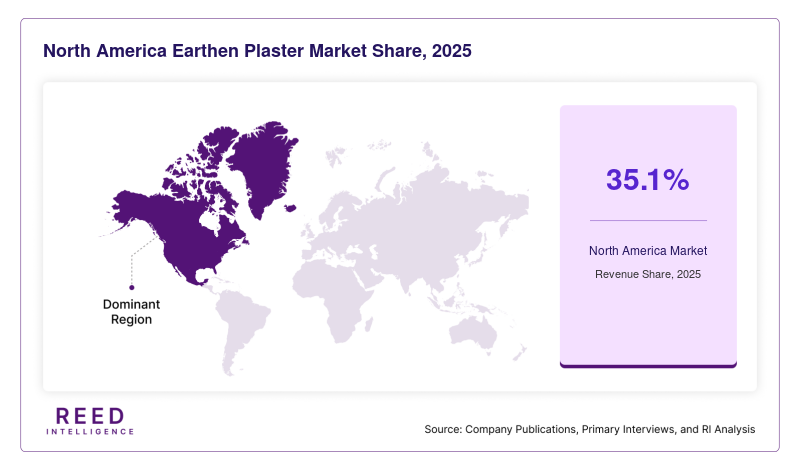
- North America dominated the market with a 35.1% share in 2025, while Asia Pacific is expected to grow at the fastest CAGR of 10.8% during 2026–2034.
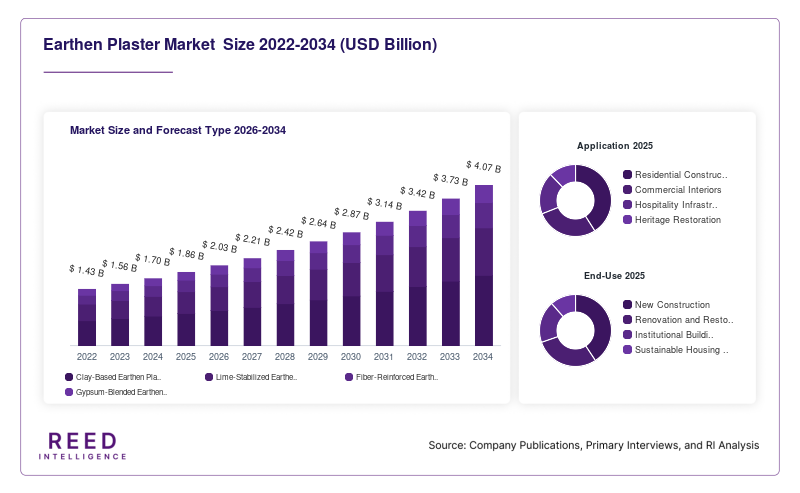
- By type, clay-based earthen plaster accounted for the largest share of 42.4%, while lime-stabilized earthen plaster is projected to grow at a CAGR of 11.1%.
- By application, residential construction led with a 46.3% share, whereas commercial interiors are expected to expand at a CAGR of 10.6%.
- By end-use, new construction accounted for the largest share of 58.7%, while renovation and restoration projects are projected to grow at a CAGR of 10.9%.
- The United States remained the dominant country, with market values of USD 420 million in 2024 and USD 468 million in 2025.
Market Trends
Rising Integration of Sustainable Interior Finishing Materials
The growing focus on environmentally responsible building practices has significantly influenced the adoption of earthen plaster products in interior finishing applications. Architects and developers are increasingly selecting natural wall coatings to reduce carbon footprints and improve indoor environmental quality. Earthen plaster contains naturally sourced materials such as clay, sand, and mineral pigments, making it suitable for sustainable residential and commercial projects. Consumers are also becoming more aware of the health impacts associated with synthetic paints and cement-based wall finishes, encouraging the transition toward low-emission alternatives. The trend is particularly visible in premium housing developments, boutique hotels, wellness centers, and eco-resorts where natural aesthetics and sustainability are major purchasing factors.
In addition, green building certification systems are supporting demand for earthen plaster materials. Construction companies seeking compliance with energy-efficient and environmentally responsible building standards are incorporating natural plasters into project specifications. The availability of customizable textures, colors, and finishes has further improved market acceptance among interior designers and urban developers.
Expansion of Heritage Restoration and Traditional Architecture Projects
The restoration of historical buildings and traditional architectural structures is emerging as a major trend supporting the Earthen Plaster Market. Many heritage conservation agencies prefer authentic construction materials that preserve the structural and visual characteristics of old buildings. Earthen plaster aligns with these requirements due to its compatibility with historic masonry, breathability, and natural moisture management properties. Governments and cultural preservation organizations are increasing investments in the restoration of heritage sites, museums, temples, and traditional homes, particularly across Europe, Asia Pacific, and the Middle East.
The growing popularity of vernacular architecture and rustic interior themes has also contributed to the expansion of decorative earthen plaster applications. Homeowners are increasingly incorporating handcrafted textures and natural finishes into modern living spaces to create organic and energy-efficient environments. This trend has encouraged manufacturers to introduce advanced formulations that combine traditional appearance with improved durability and simplified application methods. As restoration activities continue to expand globally, demand for specialized earthen plaster products is expected to strengthen steadily.
Market Drivers
Increasing Demand for Low-Carbon Construction Materials
The rising global emphasis on reducing carbon emissions in the construction industry is a significant factor driving the Earthen Plaster Market. Conventional cement-based wall finishing materials contribute substantially to greenhouse gas emissions during manufacturing. In contrast, earthen plaster products require comparatively lower energy consumption and contain naturally available raw materials, making them suitable for sustainable construction practices. Builders are increasingly adopting low-carbon materials to meet environmental targets and regulatory compliance requirements. This transition is particularly evident in developed economies where sustainable housing initiatives and energy-efficient construction standards are expanding rapidly.
Consumers are also prioritizing healthier indoor environments, further supporting product adoption. Earthen plaster improves indoor humidity regulation and reduces the presence of synthetic chemicals commonly associated with traditional wall coatings. Growing public awareness regarding sustainable living and wellness-oriented housing designs has encouraged developers to integrate natural plaster systems into modern buildings. As environmental concerns continue to shape the global construction sector, demand for eco-friendly finishing materials is expected to increase steadily.
Growth in Green Building and Eco-Housing Projects
Rapid expansion in green building projects worldwide has accelerated the use of earthen plaster in residential and commercial infrastructure. Developers are increasingly investing in eco-housing communities that utilize renewable materials and energy-efficient construction technologies. Earthen plaster is gaining preference because it supports thermal insulation, indoor comfort, and sustainable building certification requirements. Urbanization and rising disposable incomes are encouraging consumers to invest in environmentally responsible homes, especially in metropolitan regions.
The hospitality and tourism sectors are also contributing to market growth by adopting natural construction materials in resorts, eco-lodges, and wellness retreats. Many architects favor earthen plaster because it combines sustainability with aesthetic flexibility. The product is increasingly used to create textured walls, natural color finishes, and climate-responsive interiors. In addition, government incentives promoting sustainable construction materials are creating favorable business opportunities for manufacturers and suppliers. These factors collectively continue to strengthen long-term demand across multiple end-use industries.
Market Restraint
Limited Skilled Labor and Application Complexity
One of the primary challenges affecting the Earthen Plaster Market is the limited availability of skilled professionals capable of applying earthen plaster systems effectively. Unlike conventional cement or synthetic wall coatings, earthen plaster requires specialized preparation techniques, controlled drying conditions, and experienced craftsmanship to achieve consistent finishes and structural durability. In many developing regions, construction contractors remain unfamiliar with traditional plastering methods, limiting large-scale adoption across mainstream building projects.
The application process can also increase labor costs and project timelines when compared to ready-to-use industrial finishing materials. Variations in climate conditions, substrate compatibility, and moisture exposure can affect performance if the product is not applied properly. These operational challenges discourage some developers from selecting earthen plaster for large commercial projects where speed and cost efficiency remain primary priorities. Additionally, limited awareness among consumers regarding maintenance practices and long-term durability has restrained adoption in certain urban construction markets. Manufacturers are attempting to address these concerns through training programs, improved formulations, and simplified ready-mix products; however, the shortage of specialized applicators continues to present a significant barrier to broader market penetration.
Market Opportunities
Growing Adoption in Luxury and Wellness-Oriented Construction
The increasing popularity of luxury eco-friendly housing and wellness-focused architectural designs presents strong opportunities for the Earthen Plaster Market. High-income consumers are increasingly prioritizing indoor comfort, natural aesthetics, and non-toxic construction materials when selecting residential properties. Earthen plaster products are gaining traction in luxury villas, boutique hotels, yoga retreats, and wellness resorts because they contribute to healthier indoor environments and visually distinctive interiors. The material’s natural textures and thermal regulation capabilities align with evolving consumer preferences for organic and calming living spaces.
Interior designers and architects are also promoting handcrafted finishes and sustainable decorative materials in premium construction projects. This trend has encouraged manufacturers to develop customized color blends, polished textures, and enhanced durability formulations for high-end applications. As wellness-oriented real estate projects continue to expand globally, earthen plaster suppliers are expected to benefit from increased demand for natural wall finishing systems with aesthetic and environmental value.
Expansion of Sustainable Urban Renovation Programs
Urban renovation initiatives focused on sustainable infrastructure development are creating additional growth opportunities for earthen plaster manufacturers. Many governments are investing in energy-efficient retrofitting programs aimed at improving the environmental performance of aging residential and commercial buildings. Earthen plaster is increasingly being used in renovation projects because it supports moisture management, thermal comfort, and breathable wall systems without requiring highly energy-intensive production processes.
The rising demand for adaptive reuse projects and heritage restoration activities is further strengthening market potential. Older buildings often require natural and compatible materials to preserve structural integrity while meeting modern sustainability standards. Municipal authorities and private developers are incorporating eco-friendly plaster systems into renovation strategies to reduce environmental impact and improve indoor living conditions. As urban populations continue to grow and cities prioritize sustainable redevelopment, the use of earthen plaster in refurbishment applications is expected to expand considerably over the coming years.
Segmental Analysis
By Type
Clay-based earthen plaster accounted for the dominant share of 42.4% in 2024 due to its widespread availability, cost-effectiveness, and compatibility with sustainable construction practices. The segment has gained substantial demand from residential and heritage restoration applications because clay-based products provide natural thermal regulation and moisture control properties. Builders prefer clay-based plaster systems because they are biodegradable, recyclable, and capable of creating breathable wall surfaces that improve indoor air quality. The growing popularity of natural interior design concepts has also strengthened demand for textured clay finishes in modern housing projects. In addition, increasing consumer awareness regarding low-emission construction materials has encouraged developers to integrate clay-based products into eco-friendly building designs. The segment continues to benefit from strong adoption across Europe and North America where sustainable architecture standards remain well established.
Manufacturers are increasingly investing in advanced clay formulations that improve durability, crack resistance, and application efficiency. Decorative clay plaster products featuring customized pigments and handcrafted textures are gaining popularity among interior designers seeking natural aesthetic finishes. Furthermore, the expansion of green building certification programs is supporting long-term demand for clay-based materials in energy-efficient residential and commercial projects. These factors collectively continue to strengthen the segment’s leadership position within the market.
By Application
Residential construction represented the leading application segment with a market share of 46.3% in 2024. The segment’s dominance is primarily attributed to growing consumer preference for eco-friendly housing materials and healthier indoor living environments. Earthen plaster products are increasingly used in residential interiors because they regulate humidity, reduce indoor pollutants, and contribute to energy-efficient home designs. Rising awareness regarding sustainable lifestyles has encouraged homeowners to adopt natural wall finishes that align with environmental and wellness priorities. The increasing popularity of organic interior aesthetics and handcrafted wall textures has also supported strong adoption across luxury and mid-range housing projects.
Urban developers are incorporating earthen plaster systems into green residential communities to comply with environmental building standards and enhance property value. In addition, renovation projects involving traditional homes and rustic architectural styles are contributing to segment growth. Consumers are increasingly seeking natural alternatives to synthetic paints and cement-based coatings due to concerns regarding indoor air quality and chemical exposure. These factors collectively continue to support strong demand for earthen plaster products across the residential construction sector.
By End-Use
New construction accounted for the largest market share of 58.7% in 2024 due to increasing adoption of sustainable building materials in residential and commercial development projects. Builders are increasingly selecting earthen plaster systems during the initial construction phase to achieve better thermal performance, moisture control, and environmental compliance. Growing investments in green buildings and eco-housing communities have significantly strengthened segment demand. Developers are integrating natural plaster finishes into modern architecture to meet consumer preferences for low-emission and energy-efficient living spaces.
The segment is also benefiting from government incentives supporting environmentally responsible construction practices. Many construction companies are utilizing earthen plaster products to improve sustainability ratings and comply with green certification standards. Additionally, the availability of ready-mix formulations and improved installation techniques has simplified adoption across large-scale building projects. The expansion of sustainable urban infrastructure and climate-responsive architecture is expected to continue supporting growth within the new construction segment over the coming years.
Regional Analysis
North America
North America accounted for 35.1% of the global Earthen Plaster Market share in 2025 and maintained a strong position due to rising adoption of sustainable construction materials across the United States and Canada. The regional market is projected to expand at a CAGR of 8.7% during the forecast period. Growing investments in green residential construction, increasing environmental awareness, and demand for low-emission interior finishing materials are contributing to market expansion. The presence of advanced eco-building standards and sustainability-focused developers has also accelerated the integration of natural plaster products into modern construction practices.
The United States remained the dominant country within the region due to strong demand from eco-friendly housing developments and premium interior design projects. Rising consumer preference for healthier indoor living environments has encouraged builders to adopt natural wall coatings with low volatile organic compound emissions. Additionally, increasing renovation activities involving heritage homes and rustic architectural designs have strengthened product demand across urban and suburban construction sectors throughout the country.
Europe
Europe represented a significant share of the Earthen Plaster Market in 2025 and is expected to witness steady expansion at a CAGR of 8.4% through 2034. The region benefits from strong environmental regulations supporting sustainable construction materials and energy-efficient infrastructure. Countries across Western Europe are increasingly incorporating natural plasters into residential and commercial projects to reduce carbon footprints and comply with green building certification standards. Growing restoration activities involving historic structures and cultural buildings have also contributed to consistent market demand.
Germany emerged as the dominant country in the regional market due to its strong emphasis on eco-friendly architecture and renewable building materials. The country has experienced rising investments in energy-efficient housing and low-carbon construction initiatives. Additionally, consumers in Germany are increasingly adopting natural interior finishes to improve indoor air quality and thermal performance. These factors continue to support the long-term growth of earthen plaster products across the national construction industry.
Asia Pacific
Asia Pacific is projected to register the fastest CAGR of 10.8% during the forecast period due to rapid urbanization, expanding residential construction activities, and growing awareness regarding sustainable building materials. Increasing investments in green infrastructure projects across developing economies are supporting demand for natural wall finishing solutions. Governments throughout the region are implementing environmental policies encouraging the use of low-carbon construction materials. Rising disposable incomes and changing consumer preferences toward healthier living environments are also contributing to market expansion.
China dominated the Asia Pacific market owing to large-scale construction activities and growing adoption of environmentally responsible building practices. The country has witnessed increasing demand for natural and energy-efficient construction materials in urban housing projects and hospitality developments. In addition, rising government initiatives promoting sustainable urban development and green buildings have strengthened market opportunities for earthen plaster manufacturers operating across major metropolitan regions.
Middle East & Africa
The Middle East & Africa market is experiencing gradual growth supported by increasing investments in sustainable tourism infrastructure and climate-responsive construction practices. The region accounted for a moderate market share in 2025 and is forecast to expand at a CAGR of 7.9% through 2034. Builders in hot and arid climates are increasingly exploring earthen plaster systems because of their thermal insulation and moisture regulation benefits. Growing interest in traditional architectural styles and natural construction materials has also contributed to market development.
The United Arab Emirates remained the dominant country within the region due to rising adoption of eco-friendly construction materials in luxury hospitality projects and premium residential developments. The expansion of sustainable tourism infrastructure and wellness-focused resorts has created favorable conditions for natural plaster applications. Additionally, architects are increasingly incorporating earthen textures and traditional finishes into modern building designs to align with regional cultural aesthetics and environmental goals.
Latin America
Latin America is projected to witness stable market growth during the forecast period, supported by increasing demand for sustainable residential construction and affordable eco-friendly building materials. The region accounted for a developing share of the global Earthen Plaster Market in 2025 and is expected to grow at a CAGR of 8.1% through 2034. Rising environmental awareness among consumers and government efforts to promote sustainable urban housing are supporting product demand across emerging economies. Increased renovation activities involving traditional homes have also contributed to market expansion.
Brazil dominated the regional market due to expanding green housing initiatives and growing interest in natural interior finishing solutions. Builders and architects are increasingly incorporating earthen plaster into residential projects because of its low environmental impact and aesthetic versatility. Furthermore, the availability of natural raw materials and increasing consumer preference for climate-responsive construction practices are supporting broader adoption across both urban and semi-urban areas of the country.
Competitive Landscape
The Earthen Plaster Market remains moderately fragmented with the presence of regional manufacturers, specialty sustainable material suppliers, and emerging eco-construction companies. Market participants are increasingly focusing on product innovation, natural ingredient sourcing, and distribution expansion to strengthen their competitive positioning. Companies are investing in ready-mix plaster technologies, enhanced durability formulations, and customized decorative textures to meet evolving consumer preferences. Strategic collaborations with architects, green builders, and interior designers are also becoming common across the industry.
American Clay Enterprises LLC emerged as one of the leading companies due to its broad portfolio of natural plaster products and strong presence across North America. The company has expanded its sustainable interior finishing solutions for premium residential and hospitality applications. Other notable players are emphasizing environmentally responsible manufacturing processes and low-carbon product development to align with growing sustainability trends.
Key Players
- American Clay Enterprises LLC
- Clayworks Ltd.
- Earthaus Plasters
- Conluto
- Tierrafino B.V.
- Ecococon
- Vasari Plaster & Stucco
- Kreidezeit Naturfarben GmbH
- Natural Building Technologies
- Green Depot
- Lime Green Products Ltd.
- Holcim Group
- Earth Pigments Company
- Mud Girls Natural Building Collective
- BAUFritz GmbH & Co. KG
Recent Developments
- American Clay Enterprises LLC introduced a new ready-mix earthen plaster product line designed for rapid commercial interior applications in 2025.
- Clayworks Ltd. expanded its manufacturing capacity in Europe to support increasing demand for sustainable decorative plaster solutions in hospitality and residential projects.
- Tierrafino B.V. launched advanced lime-stabilized earthen plaster formulations with improved moisture resistance and durability for restoration applications in 2026.
Earthen Plaster Market Segments
Type
- Clay-Based Earthen Plaster
- Lime-Stabilized Earthen Plaster
- Fiber-Reinforced Earthen Plaster
- Gypsum-Blended Earthen Plaster
Application
- Residential Construction
- Commercial Interiors
- Hospitality Infrastructure
- Heritage Restoration
End-Use
- New Construction
- Renovation and Restoration
- Institutional Buildings
- Sustainable Housing Projects
By Region
- North America
- Europe
- APAC
- Middle East and Africa
- LATAM