Egg Phosphatidylcholine Market Size, Share & Demand Report By Grade (Pharmaceutical Grade, Food Grade, Cosmetic Grade, Industrial Grade), By Application (Pharmaceuticals, Nutraceuticals, Food & Beverages, Cosmetics & Personal Care, Animal Nutrition), By End Use (Pharmaceutical Companies, Dietary Supplement Manufacturers, Food Processing Companies, Cosmetic Manufacturers, Research Institutions) By Region & Segment Forecasts, 2026–2034
USD 3950
Market Overview
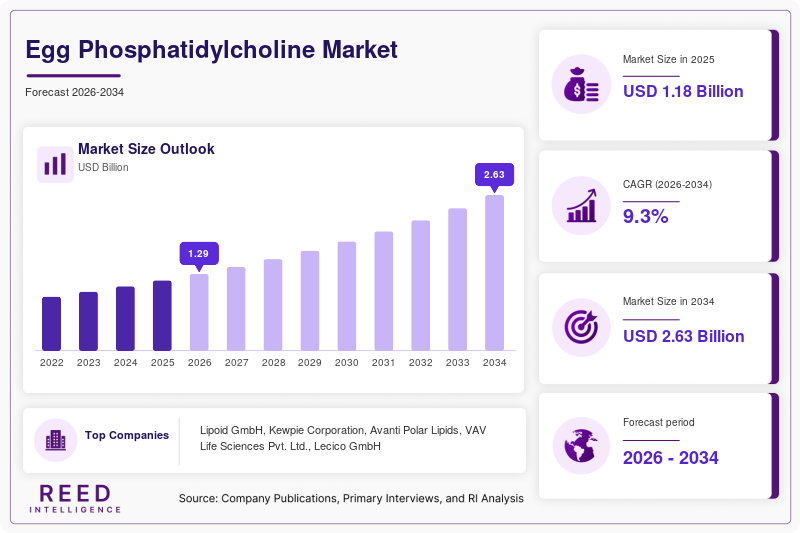
The global Egg Phosphatidylcholine Market size was valued at USD 1.18 billion in 2026 and is projected to reach USD 2.41 billion by 2034, expanding at a CAGR of 9.3% during the forecast period. The market is gaining momentum due to rising demand for naturally derived phospholipids across pharmaceutical, nutraceutical, cosmetic, and food processing industries. Egg phosphatidylcholine is widely used as an emulsifier, stabilizer, and lipid delivery component in advanced formulations. Growing interest in clean-label ingredients and bioavailable lipid compounds has further strengthened commercial adoption across developed and emerging economies.
One major global factor supporting market growth is the expansion of preventive healthcare and nutritional supplementation industries. Consumers are increasingly adopting lipid-based supplements and functional foods designed to support cognitive health, liver function, and cardiovascular wellness. Pharmaceutical manufacturers are also using phosphatidylcholine in liposomal drug delivery systems due to its compatibility with biological membranes and enhanced absorption capabilities. The ingredient’s application scope has widened significantly in recent years as manufacturers focus on premium formulations with natural sourcing profiles.
Key Highlights
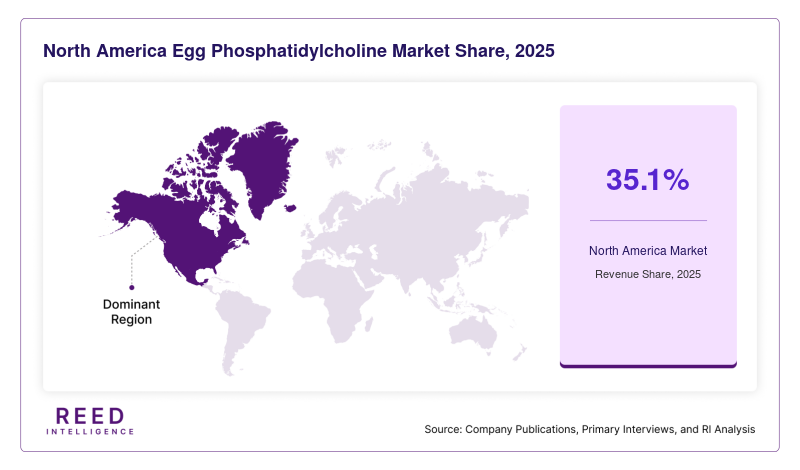
- North America dominated the market with a 35.1% share in 2025, while Asia Pacific is expected to grow at the fastest CAGR of 10.8% during 2026–2034.
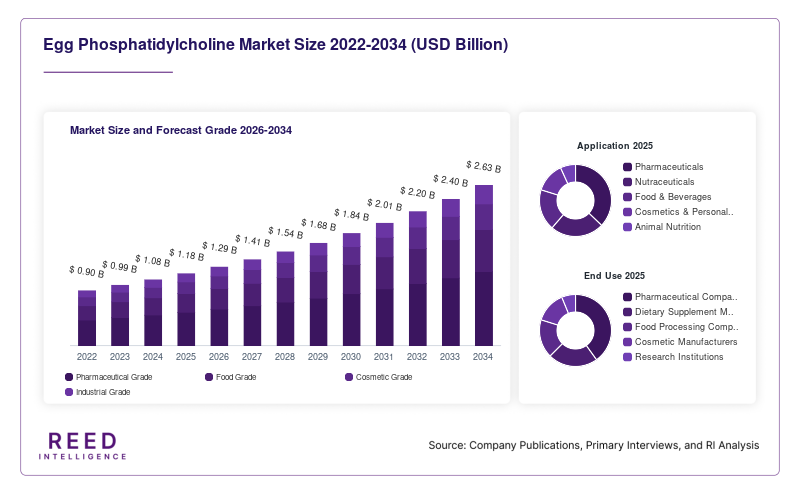
- By grade, pharmaceutical grade accounted for the largest share of 43.6%, while food grade is projected to grow at a CAGR of 10.5%.
- By application, pharmaceuticals led with a 39.8% share, whereas nutraceuticals are expected to expand at a CAGR of 11.1%.
- By end use, pharmaceutical companies held the dominant share of 36.4%, while dietary supplement manufacturers are projected to grow at a CAGR of 10.9%.
- The United States remained the dominant country, with market values of USD 318 million in 2024 and USD 347 million in 2025.
Market Trends
Rising Demand for Liposomal Delivery Systems
The use of egg phosphatidylcholine in liposomal delivery systems has increased steadily across pharmaceutical and nutraceutical industries. Manufacturers are focusing on lipid-based encapsulation technologies to improve ingredient absorption, stability, and targeted delivery efficiency. Egg phosphatidylcholine is preferred in many liposomal formulations because it provides strong biocompatibility and supports membrane integrity. Demand for injectable drug formulations and oral nutraceutical products with enhanced bioavailability is creating consistent opportunities for ingredient suppliers. The trend is particularly visible in premium supplement categories focused on cognitive health, liver support, and immune health. Companies are investing in advanced phospholipid extraction technologies to meet higher purity requirements for medical applications. Increased clinical research surrounding phospholipid-assisted delivery mechanisms is also contributing to long-term market expansion.
Expansion of Clean-Label and Natural Ingredient Formulations
Food, beverage, and cosmetic manufacturers are increasingly replacing synthetic emulsifiers with naturally sourced alternatives such as egg phosphatidylcholine. Consumers are paying closer attention to ingredient labels and are seeking products with recognizable and minimally processed ingredients. This trend has encouraged manufacturers to integrate naturally derived phospholipids into bakery products, dairy formulations, nutritional beverages, and skincare products. Egg phosphatidylcholine supports emulsification while maintaining formulation stability and texture quality. Premium cosmetic brands are also using the ingredient in moisturizing creams and anti-aging products due to its lipid compatibility with skin barriers. The clean-label movement has become especially influential in North America and Europe, where regulatory scrutiny and consumer awareness regarding synthetic additives continue to increase.
Market Drivers
Growth in Nutraceutical and Functional Food Consumption
The growing popularity of nutraceutical products and functional foods is supporting strong demand within the Egg Phosphatidylcholine Market. Consumers are increasingly seeking dietary supplements that promote cognitive wellness, cardiovascular support, and metabolic health. Egg phosphatidylcholine is commonly used in nutritional products because it contributes to cell membrane structure and supports lipid metabolism. Supplement manufacturers are introducing phospholipid-based capsules, powders, and liquid formulations aimed at aging populations and health-conscious consumers. Demand has expanded across sports nutrition and clinical nutrition categories as well. Retail distribution through online wellness platforms and specialty nutrition stores has improved product accessibility in both developed and emerging economies. Rising awareness regarding preventive healthcare practices continues to strengthen consumption patterns for high-value phospholipid ingredients.
Increasing Pharmaceutical Applications and Research Investments
Pharmaceutical companies are expanding the use of egg phosphatidylcholine in drug formulation and delivery applications. The ingredient is widely utilized in liposomal medicines, injectable formulations, and advanced therapeutic systems because of its compatibility with biological tissues. Growth in biotechnology research and pharmaceutical innovation has increased demand for high-purity phosphatidylcholine products. Companies are allocating additional investments toward phospholipid research for cancer therapies, vaccine delivery systems, and neurological treatment development. Regulatory approvals for lipid-based therapeutic products have further encouraged market participation among ingredient suppliers. Academic institutions and biotechnology firms are also conducting studies focused on improving delivery efficiency using phospholipid structures. These developments are expected to sustain long-term demand for pharmaceutical-grade egg phosphatidylcholine across global healthcare industries.
Market Restraint
Volatility in Raw Material Supply and Production Costs
Fluctuations in egg supply and rising production costs remain significant challenges for companies operating in the Egg Phosphatidylcholine Market. The industry depends heavily on stable availability of high-quality egg yolk raw materials, which can be influenced by disease outbreaks, feed price inflation, transportation disruptions, and poultry industry volatility. Changes in agricultural pricing structures directly affect phospholipid extraction costs and profit margins for manufacturers. Production also requires advanced purification technologies and strict quality standards, particularly for pharmaceutical-grade products. These factors increase operational expenses and create pricing pressure across the supply chain.
Manufacturers serving pharmaceutical and nutraceutical industries must maintain consistent purity and traceability standards, which can further elevate processing costs. Smaller companies often face difficulties competing with larger producers that benefit from integrated sourcing and large-scale extraction facilities. In some regions, regulatory requirements related to animal-derived ingredients add additional compliance costs and slow product approvals. Supply chain instability can also disrupt long-term contracts with end-use industries, particularly during periods of agricultural uncertainty. These challenges may limit market penetration in price-sensitive regions and reduce adoption among smaller food and supplement manufacturers.
Market Opportunities
Expansion in Infant Nutrition and Clinical Nutrition Products
The use of egg phosphatidylcholine in infant nutrition and medical nutrition products presents significant growth opportunities for industry participants. Infant formula manufacturers are increasingly incorporating phospholipids into formulations designed to support brain development and cognitive function. Egg phosphatidylcholine is considered a valuable source of essential phospholipid compounds that mimic naturally occurring nutritional structures. Demand for specialized nutrition products for premature infants and elderly patients is also expanding across hospitals and healthcare institutions. Clinical nutrition providers are focusing on highly digestible lipid systems that improve nutrient absorption and patient recovery outcomes. Growth in healthcare spending and rising awareness regarding nutritional therapy are expected to strengthen adoption of phosphatidylcholine-based ingredients over the coming years.
Emerging Demand Across Premium Personal Care Formulations
Premium skincare and cosmetic manufacturers are creating new opportunities for the Egg Phosphatidylcholine Market through the development of lipid-rich formulations. The ingredient is increasingly used in moisturizers, serums, and anti-aging products because it supports emulsion stability and enhances skin compatibility. Consumers are showing growing interest in naturally sourced cosmetic ingredients with multifunctional benefits. Egg phosphatidylcholine helps improve texture quality while supporting hydration retention in personal care formulations. Luxury cosmetic brands are introducing phospholipid-based delivery systems to improve ingredient penetration and formulation effectiveness. Rapid growth in online beauty retail channels and premium skincare consumption across Asia Pacific and Europe is expected to create additional demand. Continued product innovation within clean beauty and dermatological skincare categories may further accelerate commercial adoption.
Segmental Analysis
By Grade
Pharmaceutical grade egg phosphatidylcholine held the dominant share of 43.6% in 2024 due to its extensive application in drug delivery systems, injectable formulations, and clinical nutrition products. Pharmaceutical manufacturers require high-purity phospholipid ingredients that meet stringent regulatory and safety standards. The segment benefits from rising use of liposomal technologies designed to improve bioavailability and therapeutic effectiveness. Demand has increased for lipid-based carriers used in oncology, neurology, and vaccine formulations. Manufacturers are also investing in advanced purification technologies to improve consistency and reduce contamination risks. The pharmaceutical grade segment continues to expand due to increasing research involving phospholipid-assisted therapies and growing commercialization of lipid-based medicines across global healthcare industries.
Food grade egg phosphatidylcholine is projected to register the fastest CAGR of 10.5% during the forecast period. Food and beverage companies are increasingly using phospholipid ingredients in bakery products, dairy formulations, nutritional beverages, and processed foods to improve emulsification and texture quality. Consumers are showing greater preference for clean-label ingredients and naturally derived food additives, supporting rapid segment growth. Manufacturers are also integrating phosphatidylcholine into functional food products designed for cognitive wellness and metabolic support. Expansion of premium nutrition categories and rising demand for fortified foods in Asia Pacific and North America are expected to create sustained opportunities. Improvements in food processing technology and broader retail availability are also supporting segment expansion.
By Application
Pharmaceutical applications accounted for the largest market share of 39.8% in 2024 due to rising use of egg phosphatidylcholine in liposomal drug delivery and therapeutic formulations. Pharmaceutical companies rely on phospholipids to improve drug stability, enhance absorption, and support targeted delivery mechanisms. Demand for injectable medicines and biologic therapies has increased the need for high-quality phospholipid ingredients. The segment also benefits from growing research into advanced treatments for neurological disorders, cancer therapies, and vaccine delivery systems. Strong investment in biotechnology and clinical research continues to support commercial demand for phosphatidylcholine products. Regulatory approvals for lipid-based therapeutic products have further strengthened adoption across global pharmaceutical manufacturing operations.
Nutraceutical applications are anticipated to witness the fastest CAGR of 11.1% during 2026–2034. Consumer interest in preventive healthcare and wellness supplementation is driving strong demand for phosphatidylcholine-based nutritional products. Manufacturers are launching dietary supplements focused on brain health, liver support, and cardiovascular wellness. Egg phosphatidylcholine is valued for its role in supporting cell membrane function and nutrient absorption. Growth in sports nutrition and healthy aging product categories is creating additional opportunities for nutraceutical companies. Online retail platforms and direct-to-consumer supplement brands are improving product accessibility worldwide. Increasing health awareness among middle-income populations in emerging economies is expected to accelerate long-term growth within the nutraceutical application segment.
By End Use
Pharmaceutical companies represented the dominant end-use segment with a 36.4% share in 2024 due to strong utilization of egg phosphatidylcholine in therapeutic formulations and drug delivery technologies. The segment benefits from increasing investments in biologics, vaccine research, and lipid-based therapies. Pharmaceutical manufacturers require highly purified phospholipids to meet stringent regulatory and clinical performance standards. Rising demand for injectable medicines and targeted delivery systems has strengthened long-term procurement agreements between pharmaceutical firms and phospholipid suppliers. Growth in chronic disease prevalence and expanding healthcare infrastructure across major economies are also contributing to rising consumption. Continuous innovation in lipid nanoparticle systems and advanced therapeutic platforms is expected to maintain segment dominance.
Dietary supplement manufacturers are expected to grow at the fastest CAGR of 10.9% during the forecast period. Consumer demand for cognitive health, liver wellness, and metabolic support supplements has increased substantially across global markets. Supplement brands are introducing premium phosphatidylcholine capsules, powders, and liquid formulations aimed at health-conscious consumers and aging populations. The segment is also benefiting from rising adoption of personalized nutrition products and plant-forward wellness routines that incorporate phospholipid supplementation. E-commerce expansion and digital marketing strategies have improved consumer awareness and product penetration. Growing demand for natural ingredients and preventive healthcare solutions is expected to support strong future growth among dietary supplement manufacturers.
Regional Analysis
North America
North America accounted for 35.1% of the global Egg Phosphatidylcholine Market share in 2025 and is projected to maintain stable growth at a CAGR of 8.6% through 2034. Strong pharmaceutical manufacturing capabilities, established nutraceutical industries, and high consumer awareness regarding preventive healthcare continue to support regional demand. The region benefits from advanced research infrastructure and significant investments in lipid-based drug delivery systems. Food manufacturers are also expanding the use of natural emulsifiers and clean-label ingredients, contributing to broader market penetration across processed food and beverage applications.
The United States remains the dominant country in North America due to strong pharmaceutical innovation and large-scale dietary supplement consumption. Growing demand for liposomal vitamins and premium cognitive health supplements has increased the use of pharmaceutical-grade phosphatidylcholine across domestic manufacturing operations. The country also benefits from strong biotechnology investment and increasing research collaborations between ingredient suppliers and healthcare companies. Expansion of personalized nutrition trends and premium wellness products continues to support long-term market development in the United States.
Europe
Europe represented a significant share of the Egg Phosphatidylcholine Market in 2025 and is expected to expand at a CAGR of 8.9% during the forecast period. The regional market is supported by stringent food quality standards and strong consumer preference for naturally derived ingredients. Food processing and cosmetic industries across Europe are adopting phosphatidylcholine as a multifunctional emulsifier and stabilizer. Demand for clinical nutrition and pharmaceutical formulations containing natural phospholipids has also increased due to rising healthcare awareness and an aging population across several European countries.
Germany remains the leading country within the European market because of its advanced pharmaceutical manufacturing infrastructure and strong nutraceutical industry presence. The country has witnessed rising investments in functional food innovation and biotechnology research focused on lipid delivery systems. German cosmetic manufacturers are also incorporating phospholipids into premium skincare products designed for sensitive skin and hydration support. Increasing consumer demand for clean-label formulations and regulatory emphasis on product transparency continue to strengthen market growth across Germany.
Asia Pacific
Asia Pacific is projected to register the fastest CAGR of 10.8% in the Egg Phosphatidylcholine Market during 2026–2034. Rising disposable income, rapid urbanization, and expanding healthcare infrastructure are supporting strong regional demand for nutritional supplements and pharmaceutical products. Consumers across the region are increasingly purchasing wellness products that promote cognitive health and overall nutrition. Food processing companies are also introducing phospholipid-enriched products to improve texture and shelf stability. Expansion of regional biotechnology and pharmaceutical manufacturing activities is further contributing to market growth.
China dominates the Asia Pacific market due to its large pharmaceutical production capacity and expanding nutraceutical industry. Domestic manufacturers are increasing investments in phospholipid extraction technologies to improve product quality and meet international standards. Rising demand for infant nutrition products and premium dietary supplements has supported consistent market expansion. The country also benefits from strong export capabilities and government initiatives supporting biotechnology development. Growing middle-class consumption and increasing awareness regarding preventive healthcare continue to create long-term growth opportunities within the Chinese market.
Middle East & Africa
The Middle East & Africa region is experiencing gradual expansion in the Egg Phosphatidylcholine Market and is forecast to grow at a CAGR of 7.4% through 2034. Market development is being supported by rising healthcare investments and increasing demand for nutritional supplements in urban populations. Pharmaceutical imports and local manufacturing partnerships are improving the availability of phospholipid-based products across several countries. Growth in premium food and personal care industries is also encouraging the use of natural emulsifiers and stabilizing ingredients within regional manufacturing operations.
Saudi Arabia represents the dominant country within the regional market due to growing healthcare expenditure and increasing adoption of nutritional wellness products. The country is witnessing rising demand for clinical nutrition and premium dietary supplements among health-conscious consumers. Government initiatives aimed at expanding pharmaceutical manufacturing capabilities are also creating opportunities for phospholipid ingredient suppliers. Expansion of modern retail infrastructure and e-commerce channels has improved accessibility to premium nutraceutical and personal care products throughout the country.
Latin America
Latin America continues to demonstrate moderate growth within the Egg Phosphatidylcholine Market and is expected to expand at a CAGR of 7.9% during the forecast period. Demand for functional foods and nutritional supplements is increasing steadily across major urban centers. Regional food manufacturers are incorporating phospholipids into processed food formulations to improve texture and shelf stability. The cosmetic industry is also contributing to market demand through the adoption of naturally sourced lipid ingredients in skincare products. Economic recovery across several countries is supporting higher consumer spending on wellness-oriented products.
Brazil remains the dominant country in the Latin American market due to its expanding food processing sector and growing dietary supplement industry. Rising consumer awareness regarding preventive healthcare and sports nutrition has encouraged supplement manufacturers to use phospholipid-based ingredients in premium products. The country also benefits from a large poultry industry that supports raw material availability for phosphatidylcholine production. Increased investment in local pharmaceutical manufacturing and cosmetic product development is expected to support further market expansion in Brazil.
Competitive Landscape
The Egg Phosphatidylcholine Market is moderately consolidated, with leading companies focusing on product purity, extraction efficiency, and application-specific innovation. Major participants are expanding their production capacities and strengthening partnerships with pharmaceutical and nutraceutical manufacturers to improve global market reach. Companies are also investing in research related to liposomal delivery systems and phospholipid-based therapeutic formulations. Product differentiation is increasingly centered on purity standards, traceability, and regulatory compliance for pharmaceutical and clinical nutrition applications.
Lipoid GmbH remains one of the leading companies in the market due to its strong portfolio of pharmaceutical-grade phospholipids and extensive global distribution network. The company continues to expand research collaborations focused on lipid-based drug delivery technologies. Other prominent participants are increasing investments in biotechnology and nutraceutical applications to strengthen competitive positioning.
Key Players
- Lipoid GmbH
- Kewpie Corporation
- Avanti Polar Lipids
- VAV Life Sciences Pvt. Ltd.
- Lecico GmbH
- Novastell Ingredients
- Cargill Incorporated
- Bunge Limited
- Stern-Wywiol Gruppe
- Nippon Fine Chemical Co., Ltd.
- Acetar Bio-Tech Inc.
- Guangzhou Juyuan Bio-Chem Co., Ltd.
- American Lecithin Company
- Wilmar International Ltd.
- Sime Darby Oils
Recent Developments
- In February 2026, Lipoid GmbH expanded its pharmaceutical phospholipid production facility in Germany to increase output capacity for liposomal drug delivery applications.
- In July 2025, Kewpie Corporation introduced a new high-purity egg phosphatidylcholine ingredient line targeting premium nutraceutical and clinical nutrition manufacturers.
- In October 2025, VAV Life Sciences Pvt. Ltd. announced a strategic partnership with a regional supplement manufacturer to develop phospholipid-based cognitive wellness formulations for Asia Pacific markets.
- In March 2026, Lecico GmbH launched an upgraded extraction process designed to improve phosphatidylcholine yield efficiency while reducing processing waste.
Egg Phosphatidylcholine Market Segments
Grade
- Pharmaceutical Grade
- Food Grade
- Cosmetic Grade
- Industrial Grade
Application
- Pharmaceuticals
- Nutraceuticals
- Food & Beverages
- Cosmetics & Personal Care
- Animal Nutrition
End Use
- Pharmaceutical Companies
- Dietary Supplement Manufacturers
- Food Processing Companies
- Cosmetic Manufacturers
- Research Institutions
By Region
- North America
- Europe
- APAC
- Middle East and Africa
- LATAM