Electric All Terrain Vehicle Market Size, Share Demand Report By Vehicle Type (Utility ATVs, Sports ATVs, Recreational ATVs), By Application (Agriculture, Military & Defense, Recreation, Industrial), By Battery Type (Lithium-ion, Lead-acid, Others), By Region & Segment Forecasts, 2026–2034
USD 3950
Market Overview
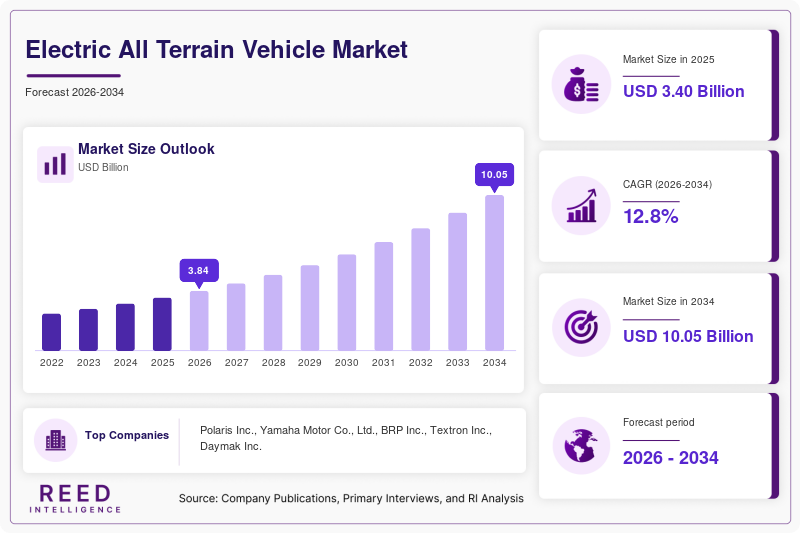
The Electric All Terrain Vehicle Market size was valued at approximately USD 3.4 billion in 2026 and is projected to reach USD 8.9 billion by 2034, registering a CAGR of 12.8% during the forecast period. The market is witnessing steady expansion as electrification trends reshape the broader mobility ecosystem. Electric all-terrain vehicles (ATVs) are gaining traction across recreational, agricultural, military, and utility applications due to their lower emissions, reduced noise levels, and declining battery costs. Increasing environmental regulations and the push toward sustainable off-road mobility are encouraging manufacturers to invest in electric ATV platforms.
One global factor supporting market growth is the rapid advancement in lithium-ion battery technology. Improvements in energy density, charging speed, and lifecycle performance have enhanced the usability of electric ATVs, making them viable alternatives to internal combustion engine models. Additionally, rising fuel prices and growing awareness of environmental impact are further accelerating adoption across developed and emerging economies.
Key Highlights
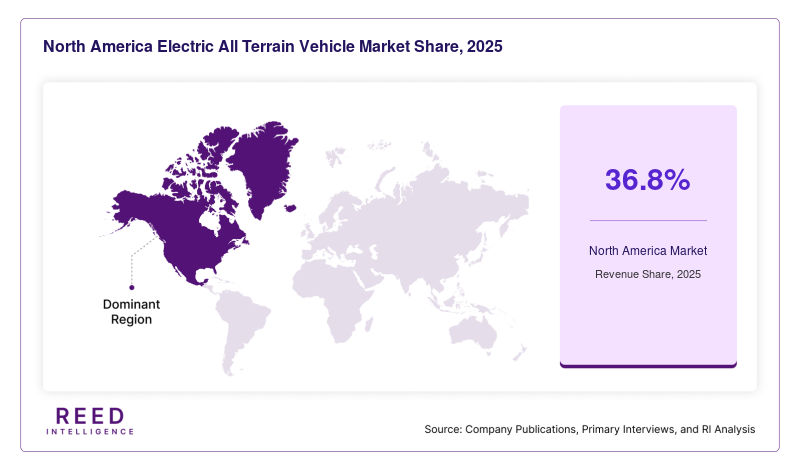
- North America dominated the market with a 36.8% share in 2025.
- Asia Pacific is expected to grow at the fastest CAGR of 14.1% during 2026–2034.
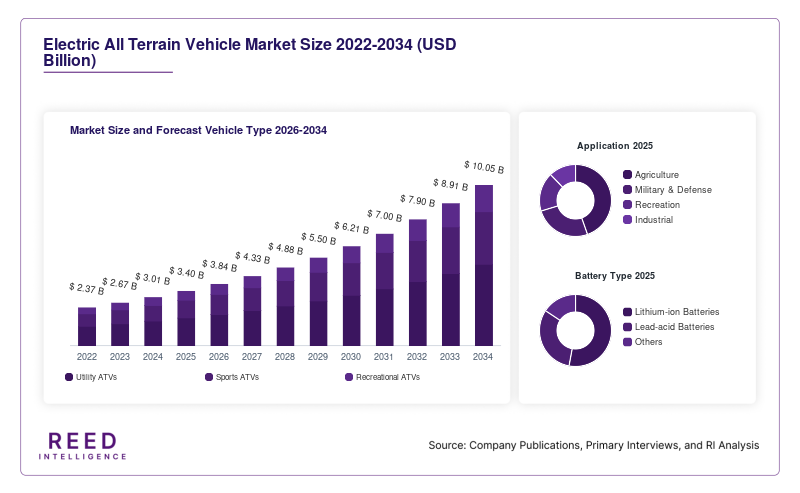
- By vehicle type, utility ATVs accounted for the largest share of 42.6%, while sports ATVs are projected to grow at a CAGR of 13.7%.
- By application, agriculture led with a 39.4% share, whereas military & defense is expected to expand at a CAGR of 13.2%.
- The United States remained the dominant country, with market values of USD 920 million in 2024 and USD 1.02 billion in 2025.
Market Trends
Rising integration of smart and connected features in electric ATVs
Electric ATVs are increasingly being equipped with advanced digital technologies such as GPS navigation, telematics, remote diagnostics, and smartphone connectivity. These features enhance operational efficiency and improve user experience, especially in agriculture and utility applications where fleet monitoring is essential. Manufacturers are incorporating IoT-enabled systems to provide real-time data on battery performance, terrain conditions, and vehicle health. This trend is particularly prominent in developed regions where digital infrastructure is well established. As connectivity becomes a standard expectation, companies are differentiating their offerings through software upgrades and integrated platforms, contributing to higher product value and long-term customer engagement.
Expansion of recreational and eco-tourism activities
The growing popularity of outdoor recreational activities and eco-tourism is significantly influencing demand for electric ATVs. Tour operators and adventure parks are increasingly adopting electric variants due to their quiet operation and minimal environmental impact, which align with sustainability goals. Electric ATVs are preferred in nature reserves and protected areas where noise and emissions regulations are stringent. Furthermore, the rising disposable income of consumers and interest in off-road experiences are driving sales in the recreational segment. This trend is expected to continue as governments promote eco-friendly tourism initiatives, creating a favorable environment for electric ATV adoption globally.
Market Drivers
Increasing demand for sustainable off-road mobility solutions
The shift toward sustainable transportation is a major driver for the electric all terrain vehicle market. Governments and regulatory bodies worldwide are enforcing stricter emission norms, pushing industries to adopt cleaner alternatives. Electric ATVs produce zero tailpipe emissions, making them suitable for environmentally sensitive areas such as farms, forests, and wildlife reserves. Additionally, corporate sustainability goals are encouraging businesses to replace traditional vehicles with electric fleets. This transition is particularly evident in agriculture and utility sectors, where electric ATVs are used for daily operations. The growing emphasis on reducing carbon footprints is expected to sustain market growth over the forecast period.
Advancements in battery and charging infrastructure
Technological progress in battery systems is significantly enhancing the performance and reliability of electric ATVs. Modern lithium-ion batteries offer longer range, faster charging times, and improved durability, addressing key limitations of earlier models. In parallel, the expansion of charging infrastructure, including portable and solar-powered charging solutions, is improving accessibility in remote areas. These developments are making electric ATVs more practical for diverse applications, from farming to military operations. As battery costs continue to decline and efficiency improves, manufacturers are able to offer competitively priced models, further driving adoption across various end-use sectors.
Market Restraint
Limited range and high initial cost impacting adoption
Despite technological advancements, electric ATVs still face challenges related to limited driving range and higher upfront costs compared to conventional models. Range anxiety remains a concern, particularly in remote or rugged terrains where charging infrastructure is sparse. This limitation can restrict usage in long-duration operations such as large-scale farming or military missions. Additionally, the initial purchase cost of electric ATVs is relatively high due to expensive battery components. Although lower maintenance and operating costs can offset this over time, the high entry barrier may deter price-sensitive consumers. This restraint is particularly evident in developing regions where affordability plays a critical role in purchasing decisions. Addressing these challenges through cost optimization and infrastructure development is essential for broader market penetration.
Market Opportunities
Growth in agricultural mechanization and precision farming
The increasing adoption of mechanized farming practices presents a significant opportunity for electric ATVs. Farmers are integrating electric vehicles into their operations for tasks such as crop monitoring, irrigation management, and transportation of goods. Electric ATVs are well-suited for precision farming due to their quiet operation and compatibility with digital tools. Governments in several countries are offering subsidies and incentives to promote sustainable agricultural practices, further supporting adoption. As the global population grows and demand for food increases, the need for efficient and eco-friendly farming solutions is expected to rise, creating a strong growth avenue for the market.
Expansion of defense and security applications
Electric ATVs are gaining traction in military and defense sectors due to their stealth capabilities and reduced thermal signature. These vehicles are ideal for reconnaissance missions, border patrol, and operations in sensitive environments where noise and emissions must be minimized. Defense agencies are investing in electric mobility solutions to enhance operational efficiency and reduce logistical challenges associated with fuel supply. Additionally, advancements in battery technology are enabling longer mission durations and improved reliability. The growing focus on modernizing defense equipment and adopting sustainable technologies is expected to drive demand for electric ATVs in this segment.
Segmental Analysis
By Vehicle Type
Utility ATVs held the largest market share of 42.6% in 2024 due to their widespread use in agriculture, forestry, and industrial applications. These vehicles are designed for heavy-duty tasks and offer high load capacity, making them suitable for operational use. Their durability and adaptability across various terrains contribute to their dominance. Additionally, the growing demand for efficient and eco-friendly utility vehicles is supporting their adoption. Manufacturers are focusing on enhancing battery performance and load capabilities to meet the evolving needs of end users, further strengthening this segment’s position.
Sports ATVs are expected to grow at the fastest CAGR of 13.7% during the forecast period. This growth is driven by increasing interest in recreational activities and off-road sports. Younger consumers and adventure enthusiasts are key contributors to this segment’s expansion. The introduction of high-performance electric sports ATVs with improved speed and agility is attracting new customers. Additionally, the development of dedicated off-road parks and events is creating opportunities for market growth. As technology advances, sports ATVs are expected to offer enhanced performance and user experience.
By Application
Agriculture accounted for the largest share of 39.4% in 2024, driven by the increasing adoption of mechanized farming practices. Electric ATVs are widely used for tasks such as crop monitoring, transportation, and irrigation management. Their low operating cost and environmental benefits make them an attractive option for farmers. Government incentives and subsidies for sustainable farming are further supporting this segment’s growth. Additionally, the integration of digital tools and precision farming techniques is enhancing the efficiency of electric ATVs in agricultural applications.
Military & defense is expected to grow at a CAGR of 13.2%, making it the fastest-growing application segment. The demand for stealth and efficient mobility solutions is driving the adoption of electric ATVs in this sector. These vehicles are used for reconnaissance, surveillance, and transportation in challenging terrains. Their low noise and thermal signature provide a tactical advantage in sensitive operations. Increasing defense budgets and modernization initiatives are further supporting this segment’s growth. As technology evolves, electric ATVs are expected to play a critical role in military operations.
By Battery Type
Lithium-ion batteries dominated the market with a share of 68.5% in 2024 due to their superior energy density, longer lifecycle, and faster charging capabilities. These batteries are widely used in electric ATVs as they provide reliable performance and efficiency. Continuous advancements in battery technology are improving their cost-effectiveness and durability. Manufacturers are investing in research and development to enhance battery performance and reduce costs, further supporting the dominance of this segment.
Lead-acid batteries are expected to grow at a moderate CAGR of 9.8% during the forecast period. Despite being an older technology, they remain popular in cost-sensitive markets due to their lower initial cost. These batteries are commonly used in entry-level electric ATVs and applications where high performance is not critical. The availability of recycling infrastructure and ease of maintenance are additional factors supporting their adoption. However, their growth is likely to be limited compared to lithium-ion batteries due to technological advancements.
Regional Analysis
North America
North America held a dominant share of 36.8% in 2025 and is expected to maintain steady growth with a CAGR of 11.9% during the forecast period. The region benefits from a well-established off-road vehicle culture and strong demand across recreational and utility applications. The presence of leading manufacturers and early adoption of electric mobility solutions further supports market expansion. Additionally, favorable government policies and incentives for electric vehicles are contributing to increased adoption.
The United States is the dominant country in this region, driven by high consumer spending and advanced infrastructure. A unique growth factor is the widespread adoption of electric ATVs in large-scale agricultural operations, where efficiency and sustainability are key priorities. Farmers are increasingly replacing traditional vehicles with electric alternatives to reduce operating costs and environmental impact.
Europe
Europe accounted for a significant share of 27.4% in 2025 and is projected to grow at a CAGR of 12.3% through 2034. The region’s strict environmental regulations and strong focus on sustainability are major drivers of market growth. Countries across Europe are actively promoting electric mobility, creating a favorable environment for electric ATV adoption.
Germany leads the European market, supported by its robust automotive industry and technological expertise. A unique growth factor is the integration of electric ATVs in forestry and environmental conservation projects. These vehicles are used for monitoring and maintenance activities in protected areas, aligning with the region’s sustainability goals.
Asia Pacific
Asia Pacific is expected to register the fastest CAGR of 14.1% during the forecast period, with a market share of 21.6% in 2025. Rapid urbanization, rising disposable income, and increasing awareness of electric mobility are driving market growth. The region is also witnessing significant investments in battery manufacturing and electric vehicle infrastructure.
China dominates the Asia Pacific market due to its large manufacturing base and government support for electric vehicles. A unique growth factor is the widespread use of electric ATVs in rural and agricultural areas, where they provide cost-effective and efficient transportation solutions.
Middle East & Africa
The Middle East & Africa region held a share of 7.3% in 2025 and is expected to grow at a CAGR of 10.7%. The market is driven by increasing investments in tourism and recreational activities, particularly in desert regions. Electric ATVs are gaining popularity for adventure tourism due to their low noise and environmental benefits.
The United Arab Emirates is the leading country in this region, supported by its развит tourism industry. A unique growth factor is the adoption of electric ATVs in desert safari operations, where sustainability and visitor experience are key considerations.
Latin America
Latin America accounted for 6.9% of the market in 2025 and is projected to grow at a CAGR of 11.2%. The region’s growth is driven by expanding agricultural activities and increasing adoption of mechanized farming equipment. Electric ATVs are becoming popular due to their cost efficiency and ease of maintenance.
Brazil dominates the Latin American market, supported by its large agricultural sector. A unique growth factor is the use of electric ATVs in livestock management, where they help improve productivity and reduce operational costs.
Competitive Landscape
The electric all terrain vehicle market is moderately competitive, with several established players and emerging companies striving to gain market share. Leading companies are focusing on product innovation, strategic partnerships, and expansion into new markets to strengthen their position. Polaris Inc. is a key leader in the market, known for its extensive product portfolio and strong distribution network. The company has recently introduced new electric ATV models with enhanced battery performance and connectivity features, reflecting its commitment to innovation.
Other major players such as Yamaha Motor Co., Ltd., BRP Inc., Textron Inc., and Daymak Inc. are also actively investing in research and development to improve product performance and efficiency. Collaborations with battery manufacturers and technology providers are common strategies to enhance competitiveness. Additionally, companies are expanding their presence in emerging markets to capitalize on growing demand. The competitive landscape is expected to evolve further as new entrants introduce innovative solutions and established players continue to expand their offerings.
Key Players List
- Polaris Inc.
- Yamaha Motor Co., Ltd.
- BRP Inc.
- Textron Inc.
- Daymak Inc.
- Eco Charger Ltd.
- DRR USA
- Hisun Motors Corp.
- Kymco
- Arctic Cat Inc.
- Suzuki Motor Corporation
- Honda Motor Co., Ltd.
- Zero Motorcycles Inc.
- Mahindra Electric Mobility Limited
- Nikola Corporation
Recent Developments
- Polaris Inc. launched a new range of electric ATVs with extended battery range and advanced connectivity features in 2025.
- Yamaha Motor Co., Ltd. announced a partnership with a battery technology firm to develop next-generation electric ATV platforms.
- BRP Inc. expanded its electric vehicle portfolio by introducing a high-performance electric ATV designed for recreational use.
Electric All Terrain Vehicle Market Segments
Vehicle Type
- Utility ATVs
- Sports ATVs
- Recreational ATVs
Application
- Agriculture
- Military & Defense
- Recreation
- Industrial
Battery Type
- Lithium-ion Batteries
- Lead-acid Batteries
- Others
Distribution Channel
- Online Retail
- Dealerships
- Specialty Stores
- Direct Sales
By Region
- North America
- Europe
- APAC
- Middle East and Africa
- LATAM