Electrochemical Gas Analyzer System Market Size, Share & Demand Report By Product Type (Portable Gas Analyzer, Fixed Gas Analyzer), By Application (Industrial Safety Monitoring, Environmental Monitoring, Medical Applications), By End-Use Industry (Oil & Gas, Chemical, Healthcare, Manufacturing, Mining), By Region & Segment Forecasts, 2026–2034
USD 3950
Market Overview
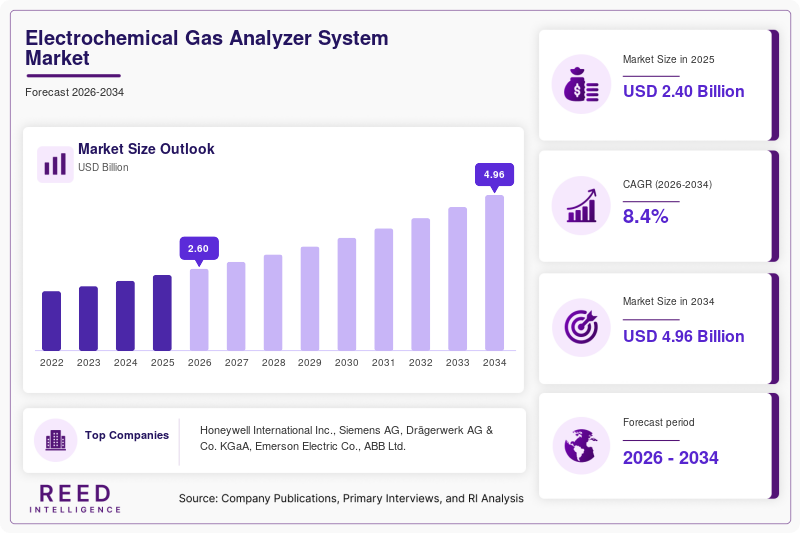
The Electrochemical Gas Analyzer System Market size was valued at approximately USD 2.4 billion in 2026 and is projected to reach USD 4.6 billion by 2034, expanding at a CAGR of 8.4% during the forecast period from 2026 to 2034. The market growth is primarily supported by increasing industrial safety regulations across developed and developing economies. Governments and regulatory bodies are mandating stricter monitoring of hazardous gases in sectors such as oil & gas, chemicals, and mining, which has led to higher adoption of electrochemical gas analyzer systems.
These systems are widely used due to their accuracy, low cost, and ability to detect toxic gases such as carbon monoxide, hydrogen sulfide, and nitrogen dioxide. Growing concerns around workplace safety and environmental compliance have accelerated their deployment. Additionally, the integration of digital monitoring systems and IoT-enabled gas analyzers is enhancing real-time data analysis, further supporting market growth.
Key Highlights
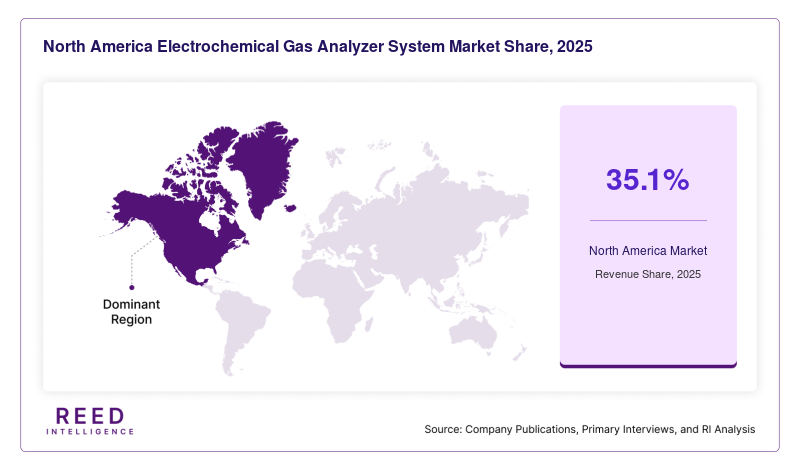
- North America dominated the market with a 35.1% share in 2025.
- Asia Pacific is expected to grow at the fastest CAGR of 9.6% during 2026–2034.
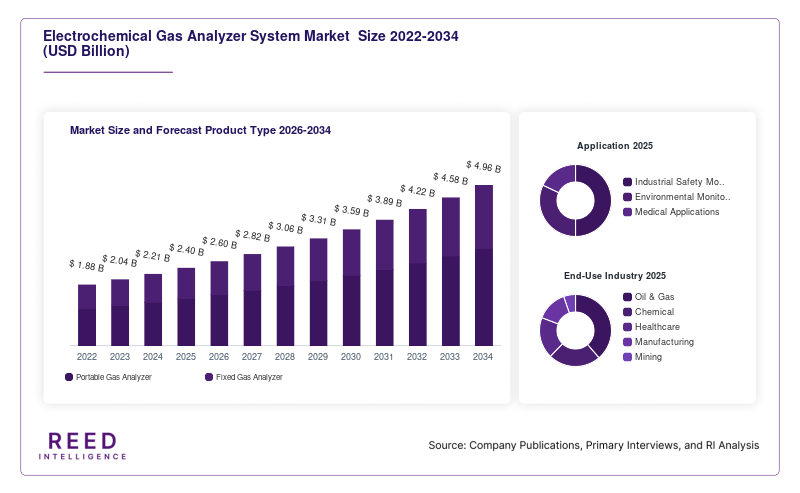
- By product type, portable gas analyzers accounted for the largest share of 42.3%, while fixed systems are projected to grow at a CAGR of 9.1%.
- By application, industrial safety monitoring led with a 45.8% share, whereas environmental monitoring is expected to expand at a CAGR of 9.4%.
- The United States remained the dominant country, with market values of USD 520 million in 2024 and USD 570 million in 2025.
Market Trends
Rising Integration of IoT and Smart Monitoring Systems
The integration of IoT-enabled technologies into electrochemical gas analyzer systems is becoming a prominent trend across industries. These systems are increasingly equipped with wireless connectivity, cloud-based monitoring, and real-time alert systems. This shift allows companies to monitor gas concentrations remotely and respond quickly to hazardous situations. Industrial facilities are adopting centralized dashboards that collect data from multiple analyzers, enabling predictive maintenance and reducing operational downtime.
This trend is particularly visible in large-scale manufacturing plants and oil refineries, where continuous monitoring is critical. IoT integration also supports data analytics, which helps in identifying patterns and improving workplace safety protocols. As digital transformation accelerates across industries, the demand for smart gas analyzer systems is expected to increase steadily, contributing to overall market growth.
Growing Demand for Portable and Wearable Gas Detection Devices
Portable and wearable electrochemical gas analyzers are gaining traction due to their convenience and effectiveness in ensuring worker safety. Industries such as mining, construction, and chemical processing are increasingly adopting compact devices that can be worn by workers. These devices provide real-time alerts and are designed to detect multiple gases simultaneously.
The trend is driven by the need for mobility and flexibility in hazardous work environments. Portable devices reduce the dependency on fixed systems and allow workers to monitor gas levels while moving across different zones. Advancements in battery life, sensor technology, and device durability have further enhanced their adoption. As industries focus more on employee safety and compliance, the demand for portable gas analyzers is expected to rise consistently.
Market Drivers
Increasing Industrial Safety Regulations and Compliance Requirements
The growing emphasis on workplace safety regulations is a key driver for the electrochemical gas analyzer system market. Governments and regulatory agencies across regions are enforcing strict guidelines for monitoring toxic and combustible gases in industrial environments. Compliance with these regulations is mandatory for companies operating in sectors such as oil & gas, chemicals, and manufacturing.
Failure to adhere to safety standards can lead to severe penalties, operational shutdowns, and reputational damage. As a result, organizations are investing heavily in advanced gas detection systems to ensure compliance. Electrochemical analyzers are preferred due to their accuracy, reliability, and cost-effectiveness. The continuous evolution of safety standards is expected to drive sustained demand for these systems over the forecast period.
Expansion of Oil & Gas and Chemical Industries
The growth of the oil & gas and chemical industries is significantly contributing to the demand for electrochemical gas analyzer systems. These industries involve processes that generate hazardous gases, making monitoring essential for safe operations. Exploration and production activities, especially in emerging economies, are increasing the need for reliable gas detection solutions.
Additionally, the expansion of petrochemical plants and refineries is creating new opportunities for market growth. Electrochemical analyzers are widely used in these facilities to detect leaks and prevent accidents. The increasing investments in energy infrastructure and chemical production are expected to drive the adoption of gas analyzer systems, supporting overall market expansion.
Market Restraint
Limitations in Sensor Lifespan and Calibration Requirements
One of the key challenges in the electrochemical gas analyzer system market is the limited lifespan of sensors and the need for frequent calibration. Electrochemical sensors degrade over time due to exposure to harsh environmental conditions and continuous use. This leads to reduced accuracy and increased maintenance costs for end-users.
Frequent calibration is necessary to ensure reliable readings, which can be time-consuming and costly for industries operating multiple systems. Small and medium enterprises may find it challenging to manage these maintenance requirements, which can hinder adoption. Additionally, sensor replacement costs add to the overall operational expenses, limiting market growth in price-sensitive regions.
Market Opportunities
Increasing Adoption in Environmental Monitoring Applications
The rising focus on environmental protection and air quality monitoring presents significant opportunities for the electrochemical gas analyzer system market. Governments and environmental agencies are implementing policies to monitor and control air pollution levels. Electrochemical analyzers are widely used to detect pollutants such as nitrogen oxides and sulfur dioxide.
Urbanization and industrialization are increasing pollution levels, particularly in developing regions. This has led to the deployment of gas analyzers in public spaces, transportation systems, and industrial zones. The growing awareness of environmental issues is expected to drive the demand for gas monitoring systems, creating new growth avenues for market players.
Technological Advancements in Sensor Accuracy and Miniaturization
Technological advancements in sensor design and miniaturization are opening new opportunities in the market. Manufacturers are focusing on developing highly accurate and compact sensors that can detect multiple gases simultaneously. These innovations are enhancing the performance and usability of gas analyzer systems.
Miniaturization is enabling the development of lightweight and portable devices, which are suitable for a wide range of applications. Improved sensor accuracy is also reducing the need for frequent calibration, addressing one of the key market challenges. As technology continues to evolve, these advancements are expected to drive increased adoption across industries.
Segmental Analysis
By Product Type
Portable gas analyzers dominated the market with a share of 42.3% in 2024. These devices are widely used due to their flexibility and ease of use. Industries prefer portable analyzers for applications where mobility is essential, such as mining and construction. The ability to provide real-time data and alerts makes them highly effective in ensuring worker safety.
Portable devices are also cost-effective compared to fixed systems, which contributes to their widespread adoption. Advancements in battery technology and sensor accuracy have further enhanced their performance. As industries continue to prioritize safety, the demand for portable gas analyzers is expected to remain strong.
Fixed gas analyzer systems are projected to grow at the fastest CAGR of 9.1% during the forecast period. These systems are widely used in large industrial facilities where continuous monitoring is required. Fixed analyzers provide consistent and accurate readings, making them suitable for critical applications.
The growth of this segment is driven by the increasing adoption of automated monitoring systems. Fixed analyzers are often integrated with centralized control systems, enabling real-time data analysis. This integration enhances operational efficiency and reduces the risk of accidents, supporting the growth of the segment.
By Application
Industrial safety monitoring accounted for the largest share of 45.8% in 2024. This application involves detecting hazardous gases in workplaces to prevent accidents and ensure compliance with safety regulations. Industries such as oil & gas, chemicals, and manufacturing rely heavily on gas analyzers for safety monitoring.
The increasing awareness of workplace safety and the implementation of strict regulations are driving the growth of this segment. Companies are investing in advanced gas detection systems to protect workers and avoid legal penalties. This trend is expected to sustain the dominance of industrial safety monitoring.
Environmental monitoring is expected to grow at the fastest CAGR of 9.4% during the forecast period. This application involves measuring air quality and detecting pollutants in the environment. Governments and environmental agencies are increasingly using gas analyzers to monitor emissions and enforce regulations.
The growth of this segment is driven by rising concerns about air pollution and climate change. Urbanization and industrialization are increasing pollution levels, creating a need for effective monitoring solutions. This is expected to drive the demand for gas analyzers in environmental applications.
By End-Use Industry
The oil & gas industry dominated the market with a share of 38.6% in 2024. This industry requires continuous monitoring of hazardous gases to ensure safe operations. Gas analyzers are used in exploration, production, and refining processes to detect leaks and prevent accidents.
The growth of this segment is driven by increasing investments in energy infrastructure. The expansion of oil & gas operations, particularly in emerging economies, is creating a strong demand for gas analyzer systems. This trend is expected to continue over the forecast period.
The healthcare industry is projected to grow at the fastest CAGR of 9.2% during the forecast period. Gas analyzers are used in medical applications such as respiratory monitoring and anesthesia delivery. The increasing demand for advanced healthcare solutions is driving the growth of this segment.
Technological advancements in medical devices are enhancing the accuracy and reliability of gas analyzers. The growing focus on patient safety and the expansion of healthcare infrastructure are expected to support the growth of this segment.
Regional Analysis
North America
North America held a significant share of 35.1% in 2025 and is expected to grow at a steady CAGR of 7.9% during the forecast period. The region’s growth is driven by strict industrial safety regulations and the presence of established industries such as oil & gas and chemicals. Companies in the region are investing in advanced gas detection technologies to ensure compliance with regulatory standards.
The United States dominates the North American market due to its strong industrial base and regulatory framework. A key growth factor in the country is the increasing adoption of IoT-enabled gas monitoring systems. Industries are focusing on digital transformation, which is driving the demand for smart gas analyzers.
Europe
Europe accounted for approximately 27.4% of the market share in 2025 and is projected to grow at a CAGR of 7.6% during the forecast period. The region’s growth is supported by stringent environmental regulations and a strong focus on sustainability. Industries are adopting gas analyzers to monitor emissions and reduce environmental impact.
Germany is the leading country in the European market, driven by its robust manufacturing sector. A unique growth factor is the country’s emphasis on industrial automation, which is increasing the adoption of integrated gas monitoring systems in production facilities.
Asia Pacific
Asia Pacific is expected to grow at the fastest CAGR of 9.6% during the forecast period, with a market share of 22.8% in 2025. Rapid industrialization and urbanization in countries such as China and India are driving the demand for gas analyzer systems. The region is witnessing significant investments in infrastructure and manufacturing.
China dominates the Asia Pacific market due to its large industrial base. A key growth factor is the increasing focus on air quality monitoring, which is leading to the deployment of gas analyzers in urban areas and industrial zones.
Middle East & Africa
The Middle East & Africa region held a market share of 8.3% in 2025 and is expected to grow at a CAGR of 8.1%. The region’s growth is primarily driven by the expansion of the oil & gas industry. Gas analyzers are essential for ensuring safety in exploration and production activities.
Saudi Arabia is the dominant country in the region, supported by its extensive oil reserves. A unique growth factor is the increasing investments in petrochemical projects, which are driving the demand for gas detection systems.
Latin America
Latin America accounted for 6.4% of the market share in 2025 and is projected to grow at a CAGR of 7.8%. The region’s growth is driven by increasing industrial activities and the adoption of safety regulations. Gas analyzers are being used in mining and manufacturing sectors.
Brazil leads the Latin American market due to its growing industrial sector. A key growth factor is the expansion of mining activities, which require effective gas monitoring solutions to ensure worker safety.
Competitive Landscape
The electrochemical gas analyzer system market is moderately competitive, with several global and regional players operating in the industry. Companies are focusing on product innovation, strategic partnerships, and geographic expansion to strengthen their market position. The competitive environment is characterized by continuous technological advancements and the introduction of smart gas monitoring solutions.
Honeywell International Inc. is one of the leading players in the market, known for its wide range of gas detection products. The company has recently introduced advanced IoT-enabled gas analyzers that provide real-time monitoring and predictive maintenance capabilities. Other key players are also investing in research and development to enhance sensor accuracy and reduce maintenance requirements.
Key Players
- Honeywell International Inc.
- Siemens AG
- Drägerwerk AG & Co. KGaA
- Emerson Electric Co.
- ABB Ltd.
- Teledyne Technologies Incorporated
- Mettler-Toledo International Inc.
- Yokogawa Electric Corporation
- Servomex Group Limited
- Figaro Engineering Inc.
- Alphasense Ltd.
- Dynament Ltd.
- MSA Safety Incorporated
- Testo SE & Co. KGaA
- Nova Analytical Systems
Recent Developments
- Several companies have launched advanced gas analyzer systems with enhanced sensor accuracy and IoT integration to improve real-time monitoring capabilities.
- A major industry player expanded its manufacturing facility in Asia Pacific to meet the growing demand for gas analyzers in emerging economies.
- Strategic partnerships between technology providers and industrial companies have been established to develop integrated gas monitoring solutions for smart factories.
Electrochemical Gas Analyzer System Market Segments
Product Type
- Portable Gas Analyzer
- Fixed Gas Analyzer
Application
- Industrial Safety Monitoring
- Environmental Monitoring
- Medical Applications
End-Use Industry
- Oil & Gas
- Chemical
- Healthcare
- Manufacturing
- Mining
By Region
- North America
- Europe
- APAC
- Middle East and Africa
- LATAM