Electronic Cigarette And Vaping Market Size, Share & Demand Report By Product Type (Rechargeable Devices, Disposable Devices, Mod and Tank Systems, Pod-Based Systems), By Distribution Channel (Specialty Vape Stores, Online Retail, Convenience Stores, Supermarkets and Hypermarkets), By Flavor Type (Fruit Flavors, Menthol and Mint, Tobacco Flavors, Dessert and Beverage Flavors), By Region & Segment Forecasts, 2026–2034
USD 3950
Market Overview
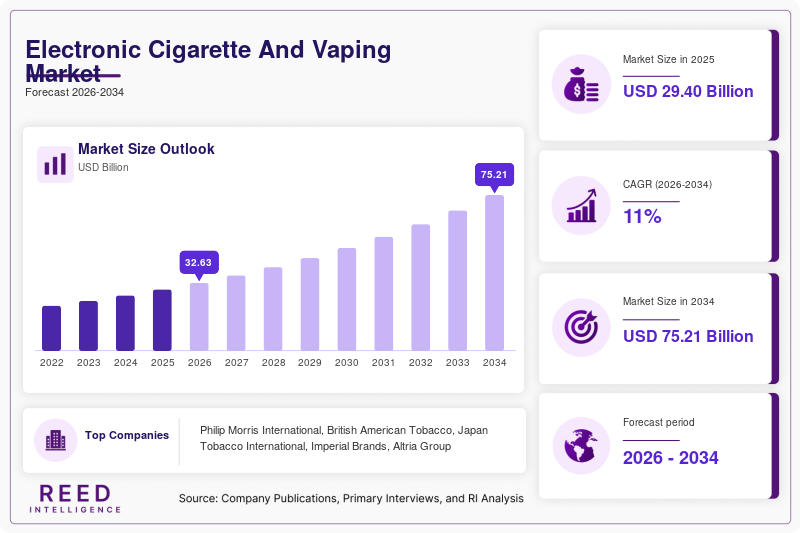
The global Electronic Cigarette And Vaping Market size was valued at USD 29.4 billion in 2026 and is projected to reach USD 67.8 billion by 2034, expanding at a CAGR of 11.0% during the forecast period from 2026 to 2034. The market continues to evolve due to increasing consumer preference for smoke-free nicotine alternatives, rapid product innovation, and the growing availability of flavored and customizable vaping devices. Manufacturers are investing heavily in advanced heating technologies, rechargeable pod systems, and nicotine salt formulations to improve user experience and product differentiation across both developed and emerging economies.
The rising awareness regarding the health effects associated with combustible tobacco products has supported the adoption of electronic cigarettes and vaping products among adult consumers. Regulatory authorities in several countries are also encouraging reduced-risk nicotine alternatives under controlled frameworks, which has strengthened market penetration. In addition, online retail channels and specialty vape stores have expanded product accessibility, particularly among younger adult consumers seeking compact and technologically enhanced vaping systems.
Key Highlights
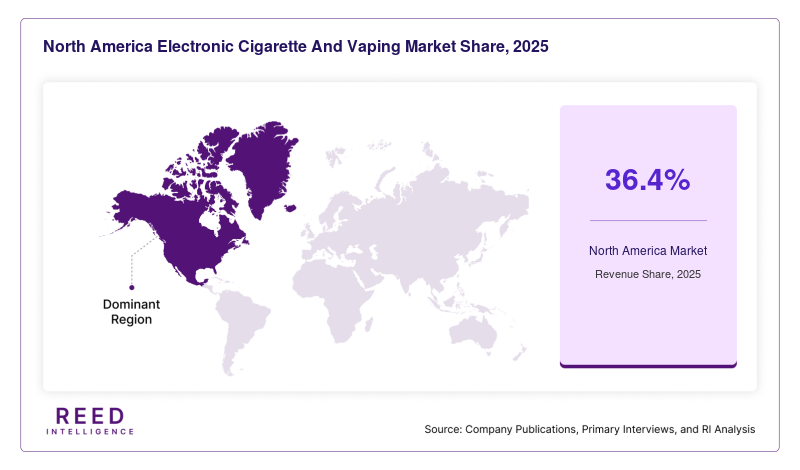
- North America dominated the market with a 36.4% share in 2025.
- Asia Pacific is expected to grow at the fastest CAGR of 13.1% during 2026–2034.
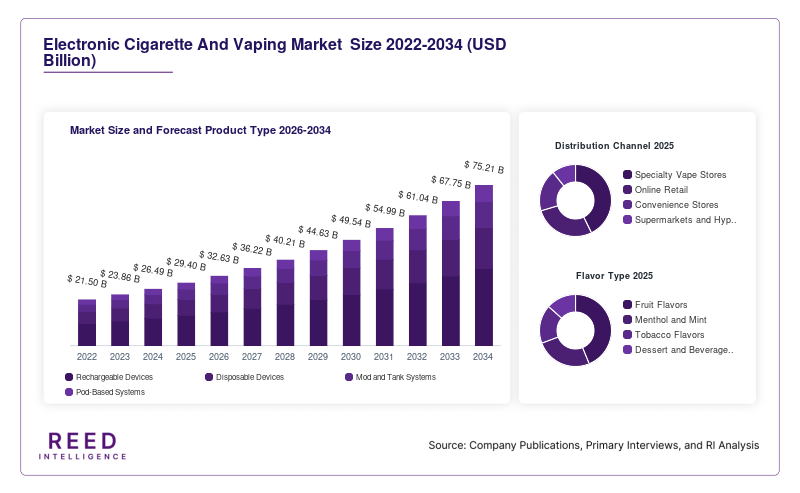
- By product type, rechargeable devices accounted for the largest share of 44.8%, while disposable vaping devices are projected to grow at a CAGR of 14.2%.
- By distribution channel, specialty vape stores led with a 39.5% share, whereas online retail platforms are expected to expand at a CAGR of 15.4%.
- The United States remained the dominant country, with market values of USD 9.8 billion in 2024 and USD 10.9 billion in 2025.
Market Trends
Expansion of Disposable and Compact Pod-Based Devices
The Electronic Cigarette And Vaping Market is experiencing significant momentum from the increasing demand for disposable and compact pod-based systems. Consumers are shifting toward lightweight, user-friendly devices that require minimal maintenance and offer convenient portability. Disposable products are particularly popular among first-time users and occasional consumers due to their lower upfront costs and ready-to-use formats. Manufacturers are continuously introducing devices with extended puff capacity, rechargeable disposable designs, and enhanced flavor delivery systems to improve consumer retention.
Pod-based systems are also benefiting from improved nicotine salt technology that delivers smoother inhalation and higher nicotine efficiency. The growing preference for sleek product aesthetics and ergonomic designs has encouraged companies to develop modern vaping products targeting adult lifestyle consumers. Retailers are increasingly promoting disposable product categories because of higher turnover rates and strong consumer demand across urban markets. This trend is expected to accelerate further as product innovation and flavor diversification continue to influence purchasing behavior worldwide.
Rising Integration of Technology and Smart Features
Technological innovation has become a defining trend within the Electronic Cigarette And Vaping Market as manufacturers compete to improve device performance and safety standards. Companies are incorporating advanced battery management systems, adjustable airflow settings, smart temperature control, and digital monitoring capabilities into premium vaping devices. Some products now include Bluetooth connectivity and mobile application integration that allows users to customize nicotine delivery and monitor consumption patterns.
The use of leak-proof pod designs and mesh coil technology has also improved vapor consistency and flavor intensity. These developments are enhancing the overall user experience while reducing maintenance concerns associated with earlier device generations. In addition, manufacturers are focusing on sustainable product engineering through recyclable components and refillable systems to address environmental concerns linked to disposable vaping waste. As consumer expectations continue to evolve, innovation-driven competition is expected to remain a major trend influencing product development and brand positioning across the industry.
Market Drivers
Increasing Preference for Reduced-Risk Nicotine Alternatives
Growing awareness regarding the harmful effects of traditional combustible tobacco products is a major factor driving the Electronic Cigarette And Vaping Market. Adult smokers are increasingly seeking alternative nicotine delivery systems that are perceived as less harmful compared to conventional cigarettes. Public health campaigns and smoking cessation initiatives in several countries have encouraged consumers to explore vaping products as transitional or substitute options.
The availability of varied nicotine strengths, flavors, and device formats has improved consumer adoption rates among both former smokers and dual users. Manufacturers are also investing in research and product testing to improve safety standards and build consumer confidence. In developed economies, the growing acceptance of vaping products within regulated frameworks has further supported market expansion. The shift toward smoke-free alternatives is expected to remain a strong long-term growth driver as consumer health consciousness and regulatory clarity continue to improve across international markets.
Expansion of Online Retail and Specialty Distribution Channels
The rapid expansion of online retail platforms and specialty vape stores has contributed significantly to market growth. Digital commerce channels allow manufacturers and retailers to reach wider consumer bases through targeted promotions, subscription models, and direct-to-consumer sales strategies. Consumers benefit from access to extensive product catalogs, competitive pricing, and convenient delivery services, which has increased purchasing frequency in many regions.
Specialty vape stores continue to play a critical role by offering personalized product guidance, flavor sampling, and technical support for advanced devices. These retail environments help consumers understand product features and encourage repeat purchases. Furthermore, social media marketing and influencer-driven product promotion have strengthened brand visibility among adult consumers. The increasing integration of digital marketing and omnichannel retail strategies is expected to continue driving sales growth and product awareness in the global market throughout the forecast period.
Market Restraint
Regulatory Uncertainty and Restrictions on Flavored Products
Regulatory uncertainty remains one of the primary restraints affecting the Electronic Cigarette And Vaping Market. Governments and health authorities across multiple countries are implementing stricter regulations regarding product approval, nicotine concentration limits, advertising standards, and flavor restrictions. Several markets have introduced bans or limitations on flavored vaping products due to concerns regarding youth usage and long-term health effects. These restrictions can significantly impact product availability, consumer demand, and revenue generation for manufacturers and retailers.
Frequent changes in compliance requirements also increase operational costs associated with testing, labeling, and certification processes. Smaller manufacturers often face difficulties adapting to evolving regulatory frameworks, which may reduce market competition and innovation. In addition, negative media coverage and public debates surrounding vaping-related health incidents can affect consumer perception and slow adoption rates. For example, flavor bans in selected North American and European jurisdictions resulted in reduced retail sales of certain disposable products and forced companies to reformulate product portfolios. As governments continue evaluating vaping regulations, market participants must navigate complex legal environments while maintaining product quality and consumer trust.
Market Opportunities
Growing Demand Across Emerging Economies
Emerging economies present substantial growth opportunities for the Electronic Cigarette And Vaping Market due to rising urbanization, expanding middle-class populations, and increasing disposable incomes. Countries across Asia Pacific, Latin America, and parts of the Middle East are witnessing growing consumer awareness regarding alternative nicotine products. Younger adult populations in these regions are increasingly attracted to technologically advanced and lifestyle-oriented vaping products.
Manufacturers are entering emerging markets through strategic partnerships, localized flavor offerings, and affordable device categories designed for price-sensitive consumers. Expanding retail infrastructure and increasing smartphone penetration are also supporting online product sales and digital brand promotion. Governments in certain developing countries are beginning to establish clearer regulatory structures for vaping products, which may encourage foreign investment and product standardization. As awareness and accessibility improve, emerging economies are expected to create long-term opportunities for manufacturers seeking geographic expansion and diversified revenue streams.
Innovation in Nicotine-Free and Wellness-Oriented Products
The development of nicotine-free and wellness-focused vaping products is creating new opportunities for market participants. Consumers are increasingly exploring products that provide sensory experiences, relaxation effects, or flavored vapor without nicotine dependency. Manufacturers are introducing herbal formulations, vitamin-infused vapor products, and aromatherapy-inspired devices to attract health-conscious consumers seeking alternatives to traditional nicotine products.
This diversification strategy allows companies to target broader demographic groups, including occasional users and lifestyle-oriented consumers. Innovation in organic ingredients, customizable flavor combinations, and eco-friendly materials is also strengthening product differentiation in competitive markets. In addition, wellness-oriented vaping products are gaining visibility through social media marketing and premium retail channels. As consumer preferences continue shifting toward personalization and healthier lifestyle choices, the expansion of nicotine-free product categories is expected to create additional revenue opportunities for both established brands and emerging manufacturers.
Segmental Analysis
By Product Type
Rechargeable vaping devices accounted for the largest share of the Electronic Cigarette And Vaping Market in 2024, representing 44.8% of total revenue. These products remain popular because of their cost efficiency, longer operational lifespan, and customizable vaping experience. Consumers increasingly prefer rechargeable pod systems and mods that offer adjustable airflow, refillable tanks, and enhanced battery performance. The segment has also benefited from technological improvements such as mesh coil systems and leak-resistant pod designs that improve vapor quality and device durability. Premium consumers often select rechargeable products because they allow greater flavor customization and compatibility with multiple nicotine strengths. Manufacturers continue investing in ergonomic designs, lightweight materials, and improved charging systems to strengthen consumer retention. Specialty vape stores and online retail channels play an important role in driving sales of rechargeable devices through product education and promotional programs.
Disposable vaping devices are projected to expand at the fastest CAGR of 14.2% during the forecast period due to rising consumer demand for convenience-oriented products. Disposable systems require minimal maintenance and eliminate the need for charging or refilling, making them attractive to first-time users and occasional consumers. Manufacturers are introducing high-capacity disposable products with rechargeable features and expanded flavor options to improve repeat purchases. The increasing popularity of compact devices among younger adult consumers has further accelerated demand across urban markets. Social media marketing and influencer-driven promotion are also supporting rapid adoption of disposable products. In addition, the affordability of entry-level disposable devices allows consumers to experiment with multiple flavor categories without significant financial commitment. This segment is expected to maintain strong momentum as companies continue focusing on portability, flavor innovation, and simplified user experiences.
By Distribution Channel
Specialty vape stores held the dominant share of the Electronic Cigarette And Vaping Market in 2024, accounting for 39.5% of total revenue. These stores provide consumers with access to extensive product selections, personalized recommendations, and technical guidance regarding device usage and maintenance. Many consumers prefer specialty retail outlets because they offer hands-on product demonstrations and flavor testing opportunities that improve purchasing confidence. The presence of trained staff and product customization services has strengthened customer loyalty within this segment. Specialty vape retailers also support premium product categories by introducing advanced devices and exclusive flavor collections. In several developed markets, independent vape stores serve as key distribution hubs for emerging brands seeking direct consumer engagement. Manufacturers frequently collaborate with these retailers for promotional campaigns, loyalty programs, and limited-edition product launches, which further supports segment growth and market visibility.
Online retail platforms are anticipated to grow at the fastest CAGR of 15.4% through 2034 due to increasing digital commerce adoption and expanding smartphone penetration. Consumers are increasingly purchasing vaping products online because of pricing advantages, wider product availability, and home delivery convenience. Subscription services and automated refill programs are further improving customer retention across e-commerce channels. Digital marketing strategies, including social media campaigns and influencer collaborations, are helping brands attract younger adult consumers and increase online visibility. Online platforms also enable manufacturers to gather consumer insights and personalize product recommendations through data analytics. In emerging economies, the growth of digital payment systems and logistics infrastructure is accelerating e-commerce expansion. As consumer purchasing habits continue shifting toward online channels, digital retail is expected to become an increasingly important revenue contributor within the global market.
By Flavor Type
Fruit-flavored vaping products represented the largest share of the Electronic Cigarette And Vaping Market in 2024, driven by strong consumer preference for sweet and refreshing taste profiles. Popular flavors such as mango, berry, watermelon, and mixed fruit continue attracting both new and experienced users. Fruit flavors are particularly successful among disposable device categories because they complement compact vaping formats and encourage product experimentation. Manufacturers frequently introduce seasonal and limited-edition flavor combinations to maintain consumer interest and strengthen brand differentiation. The segment also benefits from broad compatibility with nicotine salt formulations, which enhance flavor intensity and inhalation smoothness. Retailers often prioritize fruit-flavored products because of high sales turnover and repeat purchase rates. Continuous innovation in flavor blending and cooling technologies is expected to support long-term demand across global markets.
Menthol and mint-flavored products are expected to witness the fastest CAGR of 12.8% during the forecast period due to increasing demand for cooling and smooth inhalation experiences. Consumers transitioning from traditional menthol cigarettes often prefer mint-based vaping products because they provide familiar sensory characteristics. Manufacturers are expanding flavor portfolios by combining mint profiles with fruit and herbal elements to create differentiated product offerings. The segment is also benefiting from advancements in flavor stabilization technologies that improve consistency and shelf life. In several regions, menthol products are viewed as premium alternatives due to their balanced taste profiles and compatibility with advanced vaping devices. Online retailers and specialty vape stores actively promote mint-based flavors through targeted marketing campaigns and curated flavor collections. As adult consumers continue seeking refreshing and versatile vaping experiences, this segment is expected to achieve steady growth throughout the forecast period.
Regional Analysis
North America
North America accounted for 36.4% of the global Electronic Cigarette And Vaping Market share in 2025 and continues to maintain a strong industry position due to high consumer awareness, advanced retail infrastructure, and widespread availability of vaping products. The region is projected to expand at a CAGR of 10.4% during the forecast period. Strong product innovation and the increasing transition from combustible cigarettes to smoke-free alternatives are supporting regional growth. Disposable devices and flavored pod systems remain highly popular among adult consumers across the United States and Canada.
The United States dominates the North American market because of its extensive distribution network and large adult vaping population. The country recorded market values of USD 9.8 billion in 2024 and USD 10.9 billion in 2025. One major growth factor is the strong presence of specialty vape retailers and online platforms offering extensive product choices and subscription-based purchasing models. Continuous innovation by domestic manufacturers and investments in premium vaping technology are also contributing to market expansion.
Europe
Europe represented a substantial share of the Electronic Cigarette And Vaping Market in 2025 and is expected to witness stable growth at a CAGR of 9.8% through 2034. The market benefits from increasing awareness regarding reduced-risk nicotine alternatives and the presence of structured regulatory frameworks across several European countries. Consumers in the region are increasingly adopting refillable pod systems and nicotine salt products due to improved vapor quality and affordability. Growth is also supported by rising investments in product research and retail expansion.
The United Kingdom remains the dominant country within the European market because of strong consumer acceptance of vaping products and supportive public health discussions surrounding smoking alternatives. One unique growth factor in the country is the integration of vaping products into smoking reduction programs promoted by healthcare organizations. Germany and France are also witnessing rising demand for premium vaping devices and customizable flavor options, contributing to broader regional market development.
Asia Pacific
Asia Pacific is expected to register the fastest CAGR of 13.1% during the forecast period due to expanding urban populations, rising disposable incomes, and increasing awareness of smoke-free nicotine products. The region is becoming a major manufacturing hub for vaping devices and accessories, particularly in countries with strong electronics production capabilities. Rapid growth in online retail and social media marketing is also accelerating product visibility among younger adult consumers in metropolitan areas.
China dominates the Asia Pacific market due to its large-scale production ecosystem and strong domestic consumption of vaping products. One significant growth factor is the country's role as a global manufacturing center for disposable devices, batteries, and vaping components. South Korea and Japan are also witnessing increasing adoption of technologically advanced vaping systems, particularly among consumers seeking compact and premium-quality nicotine delivery products.
Middle East & Africa
The Middle East & Africa region is gradually emerging within the Electronic Cigarette And Vaping Market and is forecast to grow at a CAGR of 8.9% from 2026 to 2034. Increasing urbanization and growing awareness regarding alternatives to traditional tobacco products are supporting market penetration across major urban centers. The demand for premium vaping devices and imported flavored products is increasing among adult consumers with higher disposable incomes. Retail expansion and digital commerce channels are further improving product accessibility.
The United Arab Emirates dominates the regional market because of its strong retail infrastructure and expanding consumer interest in modern lifestyle products. One distinctive growth factor is the rapid growth of specialized vape lounges and premium retail stores catering to international consumers and expatriate populations. South Africa is also showing increasing demand for refillable devices and nicotine salt products, particularly among younger adult consumers in urban areas.
Latin America
Latin America is experiencing steady development within the Electronic Cigarette And Vaping Market and is projected to grow at a CAGR of 9.2% over the forecast period. Rising awareness regarding smoking alternatives and increasing digital marketing activities are supporting regional adoption. Disposable products and affordable pod systems are gaining popularity among cost-conscious consumers, while urban populations are driving demand for technologically advanced vaping products.
Brazil remains the dominant country in the Latin American market due to its large consumer base and expanding retail networks. One important growth factor is the increasing entry of international vaping brands through online distribution partnerships and regional marketing initiatives. Mexico is also witnessing rising demand for flavored vaping products and rechargeable devices, supported by the growth of independent vape retailers and e-commerce platforms.
Competitive Landscape
The Electronic Cigarette And Vaping Market is characterized by strong competition among global manufacturers, regional brands, and emerging product innovators. Companies are focusing on flavor diversification, device miniaturization, and advanced heating technologies to strengthen market positioning. Strategic partnerships with online retailers and specialty vape distributors are becoming increasingly important for expanding consumer reach and improving product availability.
Major participants are investing heavily in research and development activities to improve battery performance, nicotine delivery efficiency, and product safety standards. Brand differentiation through premium design aesthetics and exclusive flavor collections remains a key competitive strategy. Companies are also expanding manufacturing capacity and regional distribution networks to address growing international demand.
Key Players
- Philip Morris International
- British American Tobacco
- Japan Tobacco International
- Imperial Brands
- Altria Group
- JUUL Labs
- RELX Technology
- SMOK
- Vaporesso
- Geekvape
- Voopoo
- NJOY
- Innokin
- Elf Bar
- Lost Mary
Recent Developments
- In 2025, British American Tobacco introduced a new generation rechargeable pod system with advanced battery optimization and leak-resistant cartridge technology for European markets.
- In 2025, RELX Technology expanded its retail presence across Southeast Asia through strategic partnerships with regional e-commerce distributors and specialty vape chains.
- In 2026, Philip Morris International announced additional investments in smoke-free manufacturing facilities focused on premium vaping and heated nicotine products.
- In 2026, Vaporesso launched a smart vaping device featuring customizable airflow settings and digital usage monitoring capabilities for premium consumers.
Electronic Cigarette And Vaping Market Segments
Product Type
- Rechargeable Devices
- Disposable Devices
- Mod and Tank Systems
- Pod-Based Systems
Distribution Channel
- Specialty Vape Stores
- Online Retail
- Convenience Stores
- Supermarkets and Hypermarkets
Flavor Type
- Fruit Flavors
- Menthol and Mint
- Tobacco Flavors
- Dessert and Beverage Flavors
By Region
- North America
- Europe
- APAC
- Middle East and Africa
- LATAM