Emmental Cheese Market Size, Share & Demand Report By Product Type (Traditional Emmental Cheese, Organic Emmental Cheese, Low-Fat Emmental Cheese, Flavored Emmental Cheese), By Distribution Channel (Supermarkets & Hypermarkets, Convenience Stores, Specialty Stores, Online Retail), By End Use (Foodservice, Household Consumption, Food Processing Industry), By Region & Segment Forecasts, 2026–2034
USD 3950
Market Overview
The global Emmental Cheese Market size was valued at USD 8.64 billion in 2026 and is projected to reach USD 14.92 billion by 2034, expanding at a CAGR of 7.1% during 2026–2034. The market continues to benefit from rising consumer demand for premium dairy products, growing interest in European-style cheeses, and the expanding application of specialty cheese varieties across foodservice and retail channels. Emmental cheese, known for its distinctive holes, mild nutty flavor, and versatile culinary applications, has gained wider acceptance in both developed and emerging economies.
A significant factor supporting market growth is the globalization of food consumption patterns. Consumers are increasingly exploring authentic and specialty cheese products influenced by international cuisines. The expansion of quick-service restaurants, gourmet burger chains, bakery cafés, and premium sandwich outlets has accelerated the incorporation of Emmental cheese into menu offerings. Additionally, increasing disposable income and a growing preference for high-protein dairy foods are contributing to higher consumption volumes worldwide.
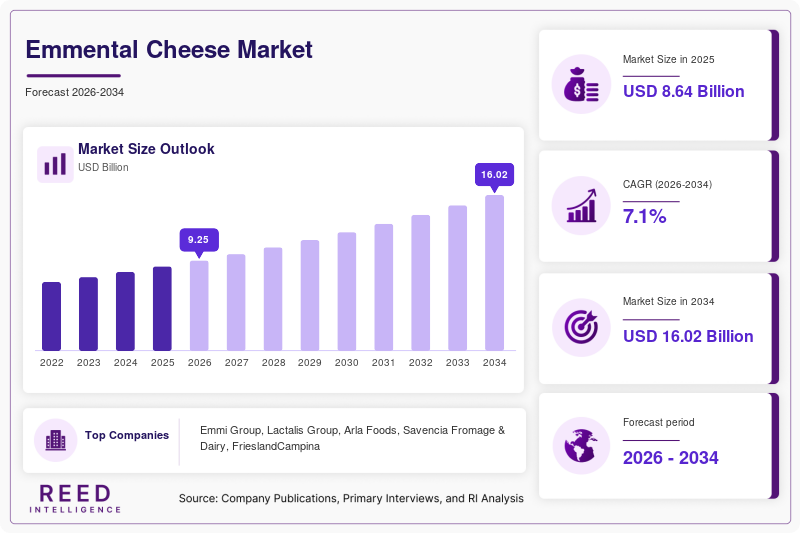
Key Highlights
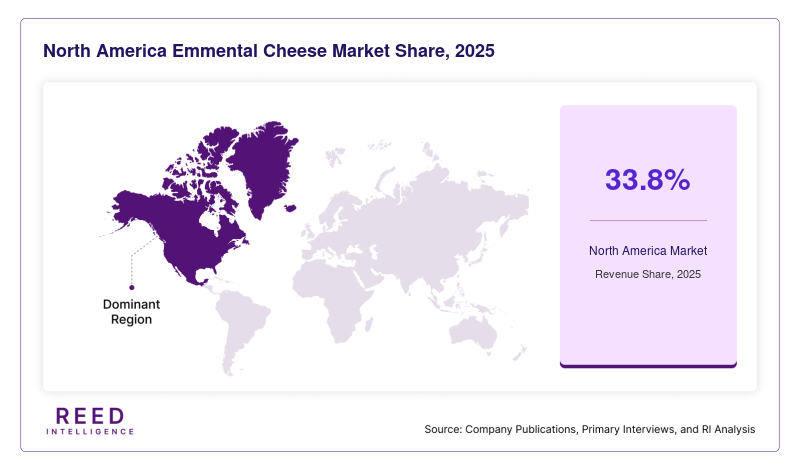
- North America dominated the market with a 33.8% share in 2025.
- Asia Pacific is expected to grow at the fastest CAGR of 9.6% during 2026–2034.
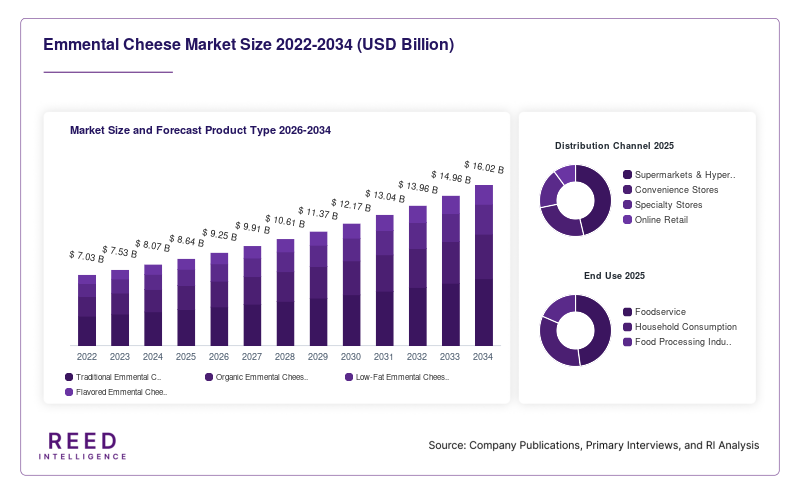
- By product type, traditional Emmental cheese accounted for the largest share of 52.4%.
- while organic Emmental cheese is projected to grow at a CAGR of 10.2%.
- By distribution channel, supermarkets and hypermarkets led with a 46.1% share.
- whereas online retail is expected to expand at a CAGR of 11.4%.
- By end use, foodservice held a 58.7% share.
- while household consumption is projected to grow at a CAGR of 8.8%.
- The United States remained the dominant country, with market values of USD 1.21 billion in 2024 and USD 1.31 billion in 2025.
Market Trends
Rising Demand for Organic and Clean-Label Cheese Products
Consumer preference for natural and minimally processed foods continues to influence the Emmental Cheese Market. Shoppers are paying closer attention to ingredient transparency, animal welfare practices, and production methods. This shift has encouraged manufacturers to expand organic and clean-label product portfolios that align with evolving dietary preferences. Organic Emmental cheese is gaining traction among health-conscious consumers who seek premium dairy products without artificial additives or preservatives. Retail chains are allocating more shelf space to specialty and organic cheese categories, while foodservice operators increasingly promote premium cheese ingredients. The trend is particularly visible across North America and Europe, where sustainability and food quality have become important purchasing considerations.
Expansion of Premium Foodservice Applications
The growing popularity of gourmet dining experiences is creating increased demand for specialty cheeses across restaurants, cafés, hotels, and quick-service outlets. Emmental cheese is widely used in burgers, sandwiches, baked products, pasta dishes, and traditional European recipes due to its smooth melting characteristics and mild flavor profile. Foodservice operators are introducing premium menu offerings to differentiate themselves in competitive markets. This trend is encouraging suppliers to develop customized formats and packaging solutions suitable for commercial kitchens. As urbanization and dining-out frequency continue to increase globally, premium cheese ingredients such as Emmental are expected to witness sustained demand growth throughout the forecast period.
Market Drivers
Growing Consumption of High-Protein Dairy Products
Consumers are increasingly incorporating protein-rich foods into daily diets to support fitness, wellness, and balanced nutrition goals. Emmental cheese contains substantial protein content along with essential nutrients such as calcium and phosphorus, making it attractive among health-conscious consumers. Rising awareness regarding nutritional benefits associated with dairy consumption has supported increased household purchases across both developed and developing markets. Additionally, dietary trends emphasizing protein intake have strengthened demand for premium cheese products. Manufacturers are responding by promoting nutritional attributes and introducing portion-controlled packaging formats that appeal to modern consumers seeking convenience and healthy food options.
Expansion of Global Retail and Cold Chain Infrastructure
The development of modern retail formats and improvements in refrigerated logistics are supporting broader availability of specialty cheese products worldwide. Supermarkets, hypermarkets, convenience stores, and online grocery platforms have expanded their premium dairy offerings significantly. Enhanced cold-chain capabilities help maintain product quality during transportation and storage, enabling manufacturers to enter new geographic markets. Emerging economies are witnessing rapid investments in food distribution infrastructure, allowing imported and specialty cheese products to reach a larger consumer base. This improved accessibility is driving higher sales volumes and contributing to sustained market growth across multiple regions.
Market Restraint
Volatility in Milk Prices and Production Costs
Fluctuations in raw milk prices remain a significant challenge for participants in the Emmental Cheese Market. Dairy production is influenced by weather conditions, feed costs, energy expenses, labor availability, and agricultural regulations. Variability in these factors can create uncertainty regarding production costs and profitability. Manufacturers often face difficulties in maintaining stable pricing structures while preserving product quality and margins.
The impact becomes more pronounced in premium cheese categories that require longer maturation periods and specialized production processes. Increased operational expenses may result in higher retail prices, potentially limiting adoption among price-sensitive consumers. Smaller producers can experience greater financial pressure due to limited economies of scale. For example, rising feed and transportation costs can increase overall production expenditures, forcing manufacturers to adjust pricing strategies or absorb additional costs. Such market dynamics may temporarily affect supply stability and purchasing behavior in certain regions.
Market Opportunities
Growing Demand Across Emerging Asian Markets
Rapid urbanization, rising disposable incomes, and changing dietary habits are creating substantial opportunities for Emmental cheese producers throughout Asia Pacific. Consumers are becoming more familiar with international cuisines and premium dairy products through travel, digital media, and expanding foodservice networks. Modern retail expansion is also increasing product visibility and accessibility. Countries such as China, India, South Korea, and Thailand are witnessing higher demand for imported and specialty cheese products. Manufacturers that invest in localized marketing campaigns, educational initiatives, and strategic distribution partnerships can capitalize on growing consumer interest and establish strong regional market positions.
Product Innovation and Premiumization Strategies
Innovation remains a significant growth avenue within the Emmental Cheese Market. Producers are introducing flavored variants, reduced-fat formulations, organic offerings, and convenient snack-sized formats to address evolving consumer preferences. Premiumization strategies are helping manufacturers differentiate products and improve profit margins. Consumers are increasingly willing to pay higher prices for authentic, artisanal, and sustainably produced cheeses that offer superior quality and distinctive taste profiles. Product diversification also allows companies to target multiple demographic groups, including health-conscious consumers, gourmet food enthusiasts, and younger buyers seeking novel culinary experiences. These initiatives are expected to support long-term market expansion and strengthen competitive positioning.
Segmental Analysis
By Product Type
Traditional Emmental cheese represented the dominant subsegment, accounting for approximately 52.4% market share in 2024. Its strong position is supported by established consumer familiarity, authentic flavor characteristics, and broad application across foodservice and household consumption. Traditional products remain highly preferred among consumers seeking genuine European-style cheese experiences. Restaurants, bakeries, and gourmet food manufacturers frequently utilize traditional Emmental due to its consistent quality and melting performance. Strong brand recognition and extensive retail availability continue to reinforce the leadership position of this segment within the global market.
Organic Emmental cheese is expected to register the fastest growth, expanding at a CAGR of 10.2% during 2026–2034. Increasing consumer preference for natural foods, sustainable production practices, and clean-label products is driving demand. Organic certification provides added value and strengthens consumer trust regarding product quality and sourcing practices. Premium pricing strategies are also supporting revenue growth within this category. As awareness of environmental sustainability and animal welfare considerations increases, organic cheese producers are expected to benefit from expanding consumer interest across multiple regions.
By Distribution Channel
Supermarkets and hypermarkets held the largest share of approximately 46.1% in 2024. These retail formats provide consumers with broad product selections, attractive merchandising, and convenient purchasing experiences. Large retail chains maintain extensive refrigerated infrastructure, allowing efficient storage and display of specialty cheese products. Promotional campaigns, product sampling activities, and premium dairy sections further encourage consumer engagement. The ability to compare multiple brands and product variants within a single shopping destination continues to support the segment's leadership position.
Online retail is projected to emerge as the fastest-growing distribution channel, recording a CAGR of 11.4% through 2034. Digital grocery platforms are transforming consumer purchasing behavior by offering convenience, product variety, and home delivery services. Improved cold-chain logistics and insulated packaging technologies have enhanced the viability of online cheese sales. Consumers increasingly utilize digital channels to access specialty products that may not be available in local stores. Growing smartphone penetration and e-commerce adoption are expected to accelerate channel expansion globally.
By End Use
Foodservice accounted for the largest share of approximately 58.7% in 2024. Restaurants, cafés, hotels, catering companies, and quick-service outlets represent significant consumers of Emmental cheese. The product's versatility makes it suitable for numerous menu applications, including burgers, sandwiches, pasta dishes, baked products, and specialty recipes. Rising demand for premium dining experiences and gourmet menu offerings continues to support segment growth. Foodservice operators increasingly utilize high-quality ingredients to enhance customer satisfaction and differentiate their brands in competitive markets.
Household consumption is anticipated to record the fastest CAGR of 8.8% during the forecast period. Consumers are preparing a wider variety of meals at home and experimenting with international recipes that incorporate specialty cheeses. Growing awareness of nutritional benefits and increasing availability through retail and online channels are supporting higher household purchases. Convenient packaging formats, recipe inspiration through digital platforms, and premium product positioning are encouraging broader adoption. This trend is expected to create substantial opportunities for manufacturers targeting retail consumers.
Regional Analysis
North America
North America accounted for approximately 33.8% of the global Emmental Cheese Market in 2025 and is projected to expand at a CAGR of 6.8% through 2034. The region benefits from strong consumer purchasing power, mature retail infrastructure, and widespread awareness of specialty cheese products. Demand remains particularly strong in premium grocery channels and foodservice establishments. The increasing popularity of gourmet burgers, artisan sandwiches, and European-inspired cuisine continues to stimulate market growth across the region.
The United States represents the dominant country within North America. A key growth factor is the increasing adoption of premium dairy products among consumers seeking authentic food experiences. Specialty cheese consumption has risen steadily due to evolving dietary preferences and greater exposure to international culinary trends. Retailers are responding by expanding premium dairy assortments and introducing exclusive imported cheese selections.
Europe
Europe held approximately 30.6% of the global market share in 2025 and is expected to register a CAGR of 6.2% during the forecast period. The region maintains a strong cheese production heritage and benefits from established consumer familiarity with Emmental cheese. Demand is supported by both retail consumption and extensive foodservice applications. Premiumization trends and growing interest in artisanal dairy products continue to strengthen market performance throughout the region.
Germany remains the leading country in the European market. A unique growth factor is the strong integration of cheese into daily dietary habits and culinary traditions. Consumers frequently incorporate specialty cheeses into home cooking, bakery products, and restaurant meals. Established dairy processing capabilities and robust distribution networks further support regional market development.
Asia Pacific
Asia Pacific represented approximately 22.1% of the market in 2025 and is anticipated to achieve the fastest CAGR of 9.6% through 2034. The region is experiencing rapid growth due to urbanization, increasing disposable income, and greater exposure to Western food culture. Expanding retail chains and online grocery platforms are making premium cheese products more accessible to consumers. Growing foodservice investments also contribute significantly to market expansion.
China dominates the Asia Pacific market due to its large consumer base and evolving food consumption patterns. A unique growth factor is the increasing popularity of Western-style bakery products, sandwiches, and fast-food offerings that frequently utilize specialty cheese ingredients. Rising demand for premium imported foods is further supporting market growth across major urban centers.
Middle East & Africa
The Middle East & Africa accounted for approximately 7.2% of global market revenue in 2025 and is projected to grow at a CAGR of 7.4% during the forecast period. The market is benefiting from expanding hospitality sectors, rising tourism activities, and increasing demand for premium food products. International restaurant chains and luxury hotels are driving higher consumption of specialty cheeses across key urban markets.
The United Arab Emirates represents the dominant country within the region. A distinctive growth factor is the concentration of high-end hospitality establishments and international dining concepts. These businesses actively incorporate premium cheese ingredients into diverse menu offerings. Growing expatriate populations and rising consumer spending further support market demand.
Latin America
Latin America captured approximately 6.3% of the global Emmental Cheese Market in 2025 and is forecast to expand at a CAGR of 7.0% through 2034. Market growth is supported by improving retail infrastructure, increasing disposable income, and growing consumer interest in premium dairy products. International food trends are influencing purchasing behavior, particularly among younger urban consumers seeking diverse culinary experiences.
Brazil remains the dominant country in the Latin American market. A unique growth factor is the continued expansion of modern retail networks that improve accessibility to imported and specialty cheese products. Consumer awareness regarding premium dairy offerings is increasing steadily, while foodservice operators are incorporating specialty cheeses into innovative menu concepts.
Competitive Landscape
The Emmental Cheese Market remains moderately consolidated, with established dairy producers competing through product quality, brand reputation, geographic expansion, and innovation strategies. Leading participants focus on premium positioning, sustainable sourcing initiatives, and diversified distribution networks to strengthen market presence. Strategic partnerships with retailers and foodservice operators remain important growth approaches.
Emmi Group is widely recognized as a leading participant due to its strong heritage in Swiss cheese production and extensive international distribution capabilities. The company continues to expand premium product offerings while investing in sustainable dairy sourcing initiatives.
Other major companies are focusing on acquisitions, production capacity expansion, and product portfolio diversification. Recent industry developments include investments in organic cheese production, advanced packaging technologies, and export market expansion. Competitive intensity is expected to increase as manufacturers pursue opportunities in emerging markets and premium consumer segments.
Key Players
- Emmi Group
- Savencia Fromage & Dairy
- Lactalis Group
- Arla Foods
- FrieslandCampina
- Hochland SE
- Groupe Bel
- Saputo Inc.
- Fonterra Co-operative Group
- DMK Group
- Alpenhain Käsespezialitäten
- Glanbia plc
- First Milk Ltd.
- Milcobel
- Müller Group
Recent Developments
- Emmi Group expanded specialty cheese production capacity in Europe to support growing export demand for premium Emmental varieties.
- Lactalis Group introduced new sustainable packaging solutions for selected cheese products aimed at reducing environmental impact and improving shelf presentation.
- Arla Foods expanded its organic specialty cheese portfolio through new product launches targeting health-conscious consumers and premium retail channels.
- Savencia Fromage & Dairy strengthened its international distribution network through strategic partnerships with foodservice operators across Asia Pacific.
- FrieslandCampina invested in dairy processing modernization initiatives designed to improve production efficiency and enhance premium cheese manufacturing capabilities.
Emmental Cheese Market Segments
Product Type
- Traditional Emmental Cheese
- Organic Emmental Cheese
- Low-Fat Emmental Cheese
- Flavored Emmental Cheese
Distribution Channel
- Supermarkets & Hypermarkets
- Convenience Stores
- Specialty Stores
- Online Retail
End Use
- Foodservice
- Household Consumption
- Food Processing Industry
By Region
- North America
- Europe
- APAC
- Middle East and Africa
- LATAM