Energy Caffeine Chewing Gum Market Size, Share & Demand Report By Caffeine Source (Synthetic Caffeine Gum, Natural Caffeine Gum), By Distribution Channel (Supermarkets & Hypermarkets, Convenience Stores, Online Retail, Specialty Stores, Others), By End User (Fitness & Sports Consumers, Students, Working Professionals, Military Personnel, Travelers), By Region & Segment Forecasts, 2026–2034
USD 3950
Market Overview
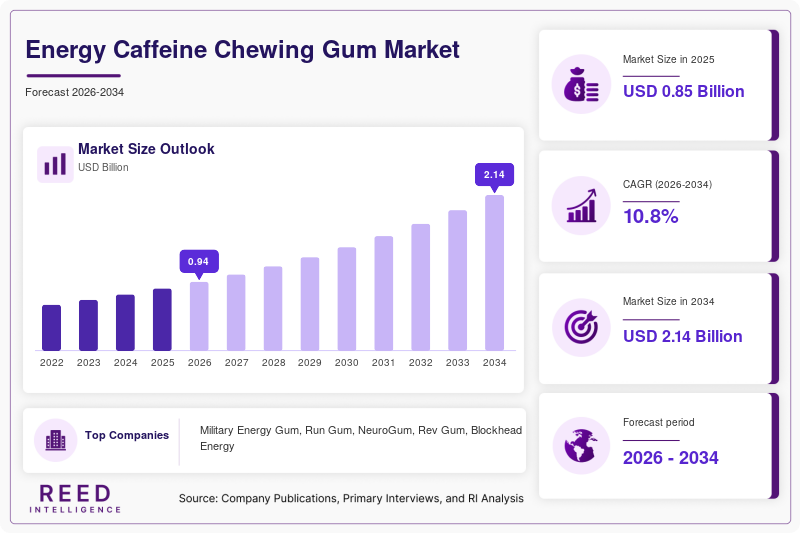
The global Energy Caffeine Chewing Gum Market size was valued at approximately USD 0.845 billion in 2026 and is projected to reach USD 1.92 billion by 2034, expanding at a CAGR of 10.8% during 2026–2034. The market is experiencing steady expansion as consumers increasingly seek convenient, portable, and fast-acting energy products that fit active lifestyles. Energy caffeine chewing gum has emerged as an alternative to traditional energy drinks and caffeinated beverages due to its rapid absorption characteristics and ease of consumption during work, travel, sports, and fitness activities.
A major factor supporting global market growth is the increasing demand for functional confectionery products. Consumers are showing stronger interest in products that provide benefits beyond taste, including enhanced focus, alertness, and mental performance. Energy caffeine chewing gum meets these expectations by combining convenience with measurable functional outcomes. The expansion of e-commerce channels, growing participation in fitness activities, and rising awareness regarding cognitive performance enhancement have further strengthened market penetration across developed and emerging economies.
Key Highlights
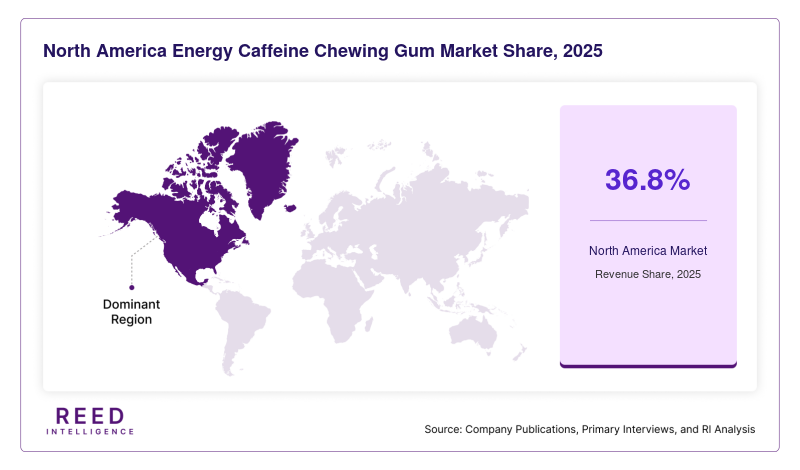
- North America dominated the market with a 36.8% share in 2025, while Asia Pacific is expected to grow at the fastest CAGR of 12.1% during 2026–2034.
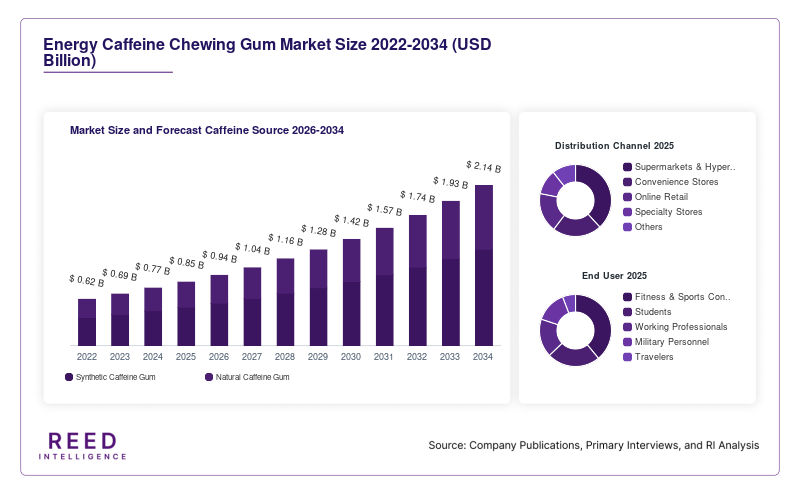
- By caffeine source, synthetic caffeine gum accounted for the largest share of 57.4%, while natural caffeine gum is projected to grow at a CAGR of 12.8%.
- By distribution channel, supermarkets and hypermarkets held the largest share of 39.6%, whereas online retail is expected to expand at a CAGR of 13.4%.
- By end user, fitness and sports consumers led with a 42.3% share, while working professionals are expected to grow at a CAGR of 12.6%.
- The United States remained the dominant country, with market values of USD 248 million in 2024 and USD 276 million in 2025.
Market Trends
Growing Preference for Functional and Sugar-Free Energy Products
The market is witnessing increasing demand for sugar-free and health-focused energy caffeine chewing gum products. Consumers are becoming more conscious about calorie intake and sugar consumption while still seeking products that improve alertness and concentration. This shift has encouraged manufacturers to introduce formulations containing low-calorie sweeteners, vitamins, minerals, and plant-based ingredients. Functional gum products that provide energy support while aligning with wellness goals are gaining traction among younger consumers and fitness enthusiasts. Product labels emphasizing clean ingredients, natural caffeine, and reduced sugar content are becoming important purchase drivers. The trend is expected to strengthen as health-conscious lifestyles continue influencing purchasing behavior across global consumer markets.
Expansion of Digital Retail and Direct-to-Consumer Channels
Digital transformation is significantly influencing the Energy Caffeine Chewing Gum Market. Brands are increasingly utilizing e-commerce platforms, subscription models, and direct-to-consumer sales channels to expand their reach. Online retail enables companies to educate consumers regarding product benefits while offering targeted marketing campaigns and personalized promotions. Social media platforms and influencer partnerships are helping brands engage with younger demographics that frequently seek convenient energy solutions. The availability of niche products through online channels has increased market accessibility in regions where traditional retail penetration remains limited. This trend is encouraging innovation in packaging, branding, and customer engagement strategies, creating additional growth opportunities for market participants.
Market Drivers
Rising Demand for Convenient Energy Solutions
Modern consumers increasingly seek products that deliver quick and convenient energy without requiring preparation or consumption of beverages. Energy caffeine chewing gum addresses this demand by offering portability, ease of use, and rapid caffeine absorption. Students, office workers, drivers, travelers, and athletes frequently use these products to maintain focus and alertness throughout the day. The growing pace of urban lifestyles has increased dependence on functional products that can be consumed during work, exercise, or commuting activities. As consumers prioritize convenience and efficiency, energy caffeine chewing gum continues gaining acceptance as a practical alternative to coffee, tea, and energy drinks, supporting sustained market growth globally.
Growth of Fitness, Sports, and Active Lifestyle Participation
Increasing participation in fitness activities and recreational sports is driving demand for performance-enhancing products. Consumers involved in workouts, endurance sports, and outdoor activities often seek convenient caffeine sources that can improve concentration and energy levels before or during exercise sessions. Energy caffeine chewing gum offers a lightweight and portable option that appeals to active individuals. Sports nutrition brands are incorporating caffeine gum into broader performance product portfolios, helping expand market visibility. Rising awareness regarding physical fitness, coupled with increasing gym memberships and sports participation rates across developed and developing regions, is expected to continue driving demand during the forecast period.
Market Restraint
Regulatory Challenges and Consumer Concerns Regarding Caffeine Intake
Despite favorable growth prospects, the market faces challenges related to caffeine regulation and consumer safety concerns. Government agencies in several countries have implemented labeling requirements and caffeine content restrictions to ensure consumer protection. Excessive caffeine consumption may result in side effects such as anxiety, sleep disturbances, and increased heart rate, creating caution among certain consumer groups. These concerns can limit adoption among parents, healthcare professionals, and older consumers. Additionally, varying regulatory frameworks across countries create compliance complexities for manufacturers seeking international expansion. Product recalls, misleading marketing claims, or inconsistent caffeine levels can negatively affect consumer trust. Consequently, companies must invest in quality control, transparent labeling, and responsible marketing practices to maintain credibility and support long-term market development.
Market Opportunities
Increasing Adoption of Natural and Plant-Based Caffeine Sources
Growing consumer interest in natural ingredients presents significant opportunities for market participants. Products formulated with caffeine derived from green tea, guarana, yerba mate, and coffee beans are attracting attention from consumers seeking clean-label alternatives. Manufacturers are increasingly developing formulations that combine natural caffeine with botanical extracts and wellness-focused ingredients. This trend enables brands to differentiate their offerings while addressing consumer concerns regarding artificial ingredients. As demand for natural functional products continues increasing across North America, Europe, and Asia Pacific, companies that invest in innovative plant-based formulations are expected to strengthen their market positions and expand their customer base.
Untapped Potential in Emerging Markets
Emerging economies represent substantial growth opportunities for the Energy Caffeine Chewing Gum Market. Rising disposable incomes, urbanization, expanding retail networks, and growing awareness of functional products are creating favorable market conditions. Younger populations in countries across Asia Pacific, Latin America, and the Middle East are increasingly adopting modern consumption habits and seeking convenient energy solutions. E-commerce expansion is also improving product availability in regions previously characterized by limited distribution infrastructure. Manufacturers that establish local partnerships, introduce affordable product variants, and adapt flavors to regional preferences can capitalize on growing demand. These factors are expected to support long-term market expansion in developing economies throughout the forecast period.
Segmental Analysis
By Caffeine Source
Synthetic caffeine gum held the dominant position in 2024, accounting for approximately 57.4% of market share. The segment benefits from cost efficiency, formulation consistency, and widespread availability of raw materials. Manufacturers frequently utilize synthetic caffeine due to its predictable concentration levels and scalability for mass production. These products remain popular among consumers seeking affordable and reliable energy solutions. Strong distribution networks and established brand recognition further contribute to segment leadership. Additionally, synthetic caffeine formulations often provide greater flexibility in flavor development, allowing companies to introduce diverse product variants that appeal to broader consumer groups across multiple regions.
Natural caffeine gum represents the fastest-growing subsegment and is projected to expand at a CAGR of 12.8% during the forecast period. Growth is supported by increasing demand for clean-label products and rising consumer awareness regarding ingredient transparency. Manufacturers are incorporating caffeine derived from green tea, coffee beans, and guarana to align with health-focused preferences. Consumers increasingly associate natural ingredients with higher product quality and wellness benefits. Marketing strategies emphasizing sustainability and plant-based sourcing are further strengthening segment performance. As health-conscious purchasing decisions continue shaping consumer behavior, natural caffeine gum is expected to gain significant market share.
By Distribution Channel
Supermarkets and hypermarkets accounted for the largest market share in 2024, representing approximately 39.6% of total revenue. These retail channels provide extensive product visibility and enable consumers to compare multiple brands within a single shopping environment. High foot traffic and strong geographic coverage contribute to segment dominance. Retail promotions, bundled offerings, and strategic shelf placement further encourage product purchases. Consumers often prefer purchasing energy caffeine chewing gum alongside other grocery items, supporting consistent sales volumes. The availability of established brands and impulse-buy opportunities near checkout areas also strengthens performance within this distribution channel.
Online retail is anticipated to be the fastest-growing subsegment, registering a CAGR of 13.4% between 2026 and 2034. Growth is being driven by increasing internet penetration, smartphone adoption, and changing shopping habits. Digital channels allow consumers to access a broader variety of products and receive detailed information regarding ingredients and functionality. Subscription programs and direct-to-consumer models are enhancing customer retention. Social media marketing and influencer endorsements are also improving brand visibility. As e-commerce platforms continue expanding globally, online retail is expected to become a critical growth channel for manufacturers and emerging brands.
By End User
Fitness and sports consumers represented the largest end-user segment in 2024, accounting for approximately 42.3% of total market share. These consumers frequently seek products that provide convenient energy support before or during physical activities. Energy caffeine chewing gum offers portability, rapid caffeine delivery, and ease of consumption, making it suitable for athletic applications. Sports nutrition brands actively target this demographic through specialized marketing campaigns and partnerships with fitness influencers. Growing participation in recreational sports, gym memberships, and endurance activities continues supporting demand. The segment's strong purchasing frequency contributes significantly to overall market revenue generation.
Working professionals are projected to be the fastest-growing end-user segment, expanding at a CAGR of 12.6% during the forecast period. Increasing workplace demands and longer working hours are encouraging consumers to seek products that support concentration and productivity. Energy caffeine chewing gum provides a practical alternative to traditional caffeinated beverages, particularly in office environments. Remote work trends and flexible employment models have also increased demand for portable energy solutions. Product positioning around focus enhancement, mental alertness, and convenience resonates strongly with professionals. These factors are expected to accelerate adoption across corporate and business environments worldwide.
Regional Analysis
North America
North America accounted for approximately 36.8% of the global market share in 2025 and continues to represent the largest regional market. The region is projected to register a CAGR of 9.6% during 2026–2034. Strong consumer awareness regarding functional products, widespread availability through retail channels, and high demand from athletes and working professionals support regional growth. Product innovation and premium brand presence further strengthen market performance across the region.
The United States remains the dominant country within North America. A unique growth factor is the extensive adoption of performance-enhancing nutrition products among fitness enthusiasts and military personnel. Strong e-commerce penetration, advanced marketing strategies, and a mature sports nutrition industry continue supporting product visibility and consumer adoption. These factors position the country as a major contributor to regional revenue generation.
Europe
Europe represented approximately 25.1% of global market revenue in 2025 and is expected to expand at a CAGR of 9.9% through 2034. Growing demand for sugar-free products, increasing health awareness, and rising acceptance of functional confectionery products are driving market expansion. Regulatory emphasis on product transparency is encouraging manufacturers to develop cleaner formulations that align with evolving consumer expectations.
Germany dominates the European market due to its established health and wellness industry. A unique growth factor is the increasing consumer preference for products containing natural ingredients and plant-derived caffeine. The country's strong retail infrastructure and growing demand for premium wellness products are creating favorable conditions for market growth. Innovation in flavors and packaging is also enhancing product appeal among consumers.
Asia Pacific
Asia Pacific held approximately 21.7% of the global market in 2025 and is anticipated to register the fastest CAGR of 12.1% during the forecast period. Rapid urbanization, growing middle-class populations, and expanding fitness culture are fueling regional demand. Increasing adoption of modern lifestyles and functional food products is contributing to market development across major economies within the region.
China represents the largest country market in Asia Pacific. A unique growth factor is the rapid expansion of online retail platforms that facilitate widespread product accessibility. Growing consumer interest in productivity-enhancing products among students and professionals is further supporting demand. The increasing influence of digital marketing and social commerce channels is accelerating product awareness and adoption throughout the country.
Middle East & Africa
The Middle East & Africa accounted for approximately 8.2% of global market revenue in 2025 and is projected to expand at a CAGR of 10.3% through 2034. The market is benefiting from rising urban populations, growing participation in sports activities, and increasing exposure to international consumer trends. Expanding retail infrastructure is also improving product availability across major cities.
Saudi Arabia leads the regional market. A unique growth factor is the increasing demand for convenient energy products among younger consumers and working professionals. Investments in fitness facilities, sporting events, and wellness initiatives are contributing to higher product awareness. The expansion of organized retail channels and digital commerce platforms is further supporting regional growth prospects.
Latin America
Latin America captured approximately 8.2% of the global market share in 2025 and is expected to record a CAGR of 10.0% during 2026–2034. Increasing health awareness, growing urbanization, and rising disposable income levels are supporting market expansion. Consumers are becoming more receptive to functional products that offer practical benefits, contributing to stronger demand across regional markets.
Brazil remains the dominant country within Latin America. A unique growth factor is the expanding sports and fitness culture among younger demographics. The country's growing consumer base for performance nutrition products is creating favorable opportunities for manufacturers. Enhanced product availability through supermarkets, convenience stores, and online retail channels is supporting continued market development.
Competitive Landscape
The Energy Caffeine Chewing Gum Market remains moderately competitive, characterized by the presence of established functional food companies, sports nutrition brands, and specialized chewing gum manufacturers. Companies focus on product innovation, flavor diversification, ingredient transparency, and digital marketing initiatives to strengthen market positioning. Strategic partnerships with fitness organizations and e-commerce platforms are becoming increasingly common.
Military Energy Gum continues to maintain a leading market position due to strong brand recognition and its association with performance-focused consumers. A recent development involved the introduction of an enhanced formulation containing additional vitamins aimed at supporting mental performance and sustained energy release.
Other prominent participants such as Run Gum, NeuroGum, Blockhead Energy, and Rev Gum are investing in natural caffeine formulations and direct-to-consumer strategies. Competitive differentiation increasingly revolves around clean-label ingredients, sugar-free products, premium packaging, and targeted consumer engagement. Continuous product launches and expansion into emerging markets are expected to intensify competition throughout the forecast period.
Key Players
- Military Energy Gum
- Run Gum
- NeuroGum
- Rev Gum
- Blockhead Energy
- Alert Energy Caffeine Gum
- Stay Alert Gum
- Military Grade Gum
- Focus Fuel Gum
- Energize Chew
- Viter Energy
- Apollo Energy Gum
- Boost Gum
- EnergyBite Functional Gum
- ActiveFocus Gum
Recent Developments
- In 2025, NeuroGum launched a new natural caffeine chewing gum formulation enriched with B vitamins and L-theanine to support sustained energy and cognitive performance among students and working professionals.
- In 2025, Run Gum expanded its direct-to-consumer subscription platform across multiple international markets, enhancing customer retention and improving product accessibility through digital sales channels.
- In 2024, Military Energy Gum introduced an upgraded performance-focused chewing gum variant with improved flavor retention and optimized caffeine delivery for military personnel and endurance athletes.
- In 2024, Rev Gum expanded its product portfolio by launching sugar-free energy gum options formulated with natural sweeteners to address growing consumer demand for low-calorie functional products.
- In 2025, Blockhead Energy increased production capacity and strengthened its e-commerce distribution network to support rising demand for convenient energy products across North America and Europe.
Energy Caffeine Chewing Gum Market Segments
Caffeine Source
- Synthetic Caffeine Gum
- Natural Caffeine Gum
Distribution Channel
- Supermarkets & Hypermarkets
- Convenience Stores
- Online Retail
- Specialty Stores
- Others
End User
- Fitness & Sports Consumers
- Students
- Working Professionals
- Military Personnel
- Travelers
By Region
- North America
- Europe
- APAC
- Middle East and Africa
- LATAM