Epidiolex Market Size, Share & Demand Report By Indication (Dravet Syndrome, Lennox-Gastaut Syndrome (LGS), Tuberous Sclerosis Complex (TSC), Other Refractory Epilepsy Disorders), By Distribution Channel (Hospital Pharmacies, Retail Pharmacies, Online Pharmacies, Specialty Pharmacies), By Patient Group (Pediatric Patients, Adult Patients, Geriatric Patients), By End User (Hospitals, Neurology Clinics, Specialty Treatment Centers, Home Care Settings), By Region & Segment Forecasts, 2026–2034
USD 3950
Market Overview
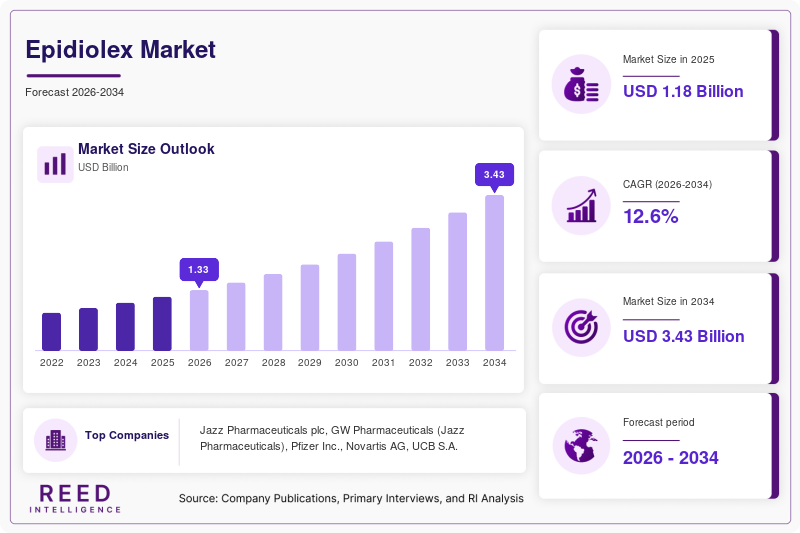
The Epidiolex Market was valued at USD 1.18 billion in 2026 and is projected to reach USD 3.06 billion by 2034, expanding at a CAGR of 12.6% during 2026–2034. The market is witnessing sustained growth due to the increasing acceptance of cannabinoid-based therapeutics in the treatment of rare neurological disorders and refractory epileptic conditions. Epidiolex, a plant-derived cannabidiol (CBD) prescription medicine, has gained considerable clinical recognition for its efficacy in managing seizure disorders such as Lennox-Gastaut syndrome, Dravet syndrome, and tuberous sclerosis complex. Growing awareness among healthcare professionals regarding evidence-based cannabinoid therapies, combined with improvements in diagnosis rates for rare epileptic disorders, has strengthened market demand globally.
A significant global factor supporting market expansion has been the broader integration of precision medicine and orphan drug development programs. Governments, healthcare organizations, and pharmaceutical companies have increased investments in therapies targeting rare diseases, creating favorable conditions for specialized products such as Epidiolex. Regulatory agencies across several countries have also streamlined pathways for innovative neurological therapies, encouraging wider commercialization and patient access. Increasing reimbursement support, expanding specialty pharmacy networks, and ongoing clinical studies evaluating cannabidiol-based therapies for additional indications are further contributing to market growth.
Key Highlights
- North America dominated the market with 48.7% share in 2025, while Asia Pacific is projected to register the fastest CAGR of 14.5% during 2026–2034.
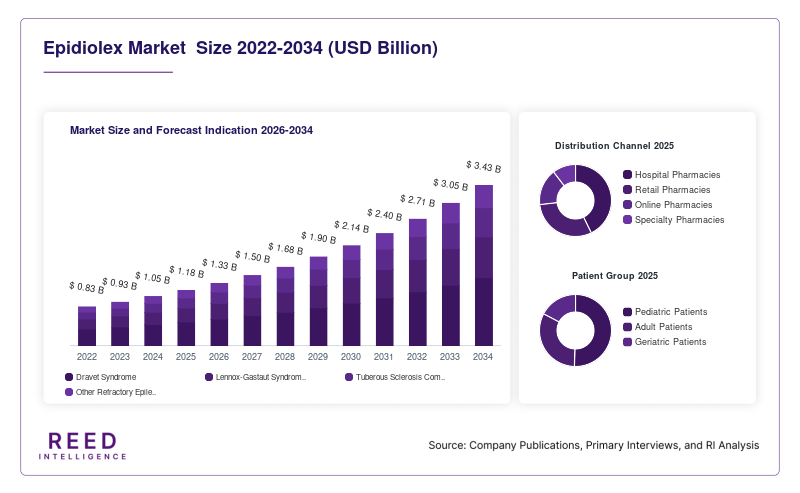
- By Indication, Lennox-Gastaut Syndrome accounted for 41.3% share in 2025, while Tuberous Sclerosis Complex is expected to grow at a CAGR of 13.8%.
- By Distribution Channel, Hospital Pharmacies held 46.9% share in 2025, whereas Online Pharmacies are forecast to expand at a CAGR of 15.2%.
- By Age Group, Pediatric Patients represented 58.4% share in 2025, while Adult Patients are projected to grow at a CAGR of 13.2%.
- By End User, Hospitals and Specialty Clinics accounted for 54.7% share in 2025, while Neurology Research Centers are expected to grow at a CAGR of 12.9%.
- The United States, the dominant country, recorded a market value of USD 412 million in 2024, increasing to USD 469 million in 2025.
Market Trends
Expansion of Cannabidiol-Based Clinical Research
The pharmaceutical industry is increasing investment in cannabidiol-focused clinical development programs. Researchers are evaluating Epidiolex and related cannabinoid therapies for additional neurological and neurodevelopmental conditions beyond currently approved indications. This trend is improving scientific understanding of cannabidiol mechanisms and creating opportunities for future label expansion. Growing clinical evidence is strengthening physician confidence and supporting broader acceptance within specialized healthcare settings.
Growing Adoption of Digital Patient Monitoring Platforms
Digital health technologies are becoming increasingly integrated into epilepsy management. Remote monitoring applications, seizure-tracking platforms, and telehealth services are helping physicians assess treatment effectiveness and patient adherence more accurately. These technologies are supporting better management of long-term neurological conditions and contributing to improved outcomes among patients receiving Epidiolex therapy.
Market Drivers
Rising Diagnosis Rates of Rare Epileptic Disorders
Improved genetic testing capabilities and enhanced neurological screening programs have increased the identification of rare seizure disorders globally. Earlier diagnosis allows healthcare providers to initiate targeted therapies more effectively. As awareness among physicians and caregivers continues to increase, demand for approved treatments specifically designed for severe epilepsy syndromes is expected to remain strong.
Increasing Healthcare Expenditure on Specialty Pharmaceuticals
Healthcare systems are allocating larger budgets toward specialty medicines addressing complex and rare medical conditions. The growing willingness of payers to support innovative neurological therapies has enhanced patient access to advanced treatment options. Expanding reimbursement frameworks and insurance coverage continue to support commercial adoption of Epidiolex across major healthcare markets.
Market Restraint
High Treatment Costs and Reimbursement Variability
Despite demonstrated therapeutic benefits, treatment costs remain relatively high in several regions. Variations in reimbursement policies and healthcare funding structures can limit accessibility for some patient populations. These challenges may slow market penetration in developing healthcare systems and cost-sensitive markets.
Market Opportunities
Expansion into Emerging Pharmaceutical Markets
Emerging economies are investing in neurological healthcare infrastructure and improving access to specialty medicines. Regulatory modernization and growing awareness of rare disease treatment options present significant opportunities for pharmaceutical companies to expand Epidiolex availability across previously underserved markets.
Development of New Neurological Indications
Ongoing clinical investigations into additional neurological and neurodevelopmental disorders offer substantial growth potential. Successful expansion into new therapeutic areas could increase patient populations eligible for cannabidiol-based treatments and strengthen long-term market prospects.
Segmental Analysis
By Indication
Lennox-Gastaut Syndrome
Lennox-Gastaut Syndrome accounted for 41.3% of market share in 2025. The segment maintained leadership because it represents one of the earliest and most widely treated approved indications for Epidiolex therapy. Extensive clinical utilization and established treatment guidelines supported sustained demand.
Tuberous Sclerosis Complex
Tuberous Sclerosis Complex is projected to grow at a CAGR of 13.8% through 2034. Growth will be driven by increasing disease awareness and broader access to specialized diagnostic services. Earlier intervention strategies will encourage greater adoption of targeted cannabidiol treatment approaches.
By Distribution Channel
Hospital Pharmacies
Hospital pharmacies held 46.9% share in 2025. This dominance was supported by specialist prescribing requirements, close physician supervision, and integrated patient management programs associated with neurological treatments.
Online Pharmacies
Online pharmacies are forecast to expand at a CAGR of 15.2% during the forecast period. Growth will be supported by improved digital prescription management systems, enhanced delivery services, and greater patient preference for convenient medication access solutions.
By Age Group
Pediatric Patients
Pediatric patients represented 58.4% share in 2025. The segment remained dominant because several approved indications are frequently diagnosed during childhood and require long-term therapeutic management.
Adult Patients
Adult patients are expected to register a CAGR of 13.2% through 2034. Growth will result from increased recognition of persistent epilepsy conditions requiring continued treatment into adulthood and improved transition care programs.
By End User
Hospitals and Specialty Clinics
Hospitals and specialty clinics accounted for 54.7% share in 2025. The segment benefited from multidisciplinary care teams and comprehensive neurological treatment services that support effective patient management.
Neurology Research Centers
Neurology research centers are projected to grow at a CAGR of 12.9% during the forecast period. Expansion will be supported by increasing participation in clinical trials and ongoing research evaluating new therapeutic applications for cannabidiol-based medicines.
Regional Analysis
North America
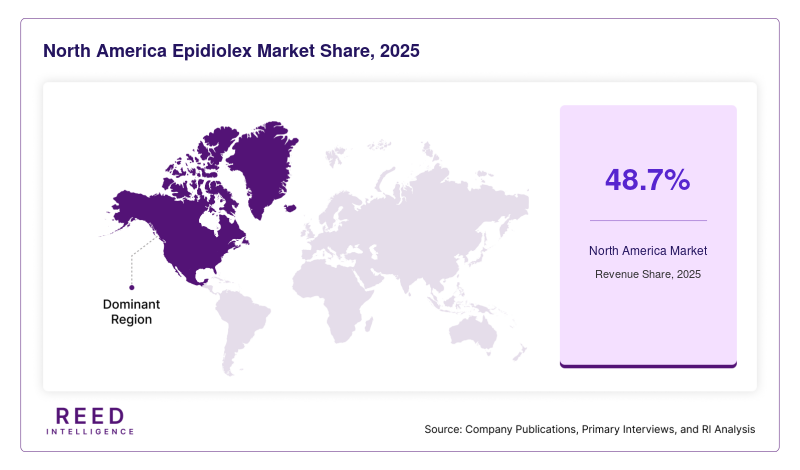
North America accounted for 48.7% of the Epidiolex Market share in 2025 and is expected to grow at a CAGR of 11.8% through 2034. The region benefited from established specialty pharmaceutical infrastructure, favorable reimbursement frameworks, and widespread physician awareness regarding cannabinoid-based therapies. The United States dominated the regional market due to extensive utilization of orphan drug programs that facilitated access to innovative neurological treatments for rare disease patients.
Europe
Europe represented 27.4% market share in 2025 and is projected to expand at a CAGR of 12.1% during the forecast period. Regulatory support for rare disease therapeutics and increasing investment in neurological healthcare services supported market expansion. The United Kingdom led the region owing to structured patient access programs and strong collaboration between specialty healthcare providers and rare disease advocacy organizations.
Asia Pacific
Asia Pacific held 15.8% share in 2025 and is forecast to witness the fastest CAGR of 14.5% from 2026 to 2034. Rising healthcare investments, growing specialist physician networks, and improving awareness of epilepsy treatment options contributed to market development. Japan emerged as the leading country due to advanced neurological treatment infrastructure and increasing adoption of innovative pharmaceutical therapies.
Middle East & Africa
The Middle East & Africa accounted for 4.2% market share in 2025 and is anticipated to register a CAGR of 10.7% during the forecast period. Improvements in specialty healthcare facilities and increasing access to advanced neurological treatments supported regional growth. Saudi Arabia dominated the market because of expanding investment in tertiary healthcare services and specialized neurological treatment centers.
Latin America
Latin America captured 3.9% market share in 2025 and is expected to grow at a CAGR of 11.2% through 2034. Expanding healthcare coverage programs and increasing recognition of rare neurological disorders supported demand. Brazil remained the leading country due to growing availability of specialty pharmaceuticals through public and private healthcare channels.
Competitive Landscape
The Epidiolex Market remains characterized by strong intellectual property positions, specialized neurological expertise, and continued investment in clinical research. Companies compete through indication expansion strategies, regulatory approvals, patient access initiatives, and partnerships with healthcare providers.
Jazz Pharmaceuticals plc
Jazz Pharmaceuticals remains the market leader through ownership and commercialization of Epidiolex. The company continues to invest in post-marketing research, physician education initiatives, and international expansion programs. A recent development involved expanding patient support services designed to improve treatment adherence and long-term therapeutic outcomes.
GW Pharmaceuticals
As the original developer of Epidiolex technologies, GW Pharmaceuticals contributed significantly to establishing pharmaceutical-grade cannabidiol therapies and continues to influence cannabinoid medicine innovation through research activities.
UCB S.A.
UCB maintains a strong neurological treatment portfolio and continues investing in epilepsy-focused therapeutic solutions, creating complementary opportunities within the specialty neurology market.
H. Lundbeck A/S
Lundbeck focuses on central nervous system disorders and strengthens its position through investments in neurological disease research and specialist healthcare partnerships.
Neurocrine Biosciences, Inc.
Neurocrine Biosciences continues expanding its neuroscience portfolio and remains active in developing therapies addressing complex neurological disorders.
Key Players List
- Jazz Pharmaceuticals plc
- GW Pharmaceuticals
- UCB S.A.
- H. Lundbeck A/S
- Neurocrine Biosciences, Inc.
- Biogen Inc.
- Eisai Co., Ltd.
- Pfizer Inc.
- Novartis AG
- Sanofi S.A.
- AbbVie Inc.
- Takeda Pharmaceutical Company Limited
- Teva Pharmaceutical Industries Ltd.
- Sun Pharmaceutical Industries Ltd.
- Zydus Lifesciences Limited
Epidiolex Market Segments
Indication
- Dravet Syndrome
- Lennox-Gastaut Syndrome (LGS)
- Tuberous Sclerosis Complex (TSC)
- Other Refractory Epilepsy Disorders
Distribution Channel
- Hospital Pharmacies
- Retail Pharmacies
- Online Pharmacies
- Specialty Pharmacies
Patient Group
- Pediatric Patients
- Adult Patients
- Geriatric Patients
End User
- Hospitals
- Neurology Clinics
- Specialty Treatment Centers
- Home Care Settings
By Region
- North America
- Europe
- APAC
- Middle East and Africa
- LATAM