Erosion Control Blanket Market Size, Share & Demand Report By Type (Natural Fiber Blankets, Synthetic Fiber Blankets), By Application (Slope Stabilization, Channel Protection, Reservoir Embankments, Others), By End-Use (Construction, Agriculture, Mining, Transportation), By Region & Segment Forecasts, 2025–2034
USD 3950
Market Overview
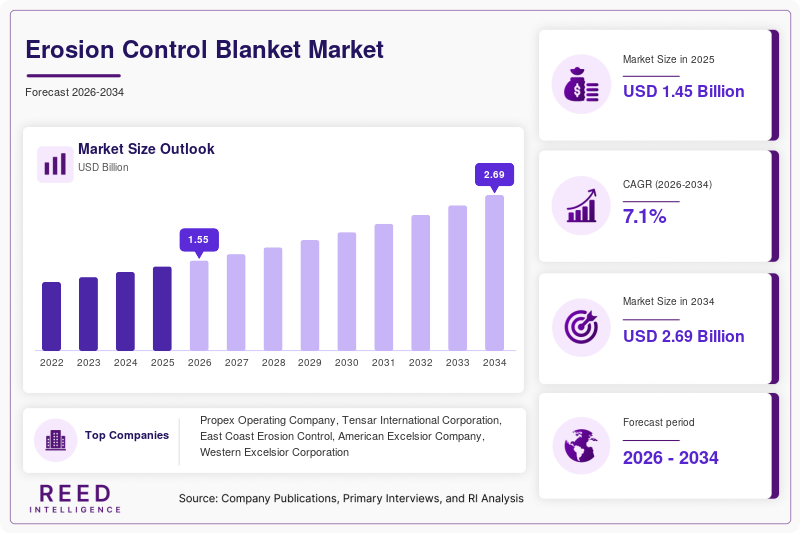
The Erosion Control Blanket Market size is estimated at USD 1.45 billion, and it is projected to reach approximately USD 1.55 billion in 2026. Over the forecast period from 2025 to 2034, the market is expected to grow at a compound annual growth rate (CAGR) of 7.1%, reaching a projected value of USD 2.85 billion by 2034.
Erosion control blankets are widely used in construction, agriculture, mining, and transportation sectors to prevent soil erosion, enhance vegetation growth, and stabilize slopes. The growing emphasis on sustainable land management practices is playing a critical role in market expansion. Governments across various regions are implementing policies aimed at reducing land degradation and promoting eco-friendly construction practices, which is increasing the adoption of biodegradable erosion control solutions.
Key Highlights
- Market size estimated at USD 1.45 billion in 2025, reflecting steady demand across construction, agriculture, and infrastructure sectors. The market continues to expand due to increasing soil stabilization requirements in both developed and emerging economies.
- Expected to reach USD 2.85 billion by 2034, driven by long-term investments in infrastructure and environmental conservation projects. Growing adoption across multiple industries is supporting sustained market expansion over the forecast period.
- CAGR of 7.1% from 2025 to 2034, indicating consistent growth supported by regulatory frameworks and technological advancements. The market is benefiting from rising awareness of erosion control solutions globally.
- Infrastructure development and environmental regulations are major factors driving demand, particularly in transportation and urban construction projects. Governments are enforcing stricter policies to reduce soil erosion and environmental damage.
Market Trends
Shift Toward Biodegradable and Natural Fiber Blankets
The market is witnessing a strong shift toward biodegradable erosion control blankets made from natural fibers such as coir, jute, and straw. These materials are gaining preference due to their ability to decompose naturally while enhancing soil fertility and supporting vegetation growth. Governments and environmental organizations are encouraging the use of sustainable materials in construction and land management projects. This trend is particularly prominent in regions with strict environmental regulations, where synthetic materials face limitations. Manufacturers are responding by expanding their product portfolios to include eco-friendly options, which is expected to reshape the competitive landscape and influence long-term demand patterns.
Integration of Advanced Manufacturing Technologies
Another notable trend is the integration of advanced manufacturing technologies to improve product performance and efficiency. Companies are investing in research and development to produce blankets with enhanced tensile strength, better moisture retention, and improved resistance to harsh environmental conditions. Automation in manufacturing processes is also helping reduce production costs and maintain product consistency. Additionally, the use of hybrid materials that combine natural and synthetic fibers is gaining traction, offering a balance between durability and environmental sustainability. This trend is enabling manufacturers to cater to diverse application requirements and expand their presence in global markets.
Market Drivers
Expansion of Infrastructure and Construction Activities
The rapid expansion of infrastructure projects worldwide is a major driver for the erosion control blanket market. Governments are investing heavily in transportation networks, including highways, railways, and airports, which require effective soil stabilization solutions. Erosion control blankets are essential in these projects to prevent soil displacement, especially in areas with steep slopes or loose soil. The growth of urbanization is further increasing the demand for construction activities, leading to higher adoption of erosion control products. In developing economies, large-scale infrastructure projects are creating significant opportunities for market players, contributing to sustained demand growth over the forecast period.
Increasing Focus on Environmental Protection and Regulations
The growing emphasis on environmental conservation is another key driver of the market. Regulatory authorities are implementing strict guidelines to minimize soil erosion and protect natural ecosystems. Industries such as mining, agriculture, and construction are required to adopt erosion control measures to comply with these regulations. This has led to increased demand for erosion control blankets, particularly biodegradable variants. Additionally, public awareness regarding the impact of soil erosion on water quality and biodiversity is encouraging the adoption of sustainable solutions. As environmental concerns continue to rise, the demand for erosion control blankets is expected to remain strong.
Market Restraint
High Cost of Installation and Limited Awareness in Developing Regions
One of the key restraints affecting the erosion control blanket market is the relatively high cost associated with installation and maintenance, particularly for advanced or high-performance products. While natural fiber blankets are cost-effective in the long term, initial expenses related to procurement, transportation, and skilled labor can limit their adoption, especially among small-scale users. In developing regions, where budget constraints are significant, stakeholders often opt for traditional erosion control methods, which may not be as effective.
Additionally, limited awareness regarding the benefits of erosion control blankets poses a challenge to market growth. Many end-users, particularly in rural or underdeveloped areas, lack knowledge about modern soil stabilization solutions. For instance, small agricultural communities may rely on conventional techniques such as manual planting or basic barriers instead of adopting erosion control blankets. This lack of awareness slows down market penetration and restricts growth potential. Addressing this restraint requires targeted awareness campaigns, government support, and training programs to educate end-users about the long-term benefits of erosion control solutions.
Market Opportunities
Growth in Sustainable Agriculture Practices
The increasing adoption of sustainable agriculture practices presents a significant opportunity for the erosion control blanket market. Farmers are becoming more aware of the importance of soil conservation and are seeking solutions that enhance crop productivity while minimizing environmental impact. Erosion control blankets help retain soil moisture, prevent nutrient loss, and support seed germination, making them valuable tools in modern farming. The rising demand for organic farming and eco-friendly agricultural practices is further driving the adoption of biodegradable blankets. As governments promote sustainable agriculture through subsidies and incentives, the market is expected to benefit from increased demand in this sector.
Expansion in Emerging Economies
Emerging economies offer substantial growth opportunities for the erosion control blanket market due to rapid urbanization and infrastructure development. Countries in Asia Pacific, Latin America, and Africa are investing in large-scale construction projects, including roads, dams, and urban housing. These projects require effective erosion control measures to ensure long-term stability and compliance with environmental regulations. Additionally, increasing foreign investments and government initiatives aimed at improving infrastructure are creating favorable conditions for market expansion. Manufacturers can capitalize on these opportunities by establishing local production facilities and forming strategic partnerships to strengthen their presence in these high-growth regions.
Segmental Analysis
By Type
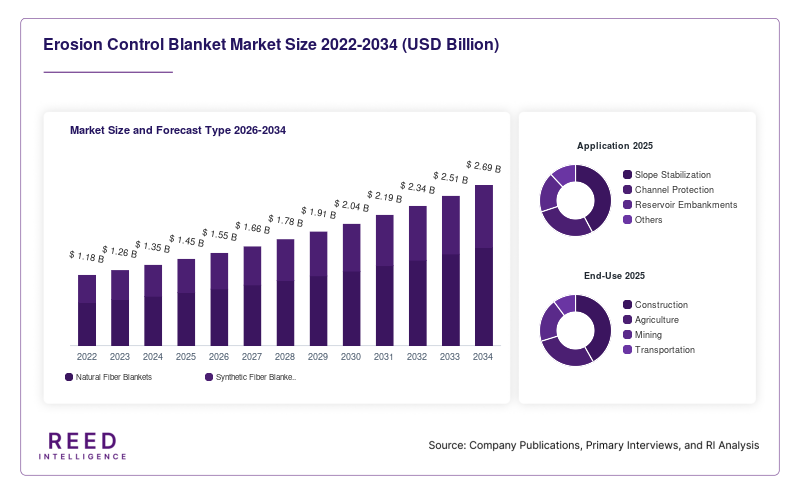
The natural fiber erosion control blankets segment dominated the market in 2024, accounting for approximately 58% of the total market share. These blankets, made from materials such as coir, jute, and straw, are widely used due to their biodegradability and environmental benefits. They support vegetation growth by retaining moisture and nutrients in the soil, making them suitable for applications in construction, agriculture, and land restoration. The increasing focus on sustainability and regulatory support for eco-friendly materials are key factors contributing to the dominance of this segment.
The synthetic fiber segment is expected to be the fastest-growing, with a projected CAGR of 7.5% during the forecast period. These blankets offer higher durability and resistance to harsh environmental conditions, making them suitable for long-term applications such as highways and mining sites. The growth of this segment is driven by the need for high-performance solutions in challenging environments, where natural fibers may not provide sufficient durability.
By Application
Slope stabilization emerged as the dominant application segment in 2024, accounting for approximately 42% of the market share. Erosion control blankets are extensively used to stabilize slopes in construction and infrastructure projects, preventing soil displacement and ensuring structural stability. The increasing number of road and railway projects, particularly in hilly and mountainous regions, is driving demand for slope stabilization solutions.
The channel protection segment is expected to be the fastest-growing, with a CAGR of 7.8% over the forecast period. This growth is attributed to the rising need for protecting water channels and drainage systems from erosion caused by flowing water. Urbanization and the development of drainage infrastructure are key factors contributing to the growth of this segment, as effective erosion control is essential for maintaining water flow and preventing damage.
By End-Use
The construction sector dominated the market in 2024, accounting for approximately 47% of the total market share. Erosion control blankets are widely used in construction projects to prevent soil erosion and ensure the stability of structures. The growth of infrastructure development and urbanization is driving demand in this segment. Additionally, regulatory requirements for environmental protection are encouraging the adoption of erosion control solutions in construction activities.
The agriculture sector is expected to be the fastest-growing, with a CAGR of 7.9% during the forecast period. Farmers are increasingly adopting erosion control blankets to improve soil quality, retain moisture, and enhance crop productivity. The shift toward sustainable farming practices and the growing demand for organic products are key factors driving growth in this segment.
Regional Analysis
North America
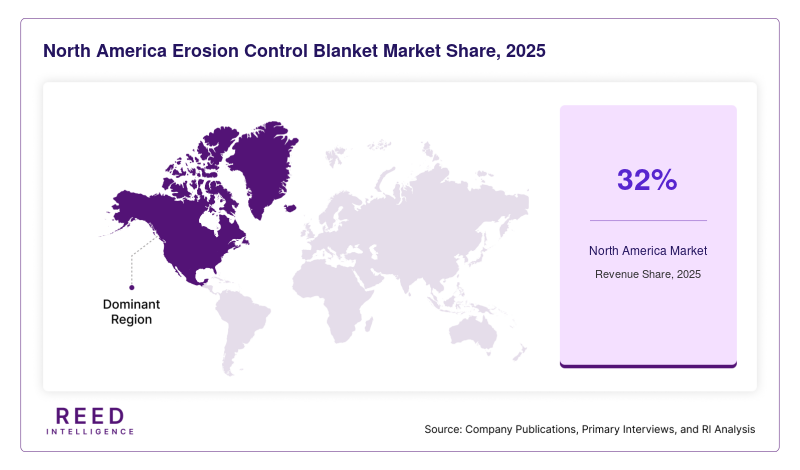
North America accounted for approximately 32% of the global market share in 2025, making it one of the leading regions in the erosion control blanket market. The region is expected to grow at a CAGR of around 6.5% during the forecast period. Strong regulatory frameworks related to environmental protection and soil conservation are driving the adoption of erosion control solutions. Additionally, the presence of established infrastructure and advanced construction practices supports consistent demand across various sectors.
The United States dominates the North American market due to its extensive infrastructure network and strict environmental regulations. A unique growth factor in this region is the increasing investment in green infrastructure projects, such as sustainable drainage systems and eco-friendly urban development. These initiatives are encouraging the use of biodegradable erosion control blankets, further supporting market growth.
Europe
Europe held a market share of approximately 25% in 2025 and is projected to grow at a CAGR of 6.8% over the forecast period. The region’s focus on sustainability and environmental protection is a key factor driving market growth. Government policies promoting the use of eco-friendly materials in construction and land management are contributing to increased adoption of erosion control blankets.
Germany is the dominant country in the European market, supported by its strong construction industry and emphasis on sustainable development. A unique growth factor in this region is the integration of erosion control solutions in renewable energy projects, such as wind farms and solar installations. These projects require effective soil stabilization measures, creating additional demand for erosion control blankets.
Asia Pacific
Asia Pacific accounted for around 28% of the global market share in 2025 and is expected to register the highest CAGR of 8.2% during the forecast period. Rapid urbanization, population growth, and large-scale infrastructure projects are driving demand for erosion control solutions in the region. Governments are investing heavily in transportation and urban development, which is boosting market growth.
China leads the Asia Pacific market due to its extensive infrastructure development and construction activities. A unique growth factor in this region is the increasing focus on land restoration projects aimed at combating soil erosion and desertification. These initiatives are driving the adoption of erosion control blankets, particularly in areas prone to environmental degradation.
Middle East & Africa
The Middle East & Africa region held a market share of approximately 8% in 2025 and is expected to grow at a CAGR of 7.0%. The region’s focus on infrastructure development and environmental conservation is supporting market growth. Increasing investments in construction and mining activities are also contributing to the demand for erosion control solutions.
South Africa is a key market in this region, driven by its mining industry and infrastructure projects. A unique growth factor is the need for soil stabilization in arid and semi-arid regions, where erosion is a significant challenge. This is encouraging the adoption of erosion control blankets designed for harsh environmental conditions.
Latin America
Latin America accounted for about 7% of the global market share in 2025 and is projected to grow at a CAGR of 6.9%. The region’s expanding construction sector and increasing awareness of environmental protection are driving market growth. Government initiatives aimed at improving infrastructure are also supporting demand.
Brazil dominates the Latin American market due to its large-scale infrastructure projects and agricultural activities. A unique growth factor in this region is the increasing adoption of erosion control blankets in agricultural applications, particularly for soil conservation and crop protection. This trend is expected to drive sustained market growth.
Competitive Landscape
The erosion control blanket market is moderately fragmented, with several global and regional players competing based on product quality, innovation, and pricing strategies. Leading companies are focusing on expanding their product portfolios and investing in research and development to enhance product performance. Strategic partnerships, mergers, and acquisitions are also common strategies used to strengthen market presence.
One of the leading companies in the market is Propex Operating Company, known for its extensive range of erosion control solutions. The company has recently introduced advanced biodegradable blankets designed for improved soil stabilization and environmental sustainability. Other key players are also focusing on developing innovative products that cater to specific application requirements, such as high-strength blankets for infrastructure projects and eco-friendly solutions for agricultural use.
Key Players
- Propex Operating Company
- Tensar International Corporation
- East Coast Erosion Control
- American Excelsior Company
- Western Excelsior Corporation
- North American Green
- GeoSolutions Inc.
- L&M Supply Company
- Soilworks LLC
- Silt Management Supplies
- Terrafix Geosynthetics Inc.
- ABG Geosynthetics
- Nilex Inc.
- BonTerra LLC
- Greenfix Soil Stabilisation
Recent Developments
- In 2024, Propex Operating Company launched a new line of biodegradable erosion control blankets designed for enhanced durability and faster vegetation growth.
- In 2023, Tensar International Corporation expanded its manufacturing capacity to meet rising demand from infrastructure projects in Asia Pacific.
- In 2024, North American Green introduced advanced hybrid blankets combining natural and synthetic fibers for improved performance in extreme conditions.
Erosion Control Blanket Market Segments
Type
- Natural Fiber Blankets
- Synthetic Fiber Blankets
Application
- Slope Stabilization
- Channel Protection
- Reservoir Embankments
- Others
End-Use
- Construction
- Agriculture
- Mining
- Transportation
By Region
- North America
- Europe
- APAC
- Middle East and Africa
- LATAM