EVOH Packaging Market Size, Share & Demand Report By Packaging Type (Flexible Packaging, Rigid Packaging), By End-Use Industry (Food & Beverage, Pharmaceutical, Personal Care & Cosmetics, Industrial, Household Products), By Material Form (Films, Containers, Trays, Bottles, Pouches), By Region & Segment Forecasts, 2026–2034
USD 3950
Market Overview
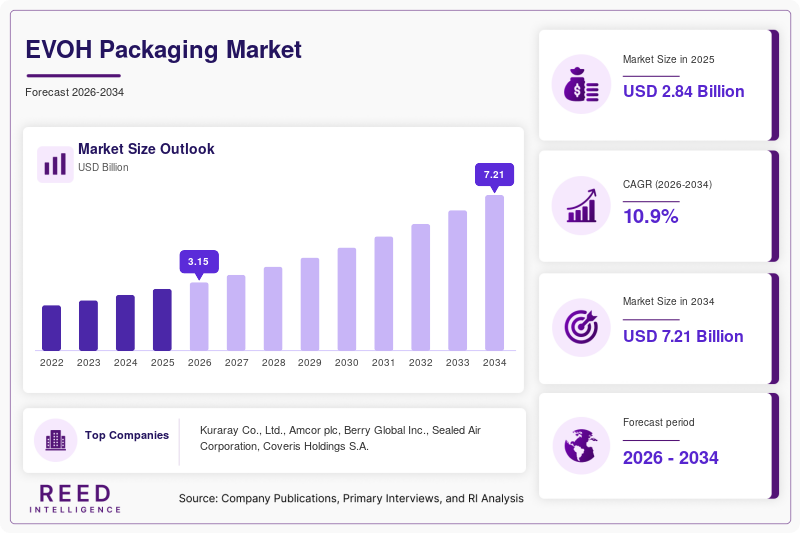
The global EVOH Packaging Market size was valued at USD 2.84 billion in 2026 and is projected to reach USD 6.48 billion by 2034, expanding at a CAGR of 10.9% during the forecast period from 2026 to 2034. The market continues to gain momentum due to the increasing demand for high-barrier packaging solutions across food, pharmaceutical, personal care, and industrial sectors. EVOH packaging materials are widely used because of their superior oxygen barrier properties, which help extend product shelf life, reduce food waste, and maintain product quality during transportation and storage.
A major global factor supporting market growth is the rapid expansion of packaged and convenience food consumption across both developed and emerging economies. Rising urbanization, changing consumer lifestyles, and the growing preference for ready-to-eat meals have encouraged manufacturers to adopt advanced multilayer packaging materials with enhanced protection capabilities. EVOH-based films and containers provide strong resistance against oxygen permeation while maintaining lightweight characteristics, making them suitable for flexible and rigid packaging applications. In addition, sustainability initiatives across the packaging industry are encouraging the development of recyclable multilayer structures that include EVOH in thinner compositions.
Key Highlights
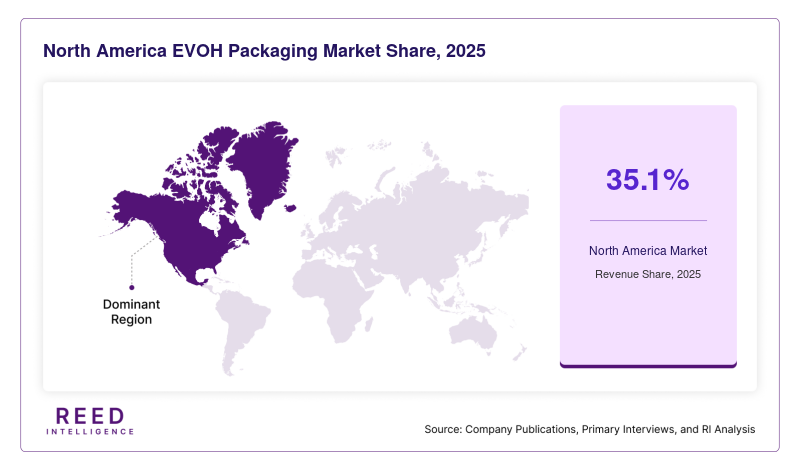
- North America dominated the market with a 35.1% share in 2025.
- Asia Pacific is expected to grow at the fastest CAGR of 11.8% during 2026–2034.
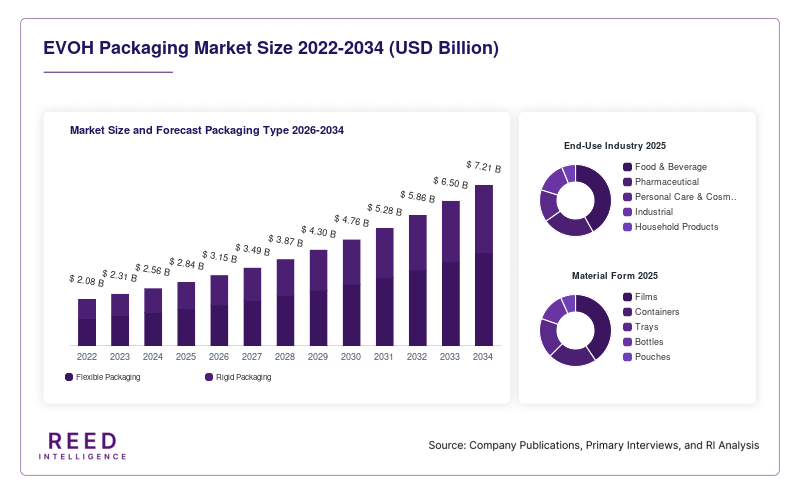
- By packaging type, flexible packaging accounted for the largest share of 57.4%.
- while rigid packaging is projected to grow at a CAGR of 11.3%.
- By end-use industry, food and beverage led with a 48.6% share, whereas pharmaceutical packaging is expected to expand at a CAGR of 12.1%.
- The United States remained the dominant country, with market values of USD 690 million in 2024 and USD 748 million in 2025.
Market Trends
Growing Adoption of Recyclable Multilayer Packaging Structures
The EVOH Packaging Market is witnessing increasing adoption of recyclable multilayer packaging solutions as manufacturers attempt to balance barrier performance with sustainability goals. Packaging producers are redesigning film structures using thinner EVOH layers that maintain oxygen barrier efficiency while improving recyclability within existing waste management systems. Food and beverage companies are increasingly demanding mono-material and lightweight packaging formats that can support circular economy objectives without compromising shelf life. This trend is particularly visible in meat packaging, dairy packaging, and ready-to-eat meal applications where oxygen sensitivity remains a critical challenge. Companies are also investing in advanced co-extrusion technologies that improve material compatibility and reduce overall resin usage. Regulatory pressure across Europe and North America is accelerating the transition toward recyclable flexible packaging, encouraging suppliers to launch EVOH-based packaging solutions with lower environmental impact.
Increasing Demand for High-Barrier Packaging in E-Commerce Food Distribution
The rapid growth of e-commerce grocery platforms and direct-to-consumer food delivery services is driving demand for durable and high-barrier packaging materials. EVOH packaging has become increasingly important in maintaining freshness and preventing contamination during extended transportation periods. Online food retailers require packaging that can preserve aroma, flavor, and nutritional quality while withstanding varying environmental conditions across supply chains. Frozen foods, processed meat, sauces, coffee products, and specialty beverages are among the categories adopting EVOH barrier films and containers at a faster pace. The rise of cross-border food trade has further expanded the need for advanced packaging capable of supporting long distribution cycles. In addition, the expansion of temperature-controlled logistics infrastructure in Asia Pacific and Latin America is increasing the adoption of multilayer barrier packaging systems that incorporate EVOH resins.
Market Drivers
Rising Consumption of Packaged Food Products Worldwide
The increasing global consumption of packaged food products remains one of the strongest growth drivers for the EVOH Packaging Market. Consumers are spending more on convenience foods, frozen meals, packaged snacks, and ready-to-cook products due to busy lifestyles and rising urban populations. These products require advanced packaging materials that can preserve freshness and prevent oxygen penetration during storage and transportation. EVOH packaging offers excellent gas barrier performance, which helps extend shelf life and reduce spoilage rates. Food manufacturers are therefore incorporating EVOH-based films, trays, and pouches into their packaging operations to maintain product integrity. Demand is especially strong in emerging economies where modern retail expansion and cold chain infrastructure development are increasing packaged food penetration. The growth of premium food categories has also encouraged manufacturers to adopt higher-quality barrier packaging solutions.
Expansion of Pharmaceutical and Medical Packaging Applications
The pharmaceutical industry is increasingly using EVOH packaging materials because of their superior barrier properties and compatibility with sterile packaging applications. Sensitive pharmaceutical products, diagnostic kits, and medical devices require protection against oxygen, moisture, and contamination throughout the supply chain. EVOH layers are commonly used in blister packs, medical pouches, intravenous solution containers, and pharmaceutical bottles to maintain product stability. Rising healthcare expenditure and the expansion of pharmaceutical manufacturing facilities across Asia Pacific and North America are supporting demand for advanced barrier packaging solutions. The growth of biologics and temperature-sensitive medications is also encouraging pharmaceutical companies to invest in reliable packaging technologies. In addition, stricter packaging safety standards and regulatory compliance requirements are prompting manufacturers to use high-performance multilayer materials that enhance product protection and support long-term storage stability.
Market Restraint
Volatility in Raw Material Prices and Recycling Challenges
Fluctuations in raw material prices continue to present a major challenge for the EVOH Packaging Market. EVOH resin production depends on petrochemical feedstocks, making the market vulnerable to changes in crude oil prices and supply chain disruptions. Rising resin costs can significantly impact packaging manufacturers, especially small and medium-sized converters operating with narrow profit margins. In addition, the multilayer structure of EVOH packaging can create recycling complexities because separation processes remain limited in several regions. Many waste management systems are not fully equipped to process multilayer flexible packaging materials efficiently, resulting in higher disposal costs and lower recycling rates. Regulatory authorities in Europe and North America are placing increased pressure on packaging companies to improve recyclability and reduce environmental impact. This challenge has encouraged some end users to explore alternative materials or redesign packaging structures to meet sustainability objectives while maintaining barrier performance.
Market Opportunities
Expansion of Sustainable Packaging Innovations Across Emerging Economies
The growing focus on sustainable packaging development across emerging economies is creating substantial opportunities for the EVOH Packaging Market. Governments and private organizations are promoting environmentally responsible packaging practices to reduce plastic waste and improve recycling rates. Packaging manufacturers are responding by introducing lightweight EVOH structures with lower material consumption and improved compatibility with recycling systems. Countries in Asia Pacific and Latin America are witnessing rising investments in food processing, retail modernization, and packaged consumer goods, creating favorable conditions for advanced barrier packaging solutions. Consumer awareness regarding food preservation and product safety is also increasing demand for packaging that can extend shelf life and reduce waste generation. As local packaging industries modernize production technologies, demand for high-performance EVOH-based packaging materials is expected to rise steadily across emerging markets.
Increasing Use of EVOH Packaging in Cosmetic and Personal Care Products
The personal care and cosmetic industry presents strong growth opportunities for EVOH packaging manufacturers due to the increasing need for premium protective packaging. Cosmetic products such as creams, lotions, serums, and liquid formulations require packaging materials that can prevent oxygen exposure and preserve ingredient stability. EVOH barrier layers help maintain fragrance quality and reduce the risk of oxidation in sensitive formulations. The growing demand for travel-sized cosmetic products and refill packaging solutions is further encouraging the use of lightweight multilayer containers and flexible pouches. Rising disposable income and changing beauty consumption patterns in countries such as China, India, Brazil, and South Korea are supporting growth across the premium cosmetics segment. Packaging producers are therefore developing aesthetically appealing EVOH-based containers that combine functionality with improved shelf presentation and product protection.
Segmental Analysis
By Packaging Type
Flexible packaging accounted for the largest share of the EVOH Packaging Market in 2024, representing approximately 57.4% of total revenue. The dominance of this subsegment is mainly attributed to its lightweight structure, cost efficiency, and strong barrier performance across food and beverage applications. Flexible EVOH packaging is extensively used in pouches, vacuum bags, sachets, lids, and multilayer films designed for meat, dairy, seafood, and ready-to-eat products. Manufacturers prefer flexible packaging because it reduces transportation costs and provides enhanced storage convenience. In addition, consumers increasingly favor flexible packaging formats due to portability and resealability features. The rapid growth of e-commerce grocery distribution has further strengthened demand for flexible barrier packaging solutions that can maintain product quality throughout extended logistics operations.
Rigid packaging is expected to witness the fastest growth during the forecast period, expanding at a CAGR of 11.3% from 2026 to 2034. Growth within this subsegment is being supported by increasing demand for durable packaging in pharmaceutical, cosmetic, and premium food applications. EVOH-based rigid containers provide superior protection against oxygen exposure while maintaining product integrity during handling and transportation. Manufacturers are increasingly adopting rigid EVOH packaging in bottles, trays, and containers for sauces, beverages, medical liquids, and personal care products. Technological improvements in injection molding and co-extrusion processes are enabling companies to develop lightweight rigid packaging with improved recyclability. The expansion of healthcare infrastructure and premium consumer product categories is also contributing to rising demand for rigid EVOH packaging solutions.
By End-Use Industry
The food and beverage segment held the largest share of the EVOH Packaging Market in 2024, accounting for nearly 48.6% of global revenue. This dominance is linked to the increasing need for extended shelf life and product freshness across packaged food categories. EVOH barrier materials are widely used in processed meat packaging, dairy products, coffee packaging, sauces, frozen foods, and snack products because they effectively prevent oxygen penetration. Food manufacturers rely on EVOH packaging to reduce spoilage, maintain flavor quality, and comply with food safety standards. The rapid expansion of convenience food consumption and ready-to-eat meal demand continues to accelerate adoption across both developed and emerging markets. Growth in organized retail channels and cold chain logistics infrastructure is also supporting the extensive use of EVOH-based multilayer packaging systems.
The pharmaceutical segment is expected to expand at the fastest CAGR of 12.1% during the forecast period due to increasing demand for high-performance sterile packaging materials. Pharmaceutical manufacturers require packaging solutions that protect sensitive drugs, biologics, and medical devices from oxygen and moisture exposure. EVOH-based multilayer structures are increasingly being used in medical pouches, blister packs, intravenous solution containers, and diagnostic product packaging. Rising healthcare expenditure and the growing production of specialty medications are encouraging packaging companies to develop advanced barrier solutions for pharmaceutical applications. The expansion of pharmaceutical manufacturing facilities across Asia Pacific and North America is further contributing to segment growth. Regulatory requirements related to product stability and contamination prevention are also driving demand for high-barrier EVOH packaging.
By Material Form
Films represented the dominant subsegment within the EVOH Packaging Market in 2024 and accounted for a significant share of total industry revenue. EVOH films are extensively used because they provide excellent oxygen barrier performance while remaining compatible with multilayer flexible packaging structures. Food processing companies widely use EVOH films in vacuum packaging, thermoforming applications, and modified atmosphere packaging for meat, cheese, and frozen products. These films help preserve freshness, reduce food waste, and support longer distribution cycles across global supply chains. Increasing demand for lightweight packaging materials and efficient storage solutions continues to encourage adoption of EVOH films across consumer goods industries. In addition, packaging manufacturers are introducing thinner and more sustainable film structures that improve recyclability while maintaining high barrier efficiency.
Containers are projected to register the fastest CAGR during the forecast period as demand for rigid protective packaging continues to rise in pharmaceutical, cosmetic, and beverage applications. EVOH containers are increasingly used for products requiring strong oxygen resistance and long-term storage stability. Manufacturers are focusing on innovative multilayer bottle and container designs that combine durability with reduced material consumption. The expansion of premium personal care products and specialized pharmaceutical formulations is supporting demand for advanced barrier containers with improved aesthetic appeal and performance. Growing investment in blow molding and co-extrusion technologies is also improving manufacturing efficiency and enabling broader application across industrial sectors. Rising consumer preference for convenient and durable packaging formats is expected to further accelerate growth in this subsegment.
Regional Analysis
North America
North America accounted for 35.1% of the global EVOH Packaging Market share in 2025 and continues to maintain a strong position due to the widespread adoption of advanced food preservation technologies. The region is projected to expand at a CAGR of 9.8% during the forecast period as packaged food consumption and pharmaceutical production remain strong. Demand for high-barrier packaging solutions is increasing across meat packaging, dairy products, frozen foods, and medical applications. In addition, packaging manufacturers are investing in recyclable multilayer packaging structures to align with evolving sustainability regulations and retailer packaging commitments.
The United States remains the dominant country within the North American market due to its large food processing industry and extensive cold chain infrastructure. A major growth factor in the country is the rapid expansion of online grocery distribution networks, which require durable packaging capable of maintaining freshness over longer transportation periods. Large-scale investments in flexible packaging innovation and sustainable resin technologies are further strengthening market growth. Canada is also contributing to regional demand through increased adoption of high-barrier packaging for processed food exports and pharmaceutical products.
Europe
Europe represented a significant share of the EVOH Packaging Market in 2025 and is expected to record a CAGR of 9.5% through 2034. The region benefits from strict packaging regulations that emphasize food safety, material efficiency, and environmental sustainability. European food manufacturers continue to invest in advanced packaging formats that improve shelf life and minimize waste generation. Demand for EVOH packaging remains strong across dairy, processed meat, coffee, and beverage applications. Growing interest in recyclable flexible packaging and lightweight container solutions is further supporting the regional market outlook.
Germany continues to dominate the European market because of its advanced packaging manufacturing sector and strong industrial base. One unique growth factor supporting the German market is the country’s focus on circular economy initiatives that encourage innovation in recyclable barrier packaging technologies. Packaging converters and resin suppliers are collaborating to develop thin EVOH structures that meet recycling standards while maintaining oxygen barrier performance. France, Italy, and the United Kingdom are also contributing to regional growth through increasing packaged food consumption and pharmaceutical packaging investments.
Asia Pacific
Asia Pacific is expected to register the fastest CAGR of 11.8% during the forecast period due to rapid urbanization, rising disposable income, and strong expansion of the food processing industry. The region is experiencing increasing demand for packaged food products, beverages, and pharmaceutical goods, creating substantial opportunities for EVOH packaging manufacturers. Countries across the region are modernizing retail infrastructure and expanding cold storage facilities, which supports the adoption of high-barrier packaging solutions. Flexible packaging demand is particularly strong because of its lightweight structure, lower transportation cost, and convenience in consumer applications.
China remains the leading country in the Asia Pacific market owing to its extensive manufacturing capabilities and growing consumer packaged goods sector. A key growth factor in China is the expansion of domestic food delivery platforms and e-commerce retail channels that require reliable packaging for long-distance distribution. India is also emerging as a major market because of rapid growth in packaged snacks, dairy products, and pharmaceutical manufacturing. Japan and South Korea continue to invest in premium packaging technologies for healthcare and high-value food applications, further strengthening regional market development.
Middle East & Africa
The Middle East & Africa region is witnessing steady growth in the EVOH Packaging Market and is projected to expand at a CAGR of 8.9% between 2026 and 2034. Increasing urban populations and changing consumer lifestyles are driving demand for packaged food and beverage products across several countries in the region. The adoption of modern retail formats, including supermarkets and hypermarkets, is supporting greater use of barrier packaging solutions. Food import dependence in several Middle Eastern countries is also encouraging the use of packaging materials that can preserve freshness during long transportation cycles.
Saudi Arabia dominates the regional market due to its expanding food processing and pharmaceutical industries. One unique growth factor contributing to the country’s market expansion is the government’s investment in domestic manufacturing diversification initiatives aimed at reducing import dependence. Local packaging manufacturers are increasingly adopting advanced multilayer film technologies to support food security objectives and growing consumer demand for packaged goods. South Africa and the United Arab Emirates are also contributing to regional growth through rising healthcare investments and increasing demand for premium packaged products.
Latin America
Latin America continues to emerge as a promising market for EVOH packaging and is forecast to grow at a CAGR of 9.2% during the assessment period. Rising demand for processed food products, improved retail penetration, and increasing urbanization are supporting the adoption of high-barrier packaging solutions throughout the region. Flexible packaging formats are gaining popularity because they reduce transportation costs and improve storage efficiency for consumer goods manufacturers. The expansion of regional agricultural exports is also encouraging the use of packaging materials that preserve product quality during long-distance shipment.
Brazil remains the dominant country in the Latin American EVOH Packaging Market due to its large consumer goods industry and growing food processing sector. A unique growth factor supporting the Brazilian market is the increasing export of meat and agricultural products that require advanced oxygen barrier packaging for international transportation. Packaging companies are investing in modern production facilities and multilayer film technologies to meet export quality standards. Mexico is also contributing to regional demand through expanding pharmaceutical manufacturing activities and rising packaged food consumption among urban consumers.
Competitive Landscape
The EVOH Packaging Market is characterized by the presence of several international and regional packaging manufacturers competing through product innovation, strategic partnerships, and production expansion activities. Leading companies are focusing on improving barrier performance, reducing material usage, and developing recyclable packaging structures that align with sustainability regulations. Market participants are also investing in advanced co-extrusion technologies and multilayer film manufacturing capabilities to strengthen their competitive position.
Kuraray Co., Ltd. remains one of the leading companies in the market due to its strong EVOH resin portfolio and extensive global distribution network. The company continues to expand its production capacity to address rising demand from food packaging and pharmaceutical sectors. Berry Global Inc., Sealed Air Corporation, Amcor plc, and Coveris Holdings S.A. are also major participants actively introducing innovative packaging solutions for flexible and rigid applications.
Key Players
- Kuraray Co., Ltd.
- Amcor plc
- Berry Global Inc.
- Sealed Air Corporation
- Coveris Holdings S.A.
- Mondi Group
- Sonoco Products Company
- Winpak Ltd.
- Smurfit Kappa Group
- Huhtamaki Oyj
- Constantia Flexibles
- Uflex Ltd.
- Transcontinental Inc.
- Mitsubishi Chemical Group
- Toppan Holdings Inc.
Recent Developments
- Amcor plc expanded its high-barrier flexible packaging production capacity in Asia Pacific to support growing demand from food and pharmaceutical industries.
- Kuraray Co., Ltd. introduced an advanced EVOH resin grade designed for recyclable multilayer packaging applications with improved process efficiency.
- Berry Global Inc. partnered with packaging technology firms to develop lightweight EVOH-based food packaging structures with enhanced sustainability performance.
EVOH Packaging Market Segments
Packaging Type
- Flexible Packaging
- Rigid Packaging
End-Use Industry
- Food & Beverage
- Pharmaceutical
- Personal Care & Cosmetics
- Industrial
- Household Products
Material Form
- Films
- Containers
- Trays
- Bottles
- Pouches
By Region
- North America
- Europe
- APAC
- Middle East and Africa
- LATAM