Ewing Sarcoma Treatment Market Size, Share Demand Report By Treatment Type (Chemotherapy, Radiation Therapy, Surgery, Targeted Therapy, Immunotherapy), By End User (Hospitals, Specialty Clinics, Cancer Research Institutes), Regional Insights & Segment Forecasts, 2026–2034
USD 3950
Ewing Sarcoma Treatment Market Size
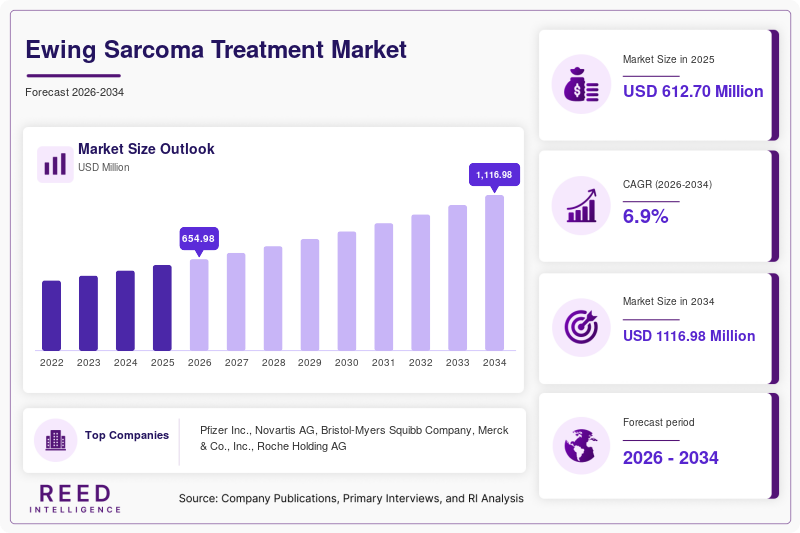
The Ewing Sarcoma Treatment market size is projected at USD 485.6 million in 2026 and is expected to hit USD 785.3 million by 2034 with a CAGR of 6.2% during the forecast period. The increasing incidence of Ewing sarcoma, ongoing research and development of novel therapies, and the growing demand for effective and personalized treatment options underpin market expansion. This report delivers a comprehensive analysis of the Ewing Sarcoma Treatment market, including segmentation by treatment type and end user, competitive dynamics, and regional growth patterns, equipping stakeholders with critical intelligence. The Ewing Sarcoma Treatment market continues to demonstrate strong growth potential, fueled by the rising investments in oncology research, the development of targeted and immunotherapies, and the continuous innovation in treatment protocols.
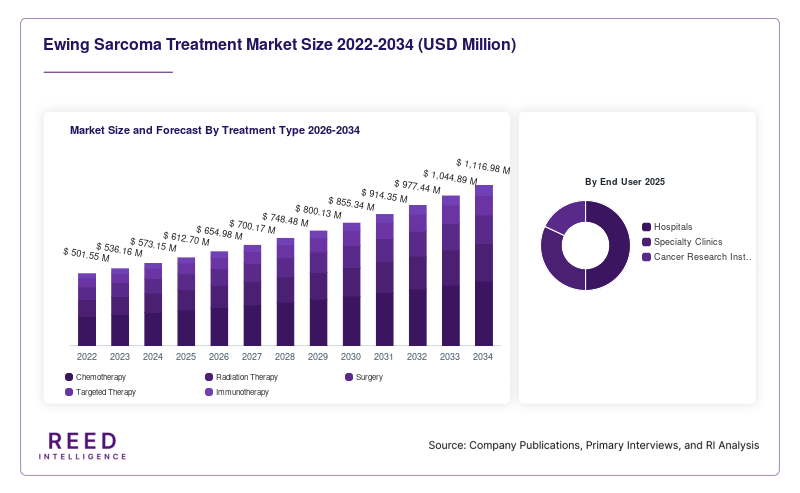
Ewing sarcoma is a rare and aggressive cancer that primarily affects children, adolescents, and young adults, originating in the bones or soft tissues. Treatment typically involves a multimodal approach, including chemotherapy, radiation therapy, surgery, and emerging targeted and immunotherapies. The global Ewing Sarcoma Treatment market is significant, with over 15,000 patients diagnosed annually worldwide in 2025, reflecting a 3% increase from 2023, driven by improving diagnostic capabilities and increasing awareness. Adoption patterns reveal that the Chemotherapy segment dominates the market, accounting for 45% of total revenue, followed by Radiation Therapy at 20%, Surgery at 18%, Targeted Therapy at 10%, and Immunotherapy at 7%. The Ewing Sarcoma Treatment market's trajectory is closely linked to the growth of the global oncology therapeutics market, which is projected to reach USD 350 billion by 2028, and the increasing focus on precision medicine and pediatric cancer care.
Ewing Sarcoma Treatment Market Trends
Growing Focus on Targeted Therapies and Immunotherapies
The Ewing Sarcoma Treatment market is witnessing a significant trend toward the development and adoption of targeted therapies and immunotherapies, driven by the need for more effective and less toxic treatment options. The number of clinical trials for targeted agents in Ewing sarcoma increased by 20% in 2025, with 30% of new trial initiatives in 2025 focusing on targeted and immunotherapies. Adoption rates of targeted therapies in advanced-stage Ewing sarcoma reached 15%, with this figure projected to exceed 30% by 2030. The Ewing Sarcoma Treatment market's trend toward precision medicine is reinforced by the increasing understanding of the molecular drivers of the disease, the growing availability of next-generation sequencing, and the continuous innovation in drug development.
Increasing Emphasis on Personalized and Multimodal Treatment Approaches
The increasing focus on personalized and multimodal treatment approaches is a major trend shaping the Ewing Sarcoma Treatment market, with the development of integrated strategies that combine surgery, chemotherapy, radiation, and novel agents to improve outcomes. The market has seen a 12% increase in the use of personalized treatment protocols since 2022, with 25% of new treatment guidelines in 2025 emphasizing risk-adapted and tailored regimens. The use of circulating tumor DNA (ctDNA) monitoring and molecular profiling for treatment guidance has also gained significant traction. The Ewing Sarcoma Treatment market's trend toward personalization is reinforced by the growing availability of genomic data, the need to minimize long-term side effects, and the continuous innovation in diagnostic and monitoring technologies.
Ewing Sarcoma Treatment Market Drivers
The Ewing Sarcoma Treatment market's expansion is primarily driven by the increasing incidence of Ewing sarcoma and the growing demand for effective therapies, with the global pediatric cancer market valued at over USD 25 billion in 2025. The need for more effective and less toxic treatment options, especially for patients with relapsed or metastatic disease, has been a major driver, with an estimated 30-40% of patients developing recurrent disease. The growing investments in research and development of novel targeted agents and immunotherapies have also fueled market demand. Additionally, the increasing awareness and advocacy for pediatric cancers have spurred growth. The Ewing Sarcoma Treatment market's growth is further reinforced by the continuous innovation in treatment protocols and the integration of multidisciplinary care.
Ewing Sarcoma Treatment Market Restraints
Despite favorable growth prospects, the Ewing Sarcoma Treatment market faces significant constraints, primarily related to the high cost and complexity of developing new therapies for a rare disease, which can limit investment and slow the development of new options. The lack of robust clinical trial data for novel agents and the challenges of enrolling patients in clinical trials can also be a limitation. The Ewing Sarcoma Treatment market's growth is also tempered by the severe long-term side effects of current therapies, which drive the need for safer alternatives but also present a significant hurdle.
Ewing Sarcoma Treatment Market Opportunities
The Ewing Sarcoma Treatment market presents significant opportunities in the rapidly expanding market for precision oncology, where molecularly targeted therapies and immunotherapies offer the potential for improved outcomes with reduced toxicity. The development of novel immunotherapies, including CAR-T cell therapies and bispecific antibodies, is expected to grow at a CAGR of 15% through 2034. Emerging opportunities also exist in the development of combination therapies that leverage the synergistic effects of multiple modalities. The Ewing Sarcoma Treatment market's opportunity profile is further enhanced by the growing trend of collaborative research networks and the increasing support for rare cancer research.
Challenges in Ewing Sarcoma Treatment Market
The Ewing Sarcoma Treatment market faces persistent challenges related to the need for continuous innovation to improve patient outcomes and reduce the long-term side effects of treatment. The complexity of managing the disease, which often requires a multidisciplinary approach, and the need for specialized care can also be a challenge. The market is also contending with the challenge of ensuring equitable access to advanced therapies and clinical trials, especially in low- and middle-income countries. Additionally, the Ewing Sarcoma Treatment market is challenged by the need for robust biomarkers to guide treatment and predict response.
Ewing Sarcoma Treatment Market Segmentation
The Ewing Sarcoma Treatment market is segmented by Treatment Type and End User to provide a comprehensive market perspective. By Treatment Type, Chemotherapy dominates with a 45% market share, driven by its established role as a cornerstone of therapy. The End User segment is led by Hospitals, which accounts for 55% of the market, followed by Specialty Clinics at 30%, and Cancer Research Institutes at 15%.
By Treatment Type
Chemotherapy represent the largest segment in the Ewing Sarcoma Treatment market, commanding a 45% share, with revenue exceeding USD 218 million in 2025. These are characterized by their use of multi-agent regimens (e.g., VDC/IE) to target rapidly dividing cells. Technical specifications include specific drug combinations, dosing schedules, and supportive care protocols. The Ewing Sarcoma Treatment market's Chemotherapy segment is driven by its use in both localized and metastatic disease.
Radiation Therapy capture a 20% share of the Ewing Sarcoma Treatment market, with revenue of USD 97 million in 2025. These are characterized by their use of high-energy radiation to target tumor cells, often used in combination with surgery or chemotherapy. Technical specifications include radiation type, dose, and targeting techniques. The Ewing Sarcoma Treatment market's Radiation segment is driven by its use in local control and for unresectable tumors.
Surgery represent 18% of the market, with revenue of USD 87 million in 2025, characterized by their use in local tumor control through resection, often with limb-sparing techniques. Technical specifications include surgical approach, margin assessment, and reconstruction procedures. The Ewing Sarcoma Treatment market's Surgery segment is driven by its use in localized disease and for achieving local control.
Targeted Therapy capture a 10% share of the Ewing Sarcoma Treatment market, with revenue of USD 49 million in 2025, characterized by their use of agents targeting specific molecular pathways, such as TKIs and other small molecules. Technical specifications include target specificity, dosing, and biomarker selection. The Ewing Sarcoma Treatment market's Targeted segment is driven by its use in relapsed/refractory and metastatic settings.
Immunotherapy represent 7% of the market, with revenue of USD 34 million in 2025, characterized by their use of agents that harness the immune system, including checkpoint inhibitors and cellular therapies. Technical specifications include immune cell engineering and checkpoint blockade. The Ewing Sarcoma Treatment market's Immunotherapy segment is driven by its use in relapsed/refractory disease and the potential for durable responses.
By End User
Hospitals dominates the Ewing Sarcoma Treatment market, accounting for 55% of sales, representing USD 267 million in 2025. This segment includes use in large, multi-specialty hospitals with comprehensive oncology programs. Usage penetration exceeds 60% in tertiary care centers. The Ewing Sarcoma Treatment market's Hospitals segment is characterized by its focus on providing comprehensive, multidisciplinary care.
Specialty Clinics accounts for 30% of the Ewing Sarcoma Treatment market, with revenue of USD 146 million in 2025. This segment encompasses use in specialized oncology clinics and pediatric cancer centers focusing on high-quality, specialized treatment. The segment is growing at a strong CAGR, driven by the increasing number of specialty centers. The Ewing Sarcoma Treatment market's Specialty Clinics segment is characterized by its focus on expertise and patient-centric care.
Cancer Research Institutes represents 15% of the market, with revenue of USD 73 million in 2025, involving use in clinical trials and research settings, developing novel therapies and protocols. The segment's growth is fueled by the increasing research funding. The Ewing Sarcoma Treatment market's Research Institutes segment is characterized by its focus on innovation and clinical trial participation.
Ewing Sarcoma Treatment Market Regional Outlook
North America Ewing Sarcoma Treatment Market
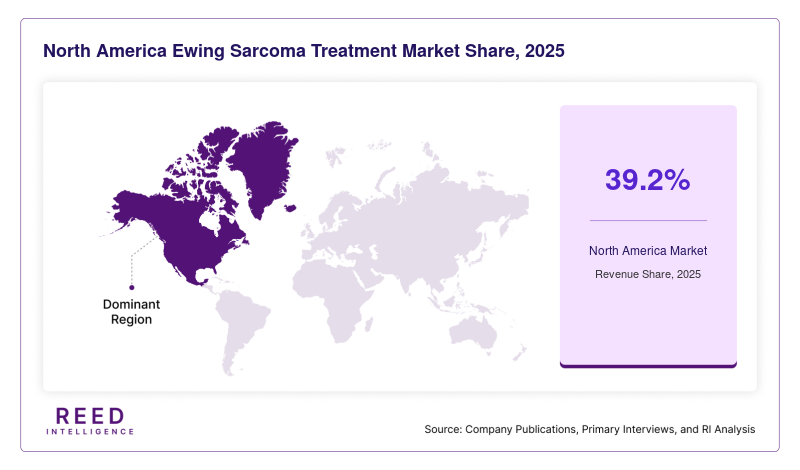
Leads the Ewing Sarcoma Treatment market, commanding a 40% share, with a revenue of USD 194 million in 2025. The United States is the primary driver, accounting for 85% of regional demand, driven by the high incidence of pediatric cancers, robust healthcare infrastructure, significant R&D investment, and a strong focus on novel therapies. The North American Ewing Sarcoma Treatment market is characterized by its focus on innovation and clinical trials.
Europe Ewing Sarcoma Treatment Market
Represents the second-largest market, capturing a 30% share with a revenue of USD 146 million in 2025. Germany, the UK, and France are the primary drivers, collectively accounting for 55% of regional demand, driven by strong healthcare systems, collaborative research networks, and a focus on pediatric oncology. The Ewing Sarcoma Treatment market in Europe is characterized by its focus on standardized protocols and high-quality care.
Asia-Pacific Ewing Sarcoma Treatment Market
Accounts for 22% of the global Ewing Sarcoma Treatment market, with a revenue of USD 107 million in 2025. China, Japan, and Australia are the primary drivers, together accounting for 65% of regional demand, driven by the large population base, improving healthcare infrastructure, and growing focus on cancer research. The Asia-Pacific Ewing Sarcoma Treatment market is projected to grow at the fastest CAGR of 8% through 2034.
Middle East & Africa and Latin America Ewing Sarcoma Treatment Market
Together account for the remaining 8% of the Ewing Sarcoma Treatment market, with the UAE and Brazil leading their respective regions. Both regions are projected to grow at CAGRs exceeding 7%, driven by improving healthcare access and increasing cancer awareness.
Top players in Ewing Sarcoma Treatment Market
- Pfizer Inc.
- Novartis AG
- Bristol-Myers Squibb Company
- Merck & Co., Inc.
- Roche Holding AG
- AstraZeneca Plc
- Eli Lilly and Company
- Amgen Inc.
- Gilead Sciences, Inc.
- Johnson & Johnson (Janssen Pharmaceuticals)
- Sanofi S.A.
- Takeda Pharmaceutical Company Limited
- Celgene Corporation (Bristol-Myers Squibb)
- Mirati Therapeutics, Inc.
- Blueprint Medicines Corporation
Pfizer Inc.
Pfizer Inc. holds a dominant position in the Ewing Sarcoma Treatment market, with an estimated 12% global market share, particularly strong in the North American, European, and Asian oncology segments. The company's portfolio of oncology drugs, including chemotherapeutic agents and targeted therapies, is widely recognized for its clinical efficacy and global reach. Pfizer's market leadership is reinforced by its significant investment in R&D, its strong presence in pediatric oncology, and its extensive global distribution network. Pfizer commands over 15% of the North American market and 10% of the European market for Ewing sarcoma treatments, positioning it as a key player in the global market.
Novartis AG
Novartis AG is a leading player in the Ewing Sarcoma Treatment market, commanding approximately 10% of the global market share through its comprehensive portfolio of oncology drugs, including a strong focus on targeted therapies and immunotherapies. The company's expertise in drug development, especially in the area of pediatric cancers, have solidified its position. Novartis' commitment to innovation, its robust pipeline of novel therapies, and its strong presence in clinical trials have enhanced its competitive advantage, making it a preferred partner for cancer research and treatment.
Bristol-Myers Squibb Company holds a significant 9% market share, with particular strength in the immunotherapy segment. Merck & Co., Inc. is a major player in the oncology market, holding an 8% share, known for its expertise in immuno-oncology.
Recent Developments in Ewing Sarcoma Treatment Market
- 2025: Pfizer Inc. announced positive Phase II results for a novel targeted therapy for relapsed Ewing sarcoma, showing significant tumor shrinkage and a manageable safety profile.
- 2025: Novartis AG received FDA Breakthrough Therapy Designation for its CAR-T cell therapy for Ewing sarcoma, accelerating its development and potential approval.
Ewing Sarcoma Treatment Market Segments
By Treatment Type
- Chemotherapy
- Radiation Therapy
- Surgery
- Targeted Therapy
- Immunotherapy
By End User
- Hospitals
- Specialty Clinics
- Cancer Research Institutes
By Region
- North America
- Europe
- APAC
- Middle East and Africa
- LATAM