Extruded Polylactic Acid Fiber Market Size, Share & Demand Report By Type (Solid PLA Fiber, Hollow PLA Fiber), By Application (Textile, Nonwoven, Industrial), By End-Use Industry (Apparel, Healthcare, Packaging, Agriculture) & Segment Forecasts, 2025–2034
USD 3950
Market Overview
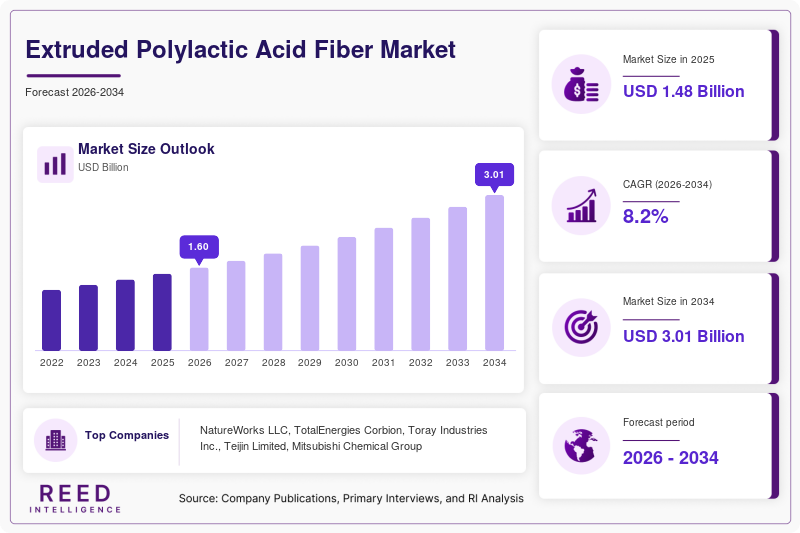
The Extruded Polylactic Acid Fiber Market size is estimated at USD 1.48 billion, with a projected increase to USD 1.62 billion in 2026. By 2034, the market is forecast to reach approximately USD 3.25 billion, registering a compound annual growth rate (CAGR) of 8.2% during 2025–2034. This growth trajectory reflects rising regulatory pressure to reduce plastic waste and increased adoption of bio-based fibers.
Extruded polylactic acid (PLA) fibers are derived from renewable sources such as corn starch and sugarcane. These fibers offer advantages including biodegradability, low carbon footprint, and compatibility with existing textile processing technologies. As industries shift toward circular economy models, PLA fibers are gaining traction as alternatives to petroleum-based synthetic fibers.
Key Highlights
- Market size is projected to grow from USD 1.48 billion in 2025 to USD 3.25 billion by 2034, reflecting steady expansion across key industries. This growth highlights increasing commercial adoption and scaling production capacities globally.
- The market is expected to register a CAGR of 8.2% during 2025–2034, indicating consistent long-term growth. This rate is supported by rising sustainability initiatives and continuous product innovation.
- There is strong demand from textile, packaging, and nonwoven sectors, where PLA fibers are used as eco-friendly alternatives. These industries are actively shifting toward sustainable materials to meet regulatory and consumer expectations.
- The adoption of biodegradable and bio-based materials is increasing due to environmental concerns and regulatory pressure. PLA fibers are gaining traction as industries move toward circular economy practices.
Market Trends
Increasing Adoption of Sustainable Textiles
The shift toward sustainable textiles is one of the most prominent trends shaping the extruded polylactic acid fiber market. Fashion brands and textile manufacturers are increasingly integrating biodegradable fibers into their product lines to align with environmental goals. Consumers are showing a growing preference for eco-friendly clothing, driving brands to adopt PLA fibers as alternatives to synthetic materials. This trend is further supported by sustainability certifications and eco-labeling initiatives, which encourage manufacturers to use renewable resources. The adoption of PLA fibers is particularly notable in sportswear, casual apparel, and home textiles, where performance and sustainability are both valued. As sustainability becomes a core business strategy, demand for PLA fibers is expected to rise consistently.
Expansion of Nonwoven and Industrial Applications
Another significant trend is the increasing use of PLA fibers in nonwoven and industrial applications. These fibers are being utilized in products such as hygiene items, medical textiles, agricultural fabrics, and filtration systems. The biodegradability and compostability of PLA fibers make them suitable for single-use applications, where environmental impact is a key concern. In the healthcare sector, PLA-based nonwoven fabrics are gaining attention for their use in disposable medical products. Additionally, advancements in extrusion processes are enabling the production of high-performance fibers with improved strength and durability. This trend is expanding the application scope of PLA fibers beyond traditional textiles, contributing to overall market growth.
Market Drivers
Growing Environmental Regulations and Policies
Stringent environmental regulations and policies are a major driver of the extruded polylactic acid fiber market. Governments worldwide are implementing measures to reduce plastic waste and carbon emissions, encouraging the use of biodegradable materials. Regulations targeting single-use plastics and non-recyclable materials are prompting industries to adopt sustainable alternatives such as PLA fibers. In regions such as Europe and North America, regulatory frameworks are supporting the development and commercialization of bio-based products. These policies are creating a favorable environment for PLA fiber manufacturers and accelerating market growth. Companies are investing in research and development to comply with environmental standards and capitalize on emerging opportunities.
Rising Demand from Textile and Apparel Industry
The expanding textile and apparel industry is another key driver of the market. As global populations grow and disposable incomes increase, demand for clothing and textiles continues to rise. At the same time, consumers are becoming more conscious of environmental issues, leading to increased demand for sustainable products. PLA fibers offer a viable solution by combining performance characteristics with environmental benefits. Textile manufacturers are incorporating PLA fibers into various applications, including apparel, home furnishings, and technical textiles. The integration of PLA fibers into mainstream textile production is expected to drive significant market growth over the forecast period.
Market Restraint
High Production Costs and Limited Infrastructure
One of the primary restraints affecting the extruded polylactic acid fiber market is the relatively high production cost compared to conventional synthetic fibers. The manufacturing process of PLA fibers involves the use of bio-based feedstocks and specialized extrusion technologies, which can increase overall costs. Additionally, the availability and price fluctuations of raw materials such as corn and sugarcane can impact production economics. Limited infrastructure for large-scale production and processing of PLA fibers further restricts market expansion.
This cost disadvantage poses challenges for manufacturers, particularly in price-sensitive markets where synthetic fibers such as polyester dominate. For example, small and medium-sized textile producers may hesitate to switch to PLA fibers due to higher input costs and uncertain returns. Moreover, the lack of widespread composting facilities limits the end-of-life benefits of PLA fibers, reducing their attractiveness in some regions. Addressing these challenges requires investments in technology, economies of scale, and infrastructure development.
Market Opportunities
Technological Advancements in Fiber Processing
Technological advancements in extrusion and polymer processing present significant opportunities for the market. Innovations aimed at improving the strength, durability, and thermal resistance of PLA fibers are enhancing their applicability across various industries. Researchers and manufacturers are developing modified PLA blends and composites to overcome performance limitations. These advancements are enabling the production of high-quality fibers suitable for demanding applications such as automotive interiors and industrial textiles. As technology continues to evolve, production costs are expected to decrease, making PLA fibers more competitive. This creates opportunities for manufacturers to expand their product portfolios and enter new markets.
Expansion in Emerging Markets
Emerging markets in Asia Pacific, Latin America, and Africa offer substantial growth opportunities for the extruded polylactic acid fiber market. Rapid industrialization, urbanization, and increasing environmental awareness are driving demand for sustainable materials in these regions. Governments are promoting eco-friendly products through policies and incentives, encouraging local production and consumption of PLA fibers. Additionally, the growing textile manufacturing base in countries such as India and Vietnam is creating new avenues for market expansion. Companies can leverage these opportunities by establishing production facilities and partnerships in emerging markets, thereby reducing costs and increasing market penetration.
Segmental Analysis
By Type
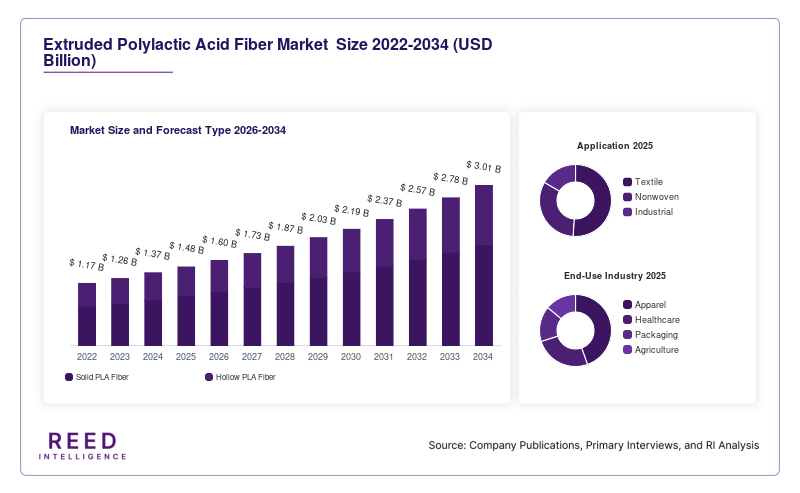
The solid PLA fiber segment dominated the market in 2024, accounting for approximately 58% of the total share. These fibers are widely used in textile and apparel applications due to their strength, durability, and ease of processing. Solid PLA fibers offer good mechanical properties and compatibility with existing manufacturing systems, making them a preferred choice for producers. The segment’s dominance is further supported by its cost-effectiveness compared to other specialized fiber types. Manufacturers are focusing on improving the performance characteristics of solid PLA fibers to expand their application scope and maintain their market position.
The hollow PLA fiber segment is expected to be the fastest-growing, with a projected CAGR of 9.5% during the forecast period. These fibers are gaining popularity due to their lightweight structure and enhanced insulation properties. Hollow PLA fibers are increasingly used in nonwoven applications, including hygiene products and filtration systems. The growth of this segment is driven by rising demand for high-performance and sustainable materials in specialized applications. Technological advancements in extrusion processes are enabling the production of high-quality hollow fibers, supporting their rapid adoption.
By Application
The textile segment held the largest share in 2024, accounting for approximately 52% of the market. PLA fibers are widely used in apparel, home textiles, and industrial fabrics due to their eco-friendly properties and performance characteristics. The segment’s dominance is driven by increasing consumer demand for sustainable clothing and the growing adoption of bio-based materials by textile manufacturers. The versatility of PLA fibers allows them to be used in a wide range of textile applications, supporting their widespread adoption.
The nonwoven segment is expected to grow at the fastest rate, with a CAGR of 9.0% during the forecast period. Nonwoven PLA fibers are used in applications such as hygiene products, medical textiles, and filtration systems. The growth of this segment is driven by increasing demand for disposable and biodegradable products. The COVID-19 pandemic highlighted the importance of sustainable medical supplies, further boosting the adoption of PLA-based nonwoven materials.
By End-Use Industry
The apparel industry dominated the market in 2024, accounting for approximately 46% of the total share. The use of PLA fibers in clothing is driven by increasing consumer awareness of environmental issues and the demand for sustainable fashion. Apparel manufacturers are incorporating PLA fibers into their products to reduce environmental impact and meet sustainability goals. The segment’s growth is supported by the expansion of the global fashion industry and the increasing popularity of eco-friendly clothing.
The healthcare industry is expected to be the fastest-growing segment, with a CAGR of 9.3% during the forecast period. PLA fibers are increasingly used in medical textiles, including surgical gowns, masks, and disposable products. The growth of this segment is driven by the need for biodegradable and safe materials in healthcare applications. Advances in material science and increasing investment in healthcare infrastructure are further supporting the adoption of PLA fibers in this sector.
Regional Analysis
North America
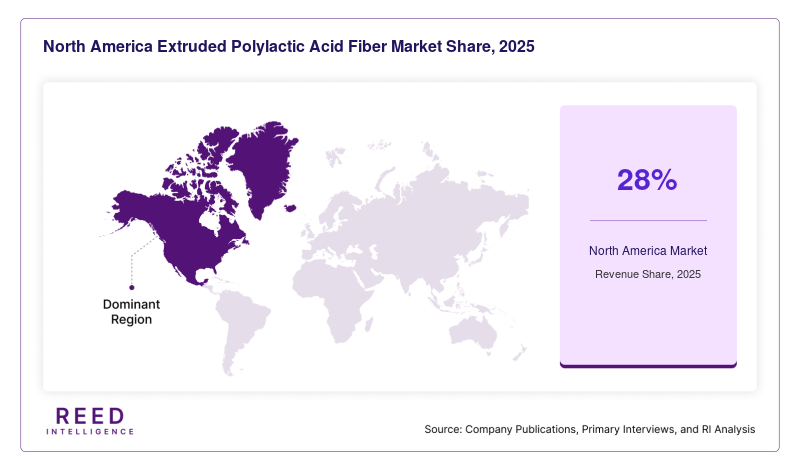
North America accounted for approximately 28% of the global market share in 2025, driven by strong demand for sustainable materials and advanced manufacturing capabilities. The region is expected to register a CAGR of 7.8% during the forecast period, supported by increasing adoption of biodegradable fibers across various industries. The presence of established textile and packaging industries, along with regulatory support for eco-friendly products, is contributing to market growth.
The United States dominates the North American market due to its robust industrial base and focus on sustainability. A unique growth factor in the region is the increasing investment in bio-based material research and development. Government initiatives promoting renewable materials and corporate sustainability commitments are encouraging the use of PLA fibers in textiles and nonwoven applications.
Europe
Europe held a 25% market share in 2025 and is projected to grow at a CAGR of 8.0% through 2034. The region’s strong regulatory framework and emphasis on environmental sustainability are key factors driving market growth. The European Union’s policies targeting plastic reduction and circular economy practices are boosting demand for biodegradable fibers.
Germany leads the European market, supported by its advanced manufacturing sector and focus on innovation. A unique growth factor in the region is the widespread adoption of eco-labeling and sustainability certifications. These initiatives are encouraging manufacturers to incorporate PLA fibers into their products, enhancing market penetration.
Asia Pacific
Asia Pacific is the largest and fastest-growing region, accounting for 32% of the market share in 2025 and expected to grow at a CAGR of 9.2%. Rapid industrialization, expanding textile production, and increasing environmental awareness are driving market growth in the region.
China dominates the Asia Pacific market due to its large-scale manufacturing capabilities and availability of raw materials. A unique growth factor is the integration of PLA fiber production with agricultural supply chains, which ensures a steady supply of feedstock and reduces costs, supporting market expansion.
Middle East & Africa
The Middle East & Africa region held a 7% market share in 2025 and is expected to grow at a CAGR of 7.5%. The market is driven by increasing awareness of sustainable materials and gradual industrial development.
South Africa is a key market in the region, supported by growing investments in eco-friendly technologies. A unique growth factor is the adoption of PLA fibers in agricultural applications, such as biodegradable mulch films and geotextiles, which are gaining popularity due to their environmental benefits.
Latin America
Latin America accounted for 8% of the market share in 2025 and is projected to grow at a CAGR of 7.9%. The region’s expanding textile industry and increasing focus on sustainability are contributing to market growth.
Brazil leads the Latin American market, driven by its strong agricultural base and availability of raw materials. A unique growth factor is the use of PLA fibers in packaging applications, where biodegradable materials are gaining traction due to regulatory support and consumer demand.
Competitive Landscape
The extruded polylactic acid fiber market is moderately fragmented, with several global and regional players competing based on product quality, innovation, and sustainability initiatives. The market is characterized by continuous investment in research and development to improve fiber properties and reduce production costs. Companies are also focusing on strategic partnerships and expansions to strengthen their market presence.
NatureWorks LLC is a leading player in the market, known for its strong product portfolio and technological capabilities. The company has recently expanded its production capacity to meet growing demand for PLA-based products. Other key players are also investing in advanced extrusion technologies and exploring new applications for PLA fibers. The competitive landscape is expected to evolve as new entrants and technological innovations reshape the market dynamics.
Key Players
- NatureWorks LLC
- TotalEnergies Corbion
- Toray Industries Inc.
- Teijin Limited
- Mitsubishi Chemical Group
- Unitika Ltd.
- Futerro
- Danimer Scientific
- Zhejiang Hisun Biomaterials
- Jiangsu Supla Bioplastics
- Shanghai Tong-jie-liang Biomaterials
- FiberVisions Corporation
- Kuraray Co., Ltd.
- BASF SE
- Dow Inc.
Recent Developments
- In 2024, NatureWorks LLC announced the expansion of its PLA production facility to increase capacity and meet rising global demand.
- In 2023, TotalEnergies Corbion introduced a new grade of PLA fiber designed for high-performance textile applications.
- In 2024, Toray Industries Inc. developed advanced extrusion technology to enhance the durability and strength of PLA fibers.
Extruded Polylactic Acid Fiber Market Segments
Type
- Solid PLA Fiber
- Hollow PLA Fiber
Application
- Textile
- Nonwoven
- Industrial
End-Use Industry
- Apparel
- Healthcare
- Packaging
- Agriculture
By Region
- North America
- Europe
- APAC
- Middle East and Africa
- LATAM