Fabric Ducting Market Size, Share & Demand Report By Type (Dispersion Fabric Ducting, Non-Dispersion Fabric Ducting), By Application (Commercial, Industrial, Residential), By End-Use (Food Processing, Healthcare, Retail, Manufacturing, Others), By Region & Segment Forecasts, 2025–2034
USD 3950
Market Overview
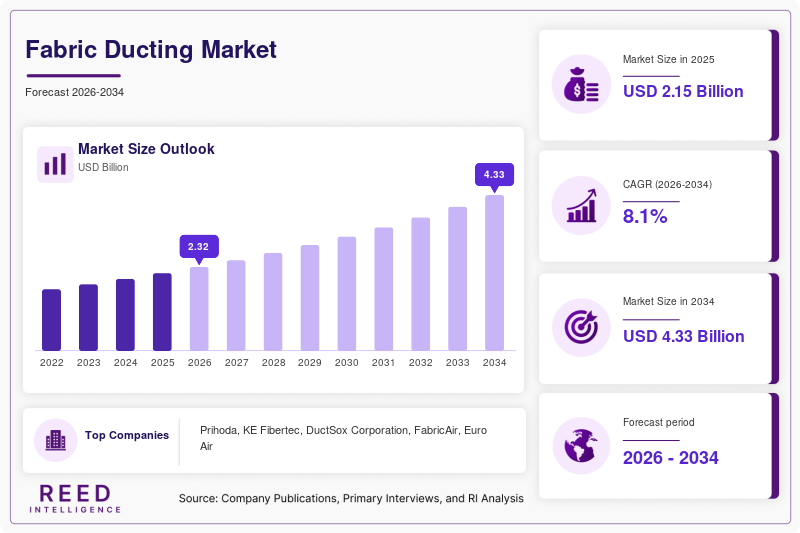
The Fabric Ducting Market size reached approximately USD 2.15 billion in 2025 and is expected to grow to USD 2.32 billion in 2026, reflecting consistent demand across commercial, industrial, and institutional applications. Over the forecast period, the market is projected to reach USD 4.65 billion by 2034, expanding at a CAGR of 8.1% from 2025 to 2034.
Fabric ducting systems, also known as textile air dispersion systems, are gaining traction due to their superior airflow distribution, easy installation, and cost-effectiveness compared to traditional metal ducting. These systems are widely used in food processing, pharmaceuticals, retail spaces, sports facilities, and warehouses where uniform air distribution and hygiene are critical.
Key Highlights
- Market size reached USD 2.15 billion in 2025 and USD 2.32 billion in 2026.
This steady growth reflects increasing adoption of advanced and flexible air distribution systems across industries. - The market is forecasted to reach USD 4.65 billion by 2034.
Expansion is supported by rising infrastructure development and modernization of HVAC systems globally. - The market is expected to grow at a CAGR of 8.1% from 2025 to 2034.
Consistent demand from commercial and industrial sectors is contributing to this sustained growth rate. - Rising demand for energy-efficient HVAC systems is driving adoption.
Fabric ducting helps reduce energy consumption by improving airflow efficiency and minimizing losses.
Market Trends
Increasing Adoption of Energy-Efficient HVAC Systems
One of the prominent trends in the Fabric Ducting Market is the growing adoption of energy-efficient HVAC systems across commercial and industrial sectors. Fabric ducting systems are designed to provide uniform airflow distribution with minimal pressure loss, which helps reduce energy consumption. As organizations aim to lower operational costs and meet sustainability goals, fabric ducting is becoming a preferred alternative to conventional metal ducts. The integration of advanced airflow engineering and optimized design configurations enhances system performance, making it suitable for large-scale facilities such as warehouses and manufacturing plants. This trend is expected to strengthen as governments and regulatory bodies promote energy efficiency standards.
Rising Demand for Hygienic Air Distribution Solutions
Another key trend is the increasing demand for hygienic and contamination-free air distribution systems, particularly in sensitive environments such as food processing units, pharmaceutical manufacturing, and healthcare facilities. Fabric ducting systems are often made with antimicrobial and washable materials, ensuring high hygiene standards. These systems can be easily removed and cleaned, reducing the risk of airborne contaminants. As industries face stricter regulations regarding air quality and sanitation, the adoption of fabric ducting is gaining momentum. This trend is further supported by growing consumer awareness of health and safety standards in indoor environments.
Market Drivers
Expansion of Commercial Infrastructure
The rapid expansion of commercial infrastructure is a significant driver of the Fabric Ducting Market. Increasing investments in shopping centers, office spaces, airports, and sports complexes are creating strong demand for efficient HVAC systems. Fabric ducting solutions offer quick installation and lower maintenance costs, making them suitable for large-scale projects with tight timelines. Additionally, the aesthetic appeal of fabric ducts, which can be customized in various colors and shapes, enhances their adoption in modern architectural designs. As urbanization continues to accelerate, particularly in emerging economies, the demand for fabric ducting systems is expected to rise steadily.
Cost-Effectiveness and Operational Efficiency
Fabric ducting systems provide a cost-effective alternative to traditional metal ducting, which is driving their adoption across various industries. These systems are lightweight, reducing transportation and installation costs. Moreover, they require fewer structural supports, which further lowers overall project expenses. Fabric ducts also improve airflow efficiency, leading to reduced energy consumption and lower operational costs. This combination of cost savings and performance benefits makes fabric ducting an attractive solution for businesses seeking to optimize their HVAC systems. The increasing focus on operational efficiency is expected to continue driving market growth.
Market Restraint
Limited Awareness and Perceived Durability Concerns
Despite the advantages of fabric ducting systems, limited awareness and concerns regarding durability remain key restraints in the market. In many regions, especially developing economies, traditional metal ducting systems are still widely preferred due to familiarity and perceived reliability. Some end-users believe that fabric ducts may not be as durable or long-lasting as metal alternatives, particularly in harsh industrial environments. This perception can hinder adoption, even though modern fabric ducting systems are designed to withstand demanding conditions.
Additionally, the lack of skilled professionals for installation and maintenance can impact market growth. Improper installation may lead to performance issues, reinforcing negative perceptions among users. For example, in heavy industrial settings where high temperatures and abrasive particles are present, decision-makers may hesitate to switch to fabric ducting due to concerns about wear and tear. Addressing these challenges through education, product innovation, and demonstration of long-term performance is essential for overcoming this restraint.
Market Opportunities
Growth in Emerging Economies
Emerging economies present significant growth opportunities for the Fabric Ducting Market due to rapid industrialization and urban development. Countries in Asia Pacific, Latin America, and the Middle East are witnessing increased investments in infrastructure and manufacturing facilities. As these regions adopt modern construction practices, the demand for efficient and flexible HVAC solutions is rising. Fabric ducting systems, with their cost advantages and ease of installation, are well-suited for these markets. Furthermore, government initiatives promoting energy efficiency and sustainable building practices are expected to support market expansion.
Integration with Smart Building Technologies
The integration of fabric ducting systems with smart building technologies offers another promising opportunity for market growth. Smart HVAC systems equipped with sensors and automation capabilities can optimize airflow and temperature control, enhancing overall energy efficiency. Fabric ducting systems can be designed to complement these technologies, providing precise air distribution and improved indoor air quality. As the adoption of smart buildings increases globally, the demand for advanced HVAC solutions, including fabric ducting, is expected to grow. This trend is particularly relevant in commercial spaces and high-tech industries.
Segmental Analysis
By Type
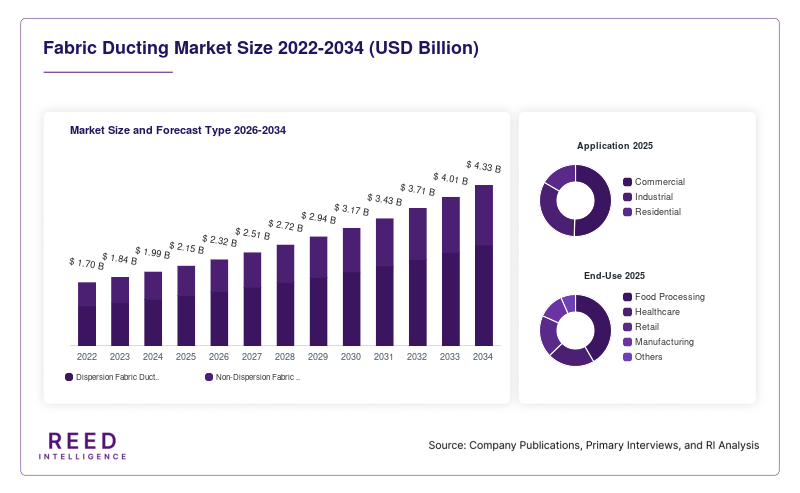
The dispersion fabric ducting segment dominated the market in 2024, accounting for approximately 58% of the total share. This segment is widely used due to its ability to provide uniform airflow distribution across large spaces. Dispersion systems are particularly suitable for applications such as warehouses, sports facilities, and retail stores where consistent air distribution is essential. The growing demand for energy-efficient HVAC systems is further driving the adoption of this segment. Additionally, advancements in fabric materials and design are enhancing the performance and durability of dispersion ducting systems.
The non-dispersion segment is expected to be the fastest-growing, with a projected CAGR of 8.7% during the forecast period. This growth is driven by increasing demand in specialized industrial applications where targeted airflow is required. Non-dispersion systems are designed to deliver air to specific areas, making them suitable for manufacturing facilities and laboratories. The rising need for customized HVAC solutions is supporting the growth of this segment.
By Application
The commercial application segment held the largest market share in 2024, accounting for around 45%. This segment includes shopping malls, offices, and entertainment venues where fabric ducting systems are used to enhance indoor air quality and energy efficiency. The increasing construction of commercial buildings and the adoption of modern HVAC systems are key factors driving this segment. Fabric ducting systems offer aesthetic flexibility, making them suitable for contemporary architectural designs.
The industrial application segment is expected to grow at the highest CAGR of 8.9% during the forecast period. This growth is driven by the increasing demand for efficient air distribution systems in manufacturing and processing facilities. Industries such as food processing and pharmaceuticals require hygienic and reliable HVAC solutions, which is boosting the adoption of fabric ducting systems.
By End-Use
The food processing industry dominated the market in 2024, accounting for approximately 35% of the total share. Fabric ducting systems are widely used in this industry due to their hygienic properties and ease of cleaning. The growing focus on food safety and compliance with hygiene standards is driving the adoption of fabric ducting systems. These systems help maintain consistent airflow and temperature, which is essential for food processing operations.
The healthcare sector is expected to be the fastest-growing end-use segment, with a CAGR of 9.2%. The increasing demand for advanced HVAC systems in hospitals and healthcare facilities is driving this growth. Fabric ducting systems provide improved air quality and reduce the risk of contamination, making them suitable for healthcare environments. The rising investment in healthcare infrastructure is expected to further support this segment.
Regional Analysis
North America
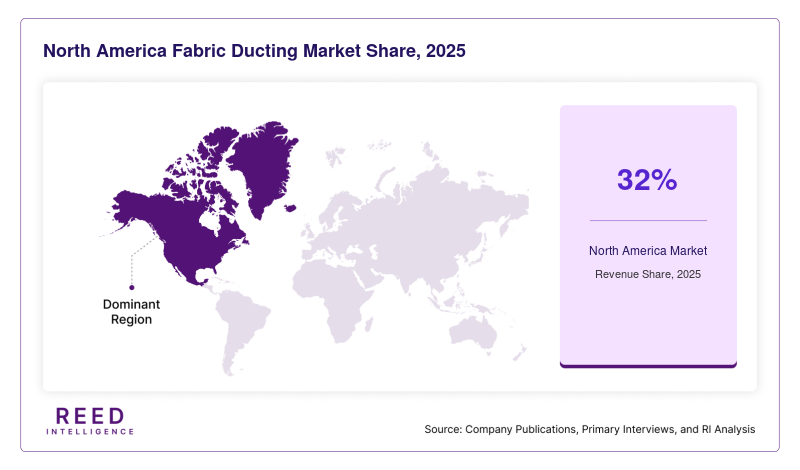
North America accounted for a significant share of the Fabric Ducting Market in 2025, contributing approximately 32% of the global revenue. The region is expected to maintain steady growth with a CAGR of around 7.5% during the forecast period. The presence of advanced infrastructure, high adoption of energy-efficient technologies, and strict building regulations are key factors driving market growth. The increasing demand for sustainable HVAC solutions in commercial and industrial sectors is further supporting the adoption of fabric ducting systems.
The United States dominates the regional market due to its well-established construction industry and strong focus on energy efficiency. A unique growth factor in this region is the rising adoption of green building certifications such as LEED, which encourages the use of sustainable HVAC systems. This trend is expected to drive continued demand for fabric ducting solutions across various applications.
Europe
Europe held a market share of approximately 27% in 2025 and is projected to grow at a CAGR of 7.8% over the forecast period. The region’s strong emphasis on sustainability and energy efficiency is a major driver for the adoption of fabric ducting systems. Regulatory frameworks aimed at reducing carbon emissions are encouraging the use of advanced HVAC solutions that minimize energy consumption.
Germany leads the European market due to its robust industrial base and focus on technological innovation. A unique growth factor in this region is the increasing demand for hygienic air distribution systems in the food and pharmaceutical industries. Strict hygiene standards are driving the adoption of fabric ducting systems that offer easy cleaning and maintenance.
Asia Pacific
Asia Pacific is the fastest-growing region in the Fabric Ducting Market, accounting for around 25% of the global share in 2025 and expected to grow at a CAGR of 9.5%. Rapid urbanization, industrialization, and infrastructure development are key factors contributing to market growth. The increasing construction of commercial buildings and manufacturing facilities is driving demand for efficient HVAC systems.
China dominates the regional market due to its large-scale industrial activities and growing construction sector. A unique growth factor in this region is the expansion of e-commerce and logistics facilities, which require efficient air distribution systems. Fabric ducting is increasingly being adopted in warehouses and distribution centers to improve airflow and energy efficiency.
Middle East & Africa
The Middle East & Africa region accounted for approximately 9% of the Fabric Ducting Market in 2025 and is expected to grow at a CAGR of 8.3%. The region’s hot climate necessitates efficient cooling systems, driving demand for advanced HVAC solutions. Increasing investments in infrastructure and commercial projects are also supporting market growth.
The United Arab Emirates is a key market in this region, driven by large-scale construction projects and a focus on modern infrastructure. A unique growth factor is the growing demand for efficient cooling systems in large indoor spaces such as malls and airports. Fabric ducting systems are gaining popularity due to their ability to provide uniform air distribution.
Latin America
Latin America held a market share of around 7% in 2025 and is projected to grow at a CAGR of 7.9%. The region is witnessing steady growth due to increasing investments in commercial infrastructure and industrial development. The demand for cost-effective HVAC solutions is driving the adoption of fabric ducting systems.
Brazil leads the regional market, supported by its expanding construction sector. A unique growth factor in this region is the rising demand for energy-efficient solutions in industrial facilities. Fabric ducting systems offer a cost-effective alternative to traditional ducting, making them attractive for businesses seeking to reduce operational costs.
Competitive Landscape
The Fabric Ducting Market is moderately fragmented, with several global and regional players competing based on product innovation, quality, and pricing. Key companies are focusing on expanding their product portfolios and enhancing their distribution networks to strengthen their market presence. Strategic collaborations and partnerships are also common, enabling companies to access new markets and technologies.
One of the leading players in the market is Prihoda, known for its extensive range of fabric ducting solutions and strong global presence. The company has been focusing on innovation and customization to meet diverse customer requirements. A recent development includes the introduction of advanced antimicrobial fabric ducting systems designed for healthcare and food processing applications.
Other prominent players are investing in research and development to improve product performance and durability. The competitive landscape is expected to remain dynamic as companies continue to adopt strategies such as mergers, acquisitions, and product launches to gain a competitive edge.
Key Players List
- Prihoda
- KE Fibertec
- DuctSox Corporation
- FabricAir
- Euro Air
- Aedis
- Textile Air Management
- Ventilation Textile
- Air Distribution Technologies
- DurkeeSox
- HVAC Textile
- Fabric Duct Systems Inc.
- Aero Textile Concepts
- Air Socks India
- Climacool Fabric Ducting
Recent Developments
- In 2024, a leading manufacturer introduced antimicrobial fabric ducting solutions to cater to the growing demand in healthcare and food processing industries.
- In 2023, a major player expanded its production facility in Asia Pacific to meet increasing regional demand.
- In 2025, a company launched a smart fabric ducting system integrated with IoT-based HVAC controls to enhance energy efficiency and performance.
Fabric Ducting Market Segments
Type
- Dispersion Fabric Ducting
- Non-Dispersion Fabric Ducting
Application
- Commercial
- Industrial
- Residential
End-Use
- Food Processing
- Healthcare
- Retail
- Manufacturing
- Others
By Region
- North America
- Europe
- APAC
- Middle East and Africa
- LATAM