Facial Cosmetic Surgery And Rejuvenation Market Size, Share & Demand Report By Procedure Type (Surgical Facial Procedures, Minimally Invasive Rejuvenation Procedures, Laser-Based Facial Resurfacing, Facial Contouring Treatments), By End User (Hospitals, Specialty Cosmetic Clinics, Medical Spas, Dermatology Centers), By Age Group (18–24 Years, 25–34 Years, 35–50 Years, Above 50 Years), By Region & Segment Forecasts, 2026–2034
USD 3950
Market Overview
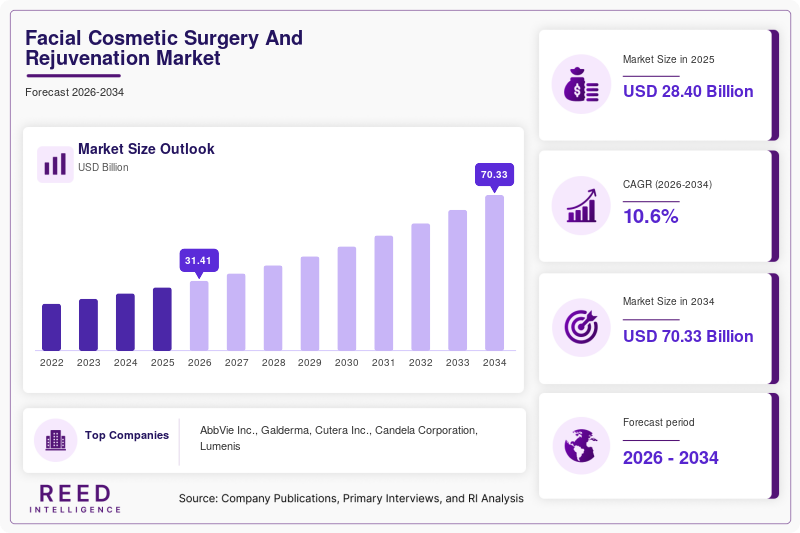
The global Facial Cosmetic Surgery And Rejuvenation Market size was valued at USD 28.4 billion in 2026 and is projected to reach USD 63.7 billion by 2034, expanding at a CAGR of 10.6% during the forecast period from 2026 to 2034. The market is experiencing consistent growth due to increasing consumer awareness regarding aesthetic appearance, rising disposable income in developing economies, and the growing acceptance of minimally invasive cosmetic procedures across multiple age groups. Facial cosmetic surgery and rejuvenation procedures are increasingly viewed as part of preventive and corrective wellness routines rather than luxury treatments, which continues to broaden the patient base worldwide.
One of the major global factors supporting market expansion is the rapid integration of advanced imaging technologies, AI-assisted treatment planning, and minimally invasive surgical systems in aesthetic clinics and hospitals. These technologies improve procedural precision, shorten recovery periods, and enhance patient satisfaction. In addition, social media influence and growing digital exposure have accelerated interest in facial enhancement procedures among younger demographics. Clinics are also expanding service portfolios to include personalized skin rejuvenation programs, laser-assisted therapies, injectables, and hybrid treatment combinations that deliver long-lasting outcomes with reduced downtime.
Key Highlights
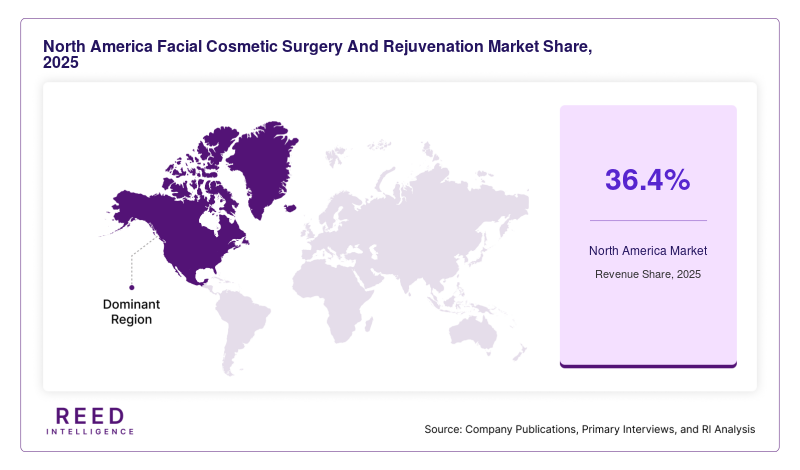
- North America dominated the market with a 36.4% share in 2025.
- Asia Pacific is expected to grow at the fastest CAGR of 11.8% during 2026–2034.
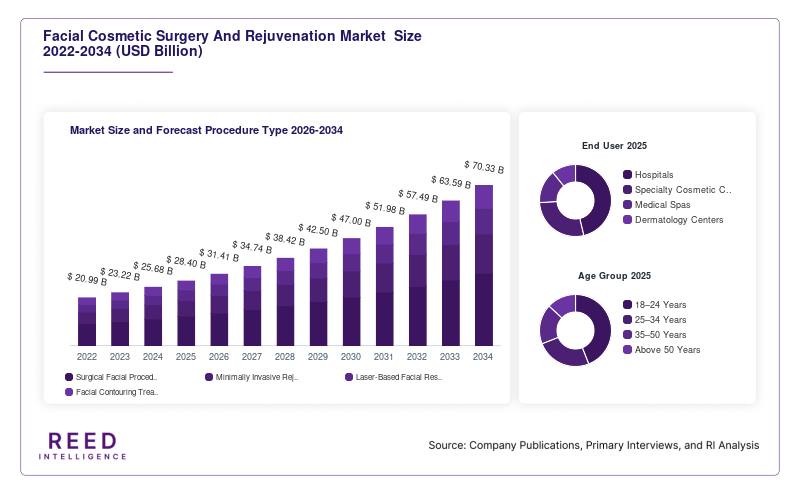
- By procedure type, minimally invasive rejuvenation procedures accounted for the largest share of 42.7%, while laser-based facial resurfacing is projected to grow at a CAGR of 12.6%.
- By end user, specialty cosmetic clinics led with a 48.9% share, whereas medical spas are expected to expand at a CAGR of 13.1%.
- The United States remained the dominant country, with market values of USD 7.1 billion in 2024 and USD 7.8 billion in 2025.
Market Trends
Rising Adoption of Non-Surgical Facial Rejuvenation Procedures
The demand for non-surgical facial rejuvenation procedures has increased significantly due to shorter recovery periods, lower treatment costs, and reduced procedural risks compared to traditional surgeries. Consumers are increasingly opting for treatments such as dermal fillers, botulinum toxin injections, chemical peels, thread lifts, and radiofrequency skin tightening procedures. These procedures are gaining popularity among working professionals and middle-aged consumers seeking gradual aesthetic enhancement without extended downtime. Clinics are also introducing combination therapies that integrate injectables with laser treatments to improve facial contouring and skin texture simultaneously.
The growing influence of digital beauty standards and video-based communication platforms has strengthened patient interest in minimally invasive facial improvements. Younger consumers in the 25–40 age category are increasingly seeking preventive anti-aging procedures, creating recurring treatment demand for clinics and aesthetic centers. Market participants are investing in advanced devices with improved safety profiles and customizable treatment parameters, further accelerating adoption rates globally.
Expansion of Personalized Aesthetic Treatment Planning
Personalized treatment planning has emerged as a significant trend in the Facial Cosmetic Surgery And Rejuvenation Market. Clinics are increasingly using AI-assisted facial analysis tools, 3D imaging systems, and digital simulation software to create individualized cosmetic treatment plans. These technologies allow practitioners to evaluate facial symmetry, skin quality, aging patterns, and structural features before recommending procedures. Personalized treatment programs improve patient confidence and support higher procedural success rates, which contributes to stronger market growth.
Consumers are also demanding customized solutions based on ethnicity, age, skin sensitivity, and lifestyle preferences. As a result, providers are developing specialized rejuvenation packages tailored to specific patient categories. Luxury medical spas and cosmetic clinics are integrating subscription-based skincare maintenance programs with procedural treatments to improve long-term customer retention. This trend is expected to create additional revenue opportunities for clinics while encouraging innovation in regenerative facial therapies and advanced aesthetic products.
Market Drivers
Increasing Global Awareness of Aesthetic Enhancement
Growing awareness regarding aesthetic enhancement procedures is a major factor driving the Facial Cosmetic Surgery And Rejuvenation Market. Consumers are becoming more informed about available treatment options through social media platforms, digital consultations, influencer marketing, and cosmetic surgery awareness campaigns. The normalization of aesthetic procedures across different age groups has significantly reduced social hesitation associated with facial cosmetic treatments. Both men and women are increasingly pursuing procedures aimed at reducing wrinkles, improving facial symmetry, and restoring youthful skin appearance.
Healthcare providers are also expanding educational initiatives that explain treatment benefits, recovery timelines, and procedural safety. The rising number of board-certified cosmetic surgeons and dermatologists has strengthened consumer confidence in aesthetic procedures. In addition, financing programs and installment-based payment options have made facial rejuvenation procedures more financially accessible to middle-income populations. These factors collectively continue to expand the global patient pool.
Technological Advancements in Facial Rejuvenation Systems
Continuous advancements in aesthetic treatment technologies are supporting rapid market growth across developed and emerging economies. Modern facial cosmetic systems now include fractional laser platforms, ultrasound-assisted lifting technologies, robotic surgical systems, and AI-guided treatment planning tools. These innovations improve procedural accuracy while minimizing tissue damage and recovery periods. Patients increasingly prefer treatments that deliver natural-looking outcomes with fewer complications, encouraging clinics to adopt advanced aesthetic technologies.
Manufacturers are introducing multifunctional systems capable of addressing pigmentation, wrinkles, acne scars, and facial tightening through single-platform procedures. The development of regenerative therapies using platelet-rich plasma and stem cell-based rejuvenation solutions is also strengthening treatment effectiveness. Furthermore, minimally invasive technologies have enabled outpatient procedure growth, reducing hospitalization costs and increasing operational efficiency for providers. The availability of advanced treatment systems across medical spas and specialized aesthetic centers is expected to sustain long-term industry expansion.
Market Restraint
High Procedure Costs and Risk of Post-Treatment Complications
The high cost associated with advanced facial cosmetic surgery and rejuvenation procedures remains a major restraint affecting market penetration in price-sensitive regions. Surgical facelifts, laser resurfacing therapies, and hybrid anti-aging procedures often require specialized equipment, skilled professionals, and multiple follow-up sessions, increasing overall treatment expenses. Since most cosmetic procedures are not covered by health insurance policies, patients must bear the full financial burden independently. This limits adoption among middle-income consumers despite growing aesthetic awareness.
The market also faces challenges related to procedural risks and post-treatment complications. Poorly performed procedures may result in facial asymmetry, skin burns, infections, nerve damage, or prolonged swelling, negatively affecting patient confidence. The presence of unlicensed clinics and inadequately trained practitioners in some developing regions has further increased concerns regarding procedural safety. Regulatory authorities are therefore implementing stricter operational standards and licensing requirements for cosmetic treatment facilities. Although these measures improve long-term industry credibility, they may temporarily slow expansion for smaller service providers with limited compliance capabilities.
Market Opportunities
Growing Medical Tourism in Emerging Economies
Medical tourism is creating substantial growth opportunities for the Facial Cosmetic Surgery And Rejuvenation Market, particularly in emerging economies across Asia Pacific, Latin America, and the Middle East. Countries such as South Korea, Thailand, Turkey, Brazil, and India are attracting international patients due to comparatively lower treatment costs and the availability of experienced cosmetic surgeons. Many healthcare providers now offer bundled medical tourism packages that include accommodation, transportation, consultation services, and post-operative care, improving treatment accessibility for foreign patients.
Government initiatives supporting private healthcare investments and international accreditation programs are strengthening confidence in regional cosmetic surgery centers. The expansion of multilingual consultation services and virtual patient management systems has also improved communication between clinics and overseas patients. As global consumers increasingly compare treatment affordability and service quality across countries, medical tourism is expected to become a significant contributor to long-term revenue generation in the market.
Rising Demand for Male Aesthetic Procedures
The increasing acceptance of male aesthetic enhancement procedures presents another major opportunity for industry participants. Men are becoming more willing to undergo facial rejuvenation procedures aimed at improving jawline definition, reducing wrinkles, correcting under-eye concerns, and enhancing skin quality. Corporate professionals and public-facing employees are increasingly investing in aesthetic treatments to maintain youthful appearances and competitive professional images.
Clinics are responding by developing male-focused cosmetic treatment programs and targeted marketing strategies. Specialized procedures such as male facelift surgery, beard restoration, and minimally invasive contouring therapies are gaining traction in urban markets. In addition, social media campaigns emphasizing natural and subtle enhancement outcomes are encouraging greater male participation in the cosmetic surgery industry. This expanding consumer category is expected to diversify market revenue streams and support the development of gender-specific treatment technologies.
Segmental Analysis
By Procedure Type
Minimally invasive rejuvenation procedures accounted for the largest share of the Facial Cosmetic Surgery And Rejuvenation Market in 2024, representing approximately 42.7% of total revenue. This segment includes dermal fillers, botulinum toxin injections, chemical peels, microdermabrasion, and radiofrequency skin tightening procedures. The strong market position of this category is mainly attributed to reduced procedural downtime, lower treatment costs, and increasing patient preference for natural-looking outcomes. Consumers are increasingly selecting minimally invasive procedures as preventive anti-aging solutions rather than corrective interventions. Cosmetic clinics are also promoting combination therapy packages that integrate injectables with skin resurfacing technologies to improve patient satisfaction and procedural efficiency. The increasing availability of outpatient aesthetic treatments across urban healthcare facilities further strengthens segment dominance globally.
Laser-based facial resurfacing is projected to register the fastest CAGR of 12.6% during the forecast period due to rising demand for advanced skin rejuvenation therapies. Patients increasingly seek laser procedures for acne scar reduction, pigmentation treatment, wrinkle management, and collagen stimulation. Technological improvements in fractional laser systems and non-ablative resurfacing devices have enhanced treatment safety and minimized recovery periods. Clinics are introducing customizable laser settings tailored to different skin types and treatment goals, expanding procedural adoption across diverse patient populations. The segment is also benefiting from increasing awareness regarding long-term skin rejuvenation outcomes and growing interest in combination therapies involving laser resurfacing and regenerative skincare solutions.
By End User
Specialty cosmetic clinics dominated the market in 2024 with a revenue share of 48.9% due to their extensive service portfolios, experienced practitioners, and advanced treatment infrastructure. These clinics typically offer comprehensive facial aesthetic solutions including facelifts, injectables, laser therapies, and personalized skincare treatments under one facility. Consumers prefer specialty clinics because they provide specialized expertise, modern imaging technologies, and customized treatment planning. The increasing number of private aesthetic clinic chains in metropolitan regions has strengthened accessibility to facial rejuvenation services. Clinics are also investing in patient consultation technologies and digital simulation systems that improve procedural transparency and treatment confidence. In addition, rising partnerships between cosmetic product manufacturers and specialty clinics continue to support procedural volume growth globally.
Medical spas are expected to witness the fastest CAGR of 13.1% during the forecast period owing to increasing consumer preference for wellness-oriented aesthetic experiences. Medical spas combine cosmetic treatments with relaxation-focused environments, attracting younger consumers seeking non-surgical facial enhancement procedures. Treatments such as hydrafacial therapies, collagen induction treatments, skin tightening procedures, and injectables are becoming increasingly popular in these facilities. Medical spas are also expanding membership-based service models that encourage recurring treatments and long-term skincare management. The integration of aesthetic wellness with preventive skincare programs is creating strong customer retention rates. Furthermore, increasing investments in luxury wellness tourism and premium skincare technologies are expected to accelerate growth within this segment.
By Age Group
The 35–50 years age group held the largest market share in 2024 due to increasing demand for anti-aging and corrective facial rejuvenation procedures. Consumers within this category commonly seek treatments aimed at reducing wrinkles, improving facial volume, and restoring skin elasticity. This demographic generally possesses higher disposable income and demonstrates strong willingness to invest in long-term aesthetic maintenance programs. Clinics frequently target this age group through personalized anti-aging packages that include injectables, laser resurfacing, and collagen stimulation therapies. The growing popularity of minimally invasive procedures among working professionals has also strengthened procedural adoption rates. Increasing workplace competitiveness and social appearance awareness continue to influence treatment decisions among middle-aged consumers across developed and emerging economies.
The 25–34 years age group is anticipated to grow at the fastest CAGR during the forecast period due to increasing interest in preventive cosmetic treatments and social media-driven beauty standards. Younger consumers are increasingly pursuing early-stage facial rejuvenation procedures aimed at delaying visible signs of aging. Treatments such as preventive botulinum toxin injections, lip augmentation, skin resurfacing, and jawline contouring are becoming common among this demographic. Clinics are actively targeting younger patients through digital marketing campaigns and subscription-based skincare programs. The influence of high-definition digital content and online beauty trends is significantly shaping treatment preferences among younger adults. Rising acceptance of cosmetic enhancement procedures among male consumers within this age category is also contributing to rapid segment growth.
Regional Analysis
North America
North America accounted for 36.4% of the global Facial Cosmetic Surgery And Rejuvenation Market share in 2025 and is expected to maintain steady expansion at a CAGR of 9.8% through 2034. The region benefits from high consumer spending on aesthetic procedures, advanced healthcare infrastructure, and widespread adoption of minimally invasive rejuvenation treatments. Strong demand for anti-aging therapies among aging populations and increasing interest in preventive cosmetic procedures among younger consumers continue to support market growth across the United States and Canada.
The United States remains the dominant country in the regional market due to the large presence of cosmetic surgery clinics, technological innovation, and high procedure volumes. One unique growth factor in the country is the strong integration of AI-assisted facial analysis systems into clinical practice. Clinics increasingly use digital imaging and simulation software to improve procedural planning and patient consultation experiences, enhancing overall treatment adoption rates.
Europe
Europe represented a significant share of the Facial Cosmetic Surgery And Rejuvenation Market in 2025 and is projected to expand at a CAGR of 9.4% during the forecast period. The region is witnessing increasing demand for facial rejuvenation procedures among aging populations seeking non-invasive anti-aging treatments. Countries across Western Europe are also experiencing growth in cosmetic dermatology centers and luxury medical spas offering advanced skin resurfacing and facial contouring procedures.
Germany emerged as the leading country within the European market due to strong healthcare infrastructure and rising consumer expenditure on aesthetic wellness services. A unique growth factor supporting the German market is the increasing preference for medically supervised cosmetic treatments. Consumers are prioritizing certified clinics and board-qualified specialists, encouraging the adoption of technologically advanced facial rejuvenation systems and premium aesthetic treatment packages.
Asia Pacific
Asia Pacific is expected to register the fastest CAGR of 11.8% between 2026 and 2034, driven by increasing disposable income, expanding medical tourism, and rising beauty consciousness among younger consumers. Countries such as South Korea, China, Japan, Thailand, and India are witnessing strong demand for facial contouring, skin tightening, and laser rejuvenation procedures. The rapid growth of aesthetic clinic chains and social media-driven beauty trends is further accelerating market penetration across urban populations.
South Korea dominates the regional market due to its highly developed cosmetic surgery industry and international reputation for advanced facial aesthetic procedures. One distinctive growth factor in the country is the strong influence of entertainment and beauty culture on consumer behavior. High acceptance of cosmetic enhancements among younger demographics has encouraged continuous innovation in minimally invasive facial rejuvenation technologies and personalized treatment approaches.
Middle East & Africa
The Middle East & Africa market is showing stable growth supported by increasing urbanization, rising disposable income, and growing awareness of facial aesthetic procedures. The region is projected to expand at a CAGR of 8.9% during the forecast period. Premium cosmetic clinics and dermatology centers are increasingly establishing operations in major cities across the Gulf Cooperation Council countries. Demand for facial rejuvenation procedures is particularly rising among affluent consumers seeking anti-aging and skin enhancement treatments.
The United Arab Emirates represents the dominant country in the regional market due to strong medical tourism infrastructure and increasing investment in luxury healthcare services. A unique growth factor driving the UAE market is the rapid expansion of high-end aesthetic wellness facilities integrated within medical tourism ecosystems. International patients frequently choose the country for advanced cosmetic treatments combined with hospitality-focused recovery services.
Latin America
Latin America continues to witness growing demand for facial cosmetic surgery and rejuvenation services, supported by rising aesthetic awareness and expanding cosmetic surgery expertise across the region. The market is anticipated to grow at a CAGR of 9.2% through 2034. Consumers increasingly prefer minimally invasive procedures such as fillers, skin resurfacing, and facial tightening treatments due to affordability and shorter recovery periods. Private healthcare investments are also contributing to the development of advanced aesthetic treatment facilities.
Brazil remains the leading country in the Latin American market owing to its strong cosmetic surgery culture and large network of specialized aesthetic clinics. One important growth factor in the country is the high social acceptance of cosmetic enhancement procedures across different age groups. Local clinics are also investing heavily in advanced laser technologies and regenerative facial rejuvenation therapies to attract both domestic and international patients.
Competitive Landscape
The Facial Cosmetic Surgery And Rejuvenation Market is moderately fragmented, with a mix of multinational aesthetic device manufacturers, cosmetic pharmaceutical companies, and regional cosmetic clinic chains competing for market share. Companies are focusing on product innovation, strategic partnerships, physician training programs, and geographic expansion to strengthen their competitive positions. The growing preference for minimally invasive procedures has intensified investment in advanced laser systems, injectable products, and AI-assisted treatment technologies.
Among leading participants, AbbVie Inc. maintains a strong market presence through its broad portfolio of facial injectables and aesthetic products. The company recently expanded its facial rejuvenation product offerings through new product launches targeting personalized anti-aging treatments. Other major companies are emphasizing research and development activities aimed at improving treatment safety, procedural precision, and patient satisfaction outcomes.
Key Players
- AbbVie Inc.
- Galderma
- Cutera Inc.
- Candela Corporation
- Lumenis
- Merz Pharma
- Alma Lasers
- Cynosure
- Sisram Medical
- Fotona
- Revance Therapeutics
- Bausch Health Companies
- Johnson & Johnson
- El.En. S.p.A.
- Sientra Inc.
Recent Developments
- In March 2026, Galderma launched an advanced injectable facial rejuvenation solution aimed at extending wrinkle reduction efficacy and improving long-term skin elasticity outcomes.
- In October 2025, Candela Corporation introduced an AI-enhanced laser resurfacing platform designed to improve treatment precision and customize skin rejuvenation procedures based on patient-specific skin profiles.
- In July 2025, Alma Lasers expanded its multi-application facial treatment portfolio with integrated skin tightening and pigmentation correction technologies for outpatient aesthetic clinics.
- In February 2026, AbbVie Inc. strengthened its aesthetic division by enhancing its facial injectable portfolio to support growing demand for minimally invasive anti-aging treatments worldwide.
Facial Cosmetic Surgery And Rejuvenation Market Segments
Procedure Type
- Surgical Facial Procedures
- Minimally Invasive Rejuvenation Procedures
- Laser-Based Facial Resurfacing
- Facial Contouring Treatments
End User
- Hospitals
- Specialty Cosmetic Clinics
- Medical Spas
- Dermatology Centers
Age Group
- 18–24 Years
- 25–34 Years
- 35–50 Years
- Above 50 Years
By Region
- North America
- Europe
- APAC
- Middle East and Africa
- LATAM