Feno Measuring Device Market Size, Share & Demand Report By Product Type (Handheld Devices, Portable Devices, Tabletop Devices), By Application (Asthma Diagnosis, COPD Monitoring, Other Respiratory Conditions), By End-Use (Hospitals, Clinics, Homecare Settings), By Distribution Channel (Direct Sales, Distributors, Online Sales), By Region & Segment Forecasts, 2025–2034
USD 3950
Market Overview
The Feno Measuring Device Market size was valued at approximately USD 1.05 billion in 2025 and is projected to reach USD 2.68 billion by 2034, expanding at a compound annual growth rate (CAGR) of 10.9% during the forecast period (2025–2034). The market growth is primarily driven by the increasing adoption of non-invasive diagnostic technologies in respiratory care, particularly for conditions such as asthma and chronic obstructive pulmonary disease (COPD). Feno (Fractional exhaled nitric oxide) measuring devices are gaining traction due to their ability to provide quick and accurate airway inflammation assessments.
A significant global factor supporting market expansion is the growing emphasis on preventive healthcare and early disease detection. Healthcare systems worldwide are increasingly prioritizing cost-effective diagnostic tools that reduce hospitalization rates and improve patient outcomes, thereby fueling demand for Feno measuring devices.
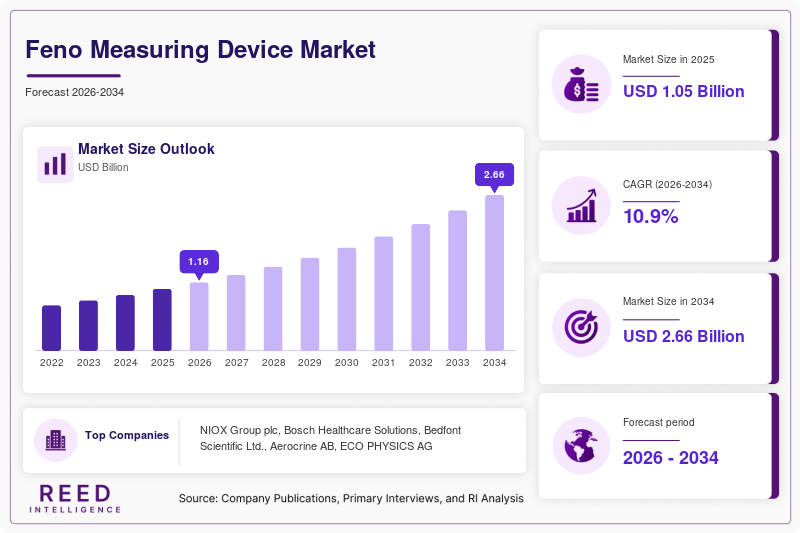
Key Highlights
- North America dominated the market with a 38% share in 2025, while Asia Pacific is expected to register the fastest CAGR of 13.2% during the forecast period.
- Handheld devices emerged as the leading type segment with a 54% share, while portable devices are projected to grow at a CAGR of 12.5%.
- Hospitals represented the dominant end-use segment with a 46% share, whereas homecare settings are anticipated to grow at a CAGR of 13.8%.
- The U.S. led the market with a valuation of USD 420 million in 2025, increasing to USD 455 million in 2026.
Market Trends
Integration of Digital Health Technologies
The integration of Feno measuring devices with digital platforms and mobile health applications is reshaping the diagnostic landscape. Modern devices now feature Bluetooth connectivity, cloud-based data storage, and real-time monitoring capabilities. These advancements enable healthcare providers to track patient data remotely, enhancing disease management and improving adherence to treatment protocols. This trend is particularly significant in telemedicine-driven care models.
Shift Toward Home-Based Monitoring
There is a growing shift toward home-based respiratory monitoring, driven by patient convenience and healthcare cost optimization. Portable and user-friendly Feno devices are increasingly being adopted for homecare settings, allowing patients to monitor airway inflammation without frequent hospital visits. This trend is further supported by the rise in chronic respiratory conditions and aging populations, which demand continuous and accessible healthcare solutions.
Market Drivers
Rising Prevalence of Respiratory Disorders
The increasing incidence of asthma, COPD, and other respiratory diseases is a key driver of the Feno Measuring Device Market. Environmental pollution, urbanization, and lifestyle changes have contributed to a surge in respiratory ailments, necessitating accurate diagnostic tools. Feno devices provide a reliable method for monitoring airway inflammation, making them essential in clinical practice.
Growing Demand for Non-Invasive Diagnostics
The demand for non-invasive diagnostic methods is significantly boosting market growth. Feno measuring devices offer a painless and quick alternative to traditional diagnostic procedures, improving patient compliance and clinical efficiency. Healthcare providers are increasingly adopting these devices to enhance diagnostic accuracy while minimizing patient discomfort.
Market Restraints
High Cost of Advanced Devices
One of the primary challenges in the Feno Measuring Device Market is the high cost associated with advanced diagnostic devices. Sophisticated Feno analyzers equipped with digital features and high precision sensors often come with significant upfront costs, limiting their adoption in low- and middle-income regions. Additionally, recurring costs related to consumables and maintenance further add to the financial burden.
This pricing barrier restricts accessibility, particularly in smaller healthcare facilities and emerging economies where budget constraints are more pronounced. As a result, the market faces limitations in achieving widespread penetration despite its clinical benefits.
Market Opportunities
Expansion in Emerging Markets
Emerging economies present significant growth opportunities for the Feno Measuring Device Market. Improving healthcare infrastructure, rising healthcare expenditure, and increasing awareness of respiratory diseases are driving demand in these regions. Manufacturers are focusing on cost-effective solutions tailored to these markets to expand their global footprint.
Technological Advancements in Sensor Technology
Advancements in sensor technologies are opening new avenues for innovation. The development of highly sensitive and miniaturized sensors is enhancing device accuracy and portability. These innovations are expected to enable broader applications, including pediatric care and personalized medicine, thereby expanding the market scope.
Segmental Analysis
By Product Type
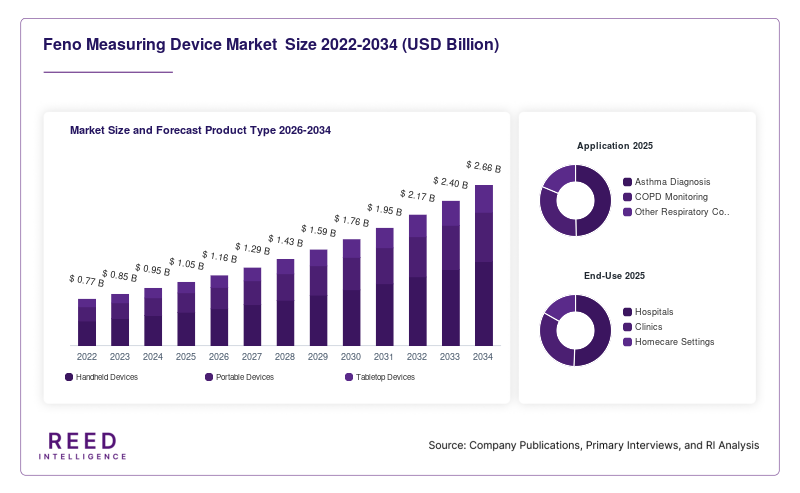
Handheld Feno measuring devices dominated the market, accounting for 54% of the share in 2025. These devices were widely adopted due to their ease of use, portability, and cost-effectiveness. Healthcare providers preferred handheld devices for point-of-care testing, enabling quick diagnosis and treatment decisions.
Portable devices will register the fastest growth at a CAGR of 12.5% during the forecast period. Their advanced features, including connectivity and enhanced accuracy, will drive adoption. The increasing demand for remote monitoring solutions will further support growth in this segment.
By Application
Asthma diagnosis held the largest share of 48% in 2025. The high prevalence of asthma and the need for continuous monitoring of airway inflammation contributed to the dominance of this segment. Feno testing has become an essential tool in asthma management, enabling personalized treatment strategies.
COPD monitoring is expected to grow at a CAGR of 11.8%. The rising burden of COPD and the need for effective disease management will drive demand. Improved diagnostic capabilities will enhance patient outcomes and support segment growth.
By End-Use
Hospitals accounted for 46% of the market share in 2025. The availability of advanced diagnostic equipment and skilled healthcare professionals contributed to the dominance of this segment. Hospitals remained the primary settings for Feno testing due to their comprehensive healthcare services.
Homecare settings will witness the fastest growth at a CAGR of 13.8%. The increasing preference for home-based healthcare and advancements in portable devices will drive segment expansion. Patients will increasingly adopt home monitoring solutions for convenience and cost savings.
By Distribution Channel
Direct sales dominated the market with a 52% share in 2025. Manufacturers relied on direct sales channels to maintain strong relationships with healthcare providers and ensure efficient product distribution.
Online sales are projected to grow at a CAGR of 12.9%. The increasing adoption of e-commerce platforms and digital procurement processes will drive growth. Online channels will offer convenience and wider product availability.
Regional Analysis
North America
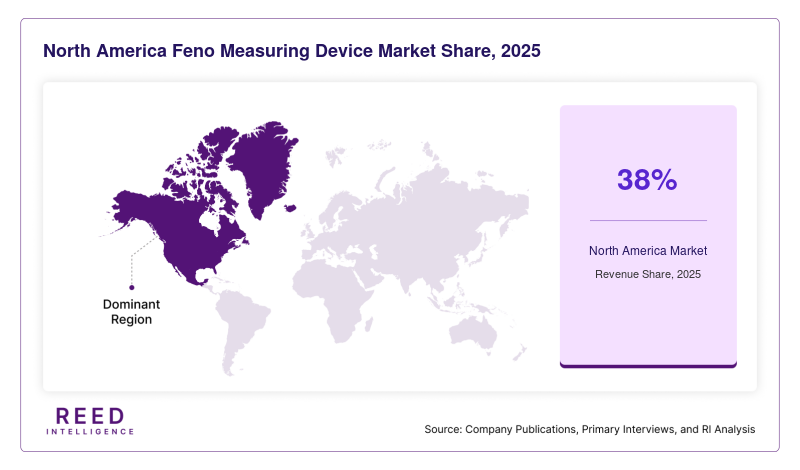
North America accounted for 38% of the Feno Measuring Device Market share in 2025 and will grow at a CAGR of 9.8% during the forecast period. The region’s growth is supported by well-established healthcare infrastructure and high adoption of advanced diagnostic technologies. Favorable reimbursement policies and strong presence of key market players also contribute to market expansion.
The United States dominated the regional market due to the increasing focus on precision medicine. The country benefits from high awareness levels among healthcare professionals regarding Feno testing, which has led to its widespread adoption in asthma management protocols.
Europe
Europe held a 27% share of the Feno Measuring Device Market in 2025 and is expected to grow at a CAGR of 10.2%. The region’s growth is driven by increasing government initiatives aimed at improving respiratory care and early diagnosis. Additionally, rising healthcare expenditure supports market expansion.
Germany emerged as the dominant country in Europe due to its advanced medical device industry and strong regulatory framework. The country’s emphasis on research and development has fostered innovation in respiratory diagnostics.
Asia Pacific
Asia Pacific represented 20% of the market share in 2025 and will witness the fastest CAGR of 13.2% through 2034. Rapid urbanization, increasing pollution levels, and growing prevalence of respiratory diseases are key factors driving regional growth.
China led the regional market due to its large patient population and expanding healthcare infrastructure. Government initiatives to improve healthcare access and affordability have significantly contributed to the adoption of diagnostic devices.
Middle East & Africa
The Middle East & Africa held a 8% share in 2025 and is projected to grow at a CAGR of 9.5%. The market growth is supported by improving healthcare infrastructure and increasing investments in medical technologies.
Saudi Arabia dominated the region due to its growing focus on healthcare modernization. The government’s efforts to enhance diagnostic capabilities have facilitated the adoption of advanced medical devices.
Latin America
Latin America accounted for 7% of the market share in 2025 and will grow at a CAGR of 9.9%. Rising awareness of respiratory diseases and improving healthcare access are key factors driving market growth.
Brazil emerged as the leading country in the region due to its expanding healthcare sector. Increased investments in medical infrastructure and growing demand for diagnostic tools have supported market development.
Competitive Landscape
The Feno Measuring Device Market is moderately consolidated, with key players focusing on product innovation and strategic collaborations. Leading companies are investing in research and development to enhance device accuracy and usability.
The market leader, NIOX Group plc, has maintained its position through continuous innovation and expansion of its product portfolio. The company recently introduced advanced Feno devices with improved connectivity features, strengthening its competitive edge.
Other prominent players include Bosch Healthcare Solutions, Bedfont Scientific Ltd., and Aerocrine AB, which are actively expanding their market presence through partnerships and geographic expansion. Companies are also focusing on developing cost-effective solutions to cater to emerging markets.
Key Players List
- NIOX Group plc
- Bosch Healthcare Solutions
- Bedfont Scientific Ltd.
- Aerocrine AB
- Vivatmo
- ECO PHYSICS AG
- Sunvou Medical Electronics
- e-LinkCare Meditech
- Beijing Beihai Kangyuan Medical Device
- MGC Diagnostics Corporation
- Cosmed Srl
- CareFusion Corporation
- Hill-Rom Holdings Inc.
- Smiths Medical
- Koninklijke Philips N.V.
Recent Developments
- In 2024, NIOX Group plc launched a next-generation Feno measuring device with enhanced digital integration capabilities.
- Bosch Healthcare Solutions expanded its respiratory diagnostics portfolio with improved portable devices.
- Bedfont Scientific Ltd. introduced cost-efficient models targeting emerging markets.
- ECO PHYSICS AG invested in advanced sensor technology to improve measurement accuracy.
- e-LinkCare Meditech strengthened its global distribution network to increase market reach.
Feno Measuring Device Market Segments
Product Type
- Handheld Devices
- Portable Devices
- Tabletop Devices
Application
- Asthma Diagnosis
- COPD Monitoring
- Other Respiratory Conditions
End-Use
- Hospitals
- Clinics
- Homecare Settings
Distribution Channel
- Direct Sales
- Distributors
- Online Sales
By Region
- North America
- Europe
- APAC
- Middle East and Africa
- LATAM