Finger Splint Market Size, Share & Demand Report By Product Type (Static Finger Splints, Dynamic Finger Splints, Stack Finger Splints, Aluminum Foam Finger Splints, Custom Thermoplastic Finger Splints), By Application (Fracture Management, Arthritis Treatment, Tendon and Ligament Injuries, Post-Surgical Rehabilitation, Sports Injury Management), By End Use (Hospitals, Orthopedic Clinics, Rehabilitation Centers, Homecare Settings, Ambulatory Surgical Centers) By Region & Segment Forecasts, 2026–2
USD 3950
Market Overview
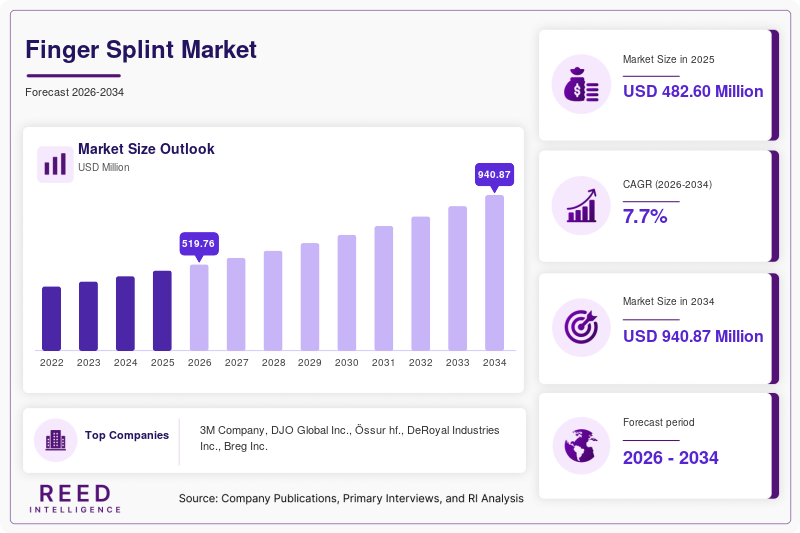
The global Finger Splint Market size was valued at approximately USD 482.6 million in 2026 and is projected to reach nearly USD 873.4 million by 2034, expanding at a CAGR of 7.7% during the forecast period from 2026 to 2034. The market continues to expand steadily due to the growing prevalence of sports injuries, rising cases of arthritis-related finger complications, and increasing awareness regarding early orthopedic intervention. Finger splints are widely used in hospitals, rehabilitation centers, ambulatory care facilities, and homecare settings for stabilizing fractures, ligament injuries, tendon damage, and post-surgical recovery. Demand has also increased due to a higher aging population worldwide, particularly in developed economies where musculoskeletal disorders are becoming more common.
One major global factor supporting market expansion is the increasing participation in recreational sports and fitness activities. Finger injuries caused by basketball, volleyball, climbing, cricket, and workplace accidents have contributed to higher adoption of supportive orthopedic products. Healthcare providers are also recommending lightweight and customizable splints to improve patient comfort and compliance. Technological advancements in medical-grade polymers, breathable materials, and adjustable fastening systems are further strengthening market penetration across both developed and emerging healthcare systems.
Key Highlights
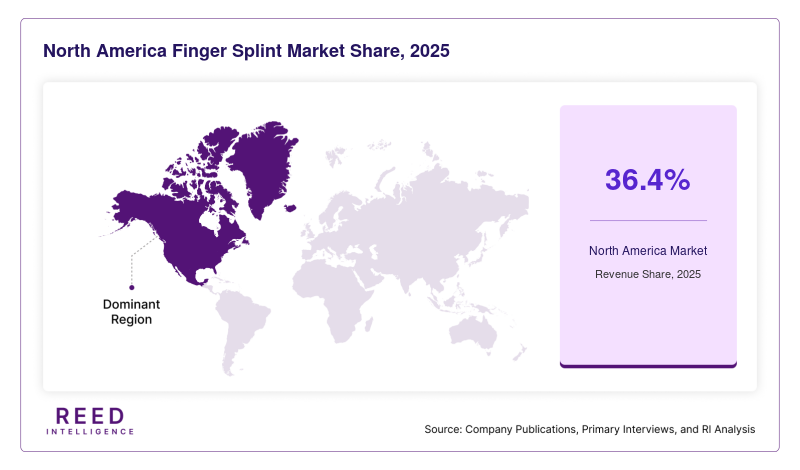
- North America dominated the market with a 36.4% share in 2025.
- Asia Pacific is expected to grow at the fastest CAGR of 9.8% during 2026–2034.
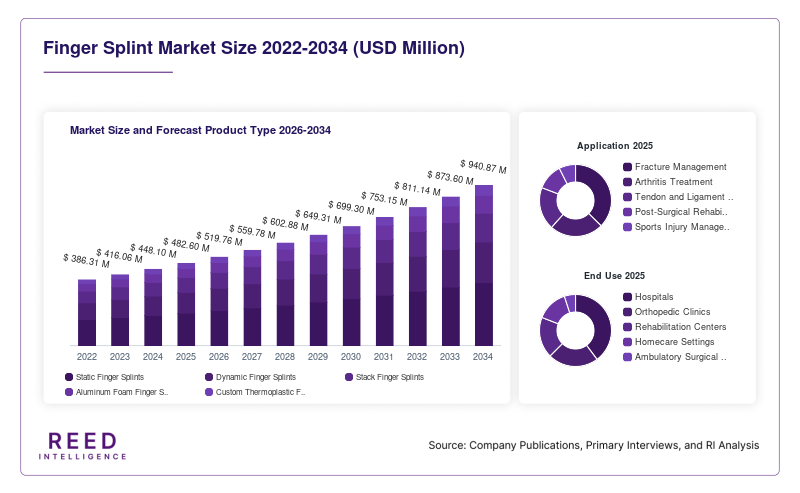
- By product type, static finger splints accounted for the largest share of 44.1%, while dynamic finger splints are projected to grow at a CAGR of 8.9%.
- By application, fracture management led with a 39.5% share, whereas arthritis treatment is expected to expand at a CAGR of 8.6%. By end use, hospitals held the dominant share of 46.8%, while homecare settings are anticipated to register a CAGR of 9.1% during the forecast period.
- The United States remained the dominant country, with market values of USD 148 million in 2024 and USD 161 million in 2025.
Market Trends
Rising Preference for Lightweight and Customizable Orthopedic Devices
Healthcare providers and patients are increasingly preferring lightweight finger splints made from breathable foam, thermoplastics, aluminum, and flexible polymers. Traditional bulky products often restricted finger movement and reduced patient compliance during long recovery periods. Modern splints are designed with adjustable straps, ergonomic shapes, and moisture-resistant materials that improve comfort and treatment efficiency. Manufacturers are focusing on user-friendly products suitable for both clinical and homecare applications. The growing use of 3D scanning and customized orthopedic support solutions is also influencing market growth. Patients recovering from tendon injuries or fractures are seeking personalized splints that reduce pressure points and improve mobility. These developments are encouraging medical device companies to introduce advanced product lines targeting sports medicine and rehabilitation sectors.
Expansion of Homecare and Online Distribution Channels
The increasing shift toward home-based recovery and self-managed orthopedic care is significantly influencing the Finger Splint Market. Consumers are purchasing splints through e-commerce platforms, online pharmacies, and digital healthcare marketplaces due to convenience and faster accessibility. Telemedicine consultations have also encouraged healthcare professionals to recommend orthopedic support products remotely, increasing direct-to-consumer sales. Homecare adoption has risen among elderly patients suffering from arthritis, trigger finger, and repetitive strain injuries. Manufacturers are responding by offering simplified application designs and instructional packaging for non-clinical users. Subscription-based medical supply services and online discount channels are further improving affordability and product availability. This trend is particularly visible in urban populations where consumers increasingly prioritize convenience and quick recovery solutions.
Market Drivers
Increasing Incidence of Sports and Occupational Finger Injuries
The growing number of sports-related and workplace hand injuries is one of the key factors driving the Finger Splint Market. Finger fractures, ligament tears, tendon injuries, and dislocations are becoming more common among athletes and industrial workers. Sports such as basketball, baseball, volleyball, cricket, and rock climbing involve frequent hand impact, increasing injury risks. Similarly, construction workers, factory employees, and technicians are vulnerable to repetitive hand stress and accidental trauma. Finger splints provide immobilization and stabilization that support effective healing while minimizing additional damage. Employers and sports organizations are increasingly investing in injury management solutions to reduce recovery time and medical expenses. Growing awareness regarding early orthopedic intervention is further supporting market demand across professional and recreational user groups.
Rising Aging Population and Arthritis Prevalence
The global increase in elderly populations is contributing substantially to the expansion of the Finger Splint Market. Aging individuals are more susceptible to osteoarthritis, rheumatoid arthritis, trigger finger, and degenerative joint disorders that require supportive orthopedic treatment. Finger splints help reduce inflammation, improve joint alignment, and minimize pain associated with chronic hand conditions. Healthcare professionals frequently recommend splints for overnight support and post-treatment recovery among elderly patients. The demand for non-invasive treatment options has also increased as patients seek alternatives to surgery and long-term medication use. Countries with growing aging demographics are witnessing stronger adoption of rehabilitation products in both hospitals and homecare settings. Improved healthcare awareness and wider availability of orthopedic devices through pharmacies and digital platforms are further strengthening market growth.
Market Restraint
Limited Awareness and Inconsistent Product Standardization in Emerging Economies
Despite steady market expansion, limited awareness regarding proper orthopedic treatment in several emerging economies remains a notable restraint for the Finger Splint Market. Many patients continue to rely on traditional remedies or temporary bandaging instead of clinically approved splinting solutions. In rural and underdeveloped healthcare systems, access to orthopedic specialists and rehabilitation services is often limited, delaying diagnosis and treatment of finger injuries. In addition, the market faces challenges related to inconsistent product quality and lack of standardization among low-cost manufacturers. Inferior materials and poorly designed splints can reduce treatment effectiveness and create patient discomfort, affecting consumer confidence. Price sensitivity among low-income populations also restricts adoption of advanced customizable splints. Smaller healthcare facilities may avoid stocking premium orthopedic devices due to budget limitations. These factors collectively slow market penetration in several developing regions despite rising injury incidence and expanding healthcare infrastructure.
Market Opportunities
Growing Demand for Pediatric and Sports-Specific Finger Splints
The increasing focus on pediatric orthopedic care and sports injury prevention is creating significant opportunities within the Finger Splint Market. Children and adolescents participating in organized sports activities frequently experience finger fractures, sprains, and tendon injuries that require immediate immobilization. Manufacturers are developing pediatric-friendly splints with softer materials, colorful designs, and adjustable sizing to improve comfort and treatment compliance. Sports-specific splints designed for athletes are also gaining popularity due to their lightweight structure and ability to support controlled mobility during rehabilitation. Professional sports teams and physiotherapy centers are increasingly adopting customized support solutions to reduce downtime among athletes. As awareness regarding sports medicine continues to grow globally, demand for specialized finger splints is expected to rise steadily.
Integration of Advanced Materials and Smart Orthopedic Technologies
The integration of advanced materials and smart healthcare technologies presents substantial long-term growth opportunities for the Finger Splint Market. Manufacturers are exploring innovative materials such as antimicrobial fabrics, memory foam structures, and temperature-sensitive polymers to improve patient comfort and reduce infection risks. The development of smart orthopedic devices with embedded sensors capable of monitoring finger movement and healing progress is also attracting industry attention. These advanced solutions may help healthcare providers track patient compliance and rehabilitation outcomes more effectively. Research activities focused on reusable eco-friendly splints and 3D-printed orthopedic devices are expected to transform product customization capabilities. Growing investment in digital healthcare infrastructure and wearable medical technology is likely to accelerate commercialization of technologically enhanced finger splints during the forecast period.
Segmental Analysis
By Product Type
Static finger splints accounted for the largest share of the Finger Splint Market in 2024, representing approximately 44.1% of total revenue. These splints are widely used for immobilizing fractures, tendon injuries, and post-surgical conditions that require limited finger movement during recovery. Their affordability, ease of use, and broad availability across hospitals and pharmacies contribute significantly to segment dominance. Static splints are commonly recommended for patients suffering from trigger finger, arthritis-related inflammation, and ligament injuries. Healthcare providers prefer these products because they effectively stabilize injured fingers while minimizing further tissue damage. Manufacturers continue to improve static splint designs through lightweight materials and breathable structures that enhance patient comfort during prolonged treatment periods. Increasing orthopedic procedures and growing injury incidence among aging populations are expected to sustain strong demand for this segment.
Dynamic finger splints are projected to witness the fastest CAGR of 8.9% during the forecast period due to their ability to support controlled motion and rehabilitation. These products are increasingly used in physical therapy programs for tendon recovery and post-operative rehabilitation. Unlike traditional immobilization devices, dynamic splints allow gradual finger movement that helps improve flexibility and muscle function during healing. Physiotherapists and rehabilitation specialists are increasingly recommending these solutions to reduce stiffness and shorten recovery time. Technological advancements in adjustable tension systems and ergonomic support structures are further enhancing segment adoption. Rising awareness regarding functional rehabilitation and growing preference for customized orthopedic devices are expected to create strong long-term growth opportunities. Sports medicine applications and increasing adoption among younger active populations are also contributing to the segment’s rapid expansion.
By Application
Fracture management represented the dominant application segment in 2024, accounting for nearly 39.5% of the Finger Splint Market. Finger fractures are among the most common orthopedic injuries treated in emergency departments, sports clinics, and trauma centers. Splints are extensively used to immobilize broken bones, reduce swelling, and prevent misalignment during recovery. Growing incidence of sports injuries, industrial accidents, and road-related trauma continues to support demand for fracture management solutions. Hospitals and orthopedic clinics increasingly prefer lightweight and adjustable finger splints that improve patient comfort and treatment effectiveness. Healthcare professionals also recommend these products as cost-effective alternatives to more complex immobilization methods for minor fractures. Rising awareness regarding early treatment and wider accessibility of orthopedic devices through pharmacies and digital healthcare platforms are further strengthening segment growth.
Arthritis treatment is expected to register the fastest CAGR of 8.6% during the forecast period due to the increasing prevalence of osteoarthritis and rheumatoid arthritis among aging populations. Finger splints are widely used to reduce joint strain, improve alignment, and alleviate pain associated with chronic inflammatory conditions. Patients seeking non-invasive treatment solutions are increasingly adopting supportive orthopedic products as part of long-term rehabilitation strategies. Rheumatologists and physiotherapists frequently recommend overnight splints to improve hand function and reduce stiffness. Growing healthcare awareness and rising demand for home-based rehabilitation are contributing to segment expansion. Manufacturers are also introducing specialized arthritis splints featuring ergonomic support structures and soft cushioning materials to improve patient comfort. The increasing global elderly population is expected to remain a major driver for this application segment.
By End Use
Hospitals accounted for the largest share of the Finger Splint Market in 2024, contributing approximately 46.8% of total revenue. Hospitals remain the primary treatment centers for fractures, tendon injuries, arthritis complications, and post-surgical rehabilitation procedures. Emergency departments and orthopedic units routinely utilize finger splints as part of initial injury management protocols. The segment benefits from strong patient inflow, access to trained healthcare professionals, and availability of advanced orthopedic products. Hospitals also maintain partnerships with medical device suppliers to ensure continuous product availability across trauma and rehabilitation departments. Increasing orthopedic surgical procedures and rising cases of sports injuries are supporting demand within this segment. In addition, improvements in healthcare infrastructure and government investments in hospital modernization are expected to sustain long-term market expansion.
Homecare settings are projected to witness the fastest CAGR of 9.1% during the forecast period due to increasing preference for self-managed rehabilitation and outpatient recovery. Patients recovering from mild fractures, arthritis, and repetitive strain injuries are increasingly choosing home-based treatment solutions to reduce healthcare expenses and improve convenience. Online retail channels and digital healthcare consultations have improved accessibility to finger splints for consumers worldwide. Manufacturers are designing user-friendly products with adjustable straps and simplified instructions suitable for non-clinical use. Elderly populations and individuals requiring long-term joint support are particularly contributing to segment growth. Rising telemedicine adoption and expansion of home healthcare services are also strengthening demand for orthopedic support devices. As healthcare systems increasingly emphasize cost-efficient outpatient care, the homecare segment is expected to expand significantly.
Regional Analysis
North America
North America accounted for approximately 36.4% of the Finger Splint Market in 2025 and continues to maintain a strong position due to advanced healthcare infrastructure and high orthopedic treatment awareness. The region is projected to expand at a CAGR of 7.1% through 2034. Growing participation in recreational sports, rising incidence of workplace injuries, and increasing cases of arthritis-related disorders are supporting market expansion. Healthcare reimbursement policies and widespread availability of orthopedic products through retail pharmacies and hospitals are also contributing to consistent regional demand.
The United States remains the dominant country within North America due to strong healthcare spending and high adoption of rehabilitation products. The country benefits from a well-established sports medicine sector and growing elderly population requiring joint support solutions. Increasing use of minimally invasive orthopedic treatments and homecare rehabilitation products is supporting market growth. Product innovation by domestic manufacturers and partnerships with online healthcare distributors are further strengthening commercial expansion across urban and suburban healthcare markets.
Europe
Europe represented nearly 27.8% of the Finger Splint Market in 2025 and is expected to witness stable growth at a CAGR of 6.8% during the forecast period. Rising prevalence of rheumatoid arthritis and musculoskeletal disorders across aging populations is supporting regional demand. Public healthcare systems in several European countries encourage the use of rehabilitation and orthopedic support products for post-surgical and injury recovery. Technological advancements in lightweight splint materials and increasing adoption of customized orthopedic solutions are also contributing to market development.
Germany remains the leading market in Europe due to its strong orthopedic healthcare infrastructure and growing focus on rehabilitation medicine. The country has witnessed increasing demand for advanced finger splints in hospitals, physiotherapy clinics, and elderly care centers. Rising workplace safety standards and expanding participation in recreational fitness activities are contributing to higher treatment volumes for finger injuries. German manufacturers are also investing in sustainable and reusable orthopedic products to align with evolving healthcare and environmental priorities.
Asia Pacific
Asia Pacific held around 22.6% of the Finger Splint Market in 2025 and is projected to record the fastest CAGR of 9.8% through 2034. Rapid urbanization, expanding healthcare infrastructure, and increasing awareness regarding orthopedic treatment are major growth contributors. The region is witnessing rising sports participation among younger populations along with a growing burden of arthritis and repetitive strain injuries. Government initiatives supporting healthcare access and the expansion of e-commerce medical supply platforms are improving product availability across developing economies.
China dominates the Asia Pacific market due to its large patient population and expanding healthcare manufacturing sector. Rising industrial employment and workplace-related hand injuries are increasing demand for orthopedic support products. The country is also experiencing higher adoption of affordable rehabilitation devices through online retail channels. Domestic manufacturers are investing in low-cost yet technologically improved finger splints to meet growing demand from hospitals and homecare users. Increasing healthcare expenditure and broader insurance coverage are expected to further support regional growth.
Middle East & Africa
The Middle East & Africa accounted for approximately 7.1% of the Finger Splint Market in 2025 and is anticipated to expand at a CAGR of 6.3% during the forecast period. Market growth is supported by improving healthcare infrastructure, increasing orthopedic awareness, and rising investments in medical services across Gulf countries. Sports-related injuries and road accidents are contributing to greater demand for immobilization devices. Hospitals and rehabilitation centers are gradually adopting modern orthopedic treatment solutions, particularly in urban healthcare systems.
Saudi Arabia represents the leading market within the region due to expanding healthcare modernization initiatives and growing medical spending. The country is experiencing increased adoption of rehabilitation products in hospitals and physiotherapy facilities. Government-led healthcare reforms and rising insurance penetration are improving patient access to orthopedic treatments. In addition, growing public participation in fitness and recreational sports is contributing to higher demand for injury management products, including advanced finger splints designed for rapid recovery.
Latin America
Latin America captured nearly 6.1% of the Finger Splint Market in 2025 and is projected to grow at a CAGR of 6.6% through 2034. The region is benefiting from gradual improvements in healthcare accessibility and increasing awareness regarding orthopedic rehabilitation. Rising cases of workplace injuries and sports-related trauma are supporting demand for finger immobilization products. Retail pharmacies and online healthcare distribution networks are improving consumer access to affordable orthopedic devices across urban markets.
Brazil remains the dominant country within Latin America due to its large healthcare sector and expanding sports culture. The country has seen increasing demand for rehabilitation products associated with football, volleyball, and industrial workplace injuries. Government initiatives aimed at improving public healthcare access are supporting orthopedic treatment adoption. Local distributors are also strengthening partnerships with international medical device manufacturers to introduce cost-effective finger splints suitable for hospitals, clinics, and homecare settings.
Competitive Landscape
The Finger Splint Market is moderately fragmented, with the presence of both multinational orthopedic device manufacturers and regional medical supply companies competing across pricing, product quality, and customization capabilities. Companies are focusing on ergonomic product development, lightweight materials, and wider distribution networks to strengthen their market positions. Strategic collaborations with hospitals, physiotherapy clinics, and e-commerce healthcare platforms are becoming increasingly common as manufacturers seek to improve customer reach.
3M Company remains one of the leading participants in the market due to its extensive orthopedic support portfolio and strong global distribution network. The company continues to invest in patient-friendly splinting solutions designed for improved comfort and rehabilitation outcomes. Other major players are also emphasizing product innovation and expansion into emerging healthcare markets.
Key Players
- 3M Company
- DJO Global Inc.
- Össur hf.
- DeRoyal Industries Inc.
- Breg Inc.
- Bird & Cronin LLC
- Vive Health
- Medline Industries LP
- Mueller Sports Medicine Inc.
- Patterson Medical Holdings Inc.
- Tynor Orthotics Pvt. Ltd.
- BSN Medical GmbH
- Orthomerica Products Inc.
- Thuasne Group
- Ottobock SE & Co. KGaA
Recent Developments
- In February 2025, Össur hf. introduced a new lightweight finger splint range featuring breathable polymer materials designed for extended rehabilitation support.
- In July 2025, DJO Global Inc. expanded its orthopedic rehabilitation distribution partnership across Asia Pacific to strengthen market penetration in emerging economies.
- In November 2024, 3M Company launched an upgraded antimicrobial finger splint series targeting sports injury recovery and arthritis management applications.
- In March 2025, Tynor Orthotics Pvt. Ltd. announced increased production capacity for customizable finger splints to meet rising homecare demand in South Asia.
- In September 2025, Breg Inc. introduced adjustable dynamic finger splints integrated with enhanced ergonomic fastening systems for rehabilitation clinics.
Finger Splint Market Segments
Product Type
- Static Finger Splints
- Dynamic Finger Splints
- Stack Finger Splints
- Aluminum Foam Finger Splints
- Custom Thermoplastic Finger Splints
Application
- Fracture Management
- Arthritis Treatment
- Tendon and Ligament Injuries
- Post-Surgical Rehabilitation
- Sports Injury Management
End Use
- Hospitals
- Orthopedic Clinics
- Rehabilitation Centers
- Homecare Settings
- Ambulatory Surgical Centers
By Region
- North America
- Europe
- APAC
- Middle East and Africa
- LATAM