Flavored Camel Milk Market Size, Share & Demand Report By Flavor Type (Chocolate, Vanilla, Fruit-Based, Others), By Distribution Channel (Supermarkets & Hypermarkets, Convenience Stores, Online Retail, Specialty Stores), By End-Use (Household Consumption, Foodservice, Industrial Use) By Region & Segment Forecasts, 2026–2034
USD 3950
Market Overview
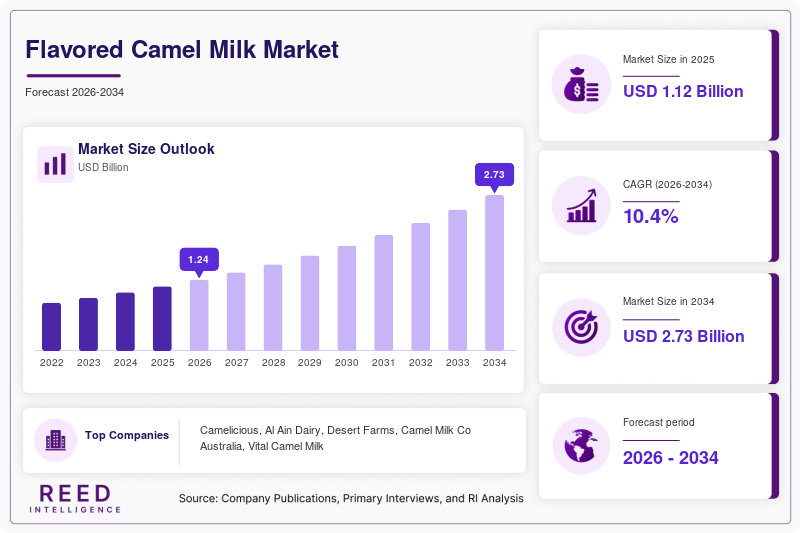
The global Flavored Camel Milk Market was valued at approximately USD 1.12 billion in 2026 and is projected to reach USD 2.48 billion by 2034, expanding at a CAGR of 10.4% during 2026–2034. The market is gaining traction due to the rising demand for alternative dairy products and functional beverages that offer enhanced nutritional benefits. Flavored camel milk, enriched with natural ingredients such as cocoa, vanilla, and fruit extracts, has emerged as a niche yet steadily expanding segment within the broader dairy alternatives industry.
One key global factor supporting market growth is the increasing prevalence of lactose intolerance and dairy allergies, particularly in urban populations. Camel milk contains lower lactose levels and a unique protein composition, making it suitable for sensitive consumers. The addition of flavors further improves taste acceptance, especially among younger demographics, thereby expanding its consumer base beyond traditional markets.
Key Highlights
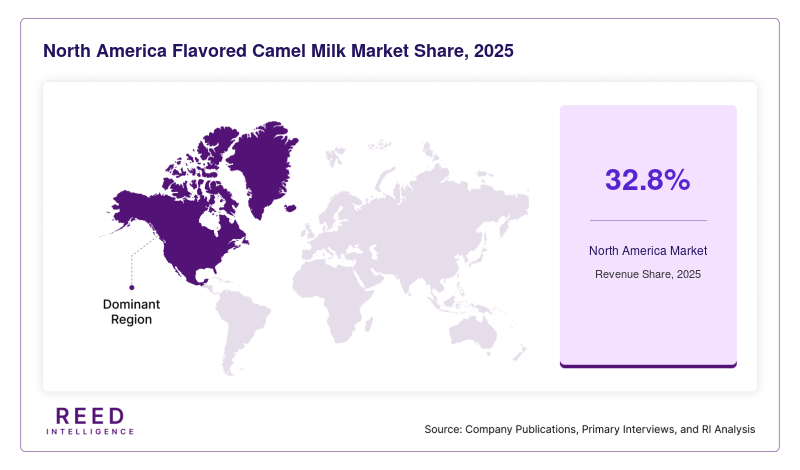
- North America dominated the market with a 32.8% share in 2025.
- Asia Pacific is expected to grow at the fastest CAGR of 11.6% during 2026–2034.
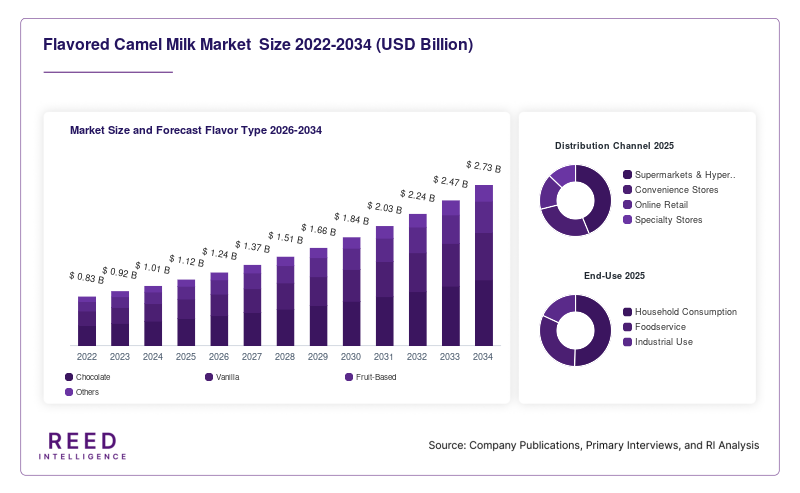
- By flavor type, chocolate-flavored camel milk accounted for the largest share of 36.2%, while fruit-based variants are projected to grow at a CAGR of 12.1%.
- By distribution channel, supermarkets and hypermarkets led with a 42.5% share, whereas online retail is expected to expand at a CAGR of 13.3%.
- The United States remained the dominant country, with market values of USD 290 million in 2024 and USD 320 million in 2025.
Market Trends
Increasing Demand for Functional and Nutrient-Enriched Beverages
The flavored camel milk market is witnessing a notable shift toward functional beverages that offer health benefits beyond basic nutrition. Consumers are increasingly seeking products that support immunity, digestion, and overall wellness. Flavored camel milk aligns with this demand due to its naturally occurring vitamins, minerals, and bioactive compounds. Manufacturers are enhancing product formulations by incorporating additional nutrients such as probiotics and vitamins. This trend is particularly strong among urban consumers who prefer convenient yet health-oriented drink options. As a result, flavored camel milk is being positioned as a premium functional beverage rather than a traditional dairy product, thereby expanding its appeal across multiple consumer segments.
Expansion of Premium and Organic Product Lines
Another emerging trend is the growth of premium and organic flavored camel milk offerings. Consumers are showing a preference for clean-label products made with natural ingredients and minimal processing. This has led companies to introduce organic certifications and transparent sourcing practices. Premium packaging, including eco-friendly materials and innovative designs, is also becoming a key differentiator. The trend is particularly prominent in developed markets where consumers are willing to pay higher prices for perceived quality and sustainability. Additionally, brands are leveraging storytelling and origin-based marketing to highlight the uniqueness of camel milk, further strengthening their market positioning.
Market Drivers
Rising Prevalence of Lactose Intolerance and Dairy Sensitivities
The increasing incidence of lactose intolerance globally is a significant driver for the flavored camel milk market. Traditional cow milk often causes digestive discomfort for a large portion of the population, prompting consumers to seek alternative dairy options. Camel milk, with its lower lactose content and different protein structure, is easier to digest and less likely to trigger allergic reactions. This characteristic makes it an attractive substitute for individuals with dietary restrictions. The addition of flavors enhances its palatability, encouraging trial and repeat consumption. As awareness of these benefits grows, the demand for flavored camel milk continues to expand across both developed and emerging markets.
Growing Health Awareness and Demand for Natural Products
Consumers are becoming more conscious of their dietary choices, leading to a preference for natural and minimally processed products. Flavored camel milk fits well within this trend due to its perceived health benefits, including immune support and anti-inflammatory properties. Manufacturers are capitalizing on this demand by offering products with natural flavorings and without artificial additives. Marketing campaigns highlighting the nutritional profile of camel milk are also contributing to increased consumer interest. This shift toward healthier consumption patterns is expected to sustain long-term growth in the flavored camel milk market.
Market Restraint
Limited Supply Chain and High Production Costs
One of the primary challenges facing the flavored camel milk market is the limited availability of raw camel milk and the associated high production costs. Camel farming is geographically concentrated in specific regions, such as the Middle East and parts of Africa, which restricts large-scale production. Additionally, camels produce significantly less milk compared to cows, resulting in higher per-unit costs. The logistics of transporting and processing camel milk further add to the overall expense, making flavored camel milk products relatively expensive for consumers.
This cost factor can limit market penetration, particularly in price-sensitive regions. For example, while demand is increasing in Asia Pacific and Latin America, the higher price point compared to traditional dairy products can deter widespread adoption. Moreover, the lack of standardized processing and distribution infrastructure poses challenges for maintaining product quality and consistency. These factors collectively hinder the scalability of the market and may slow down its growth trajectory if not addressed through technological advancements and supply chain improvements.
Market Opportunities
Expansion into Emerging Markets
Emerging economies present significant growth opportunities for the flavored camel milk market. Rising disposable incomes, urbanization, and increasing awareness of health and wellness are driving demand for alternative dairy products in regions such as Asia Pacific and Latin America. Companies can leverage these trends by introducing affordable product variants and expanding distribution networks. Strategic partnerships with local retailers and e-commerce platforms can further enhance market penetration. Additionally, targeted marketing campaigns that emphasize the health benefits and unique attributes of camel milk can help attract new consumers.
Product Innovation and Flavor Diversification
Product innovation is another key opportunity for market growth. The introduction of new and unique flavors can help attract a broader consumer base and encourage repeat purchases. For instance, tropical fruit flavors, coffee-infused variants, and low-sugar options can cater to diverse consumer preferences. Innovations in packaging, such as ready-to-drink bottles and single-serve packs, can also enhance convenience and accessibility. By continuously evolving their product portfolios, companies can differentiate themselves in a competitive market and capture a larger share of the flavored camel milk segment.
Segmental Analysis
By Flavor Type
Chocolate-flavored camel milk dominated the market in 2024, accounting for approximately 36.2% of the total share. Its popularity is driven by widespread consumer acceptance and familiarity with chocolate-based beverages. This flavor appeals to a broad demographic, including children and young adults, making it a key revenue generator for manufacturers. The ability to mask the natural taste of camel milk with chocolate enhances its appeal, encouraging trial among first-time consumers. Additionally, the availability of various formulations, such as low-sugar and organic variants, has further strengthened its market position.
Fruit-based flavored camel milk is the fastest-growing subsegment, with a projected CAGR of 12.1%. The growth is driven by increasing consumer preference for natural and refreshing beverages. Flavors such as strawberry, mango, and berry blends are gaining popularity due to their perceived health benefits and appealing taste profiles. The use of real fruit extracts and minimal artificial additives aligns with the clean-label trend, attracting health-conscious consumers. This segment is expected to witness significant expansion as manufacturers continue to innovate with new flavor combinations.
By Distribution Channel
Supermarkets and hypermarkets held the largest share of the market in 2024, accounting for 42.5%. These retail formats provide consumers with easy access to a wide range of flavored camel milk products. The presence of dedicated sections for health and specialty beverages enhances product visibility and encourages impulse purchases. Additionally, promotional activities and in-store sampling campaigns play a crucial role in driving sales. The established infrastructure and extensive reach of supermarkets and hypermarkets make them the dominant distribution channel.
Online retail is the fastest-growing distribution channel, with a CAGR of 13.3%. The growth is fueled by the increasing adoption of e-commerce platforms and the convenience of home delivery. Consumers can easily compare products, read reviews, and access a wider variety of flavors online. Subscription-based models and direct-to-consumer sales strategies are also gaining traction, enabling brands to build strong customer relationships. This channel is expected to play a pivotal role in expanding market reach, particularly in regions with limited physical retail presence.
By End-Use
Household consumption dominated the market in 2024, accounting for approximately 55.4% of the total share. The growing awareness of the health benefits of camel milk has led to increased adoption at the household level. Families are incorporating flavored camel milk into their daily diets as a nutritious beverage option. The availability of convenient packaging formats, such as single-serve bottles and multi-pack cartons, has further facilitated its use in households. This segment remains a key driver of overall market growth.
The foodservice sector is the fastest-growing end-use segment, with a projected CAGR of 11.8%. The inclusion of flavored camel milk in cafes, restaurants, and specialty beverage outlets is gaining momentum. Chefs and beverage specialists are experimenting with camel milk to create unique drinks and desserts, enhancing its appeal among consumers. The growing trend of experiential dining and the demand for innovative menu offerings are expected to drive the adoption of flavored camel milk in the foodservice sector.
Regional Analysis
North America
North America accounted for approximately 32.8% of the flavored camel milk market share in 2025 and is expected to grow at a CAGR of 9.8% during the forecast period. The region’s growth is driven by increasing consumer awareness of alternative dairy products and a strong demand for functional beverages. The presence of established retail infrastructure and a growing number of specialty health stores further supports market expansion. Additionally, the rising popularity of clean-label and organic products has encouraged manufacturers to introduce premium flavored camel milk offerings.
The United States dominates the North American market, supported by a well-developed distribution network and a high level of consumer awareness. A key growth factor in the country is the increasing adoption of e-commerce platforms for purchasing specialty food products. Online retail channels provide consumers with easy access to flavored camel milk, enabling brands to reach a wider audience. This shift toward digital sales channels is expected to play a crucial role in sustaining market growth in the region.
Europe
Europe held a significant share of the flavored camel milk market in 2025, accounting for around 24.5%, with a projected CAGR of 10.1%. The region’s growth is influenced by the increasing demand for organic and sustainably sourced products. European consumers are highly conscious of product quality and environmental impact, which has driven the adoption of premium flavored camel milk variants. Regulatory support for alternative dairy products also contributes to market development.
Germany is the leading country in the European market, driven by a strong preference for health-oriented beverages. A unique growth factor in Germany is the increasing popularity of vegan and flexitarian diets, which has boosted demand for non-traditional dairy options. Although camel milk is not entirely plant-based, its perceived health benefits and lower allergenic properties make it an appealing choice for consumers seeking alternatives to cow milk.
Asia Pacific
Asia Pacific is expected to be the fastest-growing region, with a CAGR of 11.6% from 2026 to 2034, and held a 21.3% market share in 2025. Rapid urbanization, rising disposable incomes, and increasing awareness of health and nutrition are key factors driving market growth. The region’s large population base provides significant opportunities for market expansion, particularly in countries with growing middle-class populations.
China dominates the Asia Pacific market due to its expanding dairy alternatives sector and increasing consumer interest in functional beverages. A unique growth factor in China is the government’s focus on improving food safety and quality standards, which has boosted consumer confidence in premium dairy products. This has created a favorable environment for the adoption of flavored camel milk, particularly among health-conscious urban consumers.
Middle East & Africa
The Middle East & Africa region accounted for approximately 15.2% of the market share in 2025 and is projected to grow at a CAGR of 10.7%. The region has a strong cultural association with camel milk, which supports its widespread acceptance. The availability of raw camel milk and established farming practices provide a solid foundation for market growth. Additionally, increasing investments in processing and packaging technologies are enhancing product quality and shelf life.
The United Arab Emirates is the dominant country in this region, benefiting from advanced dairy processing infrastructure. A key growth factor is the government’s support for local food production and diversification initiatives. These efforts have encouraged the development of value-added products such as flavored camel milk, enabling manufacturers to cater to both domestic and international markets.
Latin America
Latin America held a smaller share of the flavored camel milk market in 2025, accounting for around 6.2%, but is expected to grow at a CAGR of 10.9%. The region’s growth is driven by increasing consumer awareness of alternative dairy products and rising health consciousness. Expanding retail networks and the growing presence of international brands are also contributing to market development.
Brazil is the leading country in Latin America, supported by a large consumer base and increasing demand for functional beverages. A unique growth factor in Brazil is the rising popularity of fitness and wellness trends, which has boosted demand for nutrient-rich beverages. This trend is expected to drive the adoption of flavored camel milk as a premium health product in the region.
Competitive Landscape
The flavored camel milk market is moderately fragmented, with a mix of regional and international players competing for market share. Companies are focusing on product innovation, strategic partnerships, and expansion into new markets to strengthen their competitive positions. Investments in advanced processing technologies and sustainable sourcing practices are also key strategies adopted by market participants.
Camelicious is a leading player in the market, known for its extensive product portfolio and strong presence in the Middle East. The company has recently introduced new flavored variants and expanded its distribution network to international markets. Other prominent players are focusing on enhancing their product offerings through the introduction of organic and premium variants. Collaborations with retailers and e-commerce platforms are also helping companies reach a wider consumer base. Overall, the competitive landscape is characterized by continuous innovation and strategic expansion initiatives.
Key Players
- Camelicious
- Al Ain Dairy
- Desert Farms
- Camel Milk Co Australia
- Vital Camel Milk
- Tiviski Dairy
- QCamel
- Camel Dairy Farm Smits
- Aadvik Foods
- Camel Charisma
- The Camel Milk Company
- Emirates Industry for Camel Milk & Products
- Camel Milk Victoria
- Camilk Dairy
- Golden Camel
Recent Developments
- In 2025, Camelicious launched a new range of organic flavored camel milk products targeting premium consumers.
- In 2024, Aadvik Foods expanded its distribution network across Asia Pacific through strategic partnerships with online retailers.
- In 2025, Desert Farms introduced innovative packaging solutions to enhance product shelf life and convenience.
Flavored Camel Milk Market Segments
Flavor Type
- Chocolate
- Vanilla
- Fruit-Based
- Others
Distribution Channel
- Supermarkets & Hypermarkets
- Convenience Stores
- Online Retail
- Specialty Stores
End-Use
- Household Consumption
- Foodservice
- Industrial Use
By Region
- North America
- Europe
- APAC
- Middle East and Africa
- LATAM