Flaxbased Protein Market Size, Share & Demand Report By Type (Flax Protein Powder, Flax Protein Concentrates, Flax Protein Isolates), By Application (Food & Beverages, Nutraceuticals, Animal Feed), By End-Use (Food Processing Industry, Sports Nutrition, Dietary Supplements), By Region & Segment Forecasts, 2026–2034
USD 3950
Market Overview
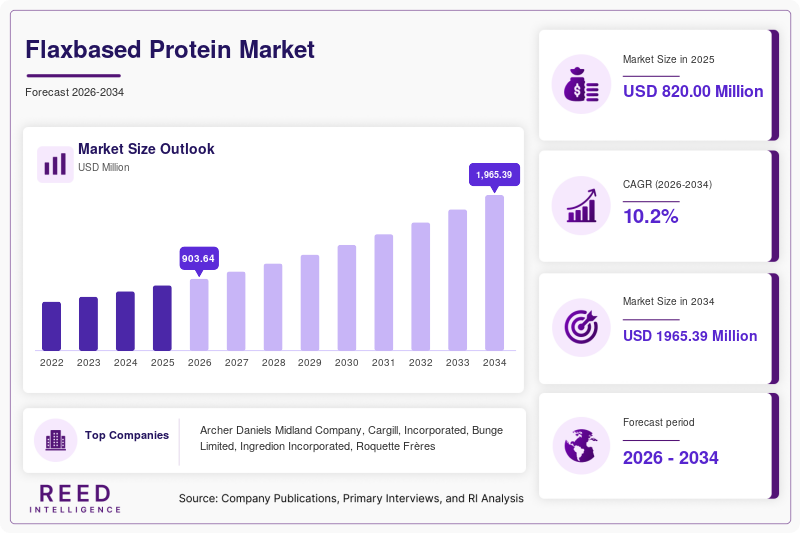
The global Flaxbased Protein Market size was valued at approximately USD 820 million in 2026 and is projected to reach USD 1.78 billion by 2034, expanding at a CAGR of 10.2% during the forecast period (2026–2034). The market has witnessed consistent expansion due to the growing consumer shift toward plant-based nutrition, supported by evolving dietary preferences and increased awareness of sustainable food sources. Flax-based protein, derived from flaxseed, is gaining traction for its balanced amino acid profile, omega-3 fatty acid content, and compatibility with vegan and gluten-free diets.
A significant global factor driving market growth is the rising adoption of alternative protein sources amid concerns regarding environmental sustainability and animal-based protein consumption. Governments and regulatory bodies across multiple regions are encouraging plant-based food innovation, which has further accelerated investments in flax-based protein extraction technologies and product development.
Key Highlights
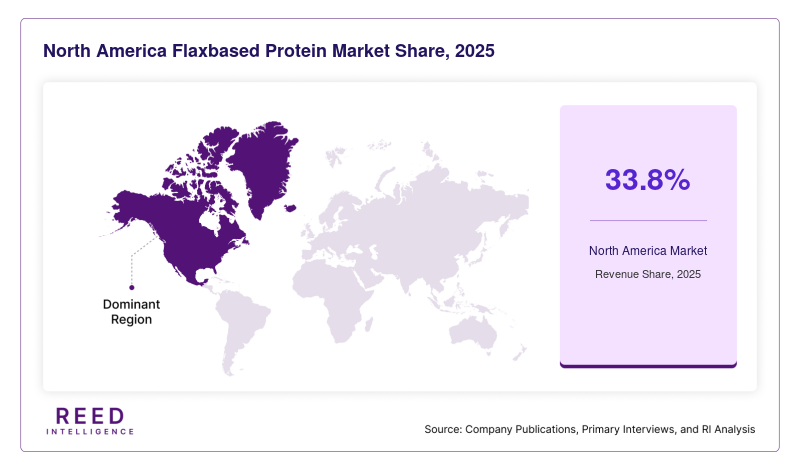
- North America dominated the market with a 33.8% share in 2025.
- Asia Pacific is expected to grow at the fastest CAGR of 11.6% during 2026–2034.
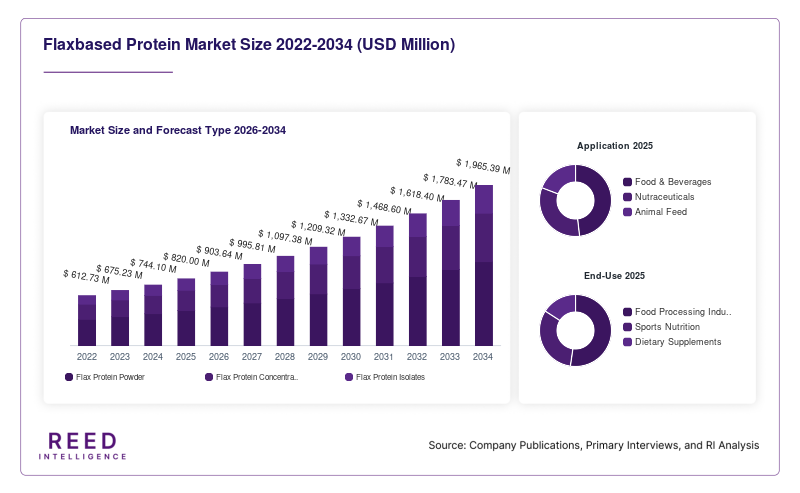
- By type, flax protein powder accounted for the largest share of 42.1%, while flax protein isolates are projected to grow at a CAGR of 12.3%.
- By application, food and beverages led with a 46.5% share, whereas nutraceuticals are expected to expand at a CAGR of 11.9%.
- The United States remained the dominant country, with market values of USD 290 million in 2024 and USD 320 million in 2025.
Market Trends
Rising Integration of Flax Protein in Functional Food Products
The incorporation of flax-based protein into functional food categories has emerged as a key trend shaping the market landscape. Food manufacturers are increasingly using flax protein in bakery products, dairy alternatives, snack bars, and ready-to-drink beverages to enhance nutritional value without compromising product texture. The trend is driven by consumers seeking clean-label ingredients and protein-rich diets that support overall wellness. Flax protein’s natural fiber content and omega-3 profile make it suitable for products targeting heart health and digestive benefits. Additionally, innovations in flavor masking and processing techniques have improved product acceptability, encouraging manufacturers to experiment with new formulations across premium and mass-market product segments.
Expansion of Plant-Based Protein Blends
Another notable trend is the growing use of flax protein in blended protein formulations alongside pea, rice, and soy proteins. This approach helps manufacturers achieve improved amino acid profiles, enhanced texture, and better functional properties such as solubility and emulsification. Blended proteins are gaining traction in sports nutrition and meal replacement products, where balanced nutrition is essential. The trend is also supported by the rising demand for allergen-free and non-GMO protein sources. As companies continue to innovate, flax-based blends are becoming a preferred choice for developing customized nutritional solutions, contributing to the diversification of the flaxbased protein market.
Market Drivers
Increasing Demand for Plant-Based and Sustainable Protein Sources
The rising global demand for plant-based protein alternatives is a primary driver of the flaxbased protein market. Consumers are becoming more conscious of the environmental impact of animal agriculture, leading to a shift toward sustainable food sources. Flax protein production requires relatively lower water and land resources compared to traditional animal-based proteins, making it an attractive option for environmentally aware consumers. Additionally, dietary shifts toward vegan, vegetarian, and flexitarian lifestyles are fueling demand across both developed and emerging economies. Food manufacturers are responding by expanding their plant-based product portfolios, thereby increasing the adoption of flax-based protein in various applications.
Growing Awareness of Health Benefits Associated with Flaxseed
Another significant driver is the increasing awareness of flaxseed’s health benefits, which directly supports the demand for flax-based protein products. Flaxseed is rich in omega-3 fatty acids, lignans, and dietary fiber, which contribute to cardiovascular health, improved digestion, and reduced inflammation. As consumers prioritize preventive healthcare and functional nutrition, flax-based protein is gaining recognition as a nutrient-dense ingredient. The expanding nutraceutical industry is also leveraging flax protein in dietary supplements and fortified products. This growing awareness is encouraging both consumers and manufacturers to adopt flax-based protein as a core ingredient in health-focused product formulations.
Market Restraint
Limited Processing Infrastructure and High Production Costs
One of the key restraints affecting the flaxbased protein market is the limited availability of advanced processing infrastructure and the relatively high cost of protein extraction. Compared to more established plant proteins such as soy and pea, flax protein requires specialized extraction techniques to preserve its nutritional properties while removing anti-nutritional compounds. This increases production complexity and cost, which can impact pricing and market competitiveness. Smaller manufacturers often face challenges in scaling production due to capital-intensive processing requirements. Additionally, fluctuations in raw material supply and quality can further affect production efficiency. These factors collectively limit market penetration, particularly in price-sensitive regions where cost competitiveness plays a crucial role in product adoption.
Market Opportunities
Rising Demand in Emerging Economies
Emerging economies present significant growth opportunities for the flaxbased protein market due to increasing urbanization, rising disposable incomes, and evolving dietary preferences. Consumers in regions such as Asia Pacific and Latin America are gradually adopting plant-based diets, driven by health awareness and exposure to global food trends. Local manufacturers are exploring flax protein as a cost-effective and nutritious ingredient for developing region-specific products. Government initiatives promoting agricultural diversification and value-added processing further support market expansion. As distribution networks improve and consumer awareness grows, emerging markets are expected to contribute substantially to future market growth.
Innovation in Nutraceutical and Sports Nutrition Applications
The growing popularity of nutraceuticals and sports nutrition products offers another promising opportunity for flax-based protein manufacturers. Athletes and fitness enthusiasts are increasingly seeking plant-based protein options that support muscle recovery and overall performance. Flax protein’s nutritional profile makes it suitable for protein powders, energy bars, and meal replacement products. Additionally, advancements in formulation technologies are enabling the development of highly bioavailable and easily digestible protein supplements. Companies investing in research and development are likely to gain a competitive edge by introducing innovative products tailored to specific consumer needs, thereby expanding the application scope of flax-based protein.
Segmental Analysis
By Type
Flax protein powder emerged as the dominant subsegment, accounting for approximately 42.1% of the market share in 2024. Its widespread use in food and beverage applications is attributed to its ease of incorporation, cost-effectiveness, and versatility. Manufacturers prefer flax protein powder for bakery products, smoothies, and nutritional bars due to its favorable texture and binding properties. Additionally, its natural nutritional profile, including fiber and omega-3 fatty acids, enhances product value. The growing demand for convenient and ready-to-use protein ingredients has further strengthened the position of flax protein powder in the global market.
Flax protein isolates are expected to be the fastest-growing subsegment, with a projected CAGR of 12.3% during the forecast period. The growth is driven by increasing demand for high-purity protein products with enhanced functionality. Isolates offer improved solubility and higher protein concentration, making them suitable for specialized applications such as sports nutrition and dietary supplements. Advances in extraction technologies have also improved the quality and consistency of isolates, enabling manufacturers to develop premium products that cater to specific consumer needs.
By Application
The food and beverages segment dominated the market in 2024, holding a share of approximately 46.5%. The segment’s growth is driven by the increasing use of flax protein in bakery, dairy alternatives, and ready-to-eat products. Consumers are seeking nutrient-rich foods that align with healthy lifestyles, which has encouraged manufacturers to incorporate flax protein into everyday food items. The versatility of flax protein allows it to be used across a wide range of products, contributing to its strong market presence.
The nutraceuticals segment is projected to grow at the fastest CAGR of 11.9% during the forecast period. The rising focus on preventive healthcare and functional nutrition is driving demand for dietary supplements containing flax protein. Its health benefits, including support for heart health and digestion, make it a preferred ingredient in capsules, powders, and fortified beverages. Increasing consumer awareness and expanding distribution channels are expected to further boost growth in this segment.
By End-Use
The food processing industry dominated the end-use segment in 2024, accounting for a significant share of the market. The segment’s leadership is attributed to the widespread adoption of flax protein in packaged foods and beverages. Manufacturers are leveraging flax protein to enhance product nutritional value and meet consumer demand for plant-based ingredients. The growing trend of clean-label products has further encouraged food processors to incorporate flax protein into their formulations.
The sports nutrition and dietary supplement segment is expected to witness the fastest growth, with a CAGR exceeding 11.5% during the forecast period. The increasing popularity of fitness and wellness activities is driving demand for protein-rich supplements. Flax protein’s plant-based origin and nutritional benefits make it an attractive option for consumers seeking alternative protein sources. Continuous innovation in product formulations and marketing strategies is expected to support the growth of this segment.
Regional Analysis
North America
North America held a dominant share of approximately 33.8% in 2025 and is expected to maintain steady growth with a CAGR of 9.8% during the forecast period. The region’s leadership is driven by strong consumer demand for plant-based products and well-established food processing infrastructure. High awareness regarding sustainable nutrition and the presence of leading market players contribute to consistent market expansion across the United States and Canada.
The United States remains the dominant country in the region, supported by a robust plant-based food industry and continuous product innovation. A unique growth factor in the country is the strong presence of health-conscious consumers who actively seek functional foods and dietary supplements. This has encouraged manufacturers to incorporate flax protein into a wide range of products, including protein bars and fortified beverages.
Europe
Europe accounted for a significant share of the flaxbased protein market in 2025 and is projected to grow at a CAGR of 9.5% through 2034. The region benefits from stringent regulations promoting clean-label and non-GMO products, which align well with flax protein’s natural characteristics. Increasing adoption of vegan diets across countries such as Germany, the UK, and France further supports market growth.
Germany emerges as the dominant country within Europe, driven by its strong organic food market and high consumer preference for sustainable products. A unique growth factor is the region’s emphasis on environmental sustainability, which encourages the use of plant-based proteins. This trend has led to increased investment in flax cultivation and processing, enhancing regional market competitiveness.
Asia Pacific
Asia Pacific is expected to witness the fastest growth, with a CAGR of 11.6% during the forecast period. The region’s expanding middle-class population and rising health awareness are key factors driving market demand. Rapid urbanization and the increasing popularity of Western dietary habits are also contributing to the adoption of plant-based protein products.
China leads the regional market, supported by its large population base and growing demand for functional foods. A unique growth factor is the increasing government focus on improving food security and promoting alternative protein sources. This has led to investments in agricultural innovation and protein processing technologies, boosting the flaxbased protein market in the region.
Middle East & Africa
The Middle East & Africa region held a moderate share in 2025 and is expected to grow at a CAGR of 8.7% during the forecast period. The market is gradually expanding due to increasing awareness of plant-based nutrition and the growing presence of international food brands. Urbanization and changing dietary patterns are also contributing to market growth.
South Africa is the dominant country in the region, driven by its relatively developed food processing industry. A unique growth factor is the rising demand for affordable protein sources, which has led to increased interest in plant-based alternatives. This trend is expected to support the adoption of flax-based protein in various food and beverage applications.
Latin America
Latin America is projected to grow at a CAGR of 9.1% during the forecast period, supported by increasing consumer awareness and expanding food processing capabilities. The region’s agricultural base provides opportunities for flax cultivation, which can support local production and reduce dependency on imports.
Brazil stands out as the dominant country, benefiting from a growing health-conscious population and expanding retail sector. A unique growth factor is the increasing popularity of functional foods and dietary supplements, which has encouraged manufacturers to incorporate flax protein into innovative product offerings, thereby driving regional market growth.
Competitive Landscape
The flaxbased protein market is moderately fragmented, with several global and regional players competing to expand their market presence. Key companies are focusing on product innovation, strategic partnerships, and capacity expansion to strengthen their competitive position. The market is characterized by ongoing investments in research and development to improve product quality and diversify applications.
Archer Daniels Midland Company is recognized as a leading player in the market, leveraging its extensive distribution network and strong product portfolio. The company recently announced the expansion of its plant-based protein production facilities to meet growing demand. Other prominent players are also investing in advanced processing technologies to enhance protein extraction efficiency and reduce production costs. Competitive strategies such as mergers, acquisitions, and collaborations are expected to shape the future of the market.
Key Players
- Archer Daniels Midland Company
- Cargill, Incorporated
- Bunge Limited
- Ingredion Incorporated
- Roquette Frères
- Kerry Group
- Glanbia plc
- Axiom Foods
- Nutra Food Ingredients
- The Scoular Company
- Linwoods Health Foods
- AgMotion Inc.
- Shape Foods Inc.
- CanMar Foods Ltd.
- Prairie Flax Products Inc.
Recent Developments
- A major industry player expanded its flax protein processing capacity in North America to meet increasing demand for plant-based ingredients.
- A leading food ingredient company introduced a new line of flax protein isolates designed for sports nutrition applications.
- Strategic collaboration between agricultural producers and food manufacturers to enhance flaxseed supply chain efficiency and improve product quality.
Flaxbased Protein Market Segments
Type
- Flax Protein Powder
- Flax Protein Concentrates
- Flax Protein Isolates
Application
- Food & Beverages
- Nutraceuticals
- Animal Feed
End-Use
- Food Processing Industry
- Sports Nutrition
- Dietary Supplements
By Region
- North America
- Europe
- APAC
- Middle East and Africa
- LATAM