Flea Market App Market Size, Share, Demand Report By Platform Type (Mobile Applications, Web-Based Platforms, Hybrid Marketplace Platforms), By Product Category (Fashion and Apparel, Electronics, Furniture and Home Décor, Collectibles and Vintage Goods, Books and Media, Others), By End User (Individual Consumers, Small Businesses and Independent Sellers, Professional Resellers) By Region & Segment Forecasts, 2026–2034
USD 3950
Market Overview
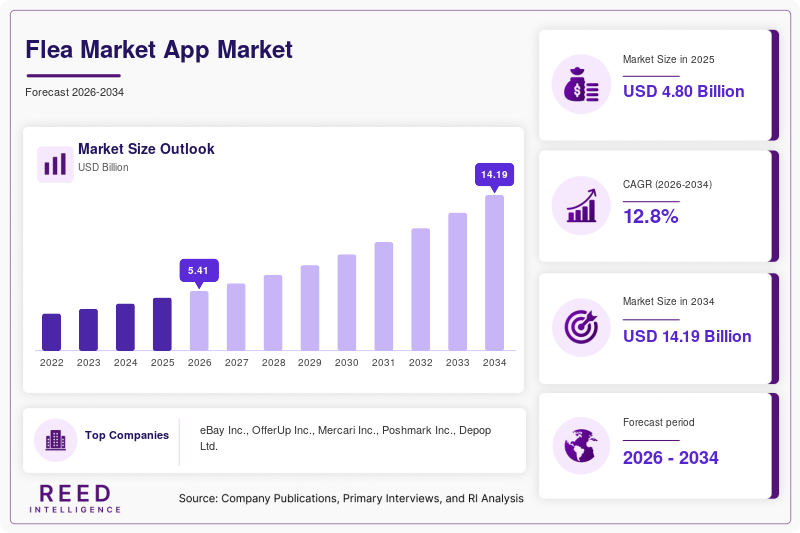
The global Flea Market App Market size was valued at USD 4.8 billion in 2026 and is projected to reach USD 12.6 billion by 2034, expanding at a CAGR of 12.8% during the forecast period. The market continues to gain momentum as consumers increasingly prefer mobile-first platforms for buying and selling secondhand products. Flea market applications allow users to trade pre-owned goods, collectibles, handmade products, vintage apparel, furniture, and electronics through secure digital ecosystems. The integration of artificial intelligence-based recommendations, in-app payment systems, geolocation tools, and social commerce features has improved user engagement and transaction efficiency across several economies.
The growing global focus on sustainable consumption patterns has significantly supported the expansion of the Flea Market App Market. Consumers are becoming more aware of environmental concerns associated with excessive manufacturing waste and fast-fashion consumption. As a result, digital resale platforms have become popular among younger users seeking affordable and environmentally conscious shopping alternatives. The rising penetration of smartphones and digital wallets across emerging economies has further accelerated platform accessibility. In addition, small businesses and independent sellers increasingly use flea market apps to reach wider audiences without investing in physical retail infrastructure.
Key Highlights
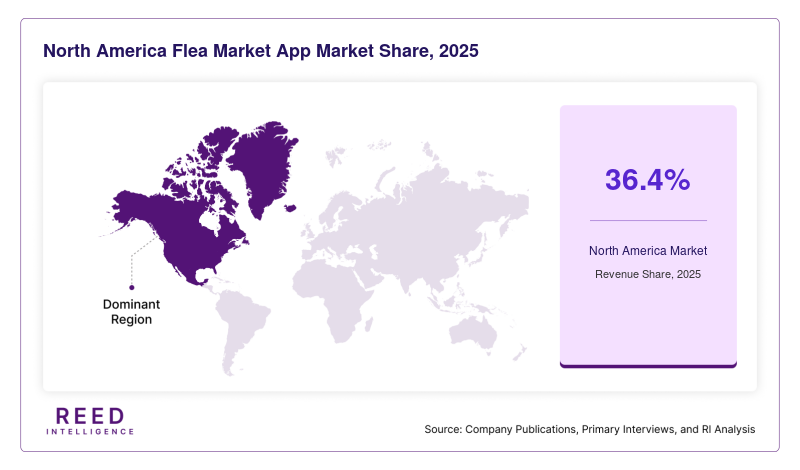
- North America dominated the market with a 36.4% share in 2025.
- Asia Pacific is expected to grow at the fastest CAGR of 14.1% during 2026–2034.
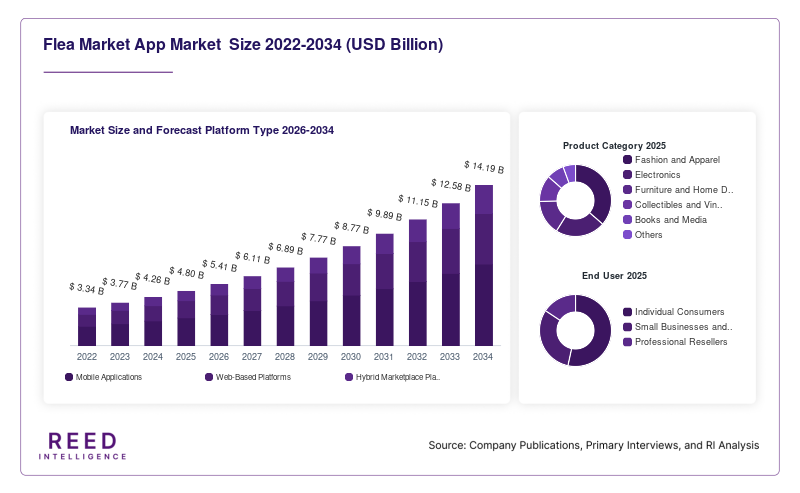
- By platform type, mobile applications accounted for the largest share of 68.2%, while hybrid marketplace platforms are projected to grow at a CAGR of 15.3%.
- By product category, fashion and apparel led with a 39.5% share, whereas collectibles and vintage goods are expected to expand at a CAGR of 14.7%.
- The United States remained the dominant country, with market values of USD 1.42 billion in 2024 and USD 1.61 billion in 2025.
Market Trends
Expansion of AI-Enabled Personalization Features
The integration of artificial intelligence and machine learning technologies has emerged as a major trend in the Flea Market App Market. Platform providers are increasingly using predictive analytics and recommendation engines to improve customer retention and transaction frequency. AI-driven personalization allows applications to recommend products based on browsing behavior, purchasing history, location preferences, and seasonal demand trends. This improves conversion rates while helping sellers reach highly targeted buyers. Several platforms are also introducing automated image recognition systems that classify products, generate descriptions, and identify counterfeit listings. These tools reduce operational inefficiencies and improve the overall user experience.
AI-powered chatbots and automated customer support systems are also becoming more common within resale marketplaces. These solutions help users resolve payment disputes, shipment issues, and product verification concerns more efficiently. Advanced fraud monitoring systems supported by machine learning algorithms are helping reduce fake listings and payment-related scams. As competition intensifies among digital marketplace providers, companies are expected to continue investing in data analytics capabilities to strengthen user engagement and platform monetization.
Rising Consumer Preference for Circular Economy Platforms
The growing popularity of circular economy business models continues to reshape the global Flea Market App Market. Consumers are increasingly choosing resale and reuse platforms as alternatives to conventional retail purchasing. Younger demographics, especially urban millennials and Gen Z users, are actively participating in secondhand commerce due to affordability and sustainability considerations. This shift has increased demand for flea market applications that support local trading communities and peer-to-peer transactions.
Fashion resale, refurbished electronics, and vintage furniture categories are witnessing rapid growth due to increasing consumer confidence in secondhand product quality. Many applications are now incorporating sustainability scorecards and environmental impact indicators to encourage responsible purchasing behavior. Partnerships between resale platforms and logistics providers are also supporting faster delivery and product authentication services. In addition, social commerce integration through live streaming, community groups, and influencer-driven resale campaigns is expanding platform visibility and attracting new users. These developments are expected to strengthen long-term industry growth across developed and emerging markets.
Market Drivers
Increasing Smartphone Penetration and Digital Payment Adoption
The growing availability of affordable smartphones and internet connectivity has become a major growth driver for the Flea Market App Market. Consumers across both developed and developing economies increasingly rely on mobile applications for everyday transactions, including secondhand shopping. Mobile-friendly interfaces, secure payment gateways, and real-time communication features have improved convenience for buyers and sellers. The rapid expansion of digital wallet adoption has further strengthened transaction efficiency and user trust across resale platforms.
Several flea market applications are integrating multiple payment options, including buy-now-pay-later services, instant bank transfers, and mobile wallets. These features simplify purchasing decisions and encourage higher transaction volumes. Rural and semi-urban populations are also gaining access to digital commerce platforms through improving mobile infrastructure. Additionally, mobile applications enable sellers to list products quickly using image uploads and automated descriptions, reducing barriers to participation. The continued expansion of internet accessibility is expected to sustain demand for digital flea market ecosystems over the coming years.
Growth of Independent Sellers and Home-Based Businesses
The increasing number of independent sellers and home-based entrepreneurs is contributing significantly to the expansion of the Flea Market App Market. Many individuals are using digital resale applications to generate supplementary income by selling unused products, handcrafted goods, and vintage collections. The low entry barriers associated with flea market applications make them attractive for small-scale merchants seeking cost-effective online retail opportunities.
Social media integration and targeted advertising tools allow sellers to reach wider audiences without establishing physical stores. Several applications now offer premium seller accounts, analytics dashboards, and promotional services that help merchants improve visibility and sales performance. The demand for flexible income opportunities has increased following economic uncertainty and changing employment patterns in several countries. In addition, rising interest in thrift shopping and personalized products has created favorable conditions for niche sellers specializing in collectibles, retro fashion, and artisanal products. These factors continue to support strong platform participation rates worldwide.
Market Restraint
Concerns Related to Product Authenticity and Fraudulent Listings
Product authenticity concerns and the growing presence of fraudulent listings remain significant restraints for the Flea Market App Market. Buyers often face uncertainty regarding the quality, condition, and legitimacy of secondhand products sold through peer-to-peer marketplaces. Counterfeit branded goods, misleading product descriptions, and manipulated images can negatively affect consumer trust and reduce repeat purchases. These issues are particularly prominent in categories such as luxury fashion, electronics, and collectibles where authenticity plays an important role in pricing.
Payment fraud and shipment disputes also create operational challenges for platform operators. In many cases, customers encounter delayed deliveries, damaged products, or unresponsive sellers, leading to dissatisfaction and negative platform reviews. Companies must invest heavily in verification systems, secure payment mechanisms, and dispute resolution infrastructure to maintain platform credibility. The implementation of advanced authentication technologies and manual moderation processes can increase operational costs, especially for smaller marketplace providers. Regulatory scrutiny related to consumer protection and digital transaction security is also increasing across several countries. These challenges may limit growth potential for new entrants that lack strong financial and technological resources.
Market Opportunities
Expansion of Cross-Border Resale Commerce
The expansion of cross-border digital commerce presents a major opportunity for the Flea Market App Market. Consumers are increasingly interested in purchasing unique products, vintage items, and collectible goods from international sellers. Flea market applications that support multilingual interfaces, currency conversion systems, and international shipping partnerships are gaining wider adoption across global markets. Cross-border resale activity is particularly strong in fashion, antiques, and rare collectibles where regional product availability differs significantly.
Several marketplace providers are introducing integrated customs support and global logistics management systems to simplify international transactions. The growing acceptance of digital payment technologies and improvements in international delivery infrastructure are further supporting this trend. Cross-border expansion also allows sellers to access larger customer bases and achieve higher profit margins for niche products. As demand for sustainable and affordable shopping alternatives increases globally, international resale commerce is expected to create substantial revenue opportunities for application developers and marketplace operators.
Integration of Live Commerce and Social Shopping Features
The integration of live commerce and social shopping capabilities is creating new opportunities for companies operating in the Flea Market App Market. Consumers increasingly prefer interactive shopping experiences that combine entertainment, product discovery, and direct engagement with sellers. Flea market applications are introducing live-stream selling events, community discussions, and influencer partnerships to improve user engagement and encourage impulse purchases.
Live commerce features allow sellers to showcase product conditions, answer customer questions in real time, and build stronger buyer confidence. Social sharing tools and personalized recommendation feeds are helping platforms increase user retention and transaction frequency. Many companies are also integrating short-form video content and creator-driven promotional campaigns to attract younger consumers. These features enhance platform visibility while encouraging community-driven commerce models. The continued growth of social media usage and creator economies is expected to support strong adoption of integrated social shopping functions within flea market applications.
Segmental Analysis
By Platform Type
Mobile applications represented the dominant subsegment within the Flea Market App Market in 2024, accounting for 68.2% of total revenue. The strong market share can be attributed to the increasing preference for smartphone-based shopping experiences among consumers across all age groups. Mobile apps provide users with instant notifications, location-based recommendations, integrated messaging systems, and convenient payment features that improve transaction efficiency. Buyers and sellers increasingly prefer mobile-first platforms because they simplify product listing, browsing, and negotiation processes. The growing availability of affordable smartphones and mobile internet access has also strengthened platform accessibility across developing economies. Companies are continuously enhancing application interfaces with AI-powered search tools, personalized feeds, and secure authentication systems to improve user engagement and retention. These technological improvements continue to support the dominance of mobile applications within the global market.
Hybrid marketplace platforms are projected to witness the fastest growth, expanding at a CAGR of 15.3% during the forecast period. These platforms combine mobile applications, web-based portals, and social commerce integration to provide seamless multi-channel experiences for users. Consumers increasingly expect flexibility when browsing and purchasing secondhand goods across different digital environments. Hybrid systems enable sellers to manage inventories more efficiently while reaching broader customer bases through multiple engagement channels. The growing popularity of integrated shopping ecosystems that connect social media, livestream commerce, and online marketplaces is accelerating demand for hybrid solutions. Businesses are investing in cloud infrastructure and synchronized user account systems to improve operational consistency across platforms. In addition, hybrid models support advanced analytics and personalized advertising capabilities, allowing operators to optimize revenue generation and customer retention strategies.
By Product Category
Fashion and apparel emerged as the dominant product category in the Flea Market App Market during 2024, capturing 39.5% of global revenue. The segment benefits from strong consumer demand for affordable branded clothing, vintage fashion items, and sustainable shopping alternatives. Younger consumers are increasingly participating in resale fashion communities to access unique styles while reducing environmental impact. The rapid growth of fast fashion has also encouraged consumers to explore secondhand marketplaces for budget-friendly purchasing options. Several flea market applications now provide category-specific filters, virtual try-on tools, and AI-generated style recommendations to improve user experience. Sellers benefit from high transaction volumes due to the frequent turnover of fashion inventory and seasonal demand patterns. Partnerships with influencers and social media creators are further increasing visibility for fashion resale products across digital marketplaces.
Collectibles and vintage goods are expected to register the fastest CAGR of 14.7% during the forecast period. Rising consumer interest in rare products, nostalgic merchandise, and limited-edition collectibles is driving growth within this segment. Buyers increasingly seek vintage watches, retro gaming products, antiques, and trading cards through digital flea market platforms. The growing influence of online collector communities and hobby-based social groups is expanding market participation worldwide. Several applications are introducing authentication services and expert verification systems to improve buyer confidence for high-value collectible transactions. Additionally, livestream auctions and community-driven bidding events are creating interactive purchasing experiences that attract enthusiast buyers. The expansion of digital nostalgia culture and increasing demand for personalized ownership experiences are expected to sustain strong growth within the collectibles segment.
By End User
Individual consumers accounted for the largest share of the Flea Market App Market in 2024 due to the widespread adoption of peer-to-peer resale activities. This segment represented a major portion of overall platform transactions as users increasingly traded pre-owned household products, fashion items, electronics, and personal accessories. Consumers are drawn toward flea market applications because they offer cost savings, convenience, and access to diverse product selections. The increasing popularity of sustainable lifestyles and minimalist consumption patterns has further encouraged participation in secondhand commerce ecosystems. Digital payment integration, secure messaging systems, and product review features have improved buyer confidence and transaction transparency. Several applications are also introducing loyalty programs and gamified user engagement tools to strengthen consumer retention. The convenience of listing and selling products directly from smartphones continues to support the dominance of individual users in the global market.
Small businesses and independent merchants are expected to witness the fastest growth rate, expanding at a CAGR of 13.9% during the forecast period. Many entrepreneurs are increasingly using flea market applications as low-cost digital storefronts to reach broader customer audiences. The segment benefits from reduced operational expenses compared to traditional retail channels. Small businesses frequently use these platforms to sell handmade crafts, refurbished electronics, vintage goods, and niche products without investing heavily in dedicated e-commerce infrastructure. Advanced seller dashboards, targeted advertising options, and integrated logistics support are improving operational efficiency for merchants. In addition, the growing acceptance of home-based entrepreneurship and flexible income generation opportunities is supporting higher participation from independent sellers. As digital commerce ecosystems continue to expand globally, flea market applications are expected to become increasingly important sales channels for small-scale enterprises.
Regional Analysis
North America
North America accounted for the largest share of the Flea Market App Market in 2025, representing 36.4% of global revenue. The region is expected to maintain steady growth at a CAGR of 11.3% during the forecast period. High smartphone penetration, strong digital payment infrastructure, and established consumer awareness regarding resale commerce continue to support regional market expansion. Consumers increasingly prefer secondhand shopping due to rising living costs and growing environmental awareness. The presence of large technology companies and well-developed logistics networks further strengthens operational efficiency for flea market app providers.
The United States remained the dominant contributor within North America due to the strong popularity of peer-to-peer resale platforms among millennials and Gen Z consumers. The country benefits from high consumer participation in online resale activities across fashion, electronics, and home décor categories. Growing adoption of circular economy practices and increasing interest in vintage products are supporting long-term demand. In addition, partnerships between marketplace operators and payment technology providers are improving transaction security and user convenience across the national market.
Europe
Europe represented a significant share of the Flea Market App Market in 2025 and is projected to grow at a CAGR of 10.8% between 2026 and 2034. The region benefits from strong sustainability regulations and high consumer awareness regarding environmentally responsible purchasing behavior. Consumers across European countries increasingly use resale applications to reduce waste and extend product life cycles. Growing digital literacy and widespread internet accessibility have supported higher adoption of secondhand commerce platforms among urban populations.
Germany emerged as the leading country within the European market due to strong consumer interest in refurbished products and sustainable retail practices. The country has a large base of environmentally conscious consumers who actively participate in online resale communities. Increasing demand for affordable fashion and pre-owned electronics is supporting transaction growth across flea market applications. Additionally, government initiatives promoting waste reduction and recycling are encouraging consumers to adopt reuse-oriented shopping habits, strengthening the long-term outlook for marketplace providers.
Asia Pacific
Asia Pacific is expected to record the fastest growth rate in the Flea Market App Market, with a projected CAGR of 14.1% during the forecast period. Rapid urbanization, increasing smartphone ownership, and improving digital payment ecosystems are major factors supporting market growth across the region. Consumers are becoming more comfortable with online transactions and mobile-based shopping platforms. The large youth population and expanding middle-class income groups are contributing significantly to demand for affordable secondhand products.
China remained the dominant country in the Asia Pacific market due to its large digital commerce ecosystem and widespread mobile payment adoption. The popularity of social commerce platforms and livestream shopping has accelerated user engagement in online resale activities. Many consumers are using flea market applications to buy refurbished electronics, branded apparel, and collectible products at lower prices. Local platform providers are also investing heavily in AI-powered recommendation engines and logistics infrastructure to improve customer experience and strengthen market competitiveness.
Middle East & Africa
The Middle East & Africa Flea Market App Market is experiencing gradual expansion and is expected to grow at a CAGR of 9.6% through 2034. Increasing internet penetration and rising smartphone usage are improving access to digital commerce platforms across several countries in the region. Consumers are increasingly exploring secondhand marketplaces for affordable purchasing options amid changing economic conditions. Growing awareness regarding sustainable consumption is also contributing to the adoption of resale applications among younger populations.
The United Arab Emirates emerged as the dominant country within the regional market due to its advanced digital infrastructure and high expatriate population. Consumers frequently use resale applications to trade furniture, electronics, and luxury fashion items during relocations and lifestyle changes. The country also benefits from high social media engagement rates that support marketplace visibility and influencer-driven resale campaigns. Expanding fintech ecosystems and secure digital payment adoption continue to improve the operational environment for flea market app providers across the UAE.
Latin America
Latin America accounted for a moderate share of the global Flea Market App Market in 2025 and is projected to expand at a CAGR of 10.2% during the forecast period. The increasing adoption of smartphones and improving mobile internet accessibility are supporting regional market development. Consumers are turning toward digital resale platforms to access affordable goods amid inflationary pressures and fluctuating economic conditions. The popularity of community-based commerce and local trading groups has also strengthened platform engagement.
Brazil remained the leading country in the Latin American market due to its large population and rapidly growing digital commerce sector. Consumers increasingly use flea market applications for trading fashion products, household goods, and refurbished electronics. The country has witnessed rising demand for informal online selling opportunities among small entrepreneurs and independent merchants. In addition, fintech innovation and the expansion of digital banking services are improving payment accessibility, enabling more users to participate in peer-to-peer resale ecosystems.
Competitive Landscape
The Flea Market App Market is moderately fragmented, with several regional and international companies competing through technology innovation, user experience improvements, and strategic partnerships. Leading companies are focusing on AI-driven personalization, secure payment systems, and logistics integration to strengthen competitive positioning. Platform operators are also expanding monetization strategies through premium seller subscriptions, advertising solutions, and authentication services for high-value products.
eBay remained one of the leading companies in the global market due to its strong international user base and diversified resale ecosystem. The company continues to invest in AI-powered search tools and secure transaction capabilities to improve customer engagement. Depop has strengthened its market position among younger consumers through social commerce integration and influencer-driven fashion resale strategies. OfferUp and Mercari are focusing on localized marketplace expansion and user-friendly mobile interfaces to increase transaction frequency.
Key Players
Recent Developments
- In February 2026, eBay introduced an AI-powered image recognition feature that automatically generates product descriptions and pricing suggestions for sellers.
- In August 2025, Poshmark expanded its live shopping functionality across multiple international markets to improve seller engagement and real-time transactions.
- In November 2025, Mercari partnered with regional logistics providers in Asia Pacific to offer same-day delivery services for selected product categories.
- In March 2026, Carousell launched enhanced fraud detection systems supported by machine learning algorithms to improve marketplace security and user trust.
- In January 2026, OfferUp announced new integrated financing options for high-value secondhand electronics and furniture purchases.
Flea Market App Market Segments
Platform Type
- Mobile Applications
- Web-Based Platforms
- Hybrid Marketplace Platforms
Product Category
- Fashion and Apparel
- Electronics
- Furniture and Home Décor
- Collectibles and Vintage Goods
- Books and Media
- Others
End User
- Individual Consumers
- Small Businesses and Independent Sellers
- Professional Resellers
By Region
- North America
- Europe
- APAC
- Middle East and Africa
- LATAM