Flood Warning System Market Size, Share & Demand Report By Equipment Type (Sensors, Communication Systems, Software Solutions), By Application (River Flood Monitoring, Coastal Flood Monitoring, Urban Flood Management), By End-Use (Government Agencies, Commercial Sector, Industrial Sector), By Region & Segment Forecasts, 2026–2034
USD 3950
Market Overview
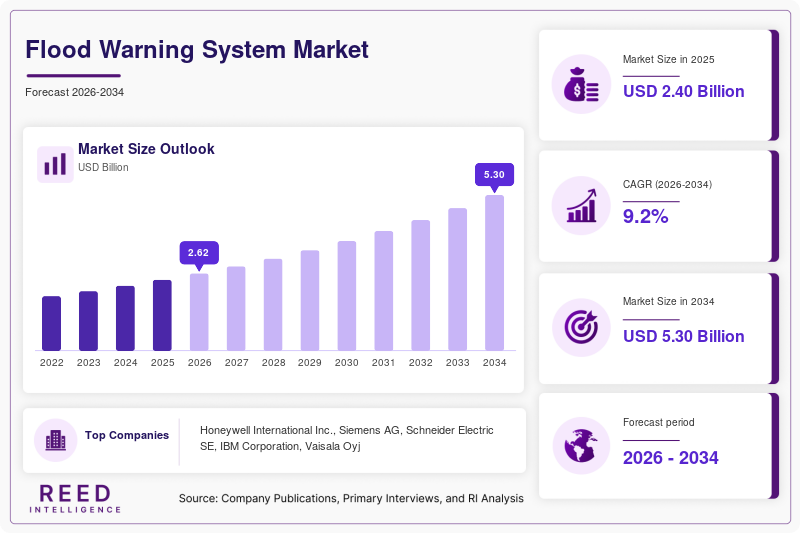
The Flood Warning System Market size was valued at approximately USD 2.4 billion in 2026 and is projected to reach around USD 4.9 billion by 2034, expanding at a CAGR of 9.2% during the forecast period (2026–2034). The market continues to evolve as governments and municipalities invest in advanced disaster management infrastructure to reduce economic losses and protect human lives. Flood warning systems integrate sensors, communication networks, and predictive analytics to provide early alerts, enabling timely evacuation and mitigation measures.
A major global factor supporting market growth is the increasing frequency and intensity of extreme weather events driven by climate variability. Rising sea levels, erratic rainfall patterns, and rapid urbanization in flood-prone regions have elevated the need for real-time monitoring and predictive flood modeling systems. As a result, both developed and developing economies are allocating higher budgets toward resilient infrastructure and digital flood forecasting solutions.
Key Highlights
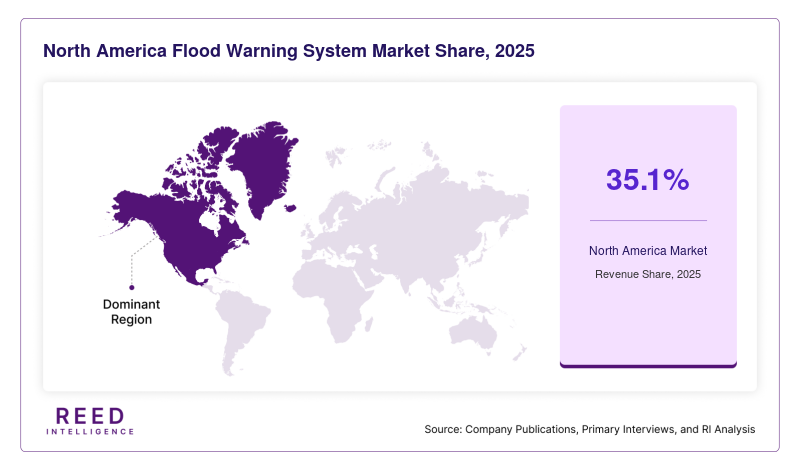
- North America dominated the market with a 35.1% share in 2025.
- Asia Pacific is expected to grow at the fastest CAGR of 10.8% during 2026–2034.
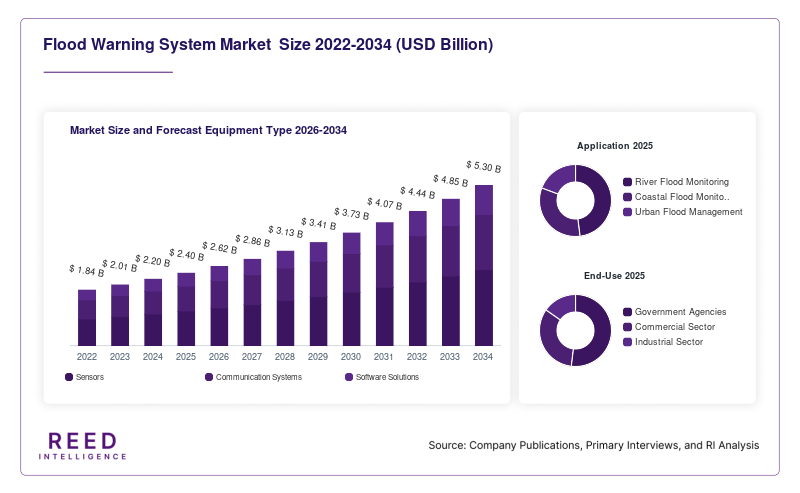
- By equipment type, sensors accounted for the largest share of 39.2%, while software solutions are projected to grow at a CAGR of 11.6%.
- By application, river flood monitoring led with a 42.4% share, whereas urban flood management is expected to expand at a CAGR of 10.9%.
- The United States remained the dominant country, with market values of USD 520 million in 2024 and USD 575 million in 2025.
Market Trends
Integration of artificial intelligence and predictive analytics in flood monitoring
The adoption of artificial intelligence and predictive analytics is transforming the operational efficiency of flood warning systems. Modern systems increasingly rely on machine learning algorithms to analyze historical weather data, river flow patterns, and real-time sensor inputs. These technologies enhance forecasting accuracy and allow authorities to issue early warnings with greater precision. The use of AI also enables scenario modeling, where multiple flood outcomes can be simulated based on varying environmental conditions.
This trend is particularly significant in urban areas, where infrastructure complexity requires precise risk assessment. AI-powered platforms can identify vulnerable zones and optimize emergency response strategies. Additionally, predictive analytics supports long-term planning by helping governments design flood-resilient infrastructure. The growing availability of cloud computing and big data platforms further accelerates the adoption of intelligent flood warning systems across both developed and emerging economies.
Expansion of IoT-enabled sensor networks and remote monitoring systems
The deployment of IoT-enabled sensors is becoming a defining trend in the flood warning system market. These sensors monitor parameters such as water level, rainfall intensity, and soil moisture in real time. Connected through wireless communication networks, they transmit continuous data to centralized control systems, enabling rapid decision-making. The scalability of IoT networks allows authorities to cover large geographic areas, including remote and high-risk regions.
This trend is supported by declining sensor costs and advancements in communication technologies such as LPWAN and satellite connectivity. Remote monitoring capabilities reduce the need for manual inspections and improve system reliability. Furthermore, integration with mobile applications ensures that alerts reach end users instantly. The widespread adoption of IoT-based systems is expected to drive market growth by enhancing responsiveness and reducing operational inefficiencies.
Market Drivers
Increasing frequency of extreme weather events and climate variability
The rising occurrence of extreme weather events is a key driver for the flood warning system market. Climate variability has led to unpredictable rainfall patterns, causing frequent flooding in both coastal and inland regions. Governments and disaster management agencies are prioritizing early warning systems to minimize casualties and economic damage. Flood warning systems play a crucial role in providing timely alerts, allowing communities to prepare and respond effectively.
In addition, the economic impact of floods has intensified the need for proactive measures. Infrastructure damage, agricultural losses, and disruptions to supply chains have prompted policymakers to invest in advanced monitoring systems. International organizations are also supporting funding initiatives for disaster risk reduction, further boosting market growth. As climate-related risks continue to rise, the demand for reliable flood warning systems is expected to remain strong.
Growing urbanization and infrastructure development in flood-prone areas
Rapid urbanization is another significant driver of the market. Expanding cities often encroach upon natural drainage systems, increasing the risk of urban flooding. High population density and critical infrastructure in urban areas make flood events more hazardous. As a result, municipalities are adopting advanced flood warning systems to safeguard residents and assets.
Infrastructure development projects, including smart cities and transportation networks, are integrating flood monitoring technologies as part of their design. These systems help manage water flow, prevent drainage blockages, and provide real-time alerts. The increasing focus on sustainable urban planning is also driving the adoption of flood warning systems. Governments are implementing regulations that mandate the inclusion of early warning mechanisms in new infrastructure projects, further supporting market expansion.
Market Restraint
High installation and maintenance costs limiting adoption in developing regions
The high cost associated with the installation and maintenance of flood warning systems acts as a restraint for market growth. Advanced systems require a combination of hardware components such as sensors, communication devices, and data processing units, along with software platforms for analytics and forecasting. The initial investment can be substantial, particularly for large-scale deployments across extensive geographic areas.
In developing regions, budget constraints often limit the adoption of such technologies. Governments may prioritize immediate infrastructure needs over long-term disaster management solutions. Additionally, maintenance costs, including sensor calibration and system upgrades, add to the financial burden. Limited technical expertise in certain regions further complicates system implementation and operation.
For example, rural and remote areas may face challenges in maintaining communication networks, leading to inconsistent data transmission. This reduces system effectiveness and discourages further investment. Addressing these cost-related challenges through public-private partnerships and affordable technology solutions will be critical for expanding market reach.
Market Opportunities
Rising adoption of smart city initiatives and digital infrastructure
The increasing number of smart city initiatives presents a significant opportunity for the flood warning system market. Governments worldwide are investing in digital infrastructure to improve urban resilience and sustainability. Flood warning systems are becoming an integral component of smart city frameworks, providing real-time data and predictive insights to manage water-related risks.
Integration with centralized command centers allows authorities to monitor multiple parameters simultaneously and coordinate emergency responses efficiently. Smart city platforms also enable seamless communication between various departments, enhancing disaster management capabilities. The use of advanced technologies such as cloud computing and data analytics further improves system performance.
As urban populations continue to grow, the need for intelligent infrastructure solutions will increase. This creates a favorable environment for the adoption of advanced flood warning systems, particularly in rapidly developing regions.
Expansion of satellite-based monitoring and remote sensing technologies
The use of satellite-based monitoring and remote sensing technologies offers promising growth opportunities for the market. These technologies provide comprehensive coverage of large and inaccessible areas, enabling accurate flood forecasting and monitoring. Satellite data can be used to track rainfall patterns, river levels, and land surface conditions, enhancing the overall effectiveness of flood warning systems.
Remote sensing technologies also support early detection of potential flood risks, allowing authorities to take preventive measures. The integration of satellite data with ground-based sensors creates a robust monitoring network that improves data accuracy and reliability. Additionally, advancements in geospatial analytics enable detailed mapping of flood-prone areas, supporting better planning and risk management.
The increasing availability of high-resolution satellite imagery and cost-effective data solutions is expected to drive adoption across various regions. This opportunity is particularly relevant for countries with limited ground-based infrastructure, as it provides an efficient alternative for flood monitoring.
Segmental Analysis
By Equipment Type
Sensors emerged as the dominant subsegment, accounting for approximately 39.2% of the market share in 2024. These devices play a critical role in collecting real-time data on water levels, rainfall, and environmental conditions. The widespread deployment of sensors across rivers, reservoirs, and urban drainage systems supports accurate monitoring and early warning capabilities. Their reliability and ability to provide continuous data streams make them indispensable components of flood warning systems.
The demand for sensors is driven by advancements in IoT technology and the need for scalable monitoring solutions. Governments and municipalities are increasingly investing in sensor networks to enhance disaster preparedness. The integration of sensors with communication systems and data analytics platforms further improves system efficiency, contributing to their dominant market position.
Software solutions are the fastest-growing subsegment, projected to expand at a CAGR of 11.6% during the forecast period. These solutions enable data processing, predictive modeling, and real-time visualization of flood risks. The increasing adoption of cloud-based platforms and AI-driven analytics is driving demand for advanced software systems.
The growth of software solutions is supported by the need for accurate forecasting and efficient data management. These systems allow authorities to analyze large volumes of data and generate actionable insights. The integration of software with mobile applications and communication networks enhances accessibility and responsiveness, making it a key growth area in the market.
By Application
River flood monitoring held the largest market share of 42.4% in 2024, driven by the need to monitor water levels in major rivers and prevent large-scale flooding. These systems are widely used by government agencies to track river flow and issue early warnings. Their ability to cover extensive geographic areas makes them essential for managing flood risks in both urban and rural regions.
The dominance of this subsegment is supported by the increasing frequency of river flooding events and the need for reliable monitoring systems. Investments in upgrading existing infrastructure and deploying advanced technologies are further driving growth. River flood monitoring systems continue to play a crucial role in disaster management strategies worldwide.
Urban flood management is the fastest-growing application, with a projected CAGR of 10.9%. Rapid urbanization and inadequate drainage systems have increased the risk of flooding in cities, driving demand for advanced monitoring solutions. These systems help manage water flow, prevent infrastructure damage, and ensure public safety.
The growth of urban flood management is supported by smart city initiatives and the integration of digital technologies. Real-time monitoring and predictive analytics enable authorities to respond quickly to potential threats. The increasing focus on sustainable urban planning further contributes to the expansion of this subsegment.
By End-Use
Government agencies dominated the market, accounting for a significant share in 2024. These agencies are responsible for implementing and managing flood warning systems as part of national disaster management strategies. Their role in funding and coordinating large-scale projects makes them key contributors to market growth.
The dominance of government agencies is driven by the need to protect public safety and reduce economic losses. Investments in infrastructure development and technology adoption are supporting the deployment of advanced systems. Collaboration with private sector companies further enhances system capabilities and efficiency.
The commercial sector is the fastest-growing end-use segment, with a notable CAGR during the forecast period. Businesses are increasingly adopting flood warning systems to protect assets and ensure operational continuity. Industries such as agriculture, construction, and logistics are particularly vulnerable to flooding, driving demand for reliable monitoring solutions.
The growth of this segment is supported by the increasing awareness of risk management and the availability of cost-effective solutions. Companies are integrating flood warning systems into their operations to minimize disruptions and enhance resilience. This trend is expected to continue as climate risks intensify.
Regional Analysis
North America
North America accounted for a significant share of the Flood Warning System Market, holding approximately 35.1% in 2025, with a projected CAGR of 8.7% during the forecast period. The region benefits from advanced technological infrastructure and strong government support for disaster management initiatives. Investments in modernizing aging water management systems and integrating digital monitoring solutions are contributing to steady market growth.
The United States dominates the regional market due to its extensive network of river monitoring systems and early adoption of advanced technologies. A key growth factor is the increasing frequency of hurricanes and coastal flooding, which has prompted federal agencies to enhance early warning capabilities. Continuous funding for climate resilience projects further supports market expansion.
Europe
Europe held around 26.4% of the market share in 2025 and is expected to grow at a CAGR of 8.5% through 2034. The region’s focus on environmental sustainability and disaster preparedness drives the adoption of flood warning systems. Strict regulatory frameworks and coordinated efforts among member states contribute to the development of integrated flood monitoring networks.
Germany leads the European market, supported by its strong emphasis on infrastructure resilience and environmental protection. A unique growth factor is the region’s cross-border flood management initiatives, which enable data sharing and coordinated response strategies. These collaborative efforts enhance system efficiency and drive market growth.
Asia Pacific
Asia Pacific is the fastest-growing region, with a CAGR of 10.8% and a market share of 22.7% in 2025. Rapid urbanization, population growth, and increasing exposure to natural disasters are key factors driving demand. Governments are investing heavily in flood management systems to mitigate risks associated with monsoons and rising sea levels.
China dominates the regional market due to large-scale infrastructure projects and significant investments in smart city development. A key growth factor is the government’s focus on digital transformation, which includes the deployment of advanced monitoring systems. These initiatives are expected to accelerate market expansion across the region.
Middle East & Africa
The Middle East & Africa region accounted for approximately 8.6% of the market share in 2025 and is projected to grow at a CAGR of 9.0%. The region is increasingly recognizing the importance of disaster preparedness, particularly in areas prone to flash floods and extreme weather conditions. Investments in infrastructure development are supporting market growth.
Saudi Arabia leads the market in this region, driven by its focus on modernizing urban infrastructure and improving disaster management systems. A unique growth factor is the integration of flood warning systems into large-scale development projects, ensuring resilience against environmental risks.
Latin America
Latin America held a market share of 7.2% in 2025 and is expected to grow at a CAGR of 8.9% during the forecast period. The region faces frequent flooding due to heavy rainfall and inadequate drainage infrastructure, driving the need for effective warning systems. Government initiatives aimed at improving disaster management capabilities are supporting market growth.
Brazil dominates the regional market, supported by investments in urban infrastructure and environmental monitoring systems. A key growth factor is the increasing adoption of digital technologies in disaster management, which enhances the efficiency and reliability of flood warning systems.
Competitive Landscape
The Flood Warning System Market is characterized by the presence of several established players and emerging companies focusing on technological innovation. Leading companies are investing in research and development to enhance system accuracy and reliability. Strategic partnerships, mergers, and acquisitions are common as firms aim to expand their market presence and strengthen their product portfolios.
A leading player in the market is Honeywell International Inc., known for its advanced monitoring solutions and strong global presence. The company continues to invest in digital technologies and expand its offerings in disaster management systems. Recent developments include the launch of integrated platforms that combine sensor data with predictive analytics to improve early warning capabilities.
Other key players are focusing on developing cost-effective solutions to cater to emerging markets. The competitive landscape is expected to remain dynamic, with companies emphasizing innovation and strategic collaborations to gain a competitive edge.
Key Players
- Honeywell International Inc.
- Siemens AG
- Schneider Electric SE
- IBM Corporation
- Vaisala Oyj
- Campbell Scientific Inc.
- Teledyne Technologies Inc.
- OTT Hydromet
- Xylem Inc.
- NEC Corporation
- Hitachi Ltd.
- Motorola Solutions Inc.
- Lockheed Martin Corporation
- General Electric Company
- Ericsson AB
Recent Developments
- Honeywell International Inc. introduced an advanced flood monitoring platform integrating AI-based analytics for improved prediction accuracy.
- Siemens AG partnered with regional governments to deploy smart flood warning systems as part of urban infrastructure projects.
- IBM Corporation launched a cloud-based flood forecasting solution utilizing real-time data and machine learning models for enhanced early warning capabilities.
Flood Warning System Market Segments
Equipment Type
- Sensors
- Communication Systems
- Software Solutions
Application
- River Flood Monitoring
- Coastal Flood Monitoring
- Urban Flood Management
End-Use
- Government Agencies
- Commercial Sector
- Industrial Sector
By Region
- North America
- Europe
- APAC
- Middle East and Africa
- LATAM