Floral Flavor Market Size, Share & Demand Report By Flavor Type (Rose Flavor, Lavender Flavor, Jasmine Flavor, Hibiscus Flavor, Elderflower Flavor), By Application (Beverages, Bakery Products, Confectionery, Dairy Products, Functional Foods, Alcoholic Beverages), By Source (Natural Floral Flavors, Synthetic Floral Flavors), By End Use (Food and Beverage Manufacturers, Foodservice Industry), By Region & Segment Forecasts, 2026–2034
USD 3950
Market Overview
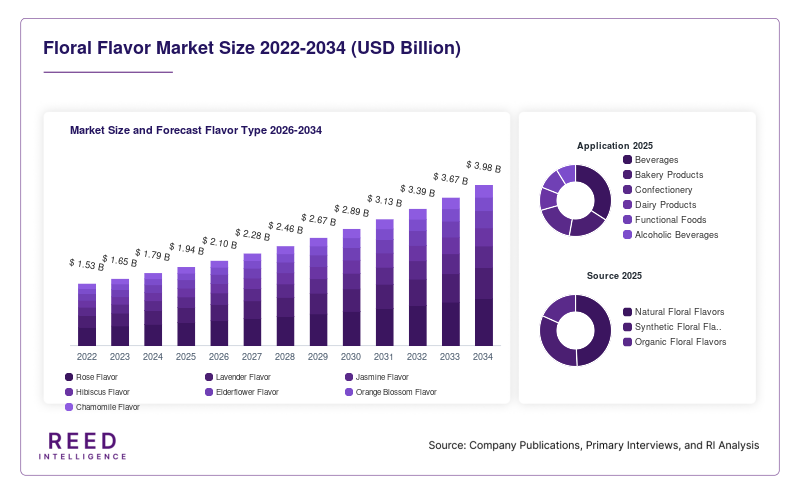
The Floral Flavor Market Size was valued at approximately USD 1.94 billion in 2026 and is projected to reach USD 3.68 billion by 2034, expanding at a CAGR of 8.3% during the forecast period from 2026 to 2034. The global Floral Flavor Market growth has been supported by rising consumer demand for premium sensory food and beverage experiences across global markets. Increasing preference for natural flavor ingredients and botanical-based formulations has accelerated the adoption of floral flavors in beverages, confectionery, bakery products, dairy products, and wellness-focused consumables.
The Floral Flavor Market has experienced significant momentum as food and beverage manufacturers continue to innovate with distinctive flavor profiles that offer freshness, authenticity, and artisanal appeal. Floral flavors derived from lavender, rose, hibiscus, elderflower, jasmine, orange blossom, and chamomile are increasingly used to differentiate products in competitive consumer markets. Manufacturers are focusing on clean-label ingredients and natural extraction methods to align with changing consumer preferences toward minimally processed food products.
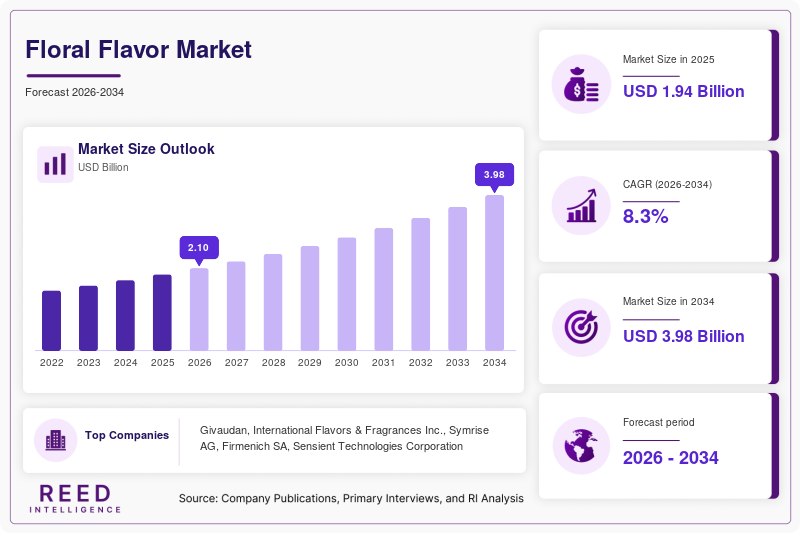
Key Highlights
- Europe accounted for 33.7% of the global Floral Flavor Market share in 2025, while Asia Pacific is projected to register the fastest CAGR of 9.4% during 2026–2034.
- By flavor type, rose flavor dominated the market with a 28.5% share in 2025, while elderflower flavor is projected to grow at a CAGR of 10.1%.
- By application, beverages represented the leading segment with 41.6% market share in 2025, whereas functional foods are forecast to expand at a CAGR of 9.8%.
- By source, natural floral flavors held 67.4% of the market share in 2025, while organic floral flavors are expected to grow at a CAGR of 10.4%.
- France remained the dominant country market, valued at USD 168 million in 2024 and USD 182 million in 2025.
Market Trends
Rising Demand for Botanical Beverage Formulations
Botanical beverages have emerged as a major trend influencing the Floral Flavor Market. Beverage manufacturers are increasingly incorporating floral ingredients into sparkling waters, teas, mocktails, energy drinks, and alcoholic beverages to create refreshing and premium flavor experiences.
Consumers are seeking sophisticated flavor combinations that offer unique sensory appeal without excessive sweetness. Floral flavors such as hibiscus, elderflower, and jasmine are gaining popularity due to their aromatic profiles and association with wellness-oriented lifestyles. This trend continues to support innovation across the beverage industry.
Expansion of Floral Flavors in Functional Food Products
The growing functional food industry has increased the use of floral flavor ingredients in wellness-focused products. Manufacturers are developing products that combine floral notes with adaptogens, herbal extracts, probiotics, and plant-based ingredients to appeal to health-conscious consumers.
Floral flavors are increasingly used in nutritional bars, yogurt products, herbal supplements, and plant-based desserts. Their association with relaxation and natural wellness contributes to strong market demand.
Market Drivers
Increasing Consumer Preference for Natural Ingredients
Rising consumer awareness regarding artificial additives and synthetic ingredients has significantly supported the growth of the Floral Flavor Market. Consumers increasingly prefer natural flavors derived from flowers, herbs, and botanical sources.
Food and beverage companies are therefore investing in natural flavor extraction technologies and clean-label product development to meet evolving consumer expectations.
Growth of Premium and Artisanal Food Categories
The expansion of premium food and artisanal beverage categories has accelerated demand for floral flavor ingredients. Consumers are increasingly exploring gourmet products offering unique taste experiences and distinctive ingredient combinations.
The Floral Flavor Market has benefited from rising demand for premium teas, handcrafted confectionery, specialty bakery products, and craft beverages incorporating floral flavor profiles.
Market Restraint
Limited Stability of Natural Floral Extracts
The Floral Flavor Market faces challenges related to the limited shelf stability and flavor consistency of natural floral extracts. Exposure to heat, light, and oxygen can affect aroma intensity and product quality, creating formulation challenges for manufacturers.
Market Opportunities
Increasing Demand for Plant-Based Desserts
The rapid growth of plant-based dessert products presents significant opportunities for the Floral Flavor Market. Floral flavor combinations are increasingly used in dairy-free ice creams, vegan pastries, and plant-based yogurts to improve product differentiation and sensory appeal.
Manufacturers are expected to introduce innovative botanical dessert concepts targeting premium and health-conscious consumer segments.
Expansion of Floral Flavors in Alcoholic Beverages
The growing popularity of botanical alcoholic beverages is creating strong opportunities for the Floral Flavor Market. Floral ingredients are increasingly used in craft gin, flavored spirits, cocktails, and sparkling alcoholic beverages.
These formulations provide distinctive aroma profiles and premium positioning within the expanding craft beverage sector.
Segmental Analysis
By Flavor Type
Rose Flavor Dominated the Market
Rose flavor accounted for 28.5% of the Floral Flavor Market share in 2025. Its dominance was attributed to widespread use in confectionery, beverages, dairy products, and traditional desserts across multiple global markets.
Rose flavor remained highly preferred because of its recognizable aroma profile and compatibility with fruit and herbal flavor combinations.
Elderflower Flavor to Witness Fastest Growth
Elderflower flavor is projected to grow at a CAGR of 10.1% through 2034. Growth will be supported by rising use in sparkling beverages, botanical cocktails, and wellness-oriented drinks.
Manufacturers are expected to expand elderflower-based formulations due to growing consumer demand for sophisticated and lightly sweet flavor profiles.
By Application
Beverages Held the Largest Share
Beverages represented 41.6% of the Floral Flavor Market share in 2025 because of increasing use of floral ingredients in teas, flavored waters, cocktails, and premium soft drinks.
Beverage manufacturers continued introducing innovative floral flavor combinations targeting health-conscious and premium consumer segments.
Functional Foods to Grow Rapidly
Functional foods are projected to expand at a CAGR of 9.8% during the forecast period. Growth will be driven by rising demand for wellness-oriented snacks, nutritional products, and fortified foods incorporating botanical ingredients.
By Source
Natural Floral Flavors Dominated the Market
Natural floral flavors held 67.4% of the Floral Flavor Market share in 2025 due to rising consumer preference for clean-label products and minimally processed ingredients.
Food manufacturers increasingly utilized natural floral extracts to support product transparency and premium positioning.
Organic Floral Flavors to Register Strong Expansion
Organic floral flavors are anticipated to grow at a CAGR of 10.4% through 2034. Growth will be supported by increasing demand for certified organic beverages and specialty food products.
By End Use
Food and Beverage Manufacturers Led the Market
Food and beverage manufacturers accounted for 58.7% of the Floral Flavor Market share in 2025 because of widespread application of floral flavors across commercial product formulations.
Large manufacturers focused on product innovation and seasonal launches incorporating floral ingredient combinations.
Foodservice Industry to Expand Significantly
The foodservice industry is expected to grow at a CAGR of 9.2% during the forecast period. Growth will be driven by rising demand for botanical cocktails, gourmet desserts, and specialty café beverages featuring floral flavor profiles.
Regional Analysis
North America
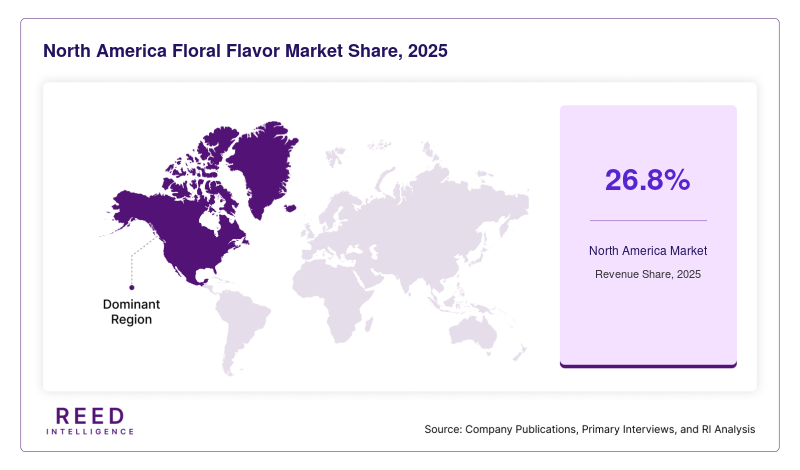
North America held 26.8% of the global Floral Flavor Market share in 2025 and will grow at a CAGR of 7.9% through 2034. The regional market expanded steadily because of increasing demand for clean-label beverages and premium food products.
The United States dominated the region due to strong consumer interest in botanical beverages, artisanal confectionery, and wellness-oriented food formulations.
Europe
Europe accounted for 33.7% of the Floral Flavor Market share in 2025 and will expand at a CAGR of 8.0% during the forecast period. The region maintained strong market growth because of its established culinary traditions involving botanical ingredients and premium flavor innovation.
France emerged as the dominant country due to high demand for floral confectionery, gourmet bakery products, and luxury beverage formulations incorporating botanical extracts.
Asia Pacific
Asia Pacific represented 24.9% of the global Floral Flavor Market share in 2025 and will witness the fastest CAGR of 9.4% during 2026–2034. Rapid urbanization and rising disposable income accelerated demand for premium beverages and innovative packaged food products.
China dominated the regional market because of increasing adoption of floral tea products, herbal beverages, and modern fusion food concepts utilizing botanical flavor ingredients.
Middle East & Africa
Middle East & Africa captured 7.6% of the Floral Flavor Market share in 2025 and will grow at a CAGR of 7.5% through 2034. Regional demand was supported by traditional culinary applications of rose, orange blossom, and jasmine flavors in beverages and desserts.
Saudi Arabia led the regional market due to strong consumption of floral-infused confectionery and premium beverage products.
Latin America
Latin America accounted for 7.0% of the global Floral Flavor Market share in 2025 and will register a CAGR of 7.2% during the forecast period. The market experienced steady growth because of increasing interest in premium beverages and natural food ingredients.
Brazil remained the dominant country due to rising demand for botanical beverages and expanding artisanal food manufacturing activities.
Competitive Landscape
The Floral Flavor Market remains competitive, with companies focusing on natural extraction technologies, botanical ingredient innovation, and premium flavor development. Manufacturers are investing in research and development activities to improve flavor stability, aroma retention, and clean-label compatibility.
Givaudan remained one of the leading participants in the Floral Flavor Market due to its extensive botanical flavor portfolio and global food ingredient distribution network. The company recently expanded development of natural floral flavor solutions designed for functional beverages and premium confectionery applications.
Other market participants are increasingly emphasizing sustainable sourcing, organic certifications, and customized flavor formulations to strengthen competitiveness in evolving consumer markets.
Key Players List
- Givaudan
- International Flavors & Fragrances Inc.
- Symrise AG
- Firmenich SA
- Sensient Technologies Corporation
- Takasago International Corporation
- Mane SA
- Kerry Group plc
- Döhler Group
- Bell Flavors & Fragrances
- Flavorchem Corporation
- Robertet Group
- Huabao International Holdings Limited
- Synergy Flavors
- Treatt plc
Floral Flavor Market Segments
Flavor Type
- Rose Flavor
- Lavender Flavor
- Jasmine Flavor
- Hibiscus Flavor
- Elderflower Flavor
- Orange Blossom Flavor
- Chamomile Flavor
Application
- Beverages
- Bakery Products
- Confectionery
- Dairy Products
- Functional Foods
- Alcoholic Beverages
Source
- Natural Floral Flavors
- Synthetic Floral Flavors
- Organic Floral Flavors
End Use
- Food and Beverage Manufacturers
- Foodservice Industry
- Household Consumers
By Region
- North America
- Europe
- APAC
- Middle East and Africa
- LATAM