Fluoroquinolone Toxicity Syndrome Market Size, Share & Demand Report By Type (Neuropathy Toxicity, Musculoskeletal Toxicity, Cognitive Toxicity), By Application (Hospitals, Specialty Clinics, Rehabilitation Centers), By End-Use (Adult Patients, Geriatric Patients, Pediatric Patients), By Region & Segment Forecasts, 2025–2034
USD 3950
Market Overview
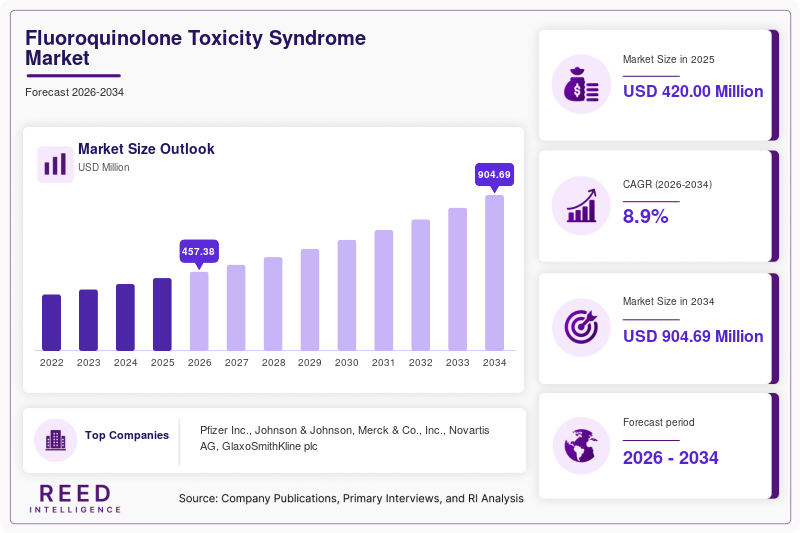
The Fluoroquinolone Toxicity Syndrome Market size is emerging as a niche yet steadily evolving segment within the broader pharmaceutical safety and post-antibiotic care industry. In 2025, the market size is estimated to reach approximately USD 420 million, driven by increased recognition of adverse effects associated with fluoroquinolone antibiotics. By 2026, the market is projected to grow to USD 455 million, reflecting a rising patient pool and growing clinical awareness. The market is expected to reach nearly USD 980 million by 2034, expanding at a compound annual growth rate (CAGR) of 8.9% from 2025 to 2034.
Fluoroquinolone toxicity syndrome refers to a cluster of persistent and sometimes severe side effects associated with the use of fluoroquinolone antibiotics, including tendon rupture, neuropathy, cognitive dysfunction, and musculoskeletal pain. Increasing regulatory scrutiny and patient advocacy efforts have brought this condition into greater focus, prompting healthcare providers to seek better diagnostic and therapeutic solutions.
Key Highlights
- Market size estimated at USD 420 million in 2025
- Projected to reach USD 980 million by 2034
- CAGR of 8.9% from 2025 to 2034
- Growing awareness of drug-induced toxicity conditions
- Rising investments in pharmacovigilance and personalized treatment
Market Trends
Increasing Clinical Recognition and Diagnostic Advancements
The Fluoroquinolone Toxicity Syndrome Market is witnessing a significant trend toward improved clinical recognition of the condition. Historically underdiagnosed, this syndrome is now gaining attention due to increased reporting of long-term side effects. Healthcare professionals are being trained to identify early symptoms, leading to better diagnosis rates. Additionally, advancements in diagnostic technologies, including biomarker research and imaging techniques, are enabling more accurate identification of neurological and musculoskeletal damage. This trend is expected to improve patient outcomes and expand the treatment landscape, as early detection allows for timely intervention and reduces long-term complications.
Expansion of Alternative Therapeutic Approaches
Another notable trend is the growing focus on alternative and supportive therapies for managing fluoroquinolone toxicity. Conventional treatment options remain limited, prompting research into nutritional supplementation, regenerative medicine, and physiotherapy-based interventions. Patients and healthcare providers are increasingly adopting multidisciplinary approaches that include pain management, physical rehabilitation, and mental health support. This shift is encouraging pharmaceutical companies and biotech firms to invest in novel treatment solutions. As a result, the market is gradually transitioning from symptom management to more comprehensive care strategies aimed at improving quality of life.
Market Drivers
Rising Incidence of Adverse Drug Reactions
The increasing prevalence of adverse reactions associated with fluoroquinolone antibiotics is a major driver for the Fluoroquinolone Toxicity Syndrome Market. These antibiotics are widely prescribed for bacterial infections, but their side effects have become more evident over time. Reports of tendon injuries, nerve damage, and chronic fatigue have prompted regulatory warnings and stricter prescription guidelines. As awareness grows among both patients and healthcare providers, more cases are being identified and treated. This has led to an increased demand for specialized care and therapeutic solutions, contributing to market growth.
Strengthening Pharmacovigilance Systems
Global improvements in pharmacovigilance systems are also driving the market forward. Governments and healthcare organizations are investing in monitoring systems to track drug safety and adverse events. These systems enable better data collection and analysis, leading to improved understanding of fluoroquinolone toxicity. Enhanced reporting mechanisms encourage patients and clinicians to report side effects, increasing the visibility of the condition. This growing body of evidence supports the development of targeted treatments and encourages pharmaceutical companies to invest in safer drug alternatives and management strategies.
Market Restraint
Limited Standardized Treatment Protocols
A key restraint in the Fluoroquinolone Toxicity Syndrome Market is the lack of standardized treatment protocols. Despite growing awareness, there is no universally accepted approach for managing this condition. Treatment often relies on symptomatic relief rather than addressing the underlying causes. This variability in treatment approaches can lead to inconsistent patient outcomes and reduced confidence among healthcare providers. Additionally, limited clinical research and a lack of large-scale trials hinder the development of evidence-based guidelines. For example, patients with similar symptoms may receive different treatments depending on the healthcare provider, leading to inefficiencies in care delivery. This challenge restricts market growth by limiting the adoption of advanced therapies and discouraging investment in new treatment development.
Market Opportunities
Development of Targeted Therapeutics
The development of targeted therapies presents a significant opportunity in the Fluoroquinolone Toxicity Syndrome Market. Current treatment options primarily focus on managing symptoms, leaving a gap for innovative solutions that address the root causes of toxicity. Advances in molecular biology and drug development are enabling researchers to explore targeted interventions that can repair cellular damage and restore normal function. Pharmaceutical companies are increasingly investing in research to identify specific pathways affected by fluoroquinolone toxicity. This could lead to the introduction of novel drugs that improve patient outcomes and create new revenue streams within the market.
Expansion in Emerging Markets
Emerging economies offer substantial growth opportunities for the market. Countries in Asia Pacific, Latin America, and parts of Africa are experiencing improvements in healthcare infrastructure and increased access to medical services. As awareness of drug-related adverse effects grows in these regions, the demand for diagnosis and treatment is expected to rise. Additionally, government initiatives aimed at improving healthcare quality and safety are supporting market expansion. The growing middle-class population and rising healthcare spending further contribute to increased adoption of advanced treatment solutions, making these regions attractive for market players.
Segmental Analysis
By Type
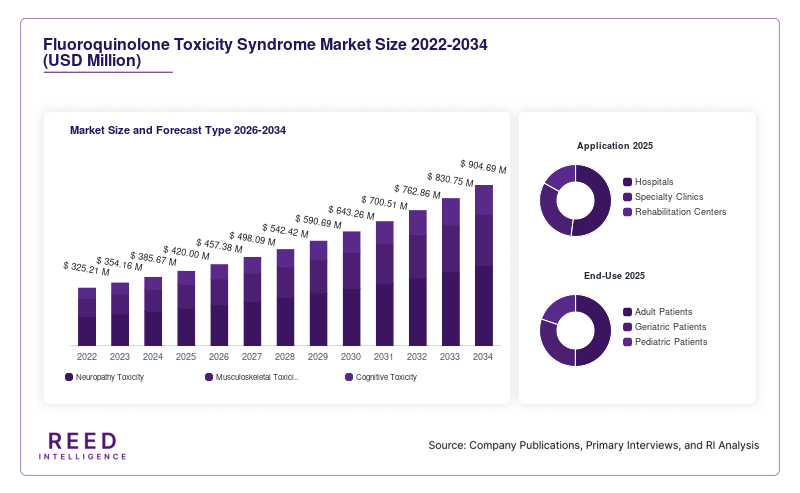
The neuropathy-related toxicity segment dominated the Fluoroquinolone Toxicity Syndrome Market in 2024, accounting for approximately 42% of the total market share. This dominance is attributed to the high prevalence of nerve damage symptoms among affected patients. Neuropathy often presents as chronic pain, tingling, and numbness, requiring long-term management. The growing recognition of neurological complications associated with fluoroquinolone use has led to increased diagnosis and treatment demand. Healthcare providers are focusing on developing targeted therapies and rehabilitation programs to address these symptoms, further supporting the segment’s growth.
The musculoskeletal toxicity segment is expected to be the fastest-growing, with a projected CAGR of 9.5% during the forecast period. This growth is driven by the increasing incidence of tendon injuries and joint-related complications linked to fluoroquinolone use. Advances in regenerative medicine and physiotherapy are supporting the development of effective treatment options. Additionally, rising awareness among patients and clinicians is encouraging early diagnosis and intervention, contributing to the segment’s rapid expansion.
By Application
Hospitals accounted for the largest share of the market in 2024, representing around 48% of total revenue. This dominance is due to the availability of advanced diagnostic tools and specialized healthcare professionals in hospital settings. Patients with severe symptoms often require comprehensive evaluation and multidisciplinary care, which is more accessible in hospitals. Additionally, hospitals play a key role in pharmacovigilance and adverse event reporting, further supporting their leading position in the market.
Specialty clinics are expected to be the fastest-growing application segment, with a CAGR of 9.2% during the forecast period. These clinics offer focused care for patients with chronic conditions, including fluoroquinolone toxicity syndrome. The growing preference for personalized treatment and shorter waiting times is driving demand for specialty clinics. Moreover, the increasing number of clinics specializing in neurological and musculoskeletal disorders is supporting segment growth.
By End-Use
The adult patient segment dominated the market in 2024, accounting for approximately 75% of the total share. This is primarily due to the higher prescription rates of fluoroquinolone antibiotics among adults. The prevalence of chronic conditions and infections requiring antibiotic treatment is also higher in this population. As a result, adults are more likely to experience adverse effects, driving demand for diagnosis and treatment services.
The geriatric segment is projected to grow at the fastest rate, with a CAGR of 9.7% during the forecast period. Older adults are more susceptible to drug-related side effects due to age-related physiological changes. This increases the risk of developing fluoroquinolone toxicity syndrome. Additionally, the growing aging population worldwide is contributing to the expansion of this segment. Healthcare providers are focusing on developing age-specific treatment approaches to address the unique needs of geriatric patients.
Regional Analysis
North America
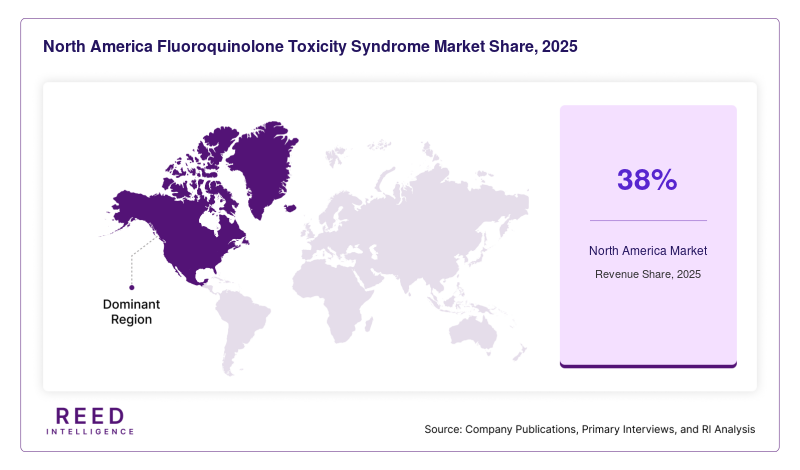
North America held the largest share of the Fluoroquinolone Toxicity Syndrome Market in 2025, accounting for approximately 38% of the global market. The region is expected to maintain its dominance, with a projected CAGR of 8.5% during the forecast period. High awareness levels, advanced healthcare infrastructure, and strong regulatory frameworks contribute to the region’s leading position. Additionally, the presence of major pharmaceutical companies and research institutions supports continuous innovation and market growth.
The United States dominates the North American market due to its well-established pharmacovigilance systems and high reporting rates of adverse drug reactions. A unique growth factor is the strong presence of patient advocacy groups, which actively promote awareness and support affected individuals. These organizations play a key role in influencing healthcare policies and encouraging research into effective treatments.
Europe
Europe accounted for around 27% of the global market share in 2025 and is projected to grow at a CAGR of 8.2% through 2034. The region benefits from stringent drug safety regulations and a proactive approach to monitoring adverse effects. Increasing healthcare expenditure and growing awareness among clinicians are supporting market expansion across major European countries.
Germany leads the European market, driven by its advanced healthcare system and strong emphasis on research and development. A unique growth factor is the integration of digital health technologies, which enable better tracking and management of patient data. This enhances early diagnosis and improves treatment outcomes, contributing to market growth.
Asia Pacific
Asia Pacific held approximately 20% of the market share in 2025 and is expected to register the fastest CAGR of 9.8% during the forecast period. Rapid urbanization, increasing healthcare access, and rising awareness of drug safety are key factors driving growth in the region. Governments are investing in healthcare infrastructure, further supporting market expansion.
China dominates the Asia Pacific market due to its large population and growing healthcare sector. A unique growth factor is the increasing adoption of telemedicine services, which improve access to specialized care in remote areas. This enables more patients to receive timely diagnosis and treatment for fluoroquinolone toxicity syndrome.
Middle East & Africa
The Middle East & Africa region accounted for around 8% of the global market share in 2025 and is projected to grow at a CAGR of 7.5%. The market is gradually expanding due to improving healthcare infrastructure and increasing awareness of drug-related adverse effects. Government initiatives aimed at enhancing healthcare quality are also contributing to growth.
Saudi Arabia leads the region, supported by significant investments in healthcare modernization. A unique growth factor is the rising focus on medical tourism, which drives demand for advanced diagnostic and treatment services. This trend is expected to support market development in the coming years.
Latin America
Latin America held approximately 7% of the market share in 2025 and is expected to grow at a CAGR of 8.0% during the forecast period. The region is experiencing steady growth due to increasing healthcare access and rising awareness of drug safety issues. Economic development and government healthcare initiatives are further supporting market expansion.
Brazil dominates the Latin American market, driven by its large healthcare system and growing investment in medical research. A unique growth factor is the expansion of public healthcare programs, which improve access to diagnosis and treatment services for a broader population. This is expected to drive demand for fluoroquinolone toxicity syndrome management solutions.
Competitive Landscape
The Fluoroquinolone Toxicity Syndrome Market is moderately fragmented, with several pharmaceutical companies, biotechnology firms, and healthcare providers competing to develop effective treatment solutions. The market is characterized by ongoing research and development activities, strategic collaborations, and increasing investment in innovative therapies.
Pfizer Inc. is considered a leading player in the market due to its extensive portfolio of antibiotics and strong research capabilities. The company has recently focused on improving drug safety and developing alternative therapies to reduce the risk of adverse effects. Other key players are also investing in clinical trials and exploring novel treatment approaches, including regenerative medicine and targeted therapies.
The competitive landscape is further shaped by partnerships between pharmaceutical companies and research institutions. These collaborations aim to accelerate the development of new treatments and improve patient outcomes. Additionally, companies are focusing on expanding their presence in emerging markets to capitalize on growth opportunities.
Key Players
- Pfizer Inc.
- Johnson & Johnson
- Merck & Co., Inc.
- Novartis AG
- GlaxoSmithKline plc
- Sanofi S.A.
- AstraZeneca plc
- Bayer AG
- AbbVie Inc.
- Eli Lilly and Company
- Bristol-Myers Squibb Company
- Takeda Pharmaceutical Company Limited
- Amgen Inc.
- Teva Pharmaceutical Industries Ltd.
- Sun Pharmaceutical Industries Ltd.
Recent Developments
- In 2024, a leading pharmaceutical company initiated a clinical trial focusing on targeted therapies for fluoroquinolone-induced neuropathy.
- In 2025, a biotechnology firm announced a collaboration with a research institute to develop regenerative treatments for tendon damage.
- In 2025, several healthcare organizations launched awareness campaigns to improve early diagnosis and patient management of fluoroquinolone toxicity syndrome.
Fluoroquinolone Toxicity Syndrome Market Segments
Type
- Neuropathy Toxicity
- Musculoskeletal Toxicity
- Cognitive Toxicity
Application
- Hospitals
- Specialty Clinics
- Rehabilitation Centers
End-Use
- Adult Patients
- Geriatric Patients
- Pediatric Patients
By Region
- North America
- Europe
- APAC
- Middle East and Africa
- LATAM