Fondaparinux Market Size, Share & Demand Report By Indication (Deep Vein Thrombosis, Pulmonary Embolism, Acute Coronary Syndrome, Venous Thromboembolism Prevention), By Distribution Channel (Hospital Pharmacies, Retail Pharmacies, Online Pharmacies), By End Use (Hospitals, Specialty Clinics, Ambulatory Surgical Centers, Homecare Settings) By Region & Segment Forecasts, 2026–2034
USD 3950
Market Overview
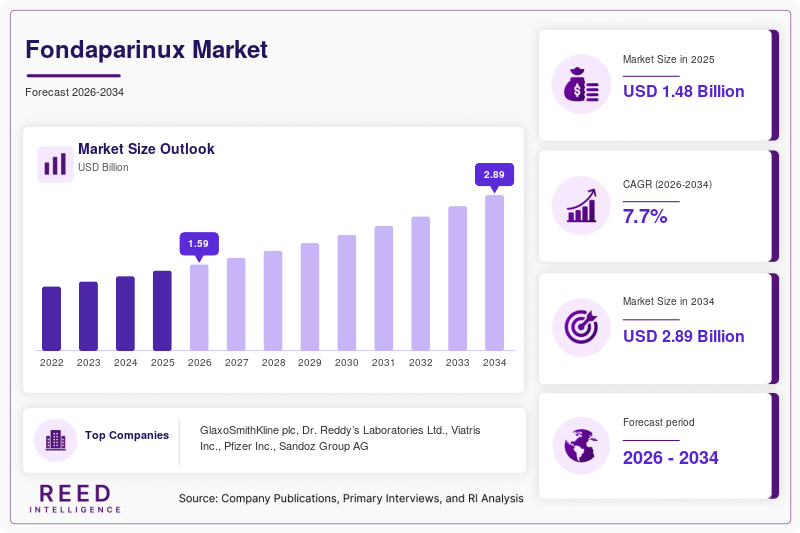
The global Fondaparinux Market size was valued at USD 1.48 billion in 2026 and is projected to reach USD 2.67 billion by 2034, expanding at a compound annual growth rate (CAGR) of 7.7% during the forecast period. Fondaparinux is a synthetic anticoagulant widely used for the prevention and treatment of deep vein thrombosis, pulmonary embolism, and other thromboembolic disorders. The market continues to witness stable expansion due to the increasing prevalence of cardiovascular diseases, rising surgical procedures, and growing awareness regarding anticoagulant therapies in both developed and emerging healthcare systems.
One of the major global factors supporting market growth is the increasing burden of venous thromboembolism cases linked to aging populations and sedentary lifestyles. Hospitals and specialty clinics are increasingly adopting advanced anticoagulation protocols to reduce complications associated with post-surgical thrombosis. In addition, healthcare providers are focusing on minimizing hospitalization duration through efficient injectable anticoagulant therapies, which is encouraging the use of fondaparinux products across multiple treatment settings.
Key Highlights
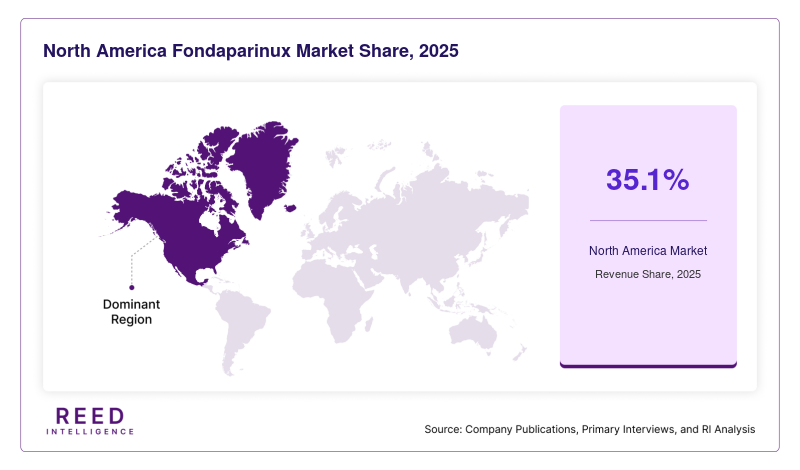
- North America dominated the market with a 35.1% share in 2025, while Asia Pacific is expected to grow at the fastest CAGR of 9.4% during 2026–2034.
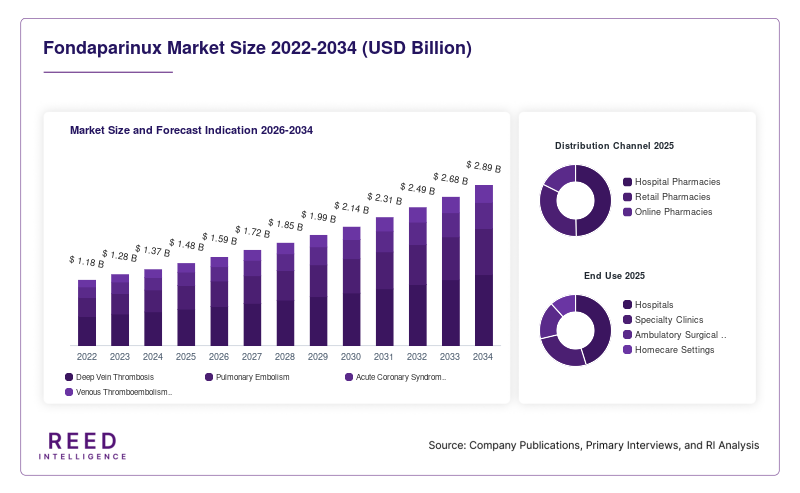
- By indication, deep vein thrombosis accounted for the largest share of 42.8%, while pulmonary embolism treatment is projected to grow at a CAGR of 8.8%.
- By distribution channel, hospital pharmacies led with a 48.6% share, whereas online pharmacies are expected to expand at a CAGR of 10.1%.
- By end use, hospitals represented the dominant share of 56.9%, while specialty clinics are projected to grow at a CAGR of 8.9%.
- The United States remained the dominant country, with market values of USD 428 million in 2024 and USD 461 million in 2025.
Market Trends
Increasing Adoption of Post-Surgical Anticoagulation Protocols
The growing implementation of post-surgical thromboprophylaxis protocols across hospitals and ambulatory surgical centers is emerging as a major trend in the Fondaparinux Market. Orthopedic surgeries, including knee replacement and hip replacement procedures, are increasing steadily due to aging populations and sports-related injuries. Healthcare providers are emphasizing the reduction of postoperative complications associated with venous thromboembolism, leading to wider adoption of fondaparinux-based anticoagulation regimens. The predictable pharmacological profile of fondaparinux and its reduced interaction with platelets are contributing to higher physician confidence in treatment outcomes. In addition, many healthcare institutions are integrating standardized anticoagulant administration pathways to improve patient recovery rates and minimize readmission risks. This trend is particularly visible in North America and Europe, where surgical volumes and evidence-based treatment approaches continue to expand.
Expansion of Generic and Biosimilar Manufacturing Activities
The expansion of generic and biosimilar manufacturing activities is another notable trend influencing the market. Pharmaceutical companies are increasingly focusing on cost-efficient anticoagulant products to meet rising demand in emerging healthcare economies. Generic fondaparinux formulations are gaining traction because they improve treatment accessibility for hospitals and public healthcare systems operating under budget constraints. Manufacturers are also investing in advanced sterile injectable production facilities and supply chain partnerships to improve market penetration. In Asia Pacific and Latin America, local pharmaceutical firms are entering the market through strategic licensing agreements and regional distribution collaborations. This trend is encouraging competitive pricing and broader product availability while supporting long-term market expansion. Growing investments in pharmaceutical manufacturing infrastructure are expected to strengthen production capacity and accelerate commercialization efforts across multiple countries.
Market Drivers
Rising Prevalence of Cardiovascular and Thromboembolic Disorders
The increasing prevalence of cardiovascular diseases and thromboembolic disorders is a primary driver supporting the growth of the Fondaparinux Market. Factors such as obesity, smoking habits, diabetes, and sedentary lifestyles are contributing to higher incidences of blood clot-related complications worldwide. Hospitals and healthcare providers are witnessing a steady increase in patients requiring anticoagulation therapies for conditions including deep vein thrombosis and pulmonary embolism. Fondaparinux is widely preferred in several clinical settings because of its targeted mechanism of action and relatively predictable anticoagulant response. The rising number of elderly individuals is also contributing significantly to market demand, as aging populations are more vulnerable to clotting disorders and surgical complications. Growing awareness regarding preventive anticoagulant therapies and improved diagnostic capabilities are further strengthening adoption rates across both developed and emerging healthcare systems.
Growth in Surgical Procedures and Hospital Admissions
The growing volume of surgical procedures globally is another important factor driving market expansion. Orthopedic surgeries, cancer surgeries, and cardiovascular interventions often require anticoagulant therapy to prevent postoperative thrombosis. As healthcare infrastructure continues to improve, especially in developing countries, hospitals are performing a higher number of complex surgical procedures that require reliable anticoagulation management. Fondaparinux products are increasingly utilized due to their effectiveness in reducing clot formation after surgery. In addition, healthcare providers are prioritizing shorter hospital stays and better patient outcomes, which is encouraging the adoption of efficient thromboprophylaxis protocols. Rising healthcare expenditure and the expansion of private hospital networks are also contributing to higher consumption of injectable anticoagulants. The growing availability of trained healthcare professionals and improved access to specialized care are expected to sustain demand during the forecast period.
Market Restraint
Risk of Bleeding Complications and Availability of Alternative Anticoagulants
The risk of bleeding complications associated with anticoagulant therapy remains a significant restraint affecting the Fondaparinux Market. Although fondaparinux is considered effective in preventing clot formation, excessive anticoagulation may increase the likelihood of bleeding events in certain patient populations. Individuals with renal impairment, elderly patients, and those undergoing high-risk surgical procedures require careful dose monitoring and clinical evaluation before administration. Concerns regarding adverse events may limit physician preference in some healthcare environments, particularly where access to advanced monitoring facilities is limited.
In addition, the market faces strong competition from alternative anticoagulants, including direct oral anticoagulants and low molecular weight heparins. Many physicians prefer oral therapies due to improved convenience and patient compliance, especially in long-term treatment settings. Pharmaceutical companies manufacturing competing anticoagulant products are also investing heavily in marketing and clinical research, which increases competitive pressure within the industry. Pricing competition from generic alternatives may further impact profit margins for established manufacturers. These factors collectively create challenges for widespread market penetration, particularly in regions with cost-sensitive healthcare systems and evolving treatment preferences.
Market Opportunities
Expansion of Healthcare Infrastructure in Emerging Economies
The rapid expansion of healthcare infrastructure across emerging economies presents strong growth opportunities for the Fondaparinux Market. Countries in Asia Pacific, Latin America, and the Middle East are increasing healthcare investments to improve hospital capacity, emergency care services, and specialized treatment availability. Public and private healthcare providers are focusing on advanced thrombosis management programs to address the growing burden of cardiovascular diseases. This development is creating favorable conditions for the adoption of injectable anticoagulants, including fondaparinux.
In addition, governments in several developing nations are implementing healthcare reforms and reimbursement programs that improve patient access to essential medicines. Expanding pharmaceutical distribution networks and growing awareness regarding venous thromboembolism prevention are further supporting product demand. International pharmaceutical companies are also entering partnerships with regional distributors to strengthen market reach. As healthcare accessibility improves and diagnostic rates increase, the adoption of fondaparinux therapies is expected to rise significantly in these emerging markets during the forecast period.
Growing Demand for Specialized Anticoagulant Therapies
The increasing demand for specialized anticoagulant therapies in high-risk patient populations is creating new opportunities for market participants. Healthcare providers are focusing on personalized treatment approaches to improve safety and treatment effectiveness for patients with complex cardiovascular conditions. Fondaparinux is gaining attention in cases where specific anticoagulant characteristics are required, particularly in patients with a history of heparin-related complications.
Pharmaceutical companies are investing in clinical studies and product development initiatives aimed at expanding therapeutic applications and improving treatment protocols. The growing adoption of specialty clinics and advanced cardiovascular treatment centers is also supporting demand for targeted anticoagulant solutions. Furthermore, increasing awareness among physicians regarding evidence-based anticoagulation practices is contributing to broader product acceptance. Opportunities are especially strong in urban healthcare systems where hospitals are emphasizing advanced patient management strategies and precision-based therapeutic interventions.
Segmental Analysis
By Indication
Deep vein thrombosis represented the dominant subsegment within the Fondaparinux Market and accounted for 42.8% of total revenue in 2024. The high prevalence of deep vein thrombosis among hospitalized patients, elderly populations, and postoperative individuals continues to support segment growth. Healthcare providers increasingly rely on fondaparinux therapy for thrombosis prevention and treatment because of its targeted anticoagulant properties and established clinical effectiveness. Rising awareness regarding the early diagnosis of thromboembolic disorders has also contributed to increased treatment rates across hospitals and specialty care centers. Furthermore, the growing number of orthopedic surgeries globally has significantly strengthened demand for thromboprophylaxis solutions. Hospitals are increasingly implementing standardized treatment protocols to minimize complications associated with prolonged immobility and blood clot formation. These factors collectively support the continued dominance of the deep vein thrombosis segment in the global market.
By Distribution Channel
Hospital pharmacies accounted for the largest share of the Fondaparinux Market in 2024, representing 48.6% of total revenue. The dominance of this segment is primarily linked to the high utilization of fondaparinux products in inpatient treatment settings and postoperative care environments. Hospitals remain the primary point of treatment for thromboembolic disorders, especially among patients undergoing major surgeries or intensive cardiovascular interventions. Physicians and pharmacists prefer hospital-based dispensing due to the need for controlled administration and monitoring of anticoagulant therapies. In addition, hospital pharmacies often maintain direct procurement relationships with pharmaceutical manufacturers, ensuring product availability and consistent supply management. Rising hospital admission rates related to cardiovascular diseases and clotting disorders continue to strengthen demand within this segment. The expansion of multispecialty hospitals and advanced surgical facilities worldwide is also supporting the continued growth of hospital pharmacy distribution channels.
By End Use
Hospitals represented the leading end-use segment in the Fondaparinux Market and captured 56.9% of total market revenue in 2024. The segment’s dominance is strongly associated with the high number of surgical procedures, emergency admissions, and cardiovascular treatments performed within hospital settings. Hospitals serve as the primary centers for anticoagulation therapy administration due to their advanced medical infrastructure and availability of trained healthcare professionals. Fondaparinux is commonly utilized in postoperative thromboprophylaxis programs, particularly following orthopedic and cardiovascular surgeries. In addition, hospitals are increasingly adopting evidence-based treatment guidelines aimed at reducing thromboembolic complications and improving patient recovery outcomes. The availability of intensive care units and specialized cardiovascular departments further supports segment growth. Expanding healthcare investments and rising patient admission rates across public and private hospitals continue to strengthen the hospital segment’s market position globally.
Regional Analysis
North America
North America accounted for the largest share of the Fondaparinux Market in 2025, representing 35.1% of global revenue. The region is projected to maintain steady growth at a CAGR of 6.9% during the forecast period. Strong healthcare infrastructure, high awareness regarding thromboembolic disorders, and widespread adoption of advanced anticoagulant therapies are supporting market expansion. Hospitals and surgical centers across the region continue to implement standardized thromboprophylaxis protocols to reduce postoperative complications. In addition, rising healthcare expenditure and favorable reimbursement frameworks are encouraging the adoption of premium anticoagulant products.
Europe
Europe held a substantial share of the global Fondaparinux Market in 2025 and is expected to grow at a CAGR of 7.1% through 2034. The region benefits from well-established public healthcare systems, strong pharmaceutical manufacturing capabilities, and increasing awareness regarding thrombosis prevention. Countries across Europe are focusing on reducing hospital-acquired complications through advanced anticoagulation protocols. Rising incidences of obesity and cardiovascular disorders are also contributing to greater demand for anticoagulant therapies. In addition, the growing elderly population across Western Europe continues to support higher treatment volumes.
Asia Pacific
Asia Pacific is projected to register the fastest growth rate in the Fondaparinux Market, with an estimated CAGR of 9.4% from 2026 to 2034. The region is benefiting from rapid healthcare infrastructure development, increasing healthcare expenditure, and a growing prevalence of cardiovascular diseases. Countries across Asia Pacific are witnessing rising hospital admissions related to obesity, diabetes, and thrombosis-associated conditions. Pharmaceutical companies are expanding their regional presence through partnerships, local manufacturing facilities, and improved distribution channels. Increasing government focus on expanding healthcare accessibility is also supporting demand for anticoagulant therapies.
Middle East & Africa
The Middle East & Africa region is gradually emerging as a developing market for fondaparinux products and is anticipated to grow at a CAGR of 6.4% during the forecast period. Improving healthcare infrastructure and increasing awareness regarding thromboembolic disease management are contributing to regional market development. Several countries are investing in hospital expansion projects and advanced surgical care services to improve treatment outcomes. The growing burden of lifestyle-related diseases, including obesity and diabetes, is also increasing the need for anticoagulant therapies across healthcare facilities.
Latin America
Latin America accounted for a moderate share of the global Fondaparinux Market in 2025 and is expected to grow steadily at a CAGR of 6.7% through 2034. The region is witnessing gradual improvements in healthcare access, pharmaceutical distribution networks, and diagnostic capabilities related to thromboembolic conditions. Increasing urbanization and changing lifestyles are contributing to higher incidences of cardiovascular disorders across multiple countries. Healthcare providers are focusing on improving postoperative care and thrombosis prevention protocols, which is supporting demand for injectable anticoagulants.
Competitive Landscape
The Fondaparinux Market is characterized by the presence of global pharmaceutical manufacturers, regional injectable drug producers, and generic medicine suppliers competing through pricing strategies, distribution expansion, and product portfolio diversification. Companies are focusing on strengthening manufacturing capabilities and enhancing regulatory compliance to improve their competitive positions in both developed and emerging markets. Strategic collaborations with hospitals, specialty clinics, and healthcare distributors are also becoming increasingly important for long-term market penetration.
GlaxoSmithKline remained one of the leading companies in the market due to its strong brand recognition and extensive anticoagulant portfolio. The company has continued to focus on supply chain optimization and global distribution partnerships to strengthen product accessibility. Several manufacturers are investing in sterile injectable production facilities to address growing global demand and improve operational efficiency.
Key Players
- GlaxoSmithKline plc
- Dr. Reddy’s Laboratories Ltd.
- Viatris Inc.
- Pfizer Inc.
- Sandoz Group AG
- Hikma Pharmaceuticals PLC
- Lupin Limited
- Aurobindo Pharma Limited
- Teva Pharmaceutical Industries Ltd.
- Fresenius Kabi AG
- Aspen Pharmacare Holdings Limited
- Cipla Limited
- Baxter International Inc.
- Sun Pharmaceutical Industries Ltd.
- Amphastar Pharmaceuticals Inc.
Recent Developments
- In February 2026, a major injectable pharmaceutical manufacturer expanded its sterile production facility in Europe to increase fondaparinux manufacturing capacity and improve regional supply stability.
- In September 2025, a leading generic drug company received regulatory approval for a new fondaparinux sodium injection formulation targeting hospital procurement programs in Asia Pacific.
- In June 2025, a multinational pharmaceutical company entered a distribution partnership with regional healthcare providers in Latin America to improve access to anticoagulant therapies across private hospital networks.
- In January 2026, several healthcare institutions in North America adopted updated thromboprophylaxis protocols that increased the use of fondaparinux in postoperative orthopedic care.
Fondaparinux Market Segments
Indication
- Deep Vein Thrombosis
- Pulmonary Embolism
- Acute Coronary Syndrome
- Venous Thromboembolism Prevention
Distribution Channel
- Hospital Pharmacies
- Retail Pharmacies
- Online Pharmacies
End Use
- Hospitals
- Specialty Clinics
- Ambulatory Surgical Centers
- Homecare Settings
By Region
- North America
- Europe
- APAC
- Middle East and Africa
- LATAM