Food Antimicrobial Antioxidant Market Size, Share & Demand Report By Type (Synthetic Antioxidants, Natural Antioxidants, Natural Antimicrobial Blends, Synthetic Antimicrobial Compounds), By Application (Processed Food and Beverages, Meat and Poultry Products, Dairy Products, Bakery and Confectionery, Edible Oils and Fats, Seafood Products), By Source (Plant-Derived Ingredients, Animal-Derived Ingredients, Microbial Fermentation-Based Ingredients, Chemical-Based Ingredients), By Region & Segment
USD 3950
Market Overview
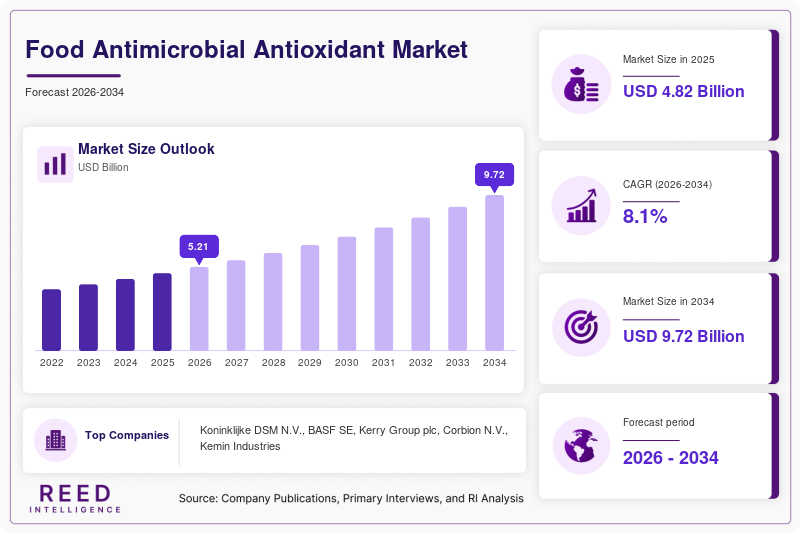
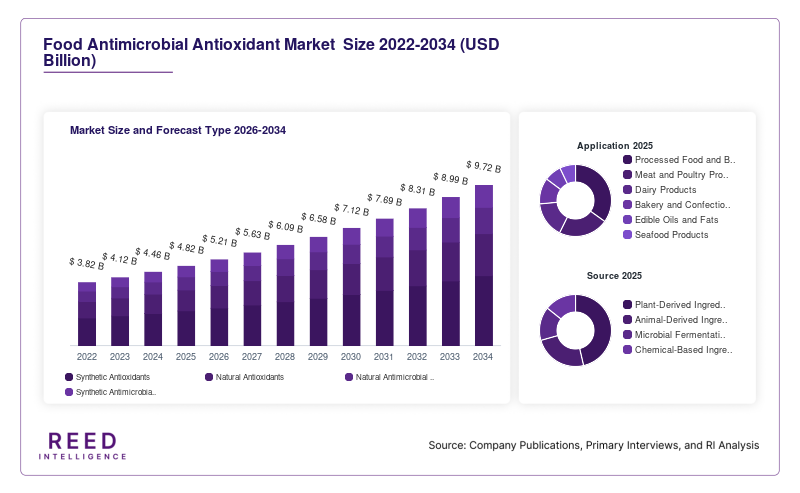
The global Food Antimicrobial Antioxidant Market size was valued at USD 4.82 billion in 2026 and is projected to reach USD 8.96 billion by 2034, expanding at a CAGR of 8.1% during 2026–2034. The market is witnessing stable expansion due to increasing demand for food preservation solutions that improve shelf life, reduce microbial contamination, and maintain product freshness across processed and packaged food categories. Rising consumption of convenience foods, frozen meals, ready-to-eat products, and bakery items has accelerated the adoption of antimicrobial antioxidants in food processing operations worldwide. Manufacturers are investing in ingredient innovations that combine oxidation control with microbial protection to meet evolving consumer expectations for food quality and safety.
One major factor supporting market growth is the rising global concern regarding food waste reduction. Governments, food manufacturers, and retailers are increasingly adopting preservation technologies that extend product usability while maintaining nutritional integrity. Food antimicrobial antioxidants help minimize spoilage caused by bacteria, mold, oxidation, and rancidity, particularly in meat, dairy, edible oils, and beverage applications. In addition, clean-label ingredient demand has encouraged the use of natural antimicrobial antioxidants derived from rosemary extract, tocopherols, green tea, and fermented compounds. Advancements in food packaging integration and multifunctional preservative blends are also supporting broader industry adoption across developed and emerging economies.
Key Highlights
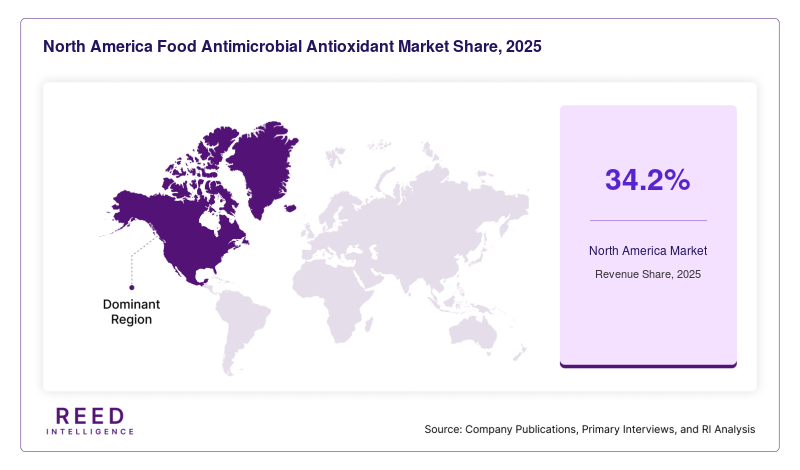
- North America dominated the market with a 34.2% share in 2025, while Asia Pacific is expected to grow at the fastest CAGR of 10.9% during 2026–2034.
- By type, synthetic antioxidants accounted for the largest share of 39.1%, while natural antimicrobial blends are projected to grow at a CAGR of 11.6%.
- By application, processed food and beverages led with a 42.4% share, whereas meat and poultry preservation is expected to expand at a CAGR of 10.8%.
- By source, plant-derived ingredients accounted for the largest share of 44.7%, while microbial fermentation-based ingredients are projected to grow at a CAGR of 12.1%.
- The United States remained the dominant country, with market values of USD 1.14 billion in 2024 and USD 1.24 billion in 2025.
Market Trends
Rising Preference for Natural Preservation Ingredients
The market is experiencing increasing demand for natural antimicrobial antioxidant solutions as consumers seek cleaner ingredient labels and reduced synthetic additive usage in food products. Food manufacturers are gradually replacing conventional synthetic preservatives with plant-based extracts, essential oils, tocopherols, and fermented antimicrobial compounds. This trend is especially visible in premium packaged foods, dairy alternatives, organic beverages, and bakery applications. Regulatory agencies across North America and Europe are also supporting ingredient transparency, encouraging food companies to reformulate products with recognizable preservation ingredients. Natural preservation systems are gaining popularity because they provide dual functionality by preventing microbial growth and delaying oxidation simultaneously.
Manufacturers are investing in research activities focused on improving the stability and effectiveness of natural antioxidants under varying temperature and storage conditions. Companies are introducing rosemary-derived antioxidants, green tea polyphenols, citrus extracts, and cultured sugar blends to satisfy demand from health-conscious consumers. Growing retail expansion of organic and minimally processed food products has further accelerated the adoption of these ingredients. As clean-label positioning becomes increasingly important in product marketing strategies, demand for multifunctional natural antimicrobial antioxidants is expected to rise steadily across global food processing industries.
Integration of Preservation Systems in Packaged Convenience Foods
Rapid growth in packaged and convenience food consumption is significantly shaping the Food Antimicrobial Antioxidant Market. Urbanization, changing work patterns, and increasing disposable income levels have encouraged consumers to purchase ready-to-cook and ready-to-eat meals that require extended shelf life. Food manufacturers are integrating antimicrobial antioxidant systems into processed foods to maintain flavor, texture, color stability, and microbial safety during transportation and storage. This trend is particularly strong in frozen foods, snack products, processed meat, and dairy categories where oxidation and contamination risks remain high.
Packaging innovation is also contributing to this trend through active packaging systems that incorporate antimicrobial and antioxidant compounds directly into packaging materials. Such technologies help preserve food freshness without excessive use of additives inside the food matrix itself. Companies are further developing customized preservation blends tailored for specific food applications and regional storage environments. The increasing penetration of e-commerce grocery delivery platforms has intensified the need for longer-lasting packaged foods, creating additional opportunities for advanced antimicrobial antioxidant technologies across the global food supply chain.
Market Drivers
Expansion of Processed Food Consumption Worldwide
The increasing global demand for processed and packaged foods is a major factor driving the Food Antimicrobial Antioxidant Market. Consumers are purchasing more frozen meals, packaged snacks, canned products, and instant foods due to convenience, affordability, and changing lifestyles. These products require effective preservation systems to maintain product quality throughout extended distribution and storage cycles. Food antimicrobial antioxidants help reduce oxidation, inhibit microbial contamination, and improve sensory stability, making them essential ingredients in modern food manufacturing operations. The rapid growth of supermarket chains and food delivery platforms has further strengthened demand for long-lasting packaged food products.
Developing economies in Asia Pacific and Latin America are witnessing strong expansion in food processing industries, creating substantial demand for preservation technologies. Manufacturers are increasingly focused on minimizing product spoilage and reducing economic losses associated with food wastage. Antimicrobial antioxidants also support regulatory compliance related to food safety and quality assurance standards. Their role in preserving color, flavor, and nutritional value makes them highly valuable in processed meat, dairy, edible oil, and bakery applications. Continuous product innovation in multifunctional preservatives is expected to support long-term market growth.
Increasing Focus on Food Safety and Shelf-Life Stability
Growing awareness regarding foodborne illnesses and contamination risks is accelerating the adoption of food antimicrobial antioxidants across global food industries. Governments and food safety authorities are implementing stricter regulations related to microbial control, product stability, and storage safety. Food manufacturers are under pressure to ensure longer shelf life while maintaining product freshness and consumer safety. Antimicrobial antioxidants play an important role in controlling bacterial growth, preventing rancidity, and reducing oxidation-related deterioration in packaged food products.
The increasing complexity of global food supply chains has intensified the need for reliable preservation technologies capable of maintaining product quality during international transportation and prolonged storage periods. Meat, seafood, dairy, and beverage industries are especially dependent on antimicrobial antioxidant systems to meet safety standards and prevent spoilage losses. Rising consumer preference for preservative-efficient food products has encouraged companies to adopt advanced ingredient combinations that provide enhanced microbial protection without compromising flavor or texture. The growing integration of smart packaging technologies and cold-chain logistics is also expected to strengthen market demand over the forecast period.
Market Restraint
Regulatory Challenges and Consumer Concerns Regarding Synthetic Additives
Stringent regulatory requirements associated with food additives remain a key restraint affecting market expansion. Several countries have implemented strict approval frameworks regarding the use of synthetic antioxidants and antimicrobial agents in food products. Regulatory bodies often impose usage limitations and labeling requirements for preservatives due to concerns about long-term health effects. As consumers become more informed about food ingredients, skepticism regarding artificial preservatives and chemical additives has increased considerably. This shift has pressured food manufacturers to reformulate products and invest in alternative preservation technologies that may involve higher production costs and longer development timelines.
The transition from synthetic to natural antimicrobial antioxidants can also create operational challenges related to ingredient stability, formulation compatibility, and shelf-life performance. Natural ingredients often display variability in potency depending on extraction methods and raw material quality. Smaller manufacturers may face difficulties in managing higher procurement costs associated with plant-derived or fermentation-based preservation compounds. In addition, some natural antimicrobial antioxidants can influence food flavor, aroma, or color, limiting their application flexibility in sensitive product categories. These factors collectively create barriers for widespread adoption, particularly in price-sensitive food markets.
Market Opportunities
Growth Potential in Functional and Organic Food Categories
The rapid expansion of functional and organic food industries is creating strong opportunities for the Food Antimicrobial Antioxidant Market. Consumers are increasingly seeking food products that offer nutritional benefits along with natural ingredient compositions. Organic packaged foods, fortified beverages, plant-based dairy alternatives, and functional snacks require preservation systems that align with clean-label positioning. This trend is encouraging manufacturers to develop advanced antimicrobial antioxidant solutions derived from botanical extracts, fermentation technologies, and naturally sourced compounds that meet organic certification requirements.
Food companies are focusing on ingredient transparency and sustainable sourcing to strengthen brand positioning among health-conscious consumers. Natural preservation systems can support extended shelf life without compromising nutritional integrity, making them highly attractive for premium food applications. The rising popularity of vegan and plant-based food products has further accelerated demand for natural antioxidant solutions compatible with alternative protein formulations. As retailers expand shelf space dedicated to organic and wellness-oriented products, manufacturers of food antimicrobial antioxidants are expected to benefit from growing commercial opportunities across global food markets.
Advancements in Active Packaging and Preservation Technologies
Technological innovation in food packaging is creating substantial growth opportunities for antimicrobial antioxidant manufacturers. Active packaging systems capable of releasing antimicrobial and antioxidant compounds are gaining attention due to their ability to improve food stability and reduce spoilage during storage and transportation. These packaging technologies are increasingly used in meat products, seafood, dairy, bakery items, and fresh produce applications where maintaining freshness is essential for commercial success.
Research activities focused on nanotechnology-based preservation systems, biodegradable packaging materials, and controlled-release antimicrobial films are expanding the market potential for advanced preservation ingredients. Food companies are investing in integrated preservation approaches that combine ingredient-based protection with packaging-enabled stability enhancement. Increasing adoption of smart logistics systems and international food trade is further supporting the demand for longer-lasting packaged food products. Emerging economies with expanding retail infrastructure and cold-chain development are also expected to create favorable conditions for active packaging technologies that incorporate food antimicrobial antioxidants.
Segmental Analysis
By Type
Synthetic antioxidants accounted for the largest market share of 39.1% in 2024 due to their cost efficiency, strong oxidative stability, and extensive commercial usage across processed food industries. These ingredients are widely used in edible oils, bakery products, snack foods, processed meat, and packaged beverages where oxidation control is essential for shelf-life maintenance. Commonly used synthetic compounds provide effective protection against rancidity and flavor deterioration during extended storage periods. Food manufacturers continue to prefer these ingredients in high-volume production environments because they offer consistent performance and compatibility with diverse food formulations. Their widespread availability and lower pricing compared to natural alternatives have further strengthened their dominance across developing and developed food markets.
Natural antimicrobial blends are expected to register the fastest CAGR of 11.6% during 2026–2034 due to increasing clean-label demand and rising consumer preference for naturally sourced food ingredients. These blends typically combine plant extracts, essential oils, fermented compounds, and natural antioxidants to deliver multifunctional preservation performance. Manufacturers are increasingly introducing rosemary extract, green tea polyphenols, cultured sugar systems, and citrus-based preservation blends to replace synthetic additives. Growing demand for organic and minimally processed foods is encouraging food companies to adopt natural ingredient technologies that align with regulatory expectations and consumer health trends. Continued innovation in extraction methods and stabilization technologies is expected to improve the commercial viability of natural antimicrobial antioxidant systems.
By Application
Processed food and beverages represented the dominant application segment with a 42.4% market share in 2024 due to strong global consumption of packaged meals, snacks, sauces, frozen foods, and convenience beverages. Food antimicrobial antioxidants are extensively used in these products to prevent microbial contamination, maintain freshness, and protect flavor stability during storage and transportation. The increasing penetration of supermarkets, online grocery platforms, and convenience retail stores has accelerated demand for long-lasting packaged foods. Manufacturers are continuously reformulating products to improve shelf life while maintaining sensory quality and regulatory compliance. Demand for multifunctional preservatives capable of reducing oxidation and microbial growth simultaneously remains particularly strong within large-scale commercial food processing operations.
Meat and poultry preservation is anticipated to expand at the fastest CAGR of 10.8% during the forecast period due to rising protein consumption and increasing concerns regarding food safety and spoilage reduction. Meat products are highly vulnerable to oxidation and microbial contamination, making antimicrobial antioxidant systems essential for maintaining product quality and extending shelf life. Food companies are adopting advanced preservation blends and active packaging solutions to reduce spoilage-related losses in fresh and processed meat applications. Increasing international trade of frozen and packaged meat products has further intensified demand for reliable preservation technologies. Growing consumer preference for high-quality packaged protein products is expected to support sustained growth in this application segment across both developed and emerging markets.
By Source
Plant-derived ingredients held the largest market share of 44.7% in 2024 due to increasing demand for natural preservation systems and clean-label food formulations. These ingredients include rosemary extract, green tea polyphenols, oregano oil, clove extract, and other botanical compounds with antioxidant and antimicrobial properties. Food manufacturers are increasingly incorporating plant-derived preservation agents into bakery products, dairy alternatives, beverages, sauces, and processed snacks to improve product stability naturally. Consumer perception regarding botanical ingredients as safer and healthier alternatives to synthetic additives has significantly strengthened segment growth. Advancements in extraction and encapsulation technologies have also improved ingredient stability, enabling wider commercial adoption across multiple food processing applications.
Microbial fermentation-based ingredients are projected to witness the fastest CAGR of 12.1% during 2026–2034 due to increasing interest in biotechnology-driven preservation systems. Fermentation-derived compounds offer strong antimicrobial performance while supporting clean-label and sustainable product positioning. Food manufacturers are adopting cultured sugar systems, bacteriocins, and fermented organic acids to improve microbial safety and shelf-life efficiency in dairy, beverages, sauces, and meat products. The growing focus on sustainable food processing and reduced chemical additive usage is encouraging investment in fermentation technologies. In addition, rising research activities aimed at improving production scalability and ingredient consistency are expected to strengthen commercial adoption of microbial fermentation-based antimicrobial antioxidants in global food industries.
Regional Analysis
North America
North America accounted for 34.2% of the global Food Antimicrobial Antioxidant Market share in 2025 and maintained its position as the leading regional market. The region is projected to expand at a CAGR of 7.6% during 2026–2034 due to strong demand for processed food preservation technologies and strict food safety regulations. High consumption of packaged meals, frozen products, and ready-to-eat foods continues to drive ingredient adoption across the United States and Canada. Food manufacturers are increasingly focusing on extending shelf life while maintaining product quality and nutritional value in competitive retail environments.
The United States remained the dominant country in North America due to its advanced food processing infrastructure and growing demand for clean-label preservation ingredients. The country recorded market values of USD 1.14 billion in 2024 and USD 1.24 billion in 2025. One unique growth factor supporting the regional market is the rapid adoption of active food packaging technologies integrated with antioxidant and antimicrobial compounds. Major food producers are investing in multifunctional preservation systems to reduce spoilage and improve supply chain efficiency across domestic and export markets.
Europe
Europe represented a significant share of the Food Antimicrobial Antioxidant Market in 2025 and is expected to grow at a CAGR of 7.4% during the forecast period. The region benefits from strong consumer demand for organic food products, premium packaged goods, and sustainable preservation technologies. Food manufacturers across Germany, France, Italy, and the United Kingdom are increasingly using natural antioxidant solutions to comply with strict food labeling and additive regulations. Rising awareness regarding food waste reduction and shelf-life extension has also encouraged broader adoption of antimicrobial antioxidant systems in processed food manufacturing.
Germany emerged as the dominant country within the European market due to its advanced food processing sector and emphasis on high-quality packaged foods. A unique factor driving growth in the country is the increasing integration of plant-derived preservation compounds into meat substitutes and vegan food products. European consumers continue to prefer minimally processed foods with recognizable ingredients, encouraging manufacturers to replace conventional synthetic additives with rosemary extracts, tocopherols, and fermentation-based antimicrobial blends in commercial food formulations.
Asia Pacific
Asia Pacific is expected to register the fastest CAGR of 10.9% during 2026–2034 due to rapid urbanization, rising disposable income, and strong expansion of the packaged food industry. Increasing demand for convenience foods, processed snacks, frozen meals, and dairy products is supporting the adoption of food antimicrobial antioxidants across China, India, Japan, and Southeast Asian economies. Expanding supermarket penetration and rising online grocery sales have increased the need for shelf-life stability and preservation efficiency in food distribution systems.
China remained the dominant country in the Asia Pacific market due to its large-scale food manufacturing sector and rising consumption of processed food products. One unique growth factor supporting regional expansion is the increasing government focus on food safety modernization and contamination prevention in large-scale food production facilities. Manufacturers are investing in advanced preservation technologies and natural ingredient solutions to improve product quality and reduce spoilage-related losses. Growing export activities within the regional food industry are also contributing to rising demand for antimicrobial antioxidant ingredients.
Middle East & Africa
The Middle East & Africa Food Antimicrobial Antioxidant Market is projected to grow steadily during the forecast period due to increasing food imports, expanding retail infrastructure, and changing consumer dietary patterns. The region is witnessing higher consumption of packaged and processed foods driven by urban population growth and lifestyle changes. Demand for preservation technologies is rising across bakery products, dairy items, processed meat, and beverages to maintain food quality under varying climatic conditions and long transportation cycles.
Saudi Arabia emerged as the dominant country in the regional market due to strong investments in food processing and food security initiatives. One unique growth factor supporting the market is the increasing development of cold-chain logistics and temperature-controlled storage systems. Food manufacturers and distributors are adopting antimicrobial antioxidant solutions to maintain product freshness in high-temperature environments. Growing tourism activity and hospitality sector expansion are also supporting increased demand for stable packaged food products across the region.
Latin America
Latin America is expected to witness moderate but stable growth in the Food Antimicrobial Antioxidant Market during the forecast period. Rising urbanization, expanding middle-class populations, and increasing processed food consumption are supporting regional demand for preservation ingredients. Countries including Brazil, Mexico, and Argentina are experiencing steady growth in packaged food production and retail distribution networks. Food manufacturers are increasingly adopting antimicrobial antioxidant systems to reduce spoilage, maintain freshness, and improve shelf-life performance in bakery, dairy, and meat products.
Brazil remained the dominant country within the Latin American market due to its strong agricultural base and expanding food processing industry. A unique growth factor contributing to regional market expansion is the increasing export of processed meat and packaged food products to international markets. Export-oriented manufacturers are adopting advanced preservation technologies to comply with global food safety standards and improve product stability during long-distance transportation. Rising consumer awareness regarding food quality and hygiene is further encouraging ingredient innovation across the region.
Competitive Landscape
The Food Antimicrobial Antioxidant Market is characterized by moderate competition with the presence of multinational ingredient manufacturers and specialized food preservation companies. Leading participants are focusing on portfolio expansion, clean-label ingredient development, strategic partnerships, and technological innovation to strengthen market positioning. Companies are investing heavily in research activities aimed at improving the effectiveness of natural preservation systems while maintaining formulation stability across diverse food applications.
Koninklijke DSM N.V. remained one of the leading companies in the market due to its extensive portfolio of food preservation and nutritional ingredients. The company has focused on expanding natural antioxidant solutions for processed food applications and strengthening partnerships with global food manufacturers. Other major players including Kerry Group, BASF SE, Corbion N.V., and Kemin Industries are actively developing multifunctional preservation systems that combine oxidation control with antimicrobial efficiency.
Key Players
- Koninklijke DSM N.V.
- BASF SE
- Kerry Group plc
- Corbion N.V.
- Kemin Industries
- Archer Daniels Midland Company
- Cargill Incorporated
- Galactic S.A.
- DuPont Nutrition & Biosciences
- Jungbunzlauer Suisse AG
- Camlin Fine Sciences Ltd.
- Naturex S.A.
- Chr. Hansen Holding A/S
- International Flavors & Fragrances Inc.
- Tate & Lyle PLC
Recent Developments
- Kerry Group introduced a new natural antimicrobial antioxidant blend designed for processed meat and frozen food applications in 2025.
- Corbion N.V. expanded its fermentation-derived food preservation ingredient production facility to support rising demand from Asia Pacific food manufacturers in 2024.
- Kemin Industries launched an advanced rosemary extract platform with enhanced oxidation stability for bakery and snack applications in 2025.
- BASF SE invested in research focused on multifunctional preservation systems integrating antioxidant protection with active food packaging technologies in 2024.
Food Antimicrobial Antioxidant Market Segments
Type
- Synthetic Antioxidants
- Natural Antioxidants
- Natural Antimicrobial Blends
- Synthetic Antimicrobial Compounds
Application
- Processed Food and Beverages
- Meat and Poultry Products
- Dairy Products
- Bakery and Confectionery
- Edible Oils and Fats
- Seafood Products
Source
- Plant-Derived Ingredients
- Animal-Derived Ingredients
- Microbial Fermentation-Based Ingredients
- Chemical-Based Ingredients
By Region
- North America
- Europe
- APAC
- Middle East and Africa
- LATAM