Foot Operated Faucet Market Size, Share & Demand Report By Product Type (Single-Pedal Faucets, Dual-Pedal Faucets, Multi-Function Foot Operated Faucets), By Application (Commercial Kitchens, Healthcare Facilities, Laboratories, Public Restrooms, Industrial Food Processing Units), By End Use (Restaurants and Foodservice Facilities, Hospitals and Clinics, Educational Institutions, Hospitality Infrastructure, Government and Institutional Buildings), By Region & Segment Forecasts, 2026–2034
USD 3950
Market Overview
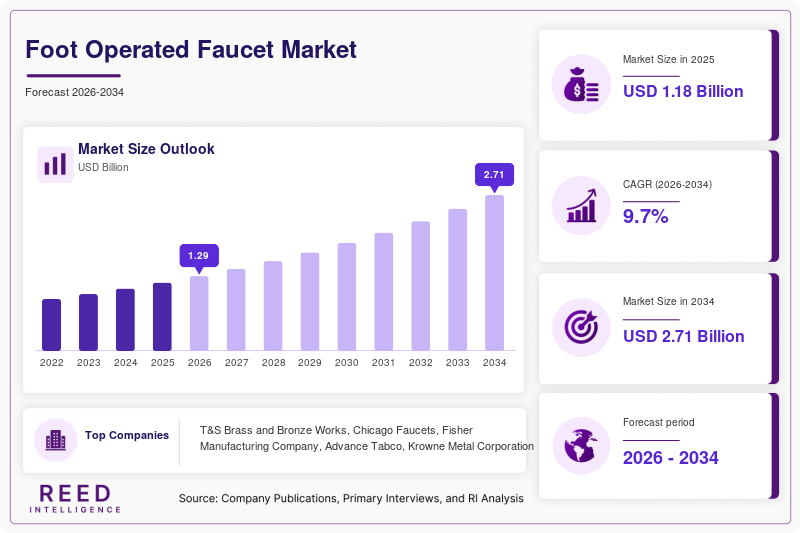
The global Foot Operated Faucet Market size was valued at approximately USD 1.18 billion in 2026 and is projected to reach nearly USD 2.47 billion by 2034, expanding at a CAGR of 9.7% during the forecast period from 2026 to 2034. Growing awareness regarding hygiene standards across commercial kitchens, healthcare facilities, educational institutions, and public infrastructure projects continues to support long-term market expansion. Foot operated faucets are increasingly adopted as an alternative to manual faucets because they reduce hand contact and minimize contamination risks in environments where sanitation remains critical. The market has also gained momentum due to rising investments in smart sanitation infrastructure and modern food processing facilities.
The increasing implementation of strict hygiene compliance regulations in foodservice and healthcare industries has created favorable conditions for product demand. Commercial establishments are shifting toward touch-free water control systems that improve operational efficiency while lowering the risk of cross-contamination. Manufacturers are also focusing on stainless steel construction, water-saving mechanisms, and durable pedal systems to improve product reliability and lifecycle performance. In addition, urbanization and public infrastructure modernization programs across emerging economies are encouraging the installation of advanced plumbing systems in airports, railway stations, malls, and hospitals.
Key Highlights
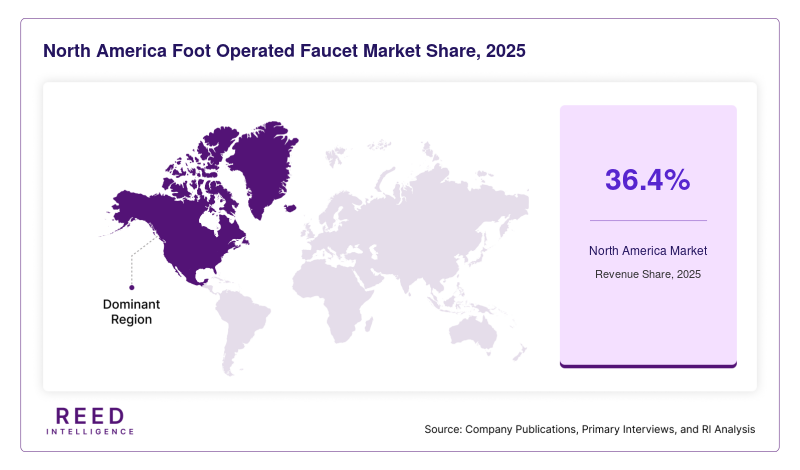
- North America dominated the market with a 36.4% share in 2025.
- Asia Pacific is expected to grow at the fastest CAGR of 11.4% during 2026–2034.
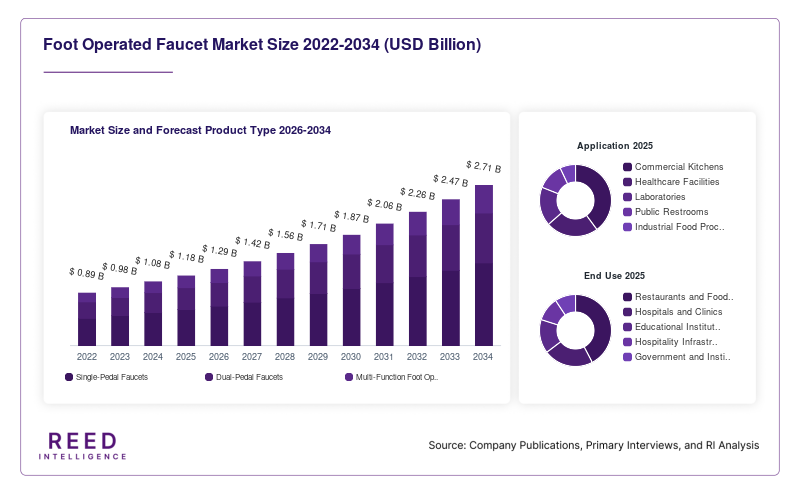
- By product type, single-pedal faucets accounted for the largest share of 42.1%, while dual-pedal faucets are projected to grow at a CAGR of 10.8%.
- By application, commercial kitchens led with a 39.6% share, whereas healthcare facilities are expected to expand at a CAGR of 11.1%.
- By end use, restaurants and foodservice facilities dominated with a 34.8% share, while institutional infrastructure is projected to grow at a CAGR of 10.9%.
- The United States remained the dominant country, with market values of USD 338 million in 2024 and USD 371 million in 2025.
Market Trends
Expansion of touch-free sanitation infrastructure
The increasing development of touch-free sanitation infrastructure across commercial and institutional environments represents a major trend in the Foot Operated Faucet Market. Public facilities such as airports, hospitals, hotels, and food courts are increasingly integrating contactless plumbing systems to improve hygiene standards and reduce bacterial transmission risks. Foot operated faucets are gaining preference because they provide an affordable and mechanically reliable alternative to sensor-based systems in high-traffic environments. Many facility operators are prioritizing long-lasting solutions with minimal maintenance requirements, which supports product demand across both developed and emerging economies.
Governments and private infrastructure developers are also investing in modern restroom and kitchen upgrades that comply with stricter sanitation regulations. In several regions, construction standards for healthcare and foodservice facilities now encourage touch-free water systems as part of infection prevention measures. Manufacturers are responding by introducing compact pedal-operated faucet systems with water-saving capabilities and corrosion-resistant materials. The trend is expected to remain strong as businesses focus on operational safety, sustainability, and regulatory compliance.
Rising demand for water-efficient plumbing systems
Water conservation initiatives are significantly influencing purchasing decisions within the global Foot Operated Faucet Market. Businesses and public institutions are seeking plumbing systems that reduce unnecessary water usage while maintaining hygiene standards. Foot operated faucets help users control water flow more effectively because water is dispensed only when the pedal is pressed. This operational advantage is supporting product adoption in commercial kitchens, laboratories, and healthcare facilities where water consumption remains high.
Manufacturers are increasingly integrating pressure-control valves, low-flow aerators, and dual-temperature mechanisms into modern foot operated faucet systems. These developments are helping end users achieve sustainability goals while reducing utility expenses. Green building certification programs and environmental regulations are also encouraging the use of efficient water management technologies in newly constructed facilities. As sustainability becomes a core procurement factor for commercial infrastructure projects, demand for advanced water-saving faucet systems is expected to increase steadily throughout the forecast period.
Market Drivers
Increasing hygiene awareness across commercial sectors
Growing awareness regarding workplace hygiene and contamination prevention continues to drive the Foot Operated Faucet Market. Commercial kitchens, hospitals, pharmaceutical facilities, and food processing plants require strict sanitation protocols to maintain operational safety. Traditional manual faucets create multiple touchpoints that may increase the risk of bacterial transmission. Foot operated systems reduce direct hand contact and support cleaner operational environments, making them highly suitable for hygiene-sensitive applications.
The foodservice industry has emerged as a major contributor to market growth because restaurants and catering facilities are under pressure to improve sanitation practices. Healthcare institutions are also investing in non-contact plumbing systems to reduce infection risks in patient care environments. Increasing consumer expectations regarding cleanliness standards are encouraging businesses to modernize plumbing infrastructure with hygienic alternatives. This growing focus on sanitation compliance is expected to remain one of the strongest market growth drivers over the next decade.
Growth in commercial construction and infrastructure projects
Rapid expansion of commercial construction activities worldwide is creating favorable growth opportunities for the Foot Operated Faucet Market. New hospitals, hotels, educational institutions, transportation hubs, and industrial facilities require advanced plumbing systems that support efficient water management and hygiene standards. Urbanization and population growth in emerging economies are accelerating investments in public infrastructure projects, leading to increased installation of foot operated faucets.
Several governments are prioritizing healthcare expansion and smart city initiatives, particularly in Asia Pacific and the Middle East. These projects frequently incorporate touch-free sanitation technologies to improve public health infrastructure. Commercial kitchens in hotels and food courts are also increasingly adopting pedal-operated faucets due to their operational efficiency and ease of use. Manufacturers are benefiting from rising demand for durable stainless steel products capable of withstanding intensive daily usage. The continued growth of infrastructure modernization programs is expected to strengthen market expansion during the forecast period.
Market Restraint
Higher installation costs compared to traditional faucet systems
The relatively higher installation and maintenance costs associated with foot operated faucet systems continue to restrain broader market penetration, particularly among small businesses and residential consumers. Compared to conventional manual faucets, pedal-operated systems require additional plumbing components, floor-mounted mechanisms, and specialized installation procedures. These requirements increase upfront investment costs and may discourage adoption in price-sensitive markets.
Small restaurants, independent clinics, and low-budget commercial facilities often prefer standard faucet systems because of their lower purchase and installation expenses. In some developing regions, limited awareness regarding long-term hygiene and water-saving benefits also reduces willingness to invest in advanced plumbing infrastructure. Maintenance challenges associated with pedal wear, valve replacement, and floor space constraints may further affect purchasing decisions. For example, older commercial kitchens with limited plumbing flexibility may face additional renovation expenses when transitioning to foot operated systems. Although product durability and operational efficiency can offset long-term costs, the initial financial barrier remains a significant challenge for manufacturers seeking wider market expansion.
Market Opportunities
Expansion of healthcare infrastructure in emerging economies
The rapid expansion of healthcare infrastructure across emerging economies presents a significant opportunity for the Foot Operated Faucet Market. Countries in Asia Pacific, Latin America, and the Middle East are investing heavily in hospitals, diagnostic laboratories, and specialized treatment centers to meet rising healthcare demands. These facilities require advanced hygiene systems that reduce contamination risks and improve infection control standards.
Foot operated faucets are increasingly preferred in surgical areas, intensive care units, and laboratory environments because they support hands-free operation without relying on electronic sensors. Governments are also implementing healthcare modernization initiatives that encourage the use of hygienic plumbing systems in public hospitals. Manufacturers have opportunities to introduce cost-effective and durable products tailored to regional infrastructure requirements. As healthcare spending continues to increase across developing nations, the demand for pedal-operated water systems is expected to rise steadily.
Growing adoption in residential premium kitchen applications
The expanding premium residential kitchen segment offers notable growth opportunities for manufacturers operating in the Foot Operated Faucet Market. Consumers are increasingly prioritizing kitchen hygiene, water conservation, and convenience when selecting home improvement products. Foot operated faucets are gaining interest among homeowners who seek touch-free kitchen functionality while preparing food or cleaning utensils.
Rising disposable income levels and increasing investments in modular kitchen renovations are supporting product adoption in urban residential markets. Manufacturers are responding with compact and aesthetically designed systems suitable for modern kitchens. Product innovation focused on silent pedal mechanisms, dual-temperature controls, and decorative stainless steel finishes is further improving consumer appeal. Online retail platforms and home improvement stores are also increasing product accessibility. As awareness regarding hygienic kitchen solutions grows among residential consumers, the premium home segment is expected to contribute to long-term market growth.
Segmental Analysis
By Product Type
Single-pedal faucets accounted for the largest share of the Foot Operated Faucet Market in 2024, representing approximately 42.1% of total revenue. These systems are widely preferred across restaurants, laboratories, and institutional kitchens because of their simple operating mechanism and cost-effective installation process. Single-pedal configurations allow users to activate water flow with minimal effort while maintaining hygienic operation standards. Their lower maintenance requirements and compatibility with existing plumbing systems have also contributed to strong adoption across commercial facilities.
Manufacturers continue to enhance single-pedal faucet systems with durable stainless steel construction, adjustable water pressure controls, and anti-slip pedal mechanisms. Demand remains particularly strong among small and medium-sized foodservice establishments that prioritize affordability and operational efficiency. In addition, educational institutions and healthcare facilities are increasingly installing these systems in handwashing stations to support contamination prevention initiatives. The widespread availability of replacement components and standardized installation designs further strengthens the leading market position of single-pedal faucets.
By Application
Commercial kitchens represented the dominant application segment within the Foot Operated Faucet Market, accounting for nearly 39.6% of global revenue in 2024. Restaurants, hotels, industrial kitchens, and catering facilities increasingly rely on foot operated systems to maintain hygiene standards while improving workflow efficiency. Employees working in food preparation environments often require hands-free water access to minimize contamination risks during cooking and cleaning processes.
The strong growth of food delivery services and organized restaurant chains has further increased demand for efficient sanitation infrastructure. Commercial kitchens prefer foot operated faucets because they are mechanically reliable and easier to maintain than electronic touchless systems. Manufacturers are also offering heavy-duty stainless steel models designed for intensive daily usage in high-volume food preparation environments. As food safety regulations become stricter across multiple countries, adoption of hygienic plumbing systems in commercial kitchens is expected to remain strong.
By End Use
Restaurants and foodservice facilities accounted for the largest share of the Foot Operated Faucet Market in 2024, contributing approximately 34.8% of total revenue. High hygiene standards within food preparation environments remain the primary factor supporting segment dominance. Restaurants require continuous handwashing and cleaning operations, making pedal-operated systems highly practical for maintaining sanitation efficiency. Fast-food chains, hotels, and catering companies increasingly prefer foot operated faucets because they help reduce contamination risks while supporting operational convenience.
The rapid expansion of organized foodservice businesses across urban areas has strengthened product demand worldwide. Many commercial kitchen operators are replacing conventional faucets with touch-free alternatives to comply with updated food safety regulations and customer expectations regarding cleanliness. Manufacturers are also developing compact models suitable for smaller restaurant kitchens with limited workspace availability. Strong replacement demand from aging foodservice infrastructure continues to support stable market growth within this segment.
Regional Analysis
North America
North America accounted for approximately 36.4% of the global Foot Operated Faucet Market share in 2025 and maintained its position as the leading regional market. The region is projected to expand at a CAGR of 8.9% during the forecast period due to widespread adoption of advanced sanitation systems across healthcare facilities, restaurants, and commercial infrastructure. Strict hygiene standards in the foodservice and healthcare sectors continue to support stable product demand. In addition, rising investments in sustainable plumbing technologies and water conservation initiatives are contributing to market expansion across the United States and Canada.
The United States remains the dominant country within the regional market due to strong commercial construction activity and high awareness regarding infection prevention standards. Large restaurant chains and hospital networks are increasingly replacing traditional plumbing systems with touch-free alternatives to improve operational safety. Another important growth factor is the increasing renovation of aging public infrastructure, including airports, schools, and transportation facilities. The presence of established plumbing equipment manufacturers and strong distribution networks also supports product availability and technological innovation.
Europe
Europe represented nearly 27.1% of the global Foot Operated Faucet Market in 2025 and is expected to witness a CAGR of 8.4% through 2034. Demand within the region is supported by strict environmental regulations and widespread adoption of water-efficient plumbing technologies. Countries across Western Europe are emphasizing sustainable building practices and energy-efficient infrastructure development, which is increasing demand for advanced faucet systems. Healthcare institutions and food processing facilities continue to remain major end users because of stringent sanitation requirements.
Germany emerged as the leading country within the European market due to its strong industrial manufacturing base and high investments in commercial infrastructure modernization. The country has experienced increasing installation of touch-free plumbing systems in public buildings, laboratories, and hospitality facilities. A unique growth factor supporting the German market is the growing emphasis on green building certifications that encourage water-saving plumbing equipment. Manufacturers are also focusing on durable stainless steel designs that align with European quality and sustainability standards.
Asia Pacific
Asia Pacific accounted for around 22.6% of the global Foot Operated Faucet Market in 2025 and is expected to register the fastest CAGR of 11.4% during the forecast period. Rapid urbanization, increasing healthcare investments, and rising foodservice industry expansion are major factors supporting regional market growth. Governments across China, India, and Southeast Asia are investing heavily in sanitation infrastructure and public healthcare development. Commercial establishments are increasingly adopting foot operated faucets to improve hygiene standards and operational efficiency.
China dominated the Asia Pacific market due to its large manufacturing sector, expanding hospital infrastructure, and significant commercial construction activities. The country has witnessed strong demand from industrial kitchens, pharmaceutical facilities, and transportation hubs. One unique growth factor is the rapid development of smart city projects that integrate modern sanitation infrastructure into urban planning initiatives. Local manufacturers are also expanding production capacity to meet increasing domestic and export demand for cost-effective pedal-operated faucet systems.
Middle East & Africa
The Middle East & Africa region held approximately 7.3% of the global Foot Operated Faucet Market share in 2025 and is projected to grow at a CAGR of 9.2% between 2026 and 2034. Rising investments in hospitality infrastructure, healthcare facilities, and airport modernization projects are contributing to market expansion. Countries within the Gulf Cooperation Council are increasingly prioritizing hygiene-focused infrastructure development to support tourism growth and healthcare improvement initiatives.
Saudi Arabia remains the dominant country in the regional market because of extensive commercial development projects and increasing public infrastructure investments. Hospitals, luxury hotels, and large-scale foodservice facilities are major adopters of foot operated faucet systems. A unique growth factor driving the Saudi Arabian market is the rapid expansion of religious tourism infrastructure, including hotels and public sanitation facilities around pilgrimage destinations. The increasing adoption of water-saving technologies in arid climates is also encouraging demand for efficient plumbing systems.
Latin America
Latin America captured nearly 6.6% of the global Foot Operated Faucet Market in 2025 and is anticipated to expand at a CAGR of 8.7% during the forecast period. The market is benefiting from rising awareness regarding hygiene management across commercial kitchens and healthcare facilities. Several regional governments are improving public healthcare infrastructure and encouraging sanitation upgrades in institutional buildings. Demand for durable and affordable foot operated faucet systems is gradually increasing across urban commercial centers.
Brazil dominated the Latin American market due to its large foodservice industry and growing investments in healthcare modernization. Restaurants, hospitals, and industrial food processing facilities are increasingly adopting pedal-operated faucets to improve sanitation standards. A distinct growth factor supporting the Brazilian market is the expansion of organized food retail and commercial catering services in metropolitan areas. Manufacturers are also introducing competitively priced products designed specifically for medium-scale commercial facilities, helping improve market accessibility across the region.
Competitive Landscape
The Foot Operated Faucet Market remains moderately fragmented, with several international and regional manufacturers competing on product durability, pricing, water efficiency, and hygiene-focused innovation. Leading companies are investing in stainless steel product development, ergonomic pedal mechanisms, and advanced valve systems to strengthen their competitive positioning. Strategic partnerships with commercial kitchen equipment suppliers and healthcare infrastructure contractors are also helping manufacturers expand their customer base.
T&S Brass and Bronze Works emerged as one of the leading companies in the global market due to its extensive commercial plumbing portfolio and strong distribution network across North America and Europe. The company recently introduced a new line of antimicrobial foot operated faucet systems designed for healthcare and foodservice applications. Other major companies are increasingly focusing on sustainable product development and regional expansion strategies to improve market penetration.
Key Players
- T&S Brass and Bronze Works
- Chicago Faucets
- Fisher Manufacturing Company
- Advance Tabco
- Krowne Metal Corporation
- Knee-Operated Faucet Company
- Monolith International
- AquaSpec Faucets
- Zurn Industries
- Kohler Co.
- Franke Group
- Elkay Manufacturing
- Moen Incorporated
- Sloan Valve Company
- Delabie Group
Recent Developments
- In March 2026, T&S Brass and Bronze Works launched a stainless steel antimicrobial foot operated faucet series targeted at healthcare and pharmaceutical facilities.
- In November 2025, Chicago Faucets expanded its commercial plumbing manufacturing capacity in the United States to address rising demand from hospitality and foodservice industries.
- In August 2025, Delabie Group introduced a low-flow dual-pedal faucet system designed to reduce water consumption in public infrastructure projects.
- In January 2026, Franke Group partnered with a commercial kitchen equipment supplier to integrate foot operated faucet systems into modular kitchen installations across Europe.
- In June 2025, Sloan Valve Company unveiled an upgraded pedal-operated faucet platform with enhanced leak prevention technology for industrial food processing facilities.
Foot Operated Faucet Market Segments
Product Type
- Single-Pedal Faucets
- Dual-Pedal Faucets
- Multi-Function Foot Operated Faucets
Application
- Commercial Kitchens
- Healthcare Facilities
- Laboratories
- Public Restrooms
- Industrial Food Processing Units
End Use
- Restaurants and Foodservice Facilities
- Hospitals and Clinics
- Educational Institutions
- Hospitality Infrastructure
- Government and Institutional Buildings
By Region
- North America
- Europe
- APAC
- Middle East and Africa
- LATAM